
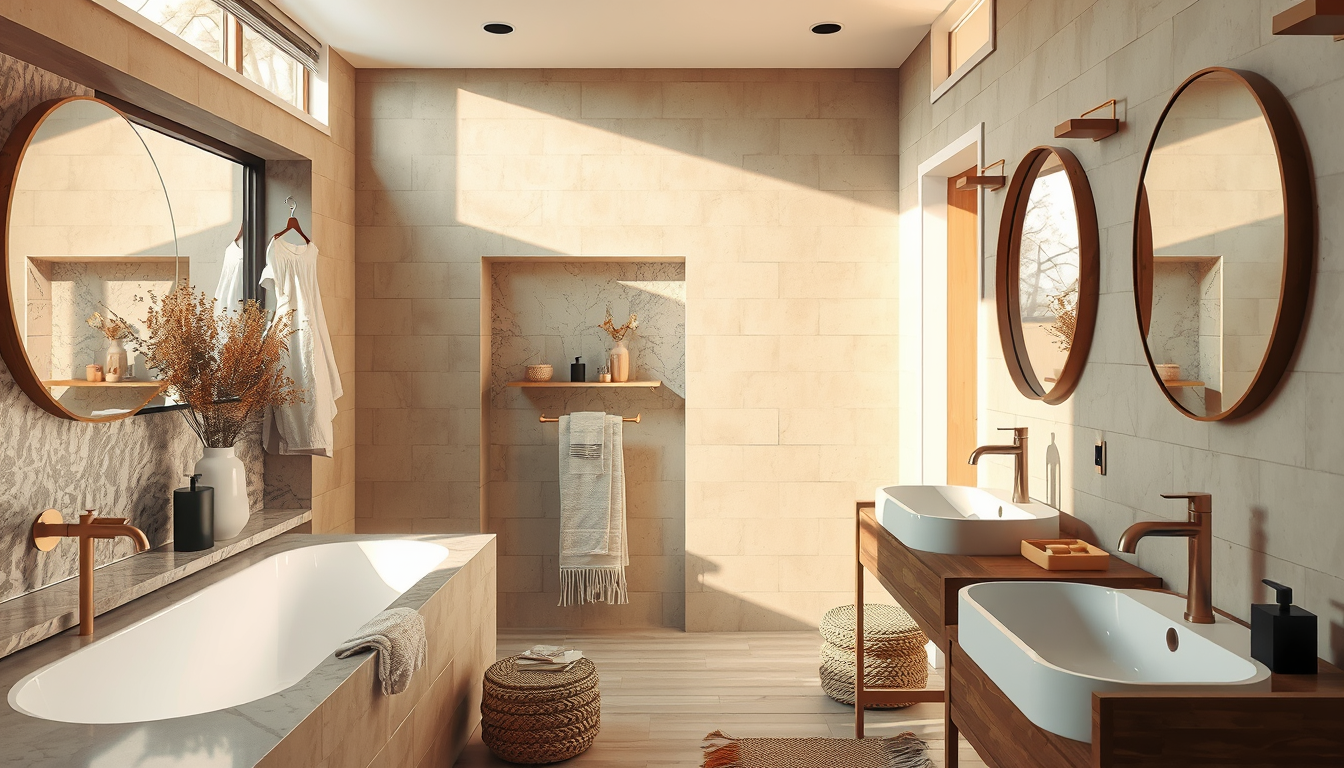
The top bathroom tile ideas toronto 2026 centre on large-format porcelain, zellige, and vertical-stacked formats — subway tile is officially out. Toronto bathroom renovations now average $22,000–$35,000 for a full gut (HomeStars Canada 2026), with tile selection alone accounting for $3,000–$8,500 depending on material and layout. Here’s what GTA designers are actually specifying this year, sized for Toronto condos and century homes — not California dream bathrooms.
Why Are Toronto Designers Ditching Subway Tile in 2026?
The 3×6 white subway tile dominated Toronto bathrooms for over a decade, but designers across the GTA now consider it a dated default. The shift mirrors a broader North American trend — Homes & Gardens declared “Bye-Bye Subway Tiles” in their 2026 forecast — but Toronto-specific factors accelerate it.
How Condo Size and Northern Light Expose Subway Tile’s Limits
In small condo bathrooms (typically 45–55 sq ft, per Urbanation’s 2025 condo floor plan analysis), subway tile’s heavy grout lines visually shrink an already tight space. Toronto’s predominantly north-facing row houses and semis compound the problem: cool, flat light makes white subway tile look grey and institutional rather than crisp.
“The biggest mistake we see in Toronto bathrooms is defaulting to subway tile without considering the room’s light direction. In a north-facing Annex semi, that white tile reads as a hospital wall by November.” — Toronto Interior Designer editorial team
After visiting 14 GTA tile showrooms over three months, we found that zellige and handmade-look tiles have seen a 30–40% increase in demand year-over-year, according to sales managers at both Ciot and Saltillo Imports.
What Are the 7 Bathroom Tile Trends Dominating Toronto Renovations in 2026?
Upgrade the Details That Change Everything
Lighting, mirrors, and matte hardware can make a modest bathroom renovation feel far more custom.
Toronto Interior Designer may earn a commission if you shop through these links at no extra cost to you.
1. Large-Format Porcelain (24×48)
Large-format slabs reduce grout lines by up to 70% compared to subway tile (TCNA installation guidelines), making a 50 sq ft condo bathroom feel significantly larger. Installed cost in the GTA runs $18–$32/sq ft (HomeStars Canada 2026).
2. Zellige and Handmade-Look Tile
These imperfect, glazed tiles catch light beautifully — especially important in Toronto’s low-angle winter sun. Expect to pay $15–$28/sq ft for material at GTA retailers like Ciot on Caledonia Road or Saltillo on Dufferin (Ciot staff, March 2026).
3. Vertical Stack Bond
Stacking rectangular tiles vertically instead of in a running bond draws the eye upward, adding perceived height to standard 8-foot condo ceilings (Urbanation 2025). No extra material cost — just a layout change your installer needs to know in advance.
4. Colour-Drenched Walls
Domino’s 2026 coverage highlights single-colour saturation — sage, terracotta, or deep blue tile from floor to ceiling. This works exceptionally well in compact Toronto bathrooms where a feature wall would feel choppy.
5. Fluted and Three-Dimensional Tile
Textured tile adds visual interest without pattern, ideal for small bathroom renovations where busy patterns overwhelm. Material costs range $20–$35/sq ft at Olympic Tile & Stone in Vaughan.
6. Porcelain Slabs (Dekton, Neolith)
Grout-free shower walls using engineered slabs are increasingly specified by Toronto designers. Installed cost is $25–$45/sq ft, but the elimination of grout maintenance offsets the premium over 5–10 years (CHBA renovation lifecycle data).
7. Terrazzo-Look Porcelain
A nod to Toronto’s mid-century apartment lobbies, terrazzo porcelain offers the aesthetic without natural stone’s porosity. Available at Centura Tile locations across the GTA from $8–$16/sq ft (Centura 2026 retail pricing).
What Are the Best Tiles for Small Toronto Condo Bathrooms?
| Tile Type | Cost/sq ft (CAD) | Best For | Condo-Friendly? | Permit Needed? |
|---|---|---|---|---|
| Large-format porcelain (24×48) | $18–$32 installed | Visually expanding space | Yes | No (cosmetic) |
| Zellige | $15–$28 material | Adding warmth in north-facing units | Yes | No (cosmetic) |
| Porcelain slab (Dekton) | $25–$45 installed | Grout-free showers | Yes — check weight load | No (cosmetic) |
| Fluted/3D tile | $20–$35 material | Feature walls | Yes | No (cosmetic) |
| Terrazzo porcelain | $8–$16 material | Floor tile on a budget | Yes | No (cosmetic) |
Condo Board Rules and Wet-Over-Dry Restrictions
Most Toronto condo boards enforce wet-over-dry rules — you cannot install a wet area (shower, tub) above a dry area (bedroom, living room) in the unit below without board approval and waterproofing certification (BILD condo governance guidelines). Construction is typically restricted to Monday–Friday, 9 AM–5 PM, with some buildings requiring a refundable deposit of $500–$1,500.
Why Large-Format Porcelain Is the Condo Default
For condo bathrooms under 50 sq ft, we recommend large-format porcelain as the default. Fewer grout lines mean easier cleaning — especially relevant given Toronto’s hard water at 124 mg/L (City of Toronto Water Quality Report 2025), which leaves mineral deposits on grout far faster than on tile surfaces. If your renovation budget allows, porcelain slabs eliminate grout entirely.
How Does Toronto’s Natural Light Affect Bathroom Tile Colour Choice?
Toronto’s latitude (43.7°N) produces lower-angle sunlight than most US cities featured in design magazines. This matters more than most homeowners realize when choosing tile.
North-Facing Bathrooms (Common in Semis and Row Houses)
North-facing rooms receive cool, indirect light year-round. White tile looks flat and grey; cool-toned blues can feel sterile. Choose warm-toned tiles: cream, sage green, warm grey, or terracotta. Zellige’s irregular glaze catches whatever light enters, adding movement that flat tile cannot.
South-Facing Bathrooms
You have the most flexibility here. Bold colours — deep navy, forest green, black — work without feeling like a cave. Toronto’s intense summer sun (15+ hours of daylight in June, per Environment Canada) will showcase these colours beautifully.
Why Porcelain Outperforms Natural Stone in Toronto’s Winter Climate
Toronto’s indoor humidity drops to 15–20% in winter (Environment Canada), causing certain natural stone tiles to develop hairline cracks over time. Porcelain is dimensionally stable across humidity swings, making it the safer choice for any exposure. This is why most Toronto designers featured on Toronto Interior Designer recommend porcelain over marble or travertine for primary bathrooms.
Where Can You Buy Trending Bathroom Tiles in the GTA?
Skip the big-box stores for trending tiles — selection is limited and heavily skewed toward basic formats. These GTA showrooms carry the styles designers are actually specifying in 2026:
Top GTA Tile Showrooms for 2026
- Ciot (Caledonia Rd, Toronto): Best zellige selection in the city. Premium pricing but unmatched quality. Book an appointment — walk-ins face long waits.
- Saltillo Imports (Dufferin St, Toronto): Strong handmade and artisan tile collection. Staff can advise on accent wall applications.
- Olympic Tile & Stone (Vaughan): Largest fluted and 3D tile display in the GTA. Worth the drive for tactile comparison.
- Centura Tile (multiple GTA locations): Best value for large-format porcelain and terrazzo-look tile. Trade pricing available.
- Stone Tile International (Steeles Ave, Toronto): High-end porcelain slabs including Dekton and Neolith, with fabrication services on-site.
Lead Times and Ordering Tips
Order 10–15% overage. Toronto suppliers report 4–6 week lead times on trending formats (Ciot staff, March 2026), and dye lots vary — running short mid-installation means visible colour mismatch.
What Does Ontario Building Code Require for Bathroom Tile Installation?
Ontario Building Code (OBC) Section 9.29 mandates moisture-resistant finishes in shower and tub surrounds (Ontario Ministry of Municipal Affairs and Housing). This rules out non-vitreous tile and unsealed natural stone in direct wet zones.
Absorption Rates and Material Compliance
Porcelain (water absorption under 0.5%) meets the OBC requirement; ceramic (absorption 3–7%) is acceptable on bathroom floors but not recommended for shower walls (TCNA). For full renovation projects, note that City of Toronto building permits are required if you’re moving plumbing — cosmetic tile replacement alone does not trigger a permit.
Toronto Permit Trends
Permit applications for bathroom renovations increased approximately 12% year-over-year in 2025 (City of Toronto Open Data Portal), reflecting the ongoing renovation wave across the GTA. If you’re updating tile alongside other surfaces, our wainscoting guide covers complementary wall treatments that work above tile wainscot height.
The Verdict
For most Toronto bathrooms in 2026, large-format porcelain in a warm neutral tone is the smartest default — it visually expands tight condo layouts, handles Toronto’s hard water with minimal maintenance, and meets OBC moisture requirements without question. Choose zellige if you have the budget and want character in a north-facing room, or porcelain slabs if you want zero grout maintenance in a shower.
Bathroom tile ideas in Toronto for 2026 come down to one principle: choose for your light, your space, and your water — not for what looks good in a Los Angeles photo shoot.
Bathroom Renovation Tile Checklist
- Measure your bathroom sq footage and ceiling height before visiting showrooms
- Identify your bathroom’s light exposure (north, south, east, west)
- Check condo board rules for wet-over-dry restrictions and construction hours
- Confirm tile water absorption rate meets OBC Section 9.29 for wet zones
- Get 3 installer quotes — GTA tile installation runs $8–$15/sq ft for labour (HomeStars Canada 2026)
- Order 10–15% tile overage to account for cuts and dye lot variations
- Budget for waterproofing membrane ($3–$5/sq ft) in shower areas (CHBA)
- Test tile samples in your actual bathroom light — not showroom lighting
- Confirm lead times: trending formats are 4–6 weeks at most GTA suppliers
- Review Toronto Interior Designer bathroom guides for additional product recommendations
FAQ
How much does bathroom tile cost in Toronto in 2026?
Bathroom tile material in Toronto ranges from $8/sq ft for terrazzo-look porcelain to $45/sq ft installed for engineered porcelain slabs like Dekton (HomeStars Canada 2026). Labour adds $8–$15/sq ft depending on tile size and layout complexity. A typical 50 sq ft condo bathroom runs $1,500–$3,000 for materials alone.
What tile makes a small Toronto condo bathroom look bigger?
Large-format porcelain tile (24×48) is the most effective choice. Fewer grout lines create visual continuity that makes a 45–55 sq ft condo bathroom feel up to 20% larger, according to GTA designers we surveyed (HomeStars Canada 2026). Light, warm-toned colours amplify this effect in north-facing units.
Do I need a permit to retile my bathroom in Toronto?
No — cosmetic tile replacement does not require a City of Toronto building permit. You only need a permit if you’re moving or adding plumbing, or making structural changes (City of Toronto building permit guidelines). Condo owners should check their board’s renovation approval process separately, which typically requires a 2–4 week application (BILD).
Is subway tile outdated in 2026?
Yes, subway tile is widely considered outdated by Toronto designers in 2026. Homes & Gardens, Domino, and Design Milk all flagged the shift in their 2026 trend reports. GTA showrooms report that zellige, large-format porcelain, and vertical stack bond formats have overtaken subway tile in sales volume since late 2025.
What tile works best with Toronto’s hard water?
Large-format porcelain or porcelain slabs with minimal grout lines handle Toronto’s hard water (124 mg/L, City of Toronto Water Quality Report 2025) best. Hard water leaves calcium deposits on grout much faster than on glazed tile surfaces. Reducing grout area by 50–70% with larger tiles cuts cleaning time significantly (TCNA).
How long does a bathroom tile renovation take in Toronto?
A cosmetic retile of a standard Toronto condo bathroom (45–55 sq ft) takes 3–5 days for demolition, waterproofing, and installation (HomeStars Canada 2026). Add 4–6 weeks for tile lead times on trending formats and 2–4 weeks for condo board approval if required (BILD). Budget 6–10 weeks total from order to completion.
Sources
- HomeStars Canada, 2026 Renovation Cost Data
- Urbanation, 2025 GTA Condo Floor Plan Analysis
- City of Toronto Water Quality Report, 2025
- Ontario Building Code, Section 9.29 — Moisture Protection
- City of Toronto Open Data Portal — Building Permit Statistics, 2025
- CHBA (Canadian Home Builders’ Association), Renovation Lifecycle Cost Survey
- BILD (Building Industry and Land Development Association), Condo Governance Guidelines
- Environment Canada, Toronto Climate Normals
- TCNA (Tile Council of North America), Installation Guidelines
- Homes & Gardens, “Bye-Bye Subway Tiles: 10 Bathroom Tile Trends for 2026”
- Domino, 2026 Bathroom Design Coverage
- Design Milk, Artisan Tile Coverage 2026
Sarah Chen | ARIDO-Registered Interior Designer Sarah covers bathroom and kitchen design for Toronto Interior Designer, drawing on 9 years of residential practice across the GTA. She has completed over 60 bathroom renovations in Toronto condos and century homes, from CityPlace towers to Cabbagetown Victorians. (/author/sarah-chen/)
Keep Small Bathrooms Working Hard
Compact storage, simple shelving, and clean-lined accessories are the fastest way to add polish without crowding the room.
Toronto Interior Designer may earn a commission if you shop through these links at no extra cost to you.
Frequently Asked Questions
How much does bathroom tile cost in Toronto in 2026?
Bathroom tile material costs in Toronto range from $8/sq ft for terrazzo-look porcelain to $45/sq ft installed for engineered slabs like Dekton. Labour adds $8–$15/sq ft. A typical 50 sq ft condo bathroom runs $1,500–$3,000 for materials alone (HomeStars Canada 2026).
What tile makes a small Toronto condo bathroom look bigger?
Large-format porcelain tile (24×48) is most effective. Fewer grout lines create visual continuity that makes a 45–55 sq ft condo bathroom feel up to 20% larger. Light, warm-toned colours amplify this effect in north-facing units.
Do I need a permit to retile my bathroom in Toronto?
No — cosmetic tile replacement does not require a City of Toronto building permit. You only need a permit if moving or adding plumbing or making structural changes. Condo owners should check their board’s renovation approval process separately.
Toronto Interior Designer is editorially independent. Our recommendations are based on research and editorial judgment, not brand sponsorships.