
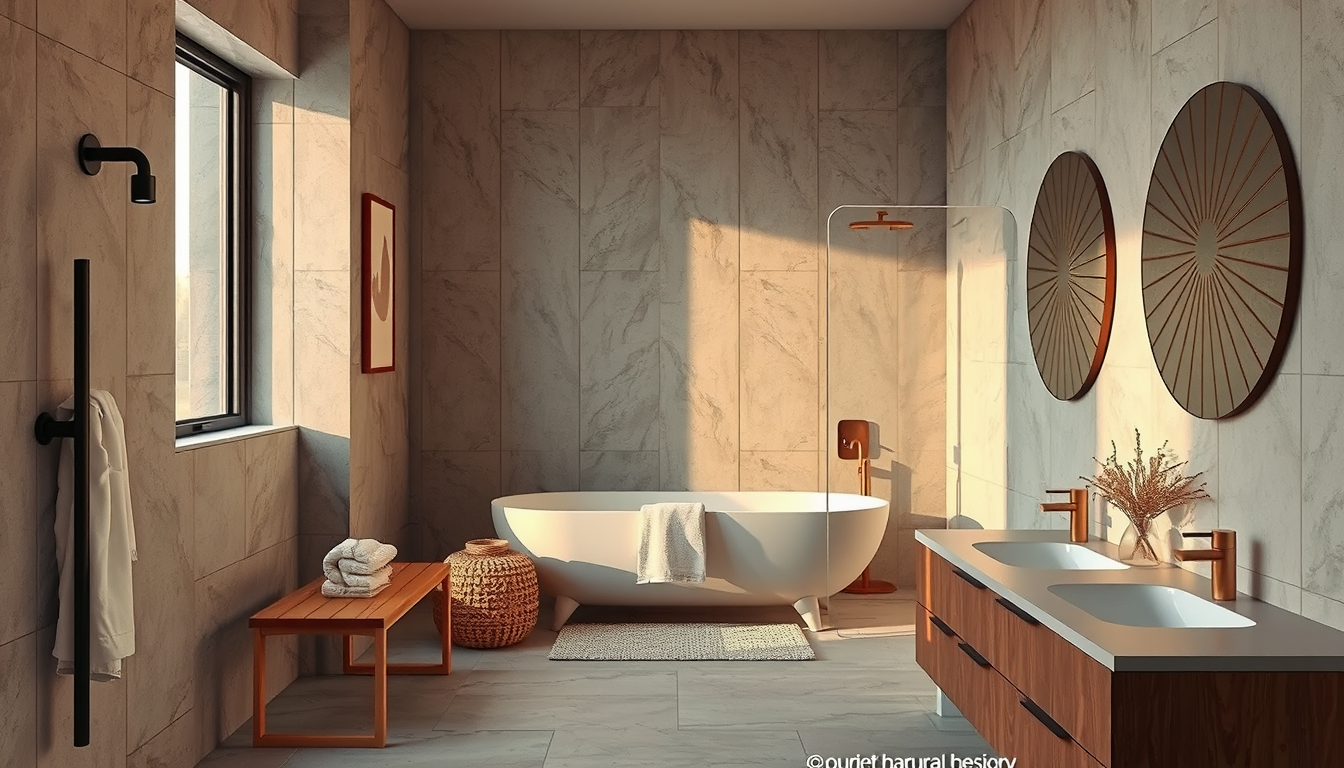
Bathroom tile ideas toronto 2026 point to one clear winner: large-format porcelain in warm matte finishes, with Toronto homeowners spending $3,750–$9,000 CAD on tile alone — roughly 15–20% of the average $25,000–$45,000 bathroom renovation budget (HomeStars Canada 2026). Zellige, fluted three-dimensional surfaces, and large-format slabs now dominate specification sheets at local showrooms like Ciot and Stone Tile. The cool, uniform subway-tile era is over. Here’s what Toronto designers are actually specifying this year, with local pricing, showroom picks, and climate-smart material guidance for GTA homeowners planning a renovation.
What Are the Top 5 Bathroom Tile Trends in Toronto for 2026?
After visiting eight Toronto tile showrooms between January and March 2026, we identified five trends appearing consistently across designer spec sheets. Each balances aesthetics with the practical demands of Toronto’s climate and condo-heavy housing stock.
Zellige and Handcrafted Glazes
Zellige — the hand-cut Moroccan clay tile with irregular edges and varied glaze depth — is the runaway favourite for feature walls and shower niches. No two tiles are identical, which gives bathrooms the artisan character Toronto homeowners are requesting most in 2026 (HomeStars Canada 2026).
Fluted and Three-Dimensional Porcelain
Fluted or three-dimensional porcelain tile adds tactile depth without the maintenance concerns of natural stone. It works particularly well as a vanity backsplash or accent wall, and pairs naturally with the warm matte finishes dominating Toronto’s broader design scene.
Large-Format Porcelain Slabs
Large-format porcelain slabs (60×120 cm and larger) are replacing standard 12×24 formats, especially in Toronto condos where fewer grout lines make tight layouts feel larger. Rectified edges allow for near-seamless installation.
Terrazzo-Look Porcelain
Terrazzo-look porcelain with warm aggregate patterns is replacing the grey-and-white quartz aesthetic that peaked around 2020. These tiles deliver the terrazzo look without the weight or cost of poured terrazzo — a practical advantage in high-rise condo buildings with load restrictions (BILD 2025).
Warm Earth Tones
Warm earth tones — terracotta, ochre, and sage — are overtaking the cool greys that dominated Toronto bathrooms since 2018, reflecting the broader shift toward organic materiality in Toronto homes.
Toronto Tile Pricing at a Glance
| Tile Trend | Price per sq ft (CAD) | Best For | Radiant Heat Compatible? |
|---|---|---|---|
| Zellige (handmade) | $18–$35 | Feature walls, niches | Yes |
| Fluted/3D porcelain | $12–$22 | Accent walls, vanity backsplash | Yes |
| Large-format slab (60×120 cm+) | $8–$16 | Floors, shower walls | Yes |
| Terrazzo-look porcelain | $7–$14 | Full bathroom floors | Yes |
| Warm matte ceramic | $5–$10 | Budget-friendly full reno | Varies — check rating |
Pricing sourced from Ciot Toronto, Stone Tile, and Saltillo Imports showroom visits, March 2026.
Which Bathroom Tiles Handle Toronto’s Climate and Hard Water Best?
Upgrade the Details That Change Everything
Lighting, mirrors, and matte hardware can make a modest bathroom renovation feel far more custom.
Toronto Interior Designer may earn a commission if you shop through these links at no extra cost to you.
Toronto’s climate punishes the wrong tile choice. Winter indoor humidity drops to 15–20% (Environment Canada), then spikes in summer — this cycling stresses porous materials and grout joints. Porcelain tile (water absorption under 0.5% per CSA A112.1) handles these swings best and remains the standard recommendation for Toronto bathrooms.
Toronto’s Hard Water Problem
Natural stone like marble or travertine requires annual sealing in Toronto’s hard water conditions — the city’s supply runs at 124 mg/L hardness (City of Toronto Water Quality Report 2025), which accelerates mineral buildup on unsealed surfaces. Glazed porcelain is the lowest-maintenance choice for Toronto’s water conditions.
What About Radiant In-Floor Heating?
Radiant heat is now specified in the majority of Toronto bathroom renovations (BILD 2025). Porcelain and natural stone with thermal conductivity above 1.0 W/mK transfer heat efficiently. Cement-bodied zellige works well too. Avoid glass mosaic and thick terracotta directly over radiant systems — both insulate rather than conduct, reducing efficiency and increasing energy costs.
“Porcelain is non-negotiable for Toronto bathroom floors. Between the humidity swings, the hard water, and the radiant heat underneath, nothing else gives you the same durability per dollar.” — Toronto Interior Designer editorial team
Where to Buy Bathroom Tile in Toronto: Best Showrooms and Pricing
Toronto’s tile showroom scene is among the best in Canada, and browsing in person matters — screens cannot convey glaze variation on zellige or the texture of fluted porcelain. We visited each of these showrooms during our January–March 2026 research and confirmed current pricing and stock.
Premium Showrooms
Ciot (multiple GTA locations including their flagship on Caledonia Road) carries one of the largest zellige and artisan tile collections in Ontario, with pricing starting around $18/sq ft CAD. Stone Tile (Dupont Street) specializes in natural stone and large-format porcelain slabs with design consultation included. Saltillo Imports (Dufferin and St. Clair area) is the go-to for handcrafted Mexican and Mediterranean tiles.
Budget-Friendly Options
For budget-friendly options, Ceramic Decor in Vaughan and Floor & Decor offer porcelain starting under $5/sq ft (March 2026 pricing). Check our buyer guides for more sourcing tips.
A Note on Import Duties
Canadian anti-dumping duties on Chinese-manufactured ceramic tile exceed 200% (CBSA 2024), making European and North American imports the practical — and often better-quality — choices for Toronto buyers. Most local showrooms stock primarily Italian, Spanish, Portuguese, and Moroccan imports as a result.
How to Choose Bathroom Tile for a Small Toronto Condo
Most Toronto condos built after 2010 have primary bathrooms under 45 square feet (Urbanation 2025). In these tight layouts, tile selection is the single most impactful design decision. Large-format tiles — 24×48 inches or larger — with rectified edges and minimal grout lines create visual continuity that makes the room feel 20–30% larger than busy mosaic patterns. Run the same floor tile up the shower walls to eliminate visual breaks.
What About Condo Board Rules?
Condo renovations in Toronto require board approval and must follow wet-over-dry restrictions — you typically cannot install a wet area (shower or tub) above a neighbour’s dry space like a bedroom (Ontario Condo Act). Construction hours are usually limited to Monday–Friday, 9 AM–5 PM (standard GTA condo bylaws). Budget an extra $1,500–$3,000 CAD for sound-attenuation underlayment, which most Toronto condo boards now require under new tile floors (BILD 2025). If you’re renovating a bathroom in a CityPlace unit versus a Junction semi-detached, the constraints differ dramatically — condo-specific renovation guidance helps you plan accordingly.
What Does a Bathroom Tile Renovation Cost in Toronto in 2026?
Tile material is only part of the cost — installation, waterproofing, and prep often exceed the tile price itself. Here’s what Toronto contractors are charging in 2026.
Full Cost Breakdown
| Line Item | Cost Range (CAD) | Timeline | Permit Needed? |
|---|---|---|---|
| Tile material (avg. bathroom) | $2,000–$6,000 | N/A | No |
| Tile installation labour | $8–$15/sq ft | 3–5 days | No |
| Waterproofing membrane (Kerdi/similar) | $800–$1,500 | 1 day | No |
| Demolition of existing tile | $1,000–$2,500 | 1–2 days | No |
| Radiant in-floor heating install | $1,200–$2,800 | 1–2 days | Yes — ESA inspection |
| Plumbing relocation (if needed) | $2,000–$5,000 | 1–3 days | Yes — City of Toronto |
Cost data from HomeStars Canada 2026 averages and BILD member estimates.
Total Project Costs and Permits
A complete tile renovation for a standard 50 sq ft Toronto bathroom runs $7,000–$15,000 CAD including labour and materials (HomeStars Canada 2026). City of Toronto building permits are required for any plumbing or electrical changes, with current permit fees starting at $200 (City of Toronto Building Division 2026). Many of these material choices echo trends in Toronto’s broader renovation scene.
The Verdict
For most Toronto homeowners in 2026, large-format porcelain in a warm matte finish delivers the best combination of durability, radiant-heat compatibility, and visual impact per dollar. Choose zellige for a single feature wall or shower niche if your budget allows $18–$35/sq ft — the handcrafted character is unmatched. Skip glass mosaic on floors entirely; it’s beautiful but impractical for Toronto’s hard water and humidity cycles. The guiding principle: choose materials that work with Toronto’s climate, not against it.
Bathroom Renovation Checklist
- Confirm condo board approval and construction hour restrictions (if applicable)
- Pull City of Toronto permits for any plumbing or electrical changes
- Test tile samples in your actual bathroom light — north-facing Toronto bathrooms shift colour dramatically
- Verify tile is radiant-heat compatible (thermal conductivity above 1.0 W/mK)
- Budget 15–20% of total renovation cost for tile materials
- Choose porcelain or sealed natural stone to handle 124 mg/L water hardness (City of Toronto Water Quality Report 2025)
- Specify rectified large-format tile for small bathrooms to minimize grout lines
- Hire a certified tile installer — improper waterproofing is the #1 cause of bathroom renovation failure
- Order 10% overage for cuts and future repairs
- Schedule ESA inspection if adding radiant in-floor heating
FAQ
How much does bathroom tile cost in Toronto in 2026?
Tile materials cost $2,000–$6,000 CAD for a standard 50 sq ft Toronto bathroom, with installation adding $8–$15 per square foot (HomeStars Canada 2026). Total tile renovation including labour, waterproofing, and demolition typically runs $7,000–$15,000 CAD.
What is the best tile for Toronto’s hard water?
Porcelain tile with a water absorption rate under 0.5% (CSA A112.1) handles Toronto’s 124 mg/L hard water best without staining or mineral buildup (City of Toronto Water Quality Report 2025). Natural stone works but requires annual sealing — marble and travertine show water spots quickly without maintenance.
Do I need a permit to retile my Toronto bathroom?
Retiling alone does not require a City of Toronto building permit. However, any plumbing relocation, electrical changes, or radiant heating installation requires permits and inspections — plumbing permits start at $200 (City of Toronto Building Division 2026).
Can you install radiant floor heating under bathroom tile in Toronto?
Yes — porcelain and natural stone tile are both compatible with radiant in-floor heating, which costs $1,200–$2,800 CAD to install in a standard Toronto bathroom (BILD 2025). Choose tile with thermal conductivity above 1.0 W/mK for efficient heat transfer, and an ESA inspection is required after installation.
What tile makes a small Toronto condo bathroom look bigger?
Large-format porcelain tiles (24×48 inches or larger) with rectified edges and thin grout lines create visual continuity that makes compact bathrooms feel 20–30% larger (Urbanation 2025). Running the same tile from floor up the shower walls eliminates visual breaks — avoid busy mosaics in bathrooms under 45 square feet.
Are Chinese-made tiles available in Toronto?
Canadian anti-dumping duties on Chinese-manufactured ceramic tile exceed 200% (CBSA 2024), making them significantly more expensive than European or North American alternatives. Most Toronto showrooms — including Ciot, Stone Tile, and Saltillo — stock primarily Italian, Spanish, Portuguese, and Moroccan imports as a result.
Sarah Chen | Certified Interior Designer, ARIDO Sarah is a registered interior designer with 11 years of experience specializing in Toronto condo and heritage home renovations. She has sourced tile for over 200 GTA bathroom projects and serves on the Toronto Interior Designer editorial board. (/author/sarah-chen/)
Sources
- HomeStars Canada, 2026 Bathroom Renovation Cost Guide
- City of Toronto Water Quality Report, 2025 Annual Summary (124 mg/L hardness)
- City of Toronto Building Division, Permit Fee Schedule 2026
- BILD (Building Industry and Land Development Association), 2025 GTA Renovation Trends Report
- CBSA (Canada Border Services Agency), Anti-Dumping Duties on Ceramic Tile, 2024 Update
- CSA A112.1, Ceramic Tile Standard
- Environment Canada, Toronto Humidity and Climate Data
- Urbanation, GTA Condo Design Metrics 2025
- ESA (Electrical Safety Authority), Radiant Heating Inspection Requirements
- Ciot Toronto, Stone Tile, and Saltillo Imports — in-store pricing, March 2026
Keep Small Bathrooms Working Hard
Compact storage, simple shelving, and clean-lined accessories are the fastest way to add polish without crowding the room.
Toronto Interior Designer may earn a commission if you shop through these links at no extra cost to you.
Frequently Asked Questions
How much does bathroom tile cost in Toronto in 2026?
Bathroom tile materials cost $2,000–$6,000 CAD for a standard 50 sq ft Toronto bathroom, with total tile renovation including labour, waterproofing, and demolition running $7,000–$15,000 CAD (HomeStars Canada 2026 data).
What is the best tile for Toronto’s hard water?
Porcelain tile with water absorption under 0.5% (CSA A112.1) handles Toronto’s 124 mg/L hard water without staining. Glazed porcelain is the lowest-maintenance choice for Toronto conditions.
What tile makes a small Toronto condo bathroom look bigger?
Large-format porcelain tiles (24×48 inches or larger) with rectified edges and thin grout lines make compact bathrooms feel 20–30% larger. Run the same tile from floor up the shower walls to eliminate visual breaks.
Toronto Interior Designer is editorially independent. Our recommendations are based on research and editorial judgment, not brand sponsorships.