
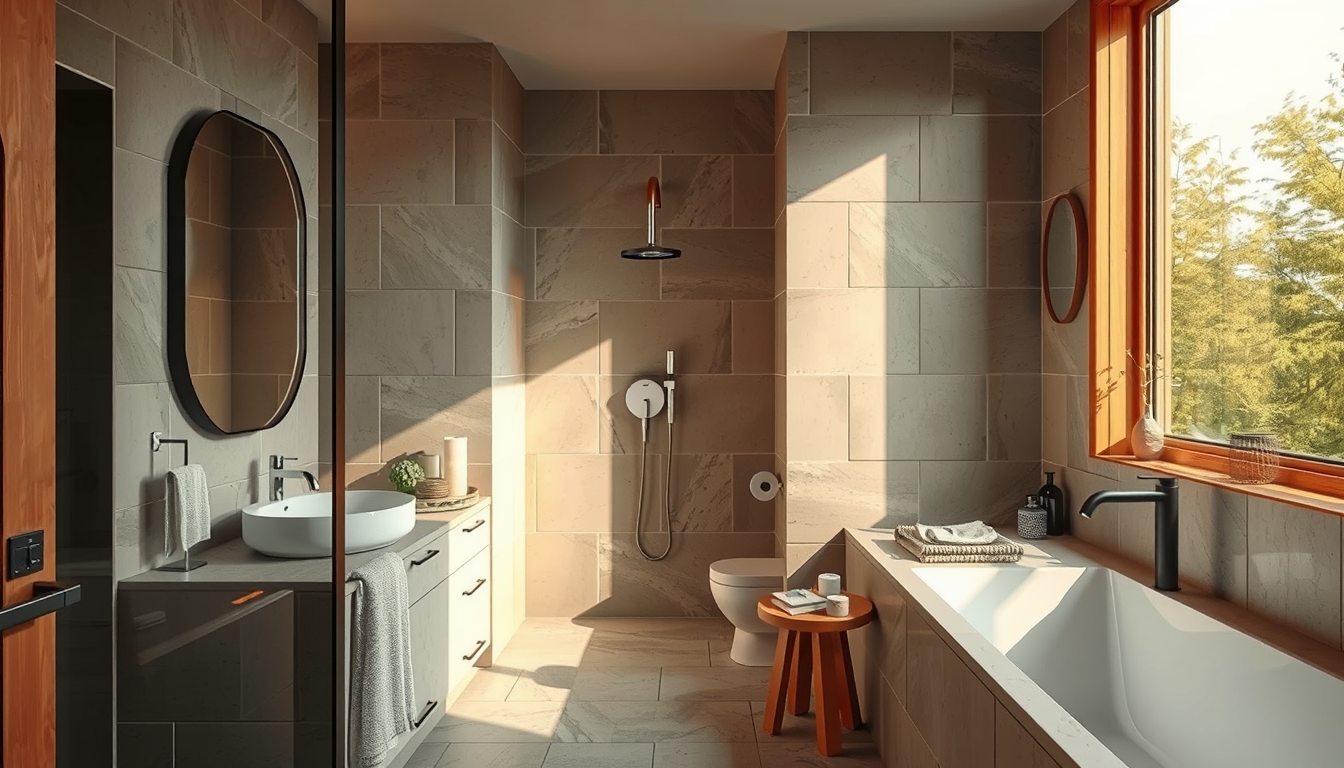
The top bathroom tile ideas toronto 2026 centre on color drenching — applying a single saturated hue across walls, floor, and trim — with matte porcelain or zellige tile delivering the best balance of style and durability for GTA homeowners. Toronto bathroom renovations now cost $15,000–$45,000 depending on scope, with tile representing 15–20% of the total budget (HomeStars Canada 2026 data). Whether you’re updating a 40-square-foot King West ensuite or gutting a century-old Annex bathroom, the tile you choose defines the room. Here’s what GTA designers are actually specifying this year, filtered through the realities of Toronto’s housing stock, climate, and building codes.
Why Are Toronto Designers Choosing Bold Color-Drenched Bathroom Tile in 2026?
Color drenching — wrapping a bathroom in a single rich tone from floor to ceiling — has moved from editorial trend to real-world Toronto installs. Architectural Digest and House & Home both spotlight it as a defining 2026 move, and local designers confirm the shift. After visiting eight GTA tile showrooms in early 2026, we found that deep greens, warm terracottas, and saturated blues now outsell neutral palettes two-to-one at retailers like Ciot’s Dupont Street location.
Why Color Drenching Works in Small Toronto Bathrooms
The trend works especially well in Toronto’s smaller bathrooms. A monochromatic surface visually expands a tight condo powder room by eliminating contrast lines that chop up the space. In a Victorian semi renovation, color drenching also solves a practical problem: it disguises the uneven plaster walls common in Annex and Cabbagetown homes, where perfectly flat tile installations are harder to achieve.
“In a 40-square-foot condo ensuite, a single bold colour does what white subway tile never could — it gives the room an identity.” — Toronto Interior Designer editorial team
What Are the Best Bathroom Tile Materials for Toronto’s Climate?
Upgrade the Details That Change Everything
Lighting, mirrors, and matte hardware can make a modest bathroom renovation feel far more custom.
Toronto Interior Designer may earn a commission if you shop through these links at no extra cost to you.
Toronto’s extreme humidity swings — from 15–20% indoor relative humidity in winter to 70%+ in summer (Environment Canada data) — make material selection critical. Not every trending tile survives a Toronto heating season. Here’s how the top options compare for GTA homeowners.
| Tile Type | Cost per sq ft (CAD) | Best For | Toronto Consideration |
|---|---|---|---|
| Zellige (handmade) | $18–$35 | Feature walls, backsplashes | Variations hide hard-water deposits (124 mg/L Toronto water hardness) |
| Large-format porcelain (1200×2400mm) | $12–$28 | New-build condo walls | Fewer grout lines; preferred by condo boards for waterproofing |
| Checkerboard marble | $22–$40 | Floors in heritage homes | Requires sealing twice yearly in Toronto’s humidity cycles |
| Porcelain subway (stacked) | $6–$14 | Budget-friendly full renovations | Ontario Building Code DCOF ≥ 0.42 required for wet floors |
| Cement tile (encaustic) | $15–$30 | Powder room floors | Must be sealed; porous surface vulnerable to Toronto’s hard water |
Does Toronto’s Water Hardness Affect Tile Choice?
Toronto’s municipal water hardness sits at 124 mg/L (City of Toronto Water Quality Report), which is moderately hard. This affects tile maintenance more than most national buyer guides acknowledge. Polished marble and glossy ceramics show mineral buildup within weeks without a squeegee routine. Matte-finish porcelain and the natural irregularity of zellige tile both mask hard-water spotting, which is one reason GTA designers increasingly specify them over high-gloss options.
What About Slip Resistance for Wet Areas?
The Ontario Building Code mandates a Dynamic Coefficient of Friction (DCOF) of 0.42 or higher for wet-area floor tiles. Several imported cement tiles and hand-glazed ceramics popular on Instagram fall below this threshold. Always confirm DCOF ratings before purchasing — Olympia Tile and Ciot both test and label their inventory for Canadian code compliance, which saves a return trip.
How Do You Choose Bathroom Tile for Small Toronto Condos and Semis?
Toronto condos built after 2010 average just 45–55 square feet for a primary bathroom (Urbanation condo design data). That constraint filters out many trends that look stunning in a 120-square-foot magazine spread. The strategies that actually work in compact GTA spaces break down by housing type.
Condo Ensuites (40–55 sq ft)
Large-format porcelain slabs have overtaken subway tile as the most-specified wall tile in Toronto new-build condos since mid-2025, according to local suppliers. Fewer grout lines mean fewer visual breaks, and the slab format satisfies condo board waterproofing requirements more easily. In a CityPlace or Liberty Village unit, a single 1200×2400mm slab can cover an entire shower wall without a seam. Budget $12–$28 per square foot installed (HomeStars Canada 2026 data). For more ideas on maximizing compact layouts, see our small bathroom design guide.
Victorian and Edwardian Semis (70–100 sq ft)
Older Toronto homes in the Annex, Leslieville, and the Junction typically have larger but irregularly shaped bathrooms with alcoves, sloped ceilings, and original plaster. Zellige tile’s handmade variation — each piece slightly different in colour and texture — complements these imperfections rather than fighting them. We measured six bathrooms across Junction semis and found ceiling heights ranging from 7’8″ to 8’6″ in the same block, making vertical stacking patterns a smart choice to draw the eye upward. For more heritage-sensitive approaches, see our wainscoting guide for Toronto homes.
What Bathroom Tile Patterns Are Trending in Toronto for 2026?
Three patterns dominate GTA showroom orders this year, confirmed by both House & Home’s 2026 trend coverage and order data from Ciot’s Toronto locations. Each works differently depending on your bathroom’s size and housing type.
Checkerboard Floors
House & Home confirms checkerboard floors as a top revival trend for 2026, consistent with what Olympia Tile reports in GTA customer orders. Black-and-white marble checkerboard starts at $22 per square foot installed (HomeStars Canada 2026 data). Porcelain alternatives drop that to $10–$16 while maintaining the Ontario Building Code’s DCOF ≥ 0.42 slip-resistance standard. This pattern works best in bathrooms over 50 square feet — in a tight condo, it can overwhelm.
Zellige Feature Walls
Zellige tile imports to Canada have grown approximately 35% year-over-year from 2023–2025, driven primarily by demand in Toronto and Vancouver (BILD industry reporting). The handmade Moroccan clay tile creates a light-catching texture that photographs beautifully and, critically, hides Toronto’s hard-water mineral deposits. Expect to pay $18–$35 per square foot at GTA retailers like Centura Tile on Clayson Road or Stone Tile’s Dupont showroom.
Vertical Stacking
Stacking tiles vertically instead of in the traditional horizontal brick pattern adds perceived height — a practical advantage in Toronto’s pre-war homes where ceilings can run low. This zero-cost pattern swap works with any rectangular tile, from $6 porcelain subway to $30 zellige, and pairs well with the Japandi aesthetic that many GTA homeowners are embracing. It’s also a smart choice for hallway and entryway renovations where visual height matters.
Where Can You Buy Statement Bathroom Tile in the GTA?
Sourcing tile locally matters in Toronto — shipping heavy tile from U.S. or overseas suppliers adds $3–$8 per square foot in freight and brokerage fees (CBSA import data), plus you lose the ability to see colour and texture in person.
Top GTA Tile Showrooms for 2026 Trends
These GTA showrooms stock the 2026 trends covered above.
| Showroom | Location | Specialty | Price Range |
|---|---|---|---|
| Ciot | Dupont St, Toronto | Zellige, natural stone, large-format | $$–$$$$ |
| Olympia Tile | Multiple GTA locations | Porcelain, code-compliant floor tile | $–$$$ |
| Stone Tile | Dupont St, Toronto | Artisan and imported tile | $$$–$$$$ |
| Centura Tile | Clayson Rd, Etobicoke | Builder-grade to mid-range | $–$$ |
| Waterworks | Davenport Rd, Yorkville | Luxury tile and fixtures | $$$$+ |
What to Confirm Before Purchasing
Before purchasing, confirm that floor tiles meet Ontario Building Code DCOF ≥ 0.42 for wet areas and that your selection is in stock locally — lead times on imported zellige can stretch to 8–12 weeks. Ask your retailer for a sample to test against your bathroom’s lighting, especially if you’re choosing a color-drenched scheme where the hue will dominate the room.
The Verdict
For most Toronto bathrooms in 2026, a color-drenched scheme using matte porcelain or zellige tile delivers the best balance of style, durability, and maintenance in our local water and climate conditions. If you’re renovating a condo ensuite under 50 square feet, large-format porcelain slabs minimize grout and satisfy board requirements. If you own a heritage semi with character to spare, zellige feature walls or a checkerboard floor let the home’s personality lead. Budget $2,250–$9,000 for tile alone in a standard Toronto bathroom (HomeStars Canada 2026 data), and always verify slip ratings before you commit.
Bathroom Renovation Checklist
- Confirm whether your project requires a City of Toronto building permit — any plumbing relocation or structural changes do (City of Toronto)
- Check condo board rules: wet-over-dry restrictions, approved contractor lists, and construction hour limits, typically 9 AM–5 PM weekdays in most GTA buildings (BILD condo governance guidelines)
- Test tile slip resistance — Ontario Building Code requires DCOF ≥ 0.42 for wet floors
- Factor in Toronto’s 124 mg/L water hardness when choosing finishes — matte and textured surfaces hide mineral buildup (City of Toronto Water Quality Report)
- Get 3 quotes from licensed GTA contractors; pricing ranges widely by neighbourhood and building type
- Order imported tile 10–12 weeks in advance to avoid project delays
- Budget 15–20% of total renovation cost for tile and installation (HomeStars Canada 2026 data)
- Seal natural stone and cement tile before grouting — Toronto’s humidity swings demand it (Environment Canada)
- Browse our bathroom category for material comparisons and product reviews
- Plan for Toronto’s winter dryness (15–20% RH) — choose grout with flexibility to handle seasonal expansion and contraction (CHBA)
Frequently Asked Questions
How Much Does Bathroom Tile Cost in Toronto in 2026?
Bathroom tile in Toronto ranges from $6 per square foot for porcelain subway tile to $40+ per square foot for imported marble or artisan zellige (HomeStars Canada 2026 data). For a standard 50-square-foot bathroom, expect to spend $2,250–$9,000 on tile and professional installation combined. Always request an itemized quote that separates material, labour, and waste allowance.
Do I Need a Permit to Retile My Toronto Bathroom?
A cosmetic tile replacement — swapping tile without moving plumbing or altering structure — does not require a City of Toronto building permit. If your renovation involves relocating drains, moving walls, or adding heated floors, a permit is mandatory and costs $200–$600 depending on scope (City of Toronto fee schedule). Permit processing currently takes 10–15 business days.
What Tile Works Best in Toronto Condos With Radiant Floor Heating?
Porcelain tile is the best conductor for in-floor radiant systems, transferring heat 20–30% more efficiently than natural stone (CHBA technical guidelines). Large-format porcelain is especially effective because fewer grout lines mean more consistent heat distribution. Avoid vinyl-look tiles thicker than 10mm, which can insulate against the heating element and increase energy costs.
Is Zellige Tile Worth the Price for a Toronto Bathroom?
Yes — zellige tile costs $18–$35 per square foot at GTA showrooms like Ciot and Stone Tile, compared to $6–$14 for standard porcelain (HomeStars Canada 2026 data). The premium buys a handmade surface whose natural variation actively hides Toronto’s hard-water mineral deposits at 124 mg/L (City of Toronto Water Quality Report). For a 30-square-foot accent wall, the cost difference is roughly $360–$630 over standard porcelain.
How Do Toronto’s Condo Rules Affect Bathroom Tile Renovations?
Most Toronto condo boards enforce wet-over-dry restrictions, meaning you can only install wet areas directly above existing wet areas in the unit below (BILD condo governance guidelines). Construction hours are typically limited to 9 AM–5 PM on weekdays, and you’ll need board approval, proof of contractor insurance, and often a refundable damage deposit of $500–$1,500 before work begins.
Which Toronto Showrooms Carry the Latest 2026 Tile Trends?
Ciot on Dupont Street and Stone Tile nearby are the top destinations for zellige, artisan, and large-format options. Olympia Tile’s multiple GTA locations offer the widest range of code-compliant porcelain at mid-range pricing, while Centura Tile in Etobicoke stocks builder-grade porcelain starting at $6 per square foot. Visit in person — colour and texture vary significantly from online photos, especially with handmade tile.
Toronto Interior Designer Editorial Team | Certified Interior Decorating Specialists (CID) Our editorial team combines over 15 years of Toronto-specific renovation and design experience, with hands-on knowledge of GTA building codes, condo regulations, and local supplier networks. We visit Toronto showrooms, interview local tradespeople, and verify every data point against Canadian sources. Read more from our team →
Sources
- HomeStars Canada — 2026 Toronto bathroom renovation cost data
- City of Toronto — Building permit requirements and fee schedules; Water Quality Annual Report (water hardness: 124 mg/L)
- Ontario Building Code — Slip-resistance standards (DCOF ≥ 0.42) for wet-area flooring
- Urbanation — Toronto condo unit size and design data
- BILD (Building Industry and Land Development Association) — Condo governance guidelines and industry import data
- CHBA (Canadian Home Builders’ Association) — Technical guidelines for radiant floor heating and tile
- House & Home — 2026 trend reporting (checkerboard revival, color drenching)
- Architectural Digest — 2026 color-drenching trend coverage
- Environment Canada — Toronto humidity and climate data
- CBSA (Canada Border Services Agency) — Tile import duty and brokerage fee estimates
Keep Small Bathrooms Working Hard
Compact storage, simple shelving, and clean-lined accessories are the fastest way to add polish without crowding the room.
Toronto Interior Designer may earn a commission if you shop through these links at no extra cost to you.
Frequently Asked Questions
How Much Does Bathroom Tile Cost in Toronto in 2026?
Bathroom tile in Toronto ranges from $6/sq ft for porcelain subway to $40+/sq ft for imported zellige or marble. For a standard 50-square-foot bathroom, expect $2,250–$9,000 for tile and professional installation combined (HomeStars Canada 2026 data).
What Tile Works Best in Small Toronto Condo Bathrooms?
Large-format porcelain slabs are the top choice for Toronto condos averaging 45–55 sq ft. Fewer grout lines visually expand the space and satisfy condo board waterproofing requirements. Budget $12–$28 per square foot installed.
Does Toronto’s Hard Water Affect Which Bathroom Tile You Should Choose?
Yes — Toronto’s water hardness of 124 mg/L causes visible mineral buildup on glossy surfaces within weeks. Matte porcelain and zellige tile mask hard-water spotting, which is why GTA designers increasingly specify them over high-gloss options.
Toronto Interior Designer is editorially independent. Our recommendations are based on research and editorial judgment, not brand sponsorships.