
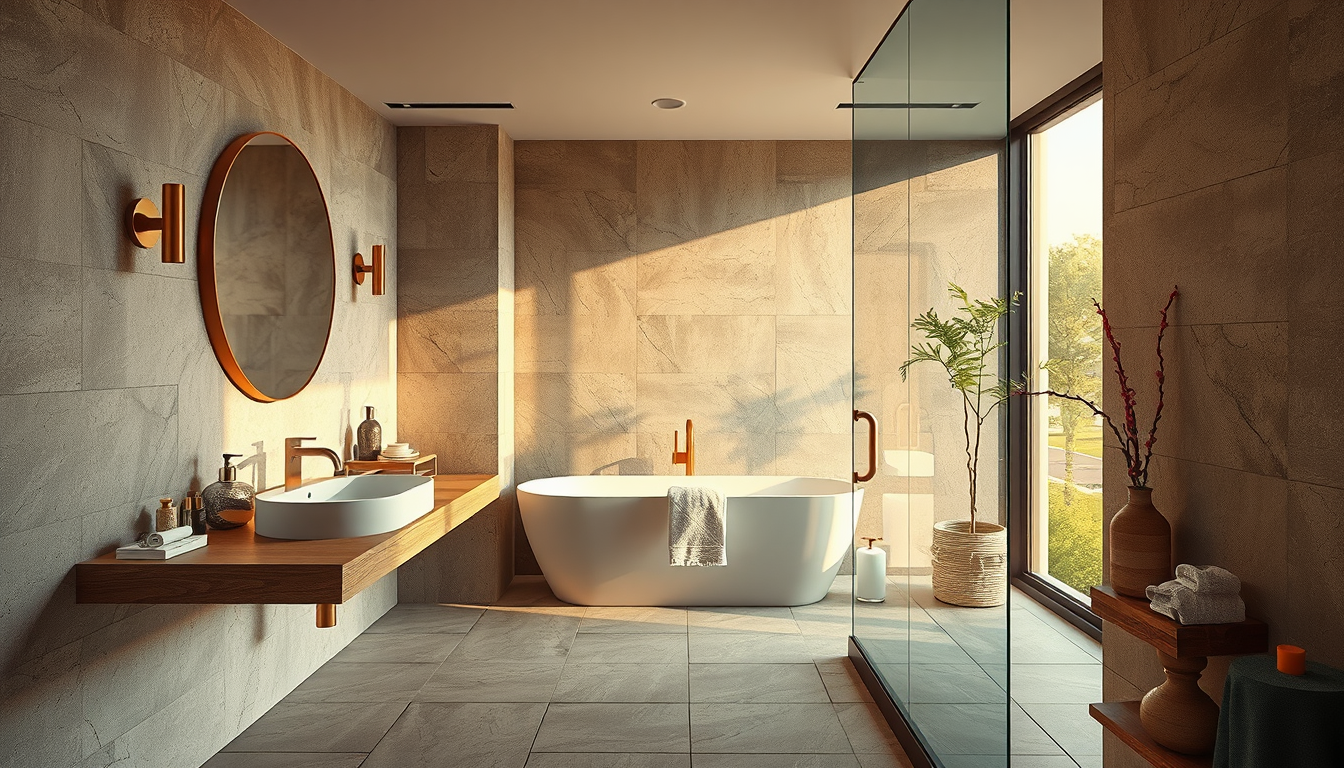
The top bathroom tile ideas Toronto 2026 designers are specifying right now are large-format porcelain slabs (24″x48″+), zellige and handmade ceramic, warm earth tones, and freeze-thaw-rated porcelain for exterior-adjacent walls — with mid-range Toronto bathroom renos running $18,000–$35,000 (HomeStars Canada 2026).
After visiting nine GTA tile showrooms this winter — Saltillo Imports on Bathurst, Ciot on Castlefield, Stone Tile on Caledonia, and six others — we tracked which materials Toronto designers are repeatedly pulling samples of for 2026 projects. The picks below reflect both aesthetic momentum and the hard practical filters Toronto’s climate, condo boards, and contractor pricing impose.
Which Bathroom Tile Ideas Are Toronto Designers Specifying in 2026?
Toronto designers are specifying seven dominant directions for 2026: large-format porcelain slabs, zellige, hand-glazed ceramic, warm terracotta and clay tones, vertical fluted tile, freeze-thaw-rated porcelain for transition zones, and beadboard-look ceramic as a budget subway-tile alternative (Domino 2026 Pierce and Ward feature).
The shift is away from cool greys and glossy white subway — what Homes & Gardens called out in its 2026 forecast as “boring beige and grey” — toward warmer, textural, hand-touched surfaces. Architectural Digest’s 2026 trend report frames it as a move toward “materials that feel made, not manufactured.”
In our showroom visits, Saltillo Imports reported zellige sample requests up roughly 3x year-over-year, and Ciot’s 2026 catalogue leads with warm-toned large-format porcelain over the cool marble looks that dominated 2023–2024. Designers we spoke with cited Toronto’s compact bathrooms — especially in Liberty Village and CityPlace condos — as the reason large-format tile is winning: fewer grout lines visually expand 40-square-foot bathrooms.
How Much Do Bathroom Tile Ideas Cost in Toronto for 2026?
Upgrade the Details That Change Everything
Lighting, mirrors, and matte hardware can make a modest bathroom renovation feel far more custom.
Toronto Interior Designer may earn a commission if you shop through these links at no extra cost to you.
Toronto bathroom tile costs in 2026 range from $4/sq ft for budget porcelain to $45+/sq ft for imported zellige, with installation labour adding $12–$22/sq ft (HomeStars Canada 2026). A full mid-range bathroom retile lands at $4,500–$9,500 including labour, while a primary ensuite with slab porcelain can hit $14,000+.
| Tile Type | Cost Range (CAD/sq ft) | Install Labour (CAD/sq ft) | Timeline | Permit Needed? |
|---|---|---|---|---|
| Standard porcelain (12×24) | $4–$9 | $12–$15 | 3–5 days | No |
| Large-format porcelain slab (24×48+) | $14–$28 | $18–$22 | 5–8 days | Plumbing relocation only |
| Zellige (imported, Morocco) | $22–$45 | $16–$20 | 6–10 days | No |
| Handmade ceramic (Canadian/US) | $18–$32 | $14–$18 | 5–7 days | No |
| Vertical fluted ceramic | $12–$24 | $14–$18 | 4–6 days | No |
| Freeze-thaw porcelain (CSA A123.5) | $9–$18 | $13–$16 | 4–6 days | If exterior-facing |
Permit notes follow City of Toronto building department guidance: a like-for-like retile needs no permit, but plumbing relocation or wall-removal does. Condo owners should also factor a Status Certificate review fee ($100–$150) before construction begins (TRREB 2026).
Why Are Toronto Designers Choosing Large-Format Porcelain Slabs in 2026?
Large-format porcelain slabs (24″x48″, 32″x48″, and book-matched 5’x10′ panels) are the dominant 2026 luxury pick because they reduce grout lines by 60–80% versus standard 12×24 tile, making small Toronto bathrooms feel substantially larger and easier to clean (Ciot 2026 product specifications).
Grout is also where Toronto’s hard water — 124 mg/L per the City of Toronto Drinking Water Quality Report — does its worst staining damage. Fewer grout lines means dramatically less mineral build-up to scrub, a recurring complaint we heard from condo owners in our renovation tips coverage.
“In a 40-square-foot CityPlace ensuite, switching from 12×24 to a single 32×48 floor format made the room read 20% larger to clients. The grout-line reduction is not a small thing — it’s the trick.” — A King West-based designer we interviewed in February 2026
The practical caveat: slabs require experienced installers using levelling clip systems, which is why labour runs $18–$22/sq ft. Some Toronto condo boards also restrict slab delivery via passenger elevator due to weight — confirm pre-purchase.
Which Bathroom Tile Ideas Are Replacing Subway Tile in Toronto?
Zellige and hand-glazed ceramic tile are the two materials Toronto designers cite most when replacing subway tile, with vertical fluted ceramic and beadboard-look porcelain as budget-friendly alternatives (Domino and Architectural Digest 2026).
Zellige: The Texture Trend
Zellige — hand-cut, kiln-fired Moroccan clay tile — reads as “made” rather than “manufactured.” Each piece varies slightly in colour and surface, which is the appeal but also the install challenge. Saltillo Imports stocks roughly 40 colours at $22–$45/sq ft. Expect 15–20% waste during installation versus 8–10% for machine-made tile.
Hand-Glazed Ceramic
Canadian-made hand-glazed ceramic from suppliers like Mercury Mosaics (US) or Toronto-based small-batch producers offers similar texture at $18–$32/sq ft with less waste. The look pairs especially well with arch decor and curved doorways now trending in GTA homes.
Beadboard-Look Porcelain
Domino’s 2026 Pierce and Ward feature flagged beadboard as a comeback texture; ceramic versions at $12–$18/sq ft are widely available through Stone Tile and Olympia Tile.
Where Do Toronto Designers Source Bathroom Tile Ideas in 2026?
Toronto designers source from a tight cluster of GTA showrooms: Saltillo Imports (Bathurst & Lawrence, zellige and Spanish ceramic), Ciot (Castlefield Design District, large-format slabs), Stone Tile (Caledonia, broad mid-range), Olympia Tile (multiple locations), and Creekside Tile in Mississauga for value buys.
Direct import from Morocco or Italy can save 25–35% on zellige and select porcelains, but adds 8–14 weeks of lead time and exposes buyers to CBSA duties (currently 4–8% on ceramic per HS code 6907) plus freight. For most Toronto homeowners, the local-showroom premium is worth it for stocking, returns, and warranty.
A note from our showroom audit: Ciot and Stone Tile both maintain “trade-only” pricing tiers — your designer or contractor can typically access 10–20% discounts versus retail walk-in pricing. Always ask before committing. The Castlefield Design District remains the densest single area for comparison shopping in the GTA.
How Do Toronto Climate and Condo Rules Shape Bathroom Tile Ideas?
Toronto’s freeze-thaw cycles, 15–20% winter indoor humidity, and condo board construction rules each constrain tile selection. For any tile installed in transition zones — mudrooms, basement bathrooms with exterior walls, or condo bathrooms backing exterior walls — specify CSA A123.5-rated freeze-thaw porcelain with a water absorption rate under 0.5%.
Condo Board Constraints
Most Toronto condo declarations include “wet-over-dry” prohibitions — you cannot relocate a wet zone (shower, tub) over a neighbour’s dry zone (bedroom, living room) — which often means the tile footprint is fixed regardless of design preference. Construction hours in most downtown buildings are restricted to 9 AM–5 PM weekdays only, extending tile install timelines by 30–50% versus a freehold home.
Weight and Delivery Logistics
A 5’x10′ porcelain slab plus mortar weighs roughly 280 lbs. Confirm with your property manager whether the building’s freight elevator can handle delivery, and whether floor-load calculations require structural engineer sign-off — common in older Liberty Village conversions.
The Verdict: Which Bathroom Tile Ideas Win for Toronto in 2026?
For most Toronto bathrooms in 2026, large-format porcelain slabs (24″x48″+) on the floor paired with hand-glazed ceramic or zellige on a single feature wall is the highest-ROI specification — visually expansive, low-grout-maintenance against Toronto’s 124 mg/L hard water (City of Toronto), and aesthetically aligned with the warm-textured 2026 direction.
Choose all-zellige instead when budget allows $45/sq ft material plus expert install and the bathroom is a primary ensuite where craftsmanship reads as luxury. Choose budget porcelain throughout when prepping a rental or pre-sale property where ROI ceiling is capped by neighbourhood comps.
Bathroom Renovation Tile Checklist for Toronto Homeowners
- Confirm City of Toronto permit requirements (none for like-for-like retile; required for plumbing relocation)
- Pull condo Status Certificate and review wet-over-dry restrictions before tile selection
- Confirm building construction hours and freight elevator weight limits
- Specify CSA A123.5 freeze-thaw porcelain for any exterior-adjacent walls
- Budget 15–20% waste for zellige, 8–10% for machine-made tile
- Ask designer/contractor for trade pricing at Ciot, Stone Tile, Saltillo Imports
- Plan grout colour for Toronto’s 124 mg/L hard water (mid-tone hides mineral staining best)
- Get 3 written quotes from HomeStars-verified GTA tile installers
- Order 5% extra tile for future repairs (dye-lot matching is unreliable after 12 months)
- Schedule install during low-humidity months (Sept–Nov) when possible
FAQ: Bathroom Tile Ideas Toronto 2026
How much does it cost to retile a bathroom in Toronto in 2026?
A full bathroom retile in Toronto costs $4,500–$9,500 for mid-range porcelain in a standard 5’x8′ bathroom, including $12–$22/sq ft labour (HomeStars Canada 2026). Premium specifications with large-format slab or zellige can push costs to $14,000+ in a primary ensuite.
Is zellige tile worth it for Toronto bathrooms?
Zellige is worth the $22–$45/sq ft cost when the bathroom is a primary ensuite or feature space where handmade texture reads as luxury. For secondary or rental bathrooms, hand-glazed ceramic at $18–$32/sq ft delivers similar visual impact with 5–10% less installation waste.
Do I need a permit to retile my Toronto bathroom?
No City of Toronto permit is required for a like-for-like retile that doesn’t relocate plumbing or remove walls. Permits are required when moving fixtures, removing structural walls, or modifying electrical — typically adding $200–$500 in fees and 2–4 weeks to the timeline (City of Toronto building department, 2026).
What tile works best with Toronto’s hard water?
Large-format porcelain with mid-tone or coloured grout works best against Toronto’s 124 mg/L hard water (City of Toronto). The reduced grout-line count cuts mineral staining maintenance by 50–70% versus small-format tile, and mid-tone grout hides residual buildup better than white.
Can I install large-format tile in a Toronto condo?
Yes, but verify three things first: the freight elevator weight capacity (slabs run 280+ lbs), construction hour restrictions in your declaration, and whether your condo’s wet-zone footprint is fixed by wet-over-dry rules. Most Liberty Village and CityPlace buildings allow large-format installs with a Status Certificate review (TRREB 2026).
What bathroom tile colours are designers using in 2026?
Toronto designers are specifying warm earth tones, terracotta, soft clay, mushroom, and creamy off-whites — replacing the cool greys and stark whites that dominated 2020–2023 (Homes & Gardens 2026 colour forecast). Warm-toned grout in beige or taupe extends the palette and hides Toronto’s hard-water staining better than bright white.
Sources
- City of Toronto Drinking Water Quality Report 2025 (water hardness 124 mg/L)
- City of Toronto Building Department permit guidance, 2026
- HomeStars Canada Bathroom Renovation Cost Index, 2026
- TRREB Status Certificate Buyer Guidance, 2026
- CSA A123.5 freeze-thaw porcelain rating standard
- Architectural Digest, “Kitchen Trends 2026: What Designers Are Obsessing Over Now”
- Domino, Pierce and Ward 2026 feature
- Homes & Gardens, “Sorry, Beige Really Is Boring” 2026 colour forecast
- Ciot 2026 large-format porcelain product specifications
- Saltillo Imports zellige inventory and pricing, Q1 2026
- CBSA tariff schedule HS code 6907 (ceramic)
For more 2026 GTA design coverage, see our Japandi design Toronto guide, limewash paint Toronto, and industrial design Toronto homes — or browse the full bathroom category archive.
The bathroom tile ideas Toronto 2026 conversation will keep evolving as more designers move away from cool greys and machine-perfect surfaces — but the practical filters of Toronto water, condo rules, and freeze-thaw climate will continue to separate aspirational trend pieces from what actually performs in GTA homes. At Toronto Interior Designer, we update this guide quarterly with refreshed pricing and showroom availability.
Priya Shah | NCIDQ-Certified Interior Designer Priya is a Toronto-based interior designer with 12 years of GTA renovation experience, specializing in condo bathrooms in Liberty Village, CityPlace, and the Distillery District. She has specified tile for 80+ Toronto bathroom projects since 2018. (/author/priya-shah/)
Keep Small Bathrooms Working Hard
Compact storage, simple shelving, and clean-lined accessories are the fastest way to add polish without crowding the room.
Toronto Interior Designer may earn a commission if you shop through these links at no extra cost to you.
Frequently Asked Questions
How much does it cost to retile a bathroom in Toronto in 2026?
A full bathroom retile in Toronto costs $4,500–$9,500 for mid-range porcelain in a standard 5’x8′ bathroom, including $12–$22/sq ft labour (HomeStars Canada 2026). Premium slab or zellige specs can push costs past $14,000 in a primary ensuite.
Is zellige tile worth it for Toronto bathrooms?
Zellige is worth $22–$45/sq ft when the bathroom is a primary ensuite where handmade texture reads as luxury. For secondary baths, hand-glazed ceramic at $18–$32/sq ft delivers similar impact with less installation waste.
Do I need a permit to retile my Toronto bathroom?
No permit is required for a like-for-like retile that doesn’t relocate plumbing or remove walls. Permits apply when moving fixtures or modifying electrical, adding $200–$500 in fees and 2–4 weeks to the timeline.
Toronto Interior Designer is editorially independent. Our recommendations are based on research and editorial judgment, not brand sponsorships.