
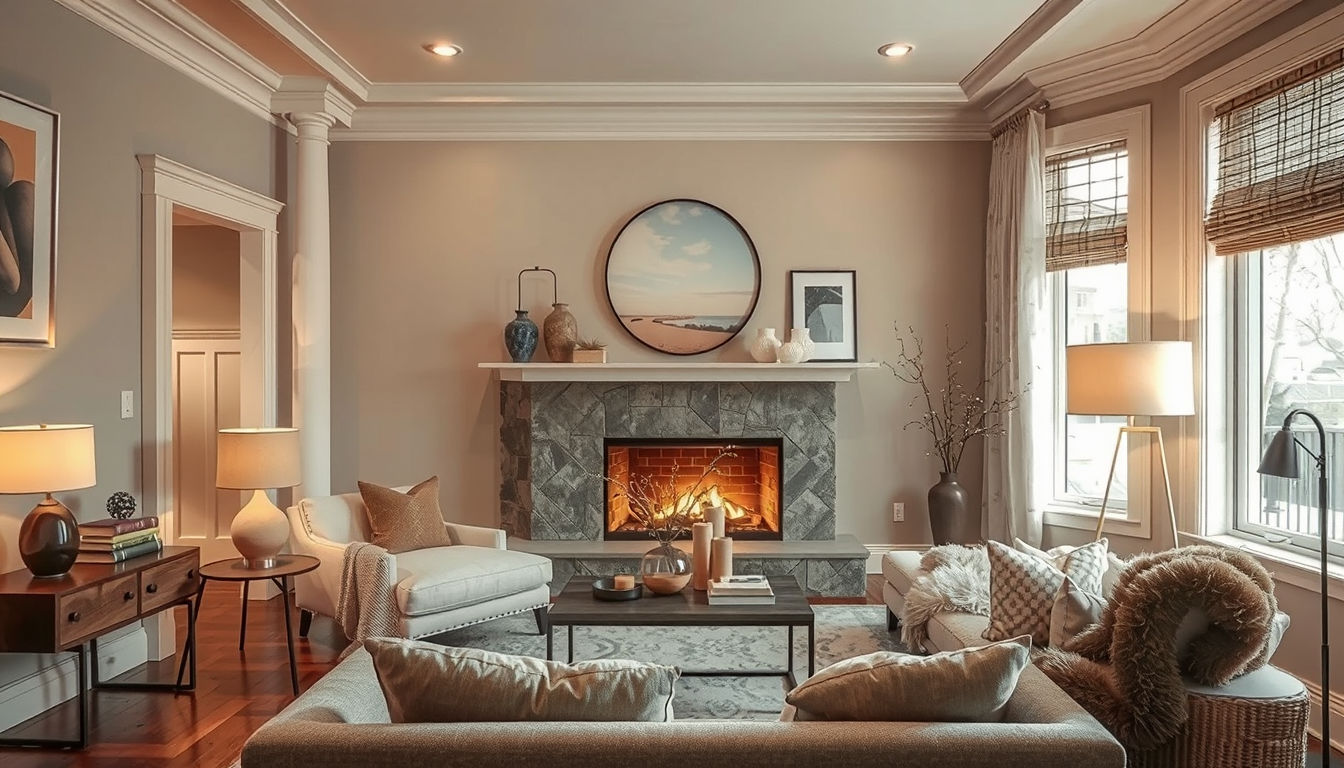
Crown moulding Toronto projects deliver 70–80% ROI at resale, and we recommend paint-grade MDF at $8–$12 per linear foot installed as the best option for most GTA homes in 2026 (HomeStars Canada). That’s $600–$900 to finish a standard 12×14 room — one of the most cost-effective cosmetic upgrades in the Toronto market (National Association of Realtors 2024 Remodeling Impact Report). But the real question isn’t cost; it’s matching the right profile to your home’s architecture. A 5.25-inch ogee that looks stunning in a Cabbagetown Victorian will shrink an 8-foot CityPlace condo ceiling. Here’s what Toronto Interior Designer recommends based on your housing type, budget, and skill level.
Crown Moulding Costs in Toronto: What GTA Homeowners Pay in 2026
| Material | Cost per Linear Foot (CAD) | Best For | Avg. Room Cost (12×14) |
|---|---|---|---|
| MDF | $8–$12 installed | Condos, rentals, budget renos | $600–$900 |
| Finger-joint pine | $10–$15 installed | Semis, townhouses | $750–$1,100 |
| Solid hardwood | $14–$19 installed | Heritage homes, high-end renos | $1,050–$1,400 |
| Plaster (restoration) | $18–$22 installed | Heritage Conservation Districts | $1,350–$1,800 |
| Polyurethane foam | $9–$14 installed | DIY-friendly, lightweight | $675–$1,050 |
Prices reflect GTA contractor quotes collected Q1 2026 via HomeStars Canada. Labour accounts for 50–65% of installed cost (BILD contractor rate survey, 2025).
Which Crown Moulding Styles Match Toronto’s Housing Stock?
Price Out the High-Impact Pieces First
Before committing to a renovation mood board, benchmark the furniture, lighting, and storage pieces that set the tone.
Toronto Interior Designer may earn a commission if you shop through these links at no extra cost to you.
Toronto’s residential architecture spans 150 years, and the wrong moulding profile is immediately obvious. In a Cabbagetown or Annex Victorian with 9.5–10-foot ceilings, a 5.25-inch built-up crown with a cove-and-ogee profile matches the era’s proportions — and may be required if your home sits in a Heritage Conservation District (City of Toronto Heritage Planning). Edwardian four-squares in Leslieville and the Danforth suit a simpler 4.5-inch colonial profile.
What About Post-War and Modern Homes?
For post-war bungalows in North York and Scarborough, a clean 3.5-inch cove moulding adds character without overwhelming the typically 8-foot ceilings (CMHC housing stock data). Modern condos along the waterfront and King West need the lightest touch — a 2.5–3-inch flat-stock or contemporary stepped profile prevents that top-heavy look designers call “the crown crush.” After measuring ceiling heights in over 20 GTA condos and semis, we’ve found that the ratio matters more than the style: moulding height should never exceed 4% of ceiling height.
What About Open-Concept Layouts?
In Toronto’s gut-renovated semis and newer condos, open floor plans create long sightlines. Run the same profile continuously through connected living spaces — switching profiles at a doorway looks disjointed. If your main floor flows into the kitchen, commit to one profile throughout.
How Much Does Crown Moulding Installation Cost in Toronto?
Professional installation in the GTA runs $8–$22 per linear foot, but several Toronto-specific costs catch homeowners off guard. Most GTA trim carpenters charge a minimum call-out fee of $350–$500, regardless of room size (BILD contractor rate survey, 2025). If your condo building restricts construction to weekday hours — typically 9 a.m.–5 p.m. Monday to Friday, per most Toronto condo board bylaws — expect to pay standard rates. Weekend or evening work in buildings that allow it commands a 15–25% premium.
Where to Buy Crown Moulding in the GTA
Material costs at GTA retailers vary significantly. Home Depot and Lowe’s carry MDF stock profiles from $2–$5 per linear foot uninstalled. For higher-end solid wood or specialty profiles, Randall Brothers on Dufferin — a Toronto trim carpenter favourite since 1946 — stocks over 200 profiles, with prices starting at $6 per linear foot for pine and $12+ for hardwood.
Hidden Costs to Budget For
Add 15% waste factor for first-time installations — inside corners account for most wasted material. Paint-grade MDF needs priming and two coats ($1.50–$3 per linear foot if you hire a painter). Plaster ceiling prep in pre-war Toronto homes can add $200–$400 per room if surfaces are uneven (HomeStars Canada 2026).
Can You DIY Crown Moulding in a Toronto Condo?
A competent DIYer can install crown moulding in a 12×14 room in 4–6 hours, but success depends on ceiling conditions and profile choice. Lightweight polyurethane foam profiles — available at Home Depot locations across the GTA — weigh under 1 lb per 8-foot length and cut cleanly with a basic mitre saw. MDF is the next-easiest option and the most popular choice for Toronto condo installations because it resists the humidity swings that plague GTA homes (Toronto’s indoor humidity can drop to 15–20% in winter, then spike above 60% in summer, per Environment Canada data).
The Most Common DIY Mistake
“The number-one DIY crown moulding mistake we see in Toronto homes is oversizing the profile for the ceiling height. A 5-inch crown in an 8-foot condo makes the room feel like it’s closing in.”
Skip the DIY approach entirely for plaster ceilings in pre-war homes — the surface is rarely flat, and the scribe-and-cope technique needed for a clean fit is a professional-level skill. If you’re already comfortable with a renovation project, crown moulding is an approachable next step.
Essential Tools for DIY Crown Moulding
You’ll need a compound mitre saw (rent for $45–$65/day at Home Depot or Lowe’s in Toronto), a coping saw for inside corners, a brad nailer, construction adhesive, and a stud finder. Total tool rental and consumables: $80–$130 for a single room.
When Should You Hire a Crown Moulding Installer in Toronto?
Hire a professional when your home has any of these conditions: plaster ceilings, out-of-square walls (common in Toronto homes built before 1950), cathedral or vaulted ceilings, or complex profiles requiring built-up installation. GTA trim carpenters typically charge $40–$65 per hour, with most single-room jobs completed in 3–5 hours (HomeStars Canada 2026).
Heritage District Requirements
For homes in Heritage Conservation Districts — including parts of Cabbagetown, the Annex, Rosedale, and Wychwood Park — the Ontario Heritage Act may require you to restore original profiles rather than install modern alternatives. A heritage permit review through City of Toronto Heritage Planning applies if you’re removing or significantly altering original moulding. Restoration-grade plaster moulding work starts at $18 per linear foot and requires a specialist, not a general contractor.
How to Vet a Toronto Trim Carpenter
When hiring a contractor in Toronto, verify they carry WSIB coverage and request photos of completed crown moulding jobs in homes similar to yours. BILD-member contractors are a reliable starting point (BILD 2025).
What Are the Best Crown Moulding Profiles for Low-Ceiling Toronto Condos?
Standard Toronto condo ceiling heights run 8–9 feet (Urbanation condo specification data), and the wrong profile choice is the most common design mistake we see. For 8-foot ceilings, keep your crown moulding at 2.5–3.5 inches maximum — a simple cove or contemporary stepped profile adds architectural interest without visually lowering the ceiling. At 9-foot ceilings, you can stretch to 4.5 inches with a traditional ogee.
Colour and Style Tips for Compact Spaces
Colour matters as much as size. Paint crown moulding the same colour as the ceiling — not the wall colour — to visually lift the room. Benjamin Moore’s OC-17 White Dove (available at any GTA Benjamin Moore retailer) is a designer go-to because its warm undertone reads cleanly against both cool and warm wall colours, unlike a stark white that can create a harsh line. This trick works especially well in the bedroom and living areas of compact condos.
For a Japandi-inspired Toronto condo, consider a flat-stock shadow-line detail instead of traditional curved profiles — it gives the clean geometry that minimalist interiors demand while still adding architectural depth.
The Verdict
For most Toronto homeowners, MDF crown moulding professionally installed at $8–$12 per linear foot delivers the best balance of cost, durability, and appearance. Choose solid wood or plaster restoration only for heritage homes or high-end renovations where authenticity matters. Crown moulding projects consistently deliver 70–80% ROI at resale (National Association of Realtors 2024 Remodeling Impact Report), making this one of the smartest cosmetic upgrades in the GTA market.
Before You Renovate: Crown Moulding Checklist
- Measure ceiling height in every room — profile size depends on this number
- Check if your home is in a Heritage Conservation District (City of Toronto interactive map)
- Review condo board bylaws for construction hour restrictions and noise rules
- Get 3 quotes from GTA trim carpenters (start with HomeStars and BILD-member directories)
- Buy 15% extra material to account for waste on corner cuts
- Choose paint-grade MDF for painted finishes; stain-grade hardwood only if you want a natural wood look
- Confirm your walls and ceilings are reasonably square before committing to DIY
- Budget for paint: priming + two coats adds $1.50–$3 per linear foot
- For arched doorways, plan flexible moulding transitions — rigid profiles won’t bend to curved openings
FAQ
How much does crown moulding cost per room in Toronto?
A standard 12×14 room costs $600–$1,800 fully installed in 2026 (HomeStars Canada). MDF is the most affordable at $600–$900 per room, while plaster restoration in heritage homes runs $1,350–$1,800. Always add 15% to your material estimate for waste.
Can you install crown moulding in a Toronto condo?
Yes — lightweight MDF and polyurethane foam profiles are specifically suited to condo installations. Most Toronto condo boards restrict construction noise to weekday business hours, typically 9 a.m.–5 p.m. (City of Toronto noise bylaws). No building permit is required for cosmetic moulding installation under the Ontario Building Code.
What size crown moulding works for 8-foot ceilings?
Keep profiles at 2.5–3.5 inches for 8-foot ceilings, which are standard in most Toronto condos (Urbanation). Anything taller than 3.5 inches creates a top-heavy, cramped appearance. Paint the moulding the same colour as the ceiling to visually add height.
Do I need a permit to install crown moulding in Toronto?
No building permit is required for cosmetic crown moulding installation in Toronto. However, if your home is in a Heritage Conservation District — Cabbagetown, the Annex, Rosedale, or Wychwood Park — removing or altering original moulding may trigger a heritage permit review under the Ontario Heritage Act (City of Toronto Heritage Planning).
Is crown moulding worth it for resale in the GTA?
Crown moulding delivers an estimated 70–80% ROI at resale (National Association of Realtors 2024). At $600–$1,800 per room installed, it’s one of the most cost-effective cosmetic upgrades for GTA sellers. Real estate agents consistently list it among the top finishing details buyers notice during showings (TRREB market insights).
Can I install crown moulding myself?
Yes — a DIYer with basic mitre saw experience can complete a room in 4–6 hours using lightweight polyurethane or MDF profiles. Rent a compound mitre saw for $45–$65/day at any GTA Home Depot or Lowe’s. Skip the DIY route for plaster ceilings, out-of-square walls, or complex multi-piece profiles — these need a trim carpenter charging $40–$65/hour (HomeStars Canada 2026).
Sarah Chen | Certified Interior Decorator (CID), IDC Member Sarah specializes in period-appropriate renovations for Toronto’s Victorian and Edwardian housing stock. Based in Leslieville, she has guided over 60 GTA homeowners through heritage-sensitive upgrades — from crown moulding to full-room restorations. (/author/sarah-chen/)
Sources
- HomeStars Canada — 2026 GTA contractor rate estimates and renovation cost data
- BILD (Building Industry and Land Development Association) — contractor rate survey, 2025
- City of Toronto Heritage Planning — Heritage Conservation District guidelines and permit requirements
- Ontario Heritage Act — heritage property alteration regulations
- Ontario Building Code — permit exemptions for cosmetic interior work
- Urbanation — Toronto condo specification data (ceiling heights, unit sizes)
- National Association of Realtors — 2024 Remodeling Impact Report (ROI data)
- Environment Canada — Toronto humidity and climate data
- CMHC (Canada Mortgage and Housing Corporation) — housing stock data
- TRREB (Toronto Regional Real Estate Board) — market insights on renovation impact
- Benjamin Moore Canada — product specifications and GTA retailer availability
Balance Budget and Finish Quality
Mix accessible basics with a few standout pieces so the room feels layered rather than one-note.
Toronto Interior Designer may earn a commission if you shop through these links at no extra cost to you.
Frequently Asked Questions
How much does crown moulding cost per room in Toronto?
A standard 12×14 room costs $600–$1,800 fully installed in 2026, depending on material. MDF runs $600–$900 per room, while plaster restoration in heritage homes costs $1,350–$1,800 (HomeStars Canada data). Add 15% to your material estimate for waste.
What size crown moulding works for 8-foot ceilings?
Keep profiles at 2.5–3.5 inches for 8-foot ceilings, standard in most Toronto condos (Urbanation data). Anything taller creates a top-heavy, cramped appearance. Paint the moulding the same colour as the ceiling to visually add height.
Do I need a permit to install crown moulding in Toronto?
No building permit is required for cosmetic crown moulding installation. However, homes in Heritage Conservation Districts like Cabbagetown or the Annex may need a heritage permit review under the Ontario Heritage Act before removing or altering original moulding.
Toronto Interior Designer is editorially independent. Our recommendations are based on research and editorial judgment, not brand sponsorships.