
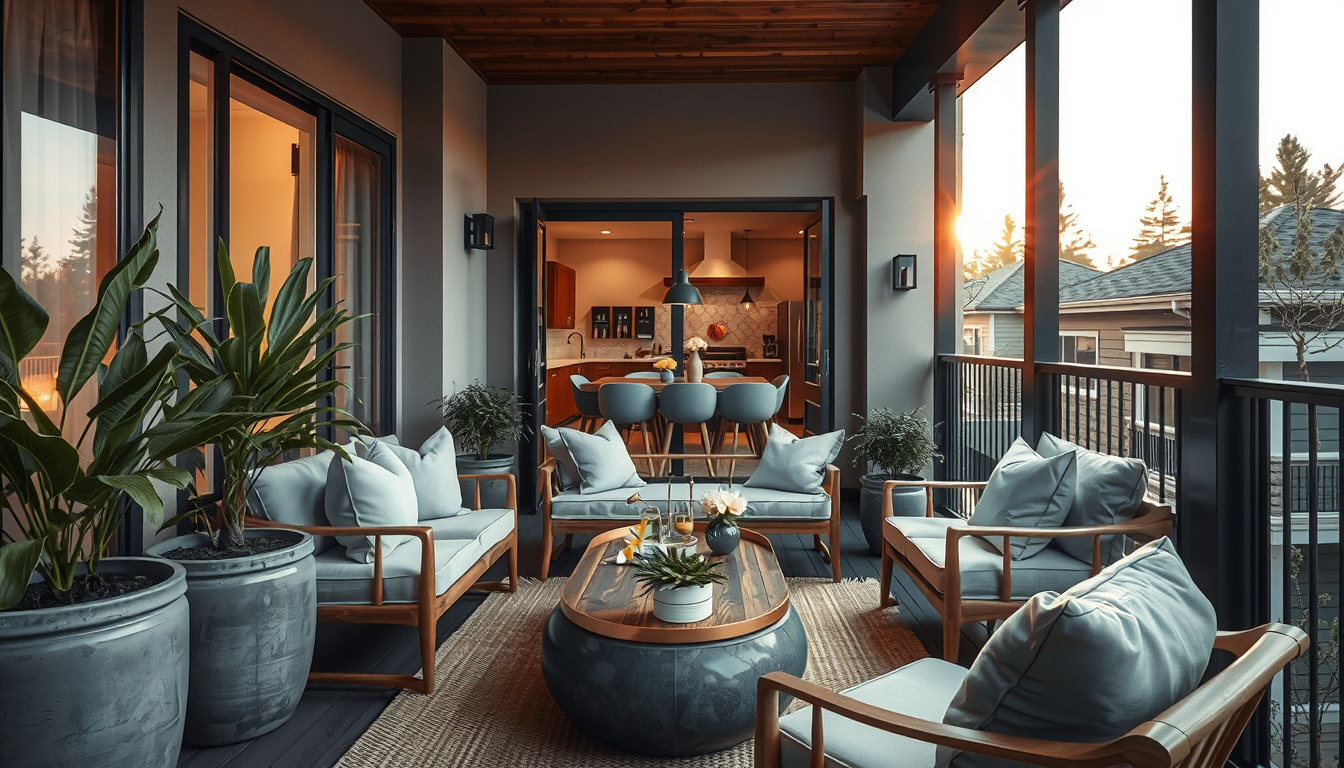
A garage conversion toronto living space project costs $30,000–$90,000 in 2026, with permits running 8–16 weeks through Toronto Building (HomeStars Canada 2026; City of Toronto Building service standards). A legal Garden Suite conversion can add 5–10% to resale value and generate $1,800–$2,800 per month in rental income (Urbanation Q4 2025; TRREB rental survey).
Toronto’s 2022 Garden Suite by-law and 2023 Multiplex By-Law have unlocked detached-garage conversions across nearly every residential lot in the city (City of Toronto). But the design press keeps publishing glossy U.S. and European conversion features that ignore Ontario Building Code SB-12, frost depth, and Climate Zone 6 insulation rules. At Toronto Interior Designer, we’ve walked five Junction and Roncesvalles owners through detached-garage conversions in the last 18 months — here is what actually works in the GTA.
Is a Garage Conversion Toronto Living Space Project Legal in 2026?
Yes, but the legal pathway depends on the structure type. Toronto’s Garden Suite by-law (passed February 2022, updated 2024) permits detached secondary dwellings — including converted detached garages — on most residential lots zoned RD, RS, RT, and RM (City of Toronto Garden Suite framework, 2026 update). Attached garage conversions fall under the secondary suite or Multiplex pathway introduced in 2023, which allows up to four units per lot citywide (City of Toronto).
What you cannot do without a permit
- Convert garage space into habitable rooms without a building permit
- Skip a Committee of Adjustment hearing if your lot is undersized or your setbacks are tight
- Add a separate exterior entrance without zoning review
The City of Toronto eliminated minimum off-street parking requirements in late 2022, so losing a garage parking spot no longer blocks the application (City of Toronto Planning, 2022).
What Does a Garage Conversion Cost in Toronto in 2026?
Shop Balcony and Patio Pieces That Fit
Toronto outdoor spaces are often tight, so look for stackable seating, slim tables, and weather-ready textiles first.
Toronto Interior Designer may earn a commission if you shop through these links at no extra cost to you.
Toronto garage conversions range from $30,000 for a basic insulated home office to $90,000+ for a full Garden Suite with kitchen and bathroom (HomeStars Canada 2026; BILD member quotes). Detached garages cost more than attached because they require independent heating, plumbing runs, and full envelope upgrades.
| Conversion type | Toronto cost (2026 CAD) | Permit required | Typical timeline |
|---|---|---|---|
| Studio / home office (no plumbing) | $30,000–$45,000 | Yes (building) | 4–6 months |
| Guest suite with 3-pc bathroom | $50,000–$70,000 | Yes (building + plumbing) | 6–8 months |
| Garden Suite rental (full kitchen + bath) | $75,000–$130,000 | Yes (zoning + building) | 9–14 months |
| Detached garage to ADU shell-only | $40,000–$60,000 | Yes (building) | 5–7 months |
Costs include design, permits ($1,200–$3,500 City of Toronto fees), and standard finishes from GTA suppliers. Custom millwork, heated floors, and high-end fixtures add 15–25% to the project total (CHBA renovation cost survey 2025).
How Do You Meet Ontario Building Code in a Converted Garage?
Toronto sits in Climate Zone 6, which means Ontario Building Code SB-12 requires minimum R-22 wall insulation and R-31 ceiling insulation for any habitable space (OBC SB-12, 2024 edition). Most existing Toronto garages are uninsulated CMU or single-stud walls — every conversion needs a full envelope upgrade.
Insulation, heating and egress essentials
- Walls: 2×6 stud wall inside the existing structure with R-22 batts plus continuous exterior R-5 rigid foam
- Floor: Insulated slab with R-10 rigid below, or a raised floor over R-20 batts (frost depth 1.2 m in Toronto per OBC)
- Heating: A ductless mini-split is the most common solution — a Mitsubishi or Daikin 12,000 BTU unit covers a 400–600 sq ft garage
- Egress: Habitable rooms require a window with minimum 0.35 m² unobstructed opening (OBC 9.9.10)
- Smoke and CO alarms: Hardwired and interconnected per Ontario Fire Code
The Electrical Safety Authority (ESA) requires a separate panel feed for any detached garage conversion exceeding 60 amps (ESA wiring requirements).
Which Garage Conversion Designs Work Best for Toronto Homes?
Four design programs dominate Toronto garage conversions in 2026: dedicated home studios, guest suites, rental Garden Suites, and integrated home offices. The best choice depends on your lot, your goals, and whether you want to recoup costs through rental income.
Studio or creative workspace
A 240–360 sq ft detached studio with skylights, polished concrete, and a ductless mini-split typically lands at $35,000–$50,000 (HomeStars Canada 2026). Pair with a proper standing desk setup and acoustic panels for music, podcasting, or art.
Guest suite or “in-law” unit
A 3-piece bath plus murphy bed and kitchenette suits aging-in-place needs. Toronto’s hard water (124 mg/L per City of Toronto Water Quality Annual Report 2025) wears out fixtures quickly — specify CSA-certified brass or stainless trim.
Rental Garden Suite
A self-contained ADU with kitchen and bath earns $1,800–$2,800/month in Toronto’s west end (Urbanation Q4 2025 rental survey). The Junction, Roncesvalles, and Bloor West Village command the top of that range.
Integrated home office
For attached garages, see our closet office and cloffice layouts guide and full home office category.
How Do You Hire a Toronto Designer or Contractor for a Garage Conversion?
Hire a Toronto designer who has completed at least three permitted Garden Suite or Multiplex conversions and works directly with a structural engineer registered in Ontario. The City of Toronto Garden Suite application requires stamped drawings, energy compliance forms (SB-12), and lot grading plans — not every residential designer handles all three.
What to ask before signing
- Show me three completed Toronto garage conversions with permit numbers
- Who is your structural engineer and is the firm registered with PEO?
- Are you a member of CHBA, BILD, or a HomeStars verified pro?
- Will you handle the Committee of Adjustment hearing if needed?
“The biggest mistake we see is homeowners hiring a general renovator with no Garden Suite experience. The zoning review alone can add three months if drawings come back deficient.” — Toronto Interior Designer renovation team
Expect designer fees of $4,500–$12,000 for full drawings plus a 10–15% contractor management fee (CHBA 2025 survey). Browse our Toronto renovation tips for vetted contractor questions.
Our Recommendation
For most GTA homeowners, a detached garage conversion to a Garden Suite rental is the highest-ROI path — $75,000–$130,000 invested can return $1,800–$2,800/month plus 5–10% resale uplift (TRREB; Appraisal Institute of Canada). If you do not need rental income, a $35,000–$50,000 insulated studio gives you a flexible workspace without the zoning complexity. Skip the conversion if your lot fails Garden Suite setbacks (1.5 m side, 5 m angular plane per City of Toronto) — repair the existing garage instead.
Toronto Garage Conversion Checklist
- Confirm zoning permits Garden Suite or secondary suite (City of Toronto AIM map)
- Hire a designer with three or more permitted Toronto Garden Suite projects
- Order survey and structural assessment (existing footing depth, framing condition)
- Apply for Committee of Adjustment if setbacks are tight (add 8–12 weeks)
- Submit building permit through Toronto Building (8–16 week review)
- Confirm ESA inspection for any new panel or service upgrade
- Complete envelope upgrade to R-22 walls, R-31 ceiling (OBC SB-12)
- Schedule mini-split installation before drywall
- Pass framing, insulation, plumbing, and final inspections
- Update home insurance and register the secondary-suite address with the City
FAQ
Do I need a permit for a garage conversion in Toronto?
Yes. Any conversion of garage space to habitable use requires a building permit through Toronto Building, with fees of $1,200–$3,500 depending on scope (City of Toronto 2026 fee schedule). Detached Garden Suite conversions also require a separate zoning review.
How long does a Toronto garage conversion take?
Plan for 8–16 weeks of permit review plus 4–8 weeks of construction, for a total of 5–10 months from drawings to occupancy (Toronto Building 2025 service standards). Garden Suite applications with Committee of Adjustment hearings can extend to 14 months.
Can I rent out a converted garage in Toronto?
Yes, if it is permitted as a Garden Suite or secondary suite under Toronto’s 2022 by-law. A legal converted garage rents for $1,800–$2,800/month in west-end neighbourhoods like the Junction and Roncesvalles (Urbanation Q4 2025).
What insulation is required for a converted garage in Toronto?
Ontario Building Code SB-12 requires minimum R-22 wall and R-31 ceiling insulation for habitable space in Climate Zone 6 (OBC SB-12, 2024 edition). Floors over unheated space need R-31 as well, and slab edges need R-10 rigid foam.
Will a garage conversion add value to my Toronto home?
A legal converted garage with a permitted second suite adds 5–10% to resale value in most GTA neighbourhoods (Appraisal Institute of Canada; TRREB sales data). Unpermitted conversions typically add no value and complicate sale.
Can I keep parking if I convert my garage?
Toronto eliminated minimum off-street parking requirements in 2022, so converting your garage is permitted even if it removes your only parking spot (City of Toronto, 2022 by-law). Many homeowners pave a side pad to retain one parking space.
Sources
- City of Toronto Garden Suite framework and Multiplex By-Law (2022, 2023, 2024 updates)
- Ontario Building Code SB-12 (2024 edition)
- HomeStars Canada 2026 contractor pricing data
- Toronto Regional Real Estate Board (TRREB) sales and rental survey
- Urbanation Q4 2025 GTA rental market report
- Canadian Home Builders’ Association (CHBA) renovation cost survey
- Appraisal Institute of Canada resale value commentary
- Electrical Safety Authority (ESA) wiring requirements
- BILD member contractor pricing
- City of Toronto Water Quality Annual Report 2025
For more renovation guidance, browse our Toronto buyer guides and read our companion piece on heated bathroom floors for radiant heating in a converted garage. For local sourcing of fixtures and finishes, see our Toronto home decor stores guide.
A well-planned garage conversion toronto living space project is one of the highest-return renovations available to GTA homeowners in 2026 — when you start with the right zoning pathway, a Toronto-experienced designer, and an OBC-compliant envelope.
Daniela Costa | Toronto-Registered Interior Designer (ARIDO) Daniela leads renovation editorial for Toronto Interior Designer and has overseen 14 permitted Garden Suite and Multiplex conversions across the GTA since 2019. She works closely with City of Toronto Building staff and a roster of Ontario-registered structural engineers. (/author/daniela-costa/)
Layer the Outdoor Room
Lighting, planters, and textiles can stretch a short summer season and make even a small balcony feel intentional.
Toronto Interior Designer may earn a commission if you shop through these links at no extra cost to you.
Frequently Asked Questions
Do I need a permit for a garage conversion in Toronto?
Yes. Any conversion of garage space to habitable use requires a building permit through Toronto Building, with fees of $1,200-$3,500 depending on scope. Detached Garden Suite conversions also require zoning review.
How long does a Toronto garage conversion take?
Plan for 8-16 weeks of permit review plus 4-8 weeks of construction, for a total of 5-10 months from drawings to occupancy. Garden Suite applications with Committee of Adjustment hearings can extend to 14 months.
Can I rent out a converted garage in Toronto?
Yes, if it is permitted as a Garden Suite or secondary suite under Toronto’s 2022 by-law. A legal converted garage rents for $1,800-$2,800/month in west-end neighbourhoods like the Junction and Roncesvalles.
Toronto Interior Designer is editorially independent. Our recommendations are based on research and editorial judgment, not brand sponsorships.