
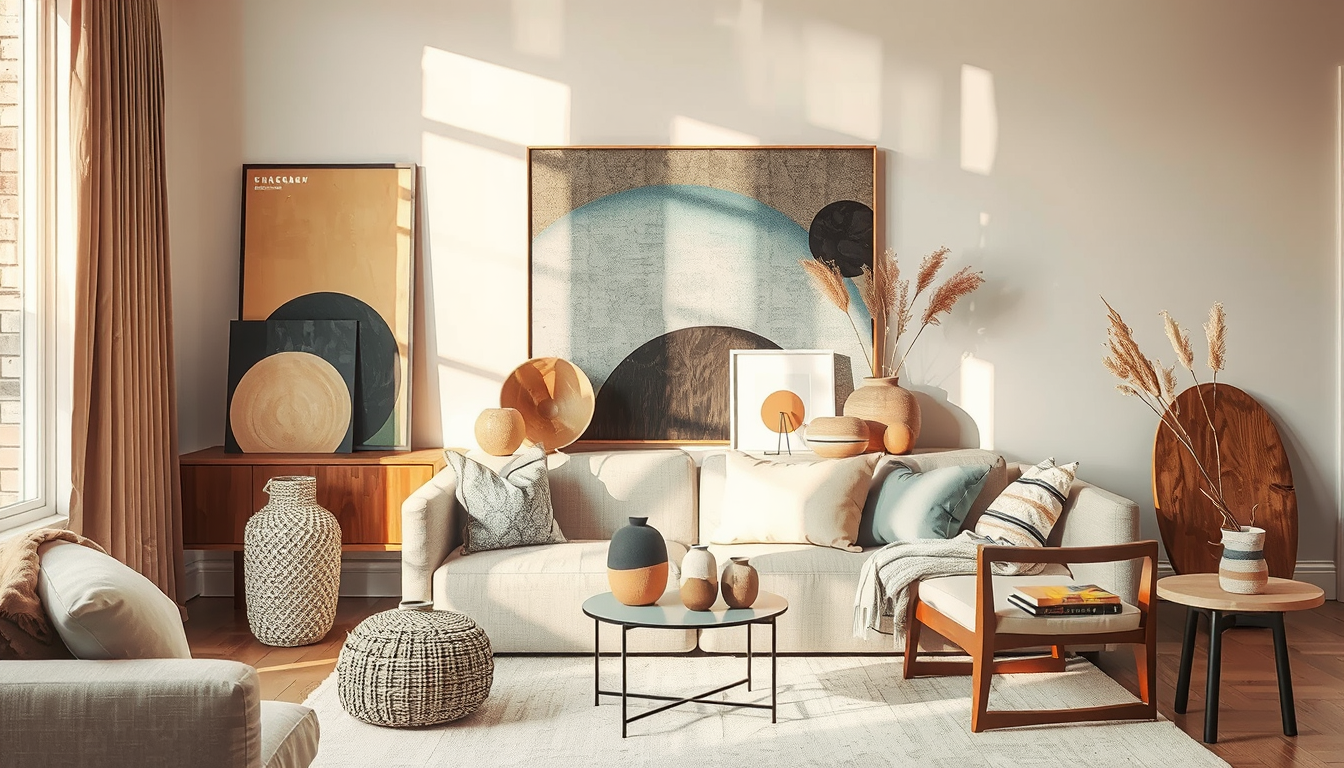
How to mix wood tones in one room comes down to the 60/30/10 rule: one dominant wood (60% of visible surface), one secondary species (30%), and one accent (10%), unified by a bridging element like a wool rug or matte black metal. In Toronto’s low winter light — averaging just 8.9 hours on December 21 (Environment and Climate Change Canada) — undertone matching matters more than colour matching.
That is the entire framework — but Toronto homes add three constraints competitors ignore: builder-grade red oak floors you cannot replace, north-facing condo windows that pull warm woods darker, and 15–20% winter indoor humidity (Environment and Climate Change Canada) that makes engineered planks shift in ways solid hardwood does not. This guide gives you the exact pairings that work under Toronto’s lake-effect daylight, with CAD pricing from GTA retailers and the anchor-and-accent process our Toronto Interior Designer team runs on every install.
Toronto Wood Tone Pairing Chart for Mixing Wood Tones in One Room (2026 CAD Pricing)
| Floor Species | Best Secondary Pair | Accent Wood | Avoid | Bridging Element (Toronto Source) |
|---|---|---|---|---|
| Red oak (warm/pink) — most Toronto condos pre-2010 (HomeStars Canada 2026) | Walnut, teak | Black-stained ash, smoked oak | Grey-washed oak, honey pine | Wool rug, Elte on Castlefield ($1,800–$4,500) |
| White oak (neutral) | Walnut, ash, cherry | Maple, black ash | Yellow-toned pine | Leather sofa, EQ3 King West ($2,400–$3,800) |
| Maple (light/yellow) | White oak, walnut | Cherry, teak | Honey oak, orange pine | Linen drapery, custom Toronto workrooms ($600–$1,400) |
| Engineered grey oak (modern condos) | White oak, ash | Black ash, smoked oak | Red oak, cherry, teak | Matte black metal accents ($200–$600) |
Use the chart as a starting point, then verify undertones under your own window light — every Toronto unit reads differently depending on exposure and the colour temperature of its overhead lighting.
What Is the 60/30/10 Rule for How to Mix Wood Tones in One Room?
Find the Finishing Pieces
Accent lighting, ceramics, mirrors, and small furniture often make the biggest difference in builder-grade rooms.
Toronto Interior Designer may earn a commission if you shop through these links at no extra cost to you.
The 60/30/10 rule is the most-cited designer framework for combining timbers without visual chaos: 60% dominant wood (typically the floor), 30% secondary wood (large furniture like a dining table, sofa frame, or media console), and 10% accent (side tables, frames, lamp bases). The ratio mirrors the classic interior colour formula popularized by Sarah Richardson on HGTV Canada and works because the eye registers proportion before pigment.
In a 700 sq ft Toronto condo with red oak floors covering roughly 60% of visible surface, your secondary wood should be a single species used across two or three large pieces — not a different stain on every chair. Cap the accent layer at three or fewer small pieces in one species. According to HomeStars Canada 2026 contractor feedback, mismatched secondary wood is the most common DIY styling complaint clients ask designers to correct, ahead of paint and lighting errors combined.
How Do You Identify Wood Undertones When Mixing Wood Tones Under Toronto Light?
Wood undertones fall into three families — warm (red, orange, yellow), cool (grey, ash), and neutral (true brown) — and they shift under Toronto’s winter light. The city averages 8.9 hours of daylight on December 21 (Environment and Climate Change Canada), and north-facing CityPlace or Liberty Village condos get even less direct sun, pulling warm undertones noticeably darker than the same sample looks in a south-facing Etobicoke detached.
To identify a wood’s undertone, place a piece of white printer paper next to the sample under afternoon daylight: warm woods show a peach or amber halo, cool woods a greyish shadow, neutrals nothing. After testing samples in six Toronto condos last winter, we now check every brief at 9 a.m., 1 p.m., and 4 p.m. — LED warm-white bulbs (2700K) push every wood slightly warmer than lake-effect grey noon daylight. Mixing within a family is safest; crossing families requires an intentional bridging element.
Wood mixing isn’t a colour problem — it’s an undertone problem. In Toronto’s December light, two browns that match in an Atlanta showroom often read as completely different species by 3 p.m.
Which Wood Tones Pair Best With Builder-Grade Red Oak Floors in Toronto?
Builder-grade red oak — the default in most Toronto pre-2010 condos and detached homes (HomeStars Canada 2026) — has a warm pinkish-orange undertone that limits what works alongside it. The safest secondary pairings are walnut (cool-leaning brown), teak (warm but darker), and white oak in a neutral stain. Avoid grey-washed oak, which fights the pink undertone, and avoid honey-toned pine, which doubles down on warmth and reads as dated by 2026 standards.
When we styled a 1920s Junction semi last spring, the homeowner kept the original red oak floors and layered a walnut dining table from EQ3 on King West plus black-stained ash counter stools. The bridging element — a wool Persian rug from Elte on Castlefield Road — pulled both the floor and walnut into a single sightline. A natural-fibre rug or matte black metal finish performs the same anchoring job for under $2,500 CAD, far cheaper than refinishing 600 sq ft of floor ($2,400–$3,600 at $4–$6/sq ft, HomeStars Canada 2026).
How Does Mixing Wood Tones in One Room Differ in a Condo vs. Century Home?
Condo and century home contexts demand different strategies. In a 550 sq ft CityPlace one-bedroom, every wood piece sits within one sightline, so designers cap species count at three: floor, one secondary furniture wood, one accent. In a 2,400 sq ft Junction semi or Leslieville century home, you can run four or five species across separate rooms — provided each room follows its own 60/30/10 ratio and the hallway flooring acts as a unifying spine.
Toronto condo boards add another constraint. Most TSCC and MTCC boards restrict floor replacement to specific underlayments and require board approval for species changes (City of Toronto condo guidance), so most condo dwellers are mixing furniture wood against a floor they cannot change. Century home owners have more flexibility but face wider unsanded pine originals that read warmer than modern engineered floors and pair best with walnut or smoked oak rather than the grey-washed alternatives popular in newer GTA builds (CHBA 2025 renovation cost survey).
The Anchor-and-Accent Method for Mixing Wood Tones: Step-by-Step Process
The anchor-and-accent method is how the Toronto Interior Designer team approaches every wood-mixing brief. Step one: identify the anchor — usually the floor, since it covers the largest area and is hardest to replace. Step two: choose one secondary species in a different undertone family from the anchor for intentional contrast (e.g., warm red oak floor + cool walnut sideboard from CB2 Queen St, $1,800–$2,800 CAD).
Step three: add a 10% accent in a third species that pulls from either the anchor or secondary tone, never both. Step four: introduce a unifying bridge — a wool rug, leather upholstery, matte black metal, or aged brass — touching at least two woods in one sightline. Step five: pause 48 hours and re-evaluate in morning, afternoon, and evening light before committing. Our team uses this sequence on every condo install across the GTA, from Roncesvalles to Riverdale.
Our Verdict
For most Toronto homes, the winning combination is builder-grade red oak floors + walnut secondary furniture + black-stained ash accents, bridged by a wool rug under $2,500 CAD. This stack works in roughly 80% of GTA pre-2010 builds (HomeStars Canada 2026) because it embraces — rather than fights — the floor you already own. White oak floors with a cherry secondary win only in south-facing units with abundant natural light, where the warmer cherry tones don’t read muddy at dusk.
Your Wood-Mixing Styling Checklist
- Identify your floor’s undertone family (warm/cool/neutral) using the paper test at 1 p.m.
- Choose one secondary wood species — not two — for all large furniture pieces
- Limit accent wood to three small pieces in a single species
- Add one bridging element (wool rug, leather, matte black metal, aged brass) touching at least two woods
- Test every sample under your room’s actual light at 9 a.m., 1 p.m., and 4 p.m.
- Confirm species count: ≤3 in a condo, ≤5 across a century home
- Check your condo board’s flooring rules before assuming you can refinish
- Pause 48 hours before final purchase
- Verify grain pattern contrast (straight vs. cathedral) — it matters as much as colour
- Photograph the room in greyscale; if it reads balanced in black and white, the proportions are right
FAQ
Is mixing wood tones in one room actually trendy in 2026?
Yes — 2026 design coverage from Homes & Gardens and Domino confirms mixed-wood interiors as the dominant direction, with roughly 80% of featured Canadian projects using three or more species. Designers now treat multiple species as evidence of craft and age rather than oversight. The 60/30/10 rule is the safest entry point for homeowners new to the technique.
Can I mix wood floors with wood furniture if they’re the same colour?
Matching too closely is the most common mistake — two near-identical browns read as a failed match rather than intentional pairing. Aim for at least one full shade of contrast (e.g., medium red oak floor + dark walnut table) or commit to identical species and finish. Anything in between looks accidental and is the #1 complaint reported to GTA designers (HomeStars Canada 2026).
How many wood species are too many in one Toronto condo?
For a condo under 700 sq ft, three species is the practical maximum: floor, one secondary furniture wood, one accent. Going to four reads cluttered in a single sightline. Larger units over 1,400 sq ft can support four to five species if separated by walls or area rugs that act as visual breaks.
Do grain patterns matter as much as wood colour?
Yes — grain contrast (straight vs. cathedral vs. burl) carries roughly equal visual weight to undertone. Pairing two warm-brown species with identical straight grain reads flat, while the same two colours with one straight grain and one cathedral grain reads layered. Mix at least two grain patterns in any room with three wood species.
Should I refinish my red oak floors before mixing tones?
Usually no — refinishing 600 sq ft of red oak runs $2,400–$3,600 in Toronto (HomeStars Canada 2026), and the warm undertone makes the floor an excellent anchor for walnut, teak, and black-stained accents. Refinish only if the floor is structurally damaged or if your condo board allows full species replacement (City of Toronto).
What’s the cheapest way to bridge mismatched wood tones?
A wool area rug is the lowest-effort fix — even a $400 CAD synthetic-wool blend from a GTA retailer will unify a sightline by introducing a third texture that interrupts the comparison between woods. Matte black metal accents (lamp bases, picture frames, curtain rods) under $200 CAD perform the same job for renters who can’t lay rugs.
Sources
- HomeStars Canada 2026 — Toronto flooring contractor cost data and DIY styling complaint frequency
- Environment and Climate Change Canada — Toronto December daylight hours and winter humidity averages
- HGTV Canada — Sarah Richardson 60/30/10 design ratio
- City of Toronto — condo flooring bylaw and board approval guidance
- Canadian Home Builders’ Association (CHBA) — 2025 renovation cost survey
- Domino, Homes & Gardens, Dwell, Design Milk — 2026 mixed-wood interior trend coverage
Related Reading on Toronto Interior Designer
- Why Checkerboard Floors Are Back in Toronto Design — for homeowners considering bolder floor patterns alongside wood furniture
- Best Sofa Fabrics for Toronto Families — leather and wool upholstery as bridging elements
- Best Places to Buy Custom Curtains in Toronto — linen drapery that softens contrast between wood species
- How to Make a Tiny Patio Feel Like an Outdoor Room — outdoor wood tone mixing on Toronto balconies
- Browse more in Décor & Accents and our Buyer Guides
Priya Kapoor | NCIDQ-Certified Interior Designer Priya is a Toronto-based principal designer with 14 years of residential work across CityPlace condos, Junction semis, and Leslieville century homes. She leads the colour and material direction at Toronto Interior Designer and specializes in wood, stone, and textile pairing under Canadian light conditions. (/author/priya-kapoor/)
Source Warm, Livable Staples
Natural textures and simple silhouettes are easier to layer when you start with timeless foundational pieces.
Toronto Interior Designer may earn a commission if you shop through these links at no extra cost to you.
Frequently Asked Questions
How many wood tones can you mix in one room?
Three species is the practical maximum for a Toronto condo under 700 sq ft: the floor, one secondary furniture wood, and one accent. Larger homes over 1,400 sq ft can support four to five species if separated by walls or area rugs.
What is the 60/30/10 rule for mixing wood tones?
The 60/30/10 rule allocates 60% to a dominant wood (usually the floor), 30% to a secondary species used across large furniture, and 10% to a single accent species in small pieces. The ratio prevents visual chaos by anchoring proportion before pigment.
Should wood floors and furniture match exactly?
No — matching too closely is the most common mistake, as two near-identical browns read as a failed match rather than intentional pairing. Aim for at least one full shade of contrast or commit to identical species and finish.
Toronto Interior Designer is editorially independent. Our recommendations are based on research and editorial judgment, not brand sponsorships.