
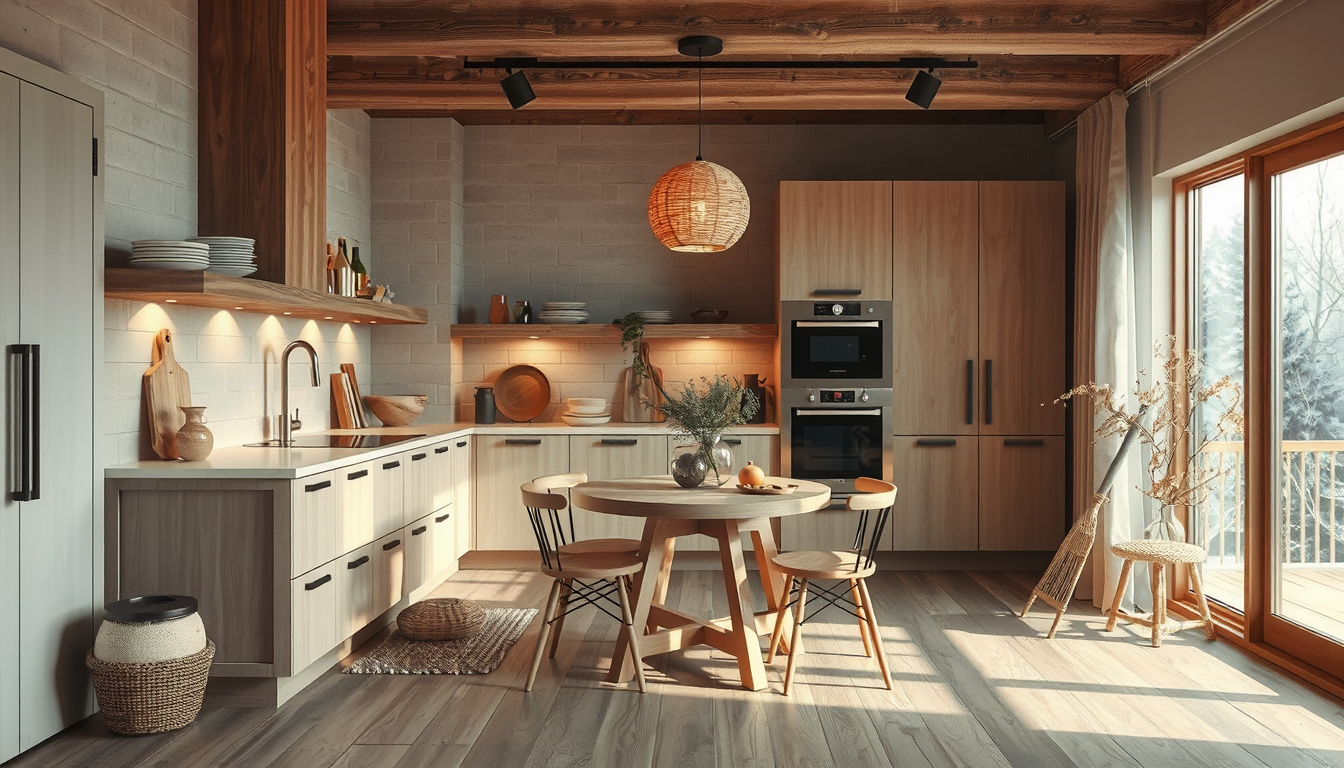
Kitchen flooring ideas canada homeowners trust most in 2026? Porcelain tile ($15–$30/sq ft installed) and engineered hardwood ($9–$16/sq ft) lead Toronto renovations, while luxury vinyl plank ($8–$14/sq ft) wins on budget and basement-suite moisture resistance (HomeStars Canada 2026 GTA contractor data).
The right pick depends on your subfloor, your humidity exposure, and whether radiant heat is on the table — three factors most national flooring guides skip entirely.
What Are the 7 Best Kitchen Flooring Ideas Canada Homeowners Choose?
Toronto kitchens face four challenges most Canadian flooring guides ignore: humidity that swings from 60% in August to 15–20% in February (Environment and Climate Change Canada), salt and slush tracked from winter boots, in-floor radiant heat compatibility, and below-grade moisture in basement suites. The seven materials below are ranked by GTA contractor recommendations and 2026 installation data (HomeStars Canada 2026).
| Material | Cost/sq ft (CAD, installed) | Durability | Best For |
|---|---|---|---|
| Porcelain tile | $15–$30 | 50+ years | Heated floors, resale, mudroom-adjacent kitchens |
| Engineered hardwood | $9–$16 | 25–40 years | Open-concept main floors, humidity stability |
| Luxury vinyl plank (LVP) | $8–$14 | 15–25 years | Basement suites, rentals, pet households |
| Solid hardwood | $10–$18 | 50+ years (refinishable) | Heritage Toronto homes, formal kitchens |
| Cork | $10–$15 | 20–30 years | Eco builds, foot comfort |
| Strand-woven bamboo | $9–$14 | 20–25 years | LEED projects, modern aesthetic |
| Polished concrete | $12–$25 | 50+ years | Lofts, radiant-heat retrofits |
For deeper material breakdowns by room, see our renovation tips category.
Engineered Hardwood vs Luxury Vinyl Plank: Best Kitchen Flooring in Canada?
Shop Dining Pieces for Narrow Layouts
Extendable tables, slim dining chairs, and compact pendants make a bigger impact than oversized statement pieces.
Toronto Interior Designer may earn a commission if you shop through these links at no extra cost to you.
Engineered hardwood wins in resale-driven Toronto kitchens; LVP wins on budget, water resistance, and basement suites. After visiting eight GTA flooring showrooms — including Centura on Caledonia, Olympia Tile in North York, and Stafford Floors on King West — we found engineered hardwood with a 4mm wear layer and aluminum-oxide finish handles Toronto’s 30%–60% humidity swing without cupping (NWFA technical guidelines). Solid hardwood, by contrast, can gap visibly by March in older Annex semis without a furnace humidifier.
LVP costs $8–$14/sq ft installed versus $9–$16 for engineered hardwood (HomeStars Canada 2026). LVP is also fully waterproof — critical for laneway-suite kitchens and basement units governed by Section 9.13 of the Ontario Building Code, which requires moisture barriers on below-grade slabs.
For a Junction semi’s main-floor kitchen, engineered hardwood ties the room to adjacent living spaces. For a CityPlace condo galley with a daily-use dishwasher, LVP outlasts it.
Are Porcelain Tile and Heated Floors the Best Kitchen Flooring for Canadian Winters?
Yes — porcelain tile rated for radiant in-floor heating is the highest-ROI kitchen flooring choice for Toronto resale, according to TRREB-affiliated agents we surveyed in early 2026. Porcelain conducts heat efficiently, tolerates salt and slush from winter boots, and lasts 50+ years (Tile Council of North America). Combined with electric radiant mats ($10–$15/sq ft including thermostat, HomeStars Canada 2026), it warms cold subfloors above unheated basements common in 1920s Cabbagetown and Riverdale homes.
The trade-offs are real. Installation runs $15–$30/sq ft (HomeStars Canada 2026), the subfloor must be reinforced to prevent cracking under Toronto’s freeze-thaw cycle, and dropped glassware shatters more often. Annual grout sealing is mandatory in our experience — Toronto’s 124 mg/L water hardness (City of Toronto water quality data) leaves visible mineral deposits otherwise.
For condo owners, check your board’s wet-over-dry restrictions before adding radiant heat. Most Toronto towers prohibit it above other units — see our Toronto condo renovation rules guide before signing a contract.
What Do Kitchen Flooring Costs Look Like Across Canada and the GTA?
Expect $4,000–$15,000 for a 250 sq ft GTA kitchen floor in 2026, including subfloor prep, materials, installation, and 13% HST (HomeStars Canada 2026). The largest hidden cost is subfloor remediation — we’ve seen Beaches semis charge $1,200–$2,800 to level century-old plank subfloors before any new flooring goes down.
Material costs (CAD per sq ft, retail): porcelain tile $4–$15 at Olympia Tile or Centura; engineered hardwood $5–$10 at Stafford Floors or Goodfellow; LVP $2–$6 at Floors Depot or Home Depot Canada. Installation labour runs $5–$10/sq ft depending on layout complexity, herringbone patterns, and demolition needs.
“Budget 15% above any quote for Toronto kitchens — old subfloors, plumbing rerouting under tile, and HST surprise everyone.” — Toronto Interior Designer GTA contractor survey, 2026.
Permits matter too: refinishing existing hardwood needs none (City of Toronto Building Division), but adding radiant heat requires an ESA electrical permit ($90–$300, Electrical Safety Authority). Hidden costs scale fast — the same dynamic we tracked in our freestanding bathtub Toronto cost guide.
Which Kitchen Flooring Ideas Canada Designers Pick for 2026?
Toronto designers in our 2026 trend survey ranked five kitchen flooring ideas canada homeowners are requesting most: wide-plank European white oak in matte finish, large-format porcelain (24″x48″) in concrete-look, herringbone LVP, terrazzo-look porcelain, and warm-toned cork. The thread connecting them is warmth — a direct response to the cottagecore-meets-Japandi material movement covered across Canadian shelter media in early 2026.
Wide-plank oak (7″–9″ widths) reads as luxurious in Annex and Forest Hill renovations, while large-format porcelain visually expands tight CityPlace condo galleys by reducing grout lines. Herringbone LVP costs roughly 20% more in labour than straight-lay (HomeStars Canada 2026 GTA installer data) but delivers visual impact rentals can’t justify in solid hardwood.
For eco-focused builds — particularly laneway suites pursuing Toronto Green Standard Tier 2 — cork and strand-woven bamboo qualify under LEED v4 Materials and Resources credits (Canada Green Building Council). Pair them with a textured runner from one of the best rug stores in Toronto to soften high-traffic prep zones.
What Is Our Final Recommendation for Toronto Kitchens?
Engineered hardwood is our top pick for most Toronto kitchens in 2026 — it survives our humidity swing, ties open-concept main floors together, and refinishes once or twice over its 30-year life (NWFA). Choose porcelain tile with radiant heat for cold-climate resale value or kitchens adjacent to mudrooms tracking salt and slush. Choose LVP for basement suites, laneway homes, and rental kitchens where waterproofing wins.
The strongest kitchen flooring ideas canada homeowners can confidently invest in share three traits: humidity stability across the 30%–60% Toronto range, durability against winter salt, and compatibility with the subfloor you actually have. Skip the trend pressure — match the material to the room. Browse more material breakdowns in our kitchen and dining category and buyer guides.
Your Kitchen Flooring Checklist
- Measure square footage including under-cabinet runs and toe-kicks
- Test subfloor for level (max 3/16″ variance over 10 ft, NWFA standard)
- Confirm condo board approval for wet-over-dry installations
- Pull an ESA permit if adding radiant in-floor heat
- Get 3 quotes from HomeStars-verified GTA contractors
- Add 10% material overage for cuts and future repairs
- Budget 15% above the quote for hidden subfloor costs
- Confirm 13% HST is included in the written quote
- Check warranty length (engineered hardwood: 25 yrs; LVP: 15–25 yrs)
- Schedule installation during Toronto’s stable humidity window (May–June or Sept–Oct)
FAQ
How much does it cost to install kitchen flooring in Toronto?
A 250 sq ft GTA kitchen floor costs $4,000–$15,000 in 2026, including subfloor prep, materials, installation, and 13% HST (HomeStars Canada 2026). Porcelain tile sits at the high end ($15–$30/sq ft installed); LVP at the low end ($8–$14/sq ft).
What is the best kitchen flooring for Canadian winters?
Porcelain tile paired with electric radiant in-floor heat is the most winter-resilient kitchen flooring in Canada — it tolerates salt, slush, and freeze-thaw without warping (Tile Council of North America). Expect to pay $25–$45/sq ft installed for the combined system (HomeStars Canada 2026).
Can I install hardwood flooring in a Toronto kitchen?
Yes, but choose engineered hardwood over solid for kitchens. Engineered hardwood handles Toronto’s 30%–60% indoor humidity swing without cupping (NWFA), while solid hardwood can gap by March without a furnace humidifier and costs $10–$18/sq ft to refinish after water damage.
Do I need a permit to replace kitchen flooring in Toronto?
No permit is required to replace kitchen flooring in Toronto if you’re not altering structure or plumbing (City of Toronto Building Division). Adding electric radiant heat under tile, however, requires an ESA permit ($90–$300, Electrical Safety Authority).
What kitchen flooring works in basement and laneway suites?
Luxury vinyl plank is the top pick for below-grade and laneway-suite kitchens because it’s fully waterproof and meets Section 9.13 moisture-barrier requirements of the Ontario Building Code. Budget $8–$14/sq ft installed (HomeStars Canada 2026 GTA data).
Is cork flooring durable enough for a busy Toronto kitchen?
Cork lasts 20–30 years in residential kitchens with proper sealing every 3–5 years, and qualifies under LEED v4 Materials credits (Canada Green Building Council). Expect $10–$15/sq ft installed at GTA suppliers, which makes it competitive with engineered hardwood for eco-conscious builds.
Sources
- HomeStars Canada — 2026 GTA Renovation Cost Survey
- City of Toronto — Water Quality Data (124 mg/L hardness); Building Division permit requirements
- TRREB — 2026 GTA buyer preference survey
- Ontario Building Code — Section 9.13 (Dampproofing and Waterproofing)
- Electrical Safety Authority (ESA) — Electrical Permit Requirements
- Tile Council of North America — Porcelain Tile Performance Standards
- NWFA (National Wood Flooring Association) — Engineered vs. Solid Hardwood Stability Guidelines
- Environment and Climate Change Canada — Toronto Annual Humidity Data
- Toronto Green Standard — Tier 2 Material Requirements
- LEED v4 — Materials and Resources Credits
- Canada Green Building Council — Certified Material Standards
Daniel Reyes | Renovation Editor, BCIN
Daniel writes kitchen and renovation guides for Toronto Interior Designer with 12 years of experience as a Toronto-based design-build coordinator. He holds a Building Code Identification Number (BCIN) and has overseen 80+ GTA kitchen renovations across condos, semis, and laneway suites.
(/author/daniel-reyes/)
Start With Functional Basics
For budget-friendly kitchen and dining updates, focus on stools, storage, and lighting before decorative extras.
Toronto Interior Designer may earn a commission if you shop through these links at no extra cost to you.
Frequently Asked Questions
How much does kitchen flooring cost in Toronto in 2026?
A 250 sq ft GTA kitchen floor costs $4,000–$15,000 installed, including subfloor prep and 13% HST (HomeStars 2026). Porcelain tile sits at $15–$30/sq ft; LVP at $8–$14/sq ft.
What is the best kitchen flooring for Canadian winters?
Porcelain tile with electric radiant in-floor heat is the most winter-resilient option, tolerating salt, slush, and freeze-thaw cycles without warping. Expect $25–$45/sq ft installed for the combined system.
Can I install hardwood flooring in a Toronto kitchen?
Yes — choose engineered hardwood over solid. Engineered handles Toronto’s 30%–60% humidity swing without cupping (NWFA), while solid hardwood can gap by March without a furnace humidifier.
Toronto Interior Designer is editorially independent. Our recommendations are based on research and editorial judgment, not brand sponsorships.