
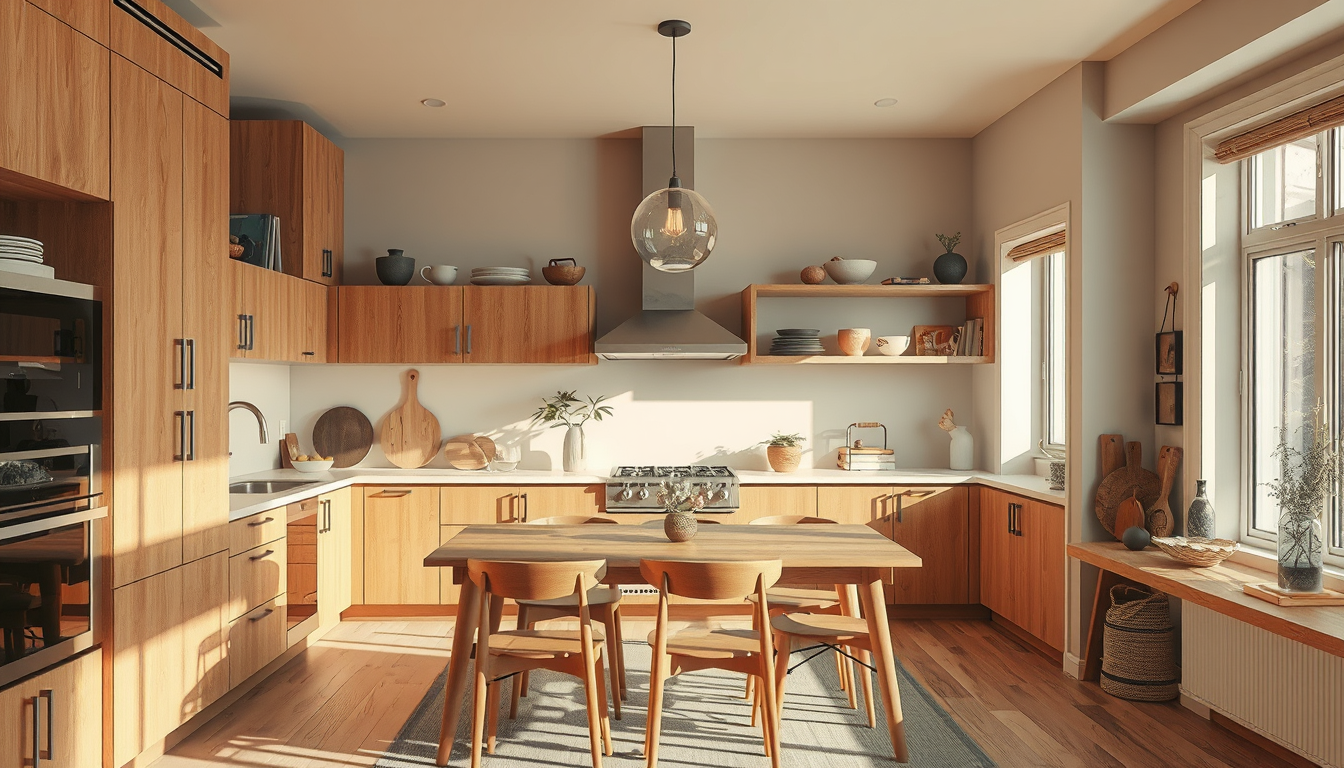
If you’re searching for kitchen pendant lighting Canada has its own set of rules — and they go well beyond aesthetics. Unlike the soaring 10-foot ceilings you see in American design magazines, most Toronto kitchens sit under 8-to-9-foot ceilings in pre-war semis and Victorians, or a standard 9 feet in newer condos. That reality changes everything: the scale of your pendants, the length of your drop rods, and even the fixtures you’re legally allowed to install. The good news is that Canada is home to some of the world’s most respected lighting studios, and getting this upgrade right can transform a functional kitchen into a design-forward space that actually works for daily life.
Why Kitchen Pendant Lighting Is the Best Upgrade for Toronto Kitchens
Pendants do what flush-mounts and pot lights cannot: they define zones, add sculptural character, and put light exactly where you need it for food prep. In a compact Toronto galley or a condo kitchen where the island doubles as a dining table, homework desk, and bar, that precision matters.
The broader design world agrees. Editorial coverage from Architectural Digest and Design Milk has shifted heavily toward artisan and craft-driven fixtures — handblown glass from Vancouver’s Bocci, geometric brass from Montreal’s Lambert & Fils, and minimalist forms from ANDlight . These aren’t just decorative objects. Layered with under-cabinet task lighting and a good dimmer, a set of pendants lets you shift the kitchen from bright workstation at 7 a.m. to ambient dinner-party mode by 8 p.m.
For Toronto homeowners weighing where to spend a renovation budget, pendant lighting delivers one of the highest visual returns per dollar. A single swap — old builder-grade flush mount for three well-chosen pendants — can redefine the entire room without touching cabinetry or countertops.
How to Choose the Right Pendant Style for Your Kitchen Layout
Shop Dining Pieces for Narrow Layouts
Extendable tables, slim dining chairs, and compact pendants make a bigger impact than oversized statement pieces.
Toronto Interior Designer may earn a commission if you shop through these links at no extra cost to you.
Not every pendant works in every kitchen. The table below offers a practical framework based on the layouts most common in Toronto homes, from narrow galleys in century-old semis to open-plan condos along the waterfront.
| Kitchen Layout | Recommended Pendant Style | Ideal Size (Diameter) | Suggested Quantity | Budget Range (CAD) |
|---|---|---|---|---|
| Galley (no island) | Slim cylinder or mini pendant over sink | 6–8 in | 1–2 | $150–$400 each |
| L-shaped with island | Mid-scale drum or globe | 10–14 in | 2–3 | $250–$600 each |
| Open-concept condo | Statement sculptural pendant | 14–20 in | 2–3 | $400–$1,200 each |
| Victorian semi (8 ft ceiling) | Low-profile schoolhouse or flush-pendant hybrid | 8–12 in | 2 | $200–$500 each |
| Large open kitchen (9+ ft ceiling) | Oversized artisan glass or cluster | 16–24 in | 3+ | $500–$2,000+ each |
The ceiling-height rule: In a room with 8-foot ceilings, the bottom of your pendant should sit no lower than 6 feet from the floor over a walkway, or 30–36 inches above the countertop over an island. That leaves very little room for a large shade, so low-profile or semi-flush designs are your friend. In a 9-foot condo, you gain meaningful flexibility — enough for a 12-to-16-inch globe pendant on a standard drop rod.
A pendant isn’t just a light source — it’s the piece that tells guests this kitchen was designed, not just assembled. Choose it like you’d choose art: with intention, scale, and the room’s daily rhythm in mind.
CSA Certification and Ontario Electrical Codes for Kitchen Pendant Lighting Canada
Style decisions are only half the equation. This is where kitchen pendant lighting Canada purchases diverge sharply from cross-border shopping. Every light fixture sold and installed in Canada must carry CSA (Canadian Standards Association) certification or an equivalent recognized mark. A fixture that only carries a UL listing from the United States may not satisfy Ontario code requirements, and your electrician can — and should — refuse to install it .
Here’s what matters for a typical pendant installation:
- 1-to-1 fixture swaps on an existing junction box generally do not require a permit in Ontario. You can replace a flush mount with a pendant on the same box without calling ESA.
- New rough-ins — adding a junction box where none existed, such as centering pendants over a new island — require an electrical permit and inspection through the Ontario Electrical Safety Authority.
- All fixtures must be CSA-certified. If you’re ordering from a US-based retailer like Rejuvenation or Schoolhouse, confirm CSA certification before purchasing. Many major brands carry dual UL/CSA listings, but not all.
- Dimmer compatibility is critical. LED pendants require LED-rated dimmers (look for ELV or TRIAC compatibility). Mismatched dimmers cause flickering, buzzing, and premature driver failure.
- Junction box load ratings must match. Heavier pendants — anything over 20 pounds — may require a fan-rated box, even though it’s not a fan.
At Toronto Interior Designer, we always recommend confirming permit requirements with ESA directly before starting any new wiring work, since enforcement thresholds can shift.
Installing Kitchen Pendants: Heights, Spacing, and Dimmer Setup
With the right fixture chosen and CSA compliance confirmed, installation comes down to precise placement. Getting pendant positioning right is part math, part feel. Here are the numbers that work in Toronto’s typical ceiling heights:
- Hanging height over an island: 30–36 inches from countertop to the bottom of the pendant shade. Start at 32 inches and adjust based on your sightlines — you shouldn’t have to duck or crane your neck to see across the island.
- Spacing between pendants: For islands 6 feet or longer, space pendants 24–30 inches apart, centered along the island’s length. Two pendants work for a 5-to-6-foot island; three for anything longer.
- Clearance from ceiling: Leave at least 2 inches between the canopy and the ceiling for heat dissipation. On an 8-foot ceiling, this plus the hanging height leaves roughly 24–28 inches for the cord or rod — measure before you order.
- Dimmer placement: Install dimmers at the primary kitchen entry point, not behind the island. A Lutron Caseta or Legrand Radiant dimmer with a smart switch option adds convenience and is readily available at Canadian retailers.
- Professional installation cost: Expect $150–$350 per fixture in the GTA for a standard install, rising if new wiring or permit work is involved .
If you’re coordinating pendant lighting with a broader kitchen refresh, consider how your decor accents and colour palette work together — fixtures in brushed brass, matte black, or aged bronze should complement hardware and faucet finishes.
Where to Buy Kitchen Pendant Lighting in Canada: Top Brands and Retailers
You don’t need to import from the US or Europe to get exceptional pendants. Canada’s lighting design scene is world-class, and buying domestically means faster lead times, local warranty service, and guaranteed CSA compliance.
- Bocci (Vancouver): Handblown glass pendants known for organic, clustered forms. Their 28-series is an iconic choice for kitchen islands and has appeared in residential and hospitality projects worldwide. Prices start around $800 CAD per pendant.
- Lambert & Fils (Montreal): Mid-century-meets-industrial aesthetic with meticulous metalwork. Their Laurent and Dorval collections suit kitchen islands beautifully. Starting around $500 CAD.
- ANDlight (Vancouver): Minimalist, architecturally clean fixtures favoured by designers working in modern condo kitchens. Their Spar and Pipeline series pair especially well with open-concept layouts. Starting around $600 CAD.
- Luminaire Authentik (Montreal): A budget-conscious option with clean, simple designs and CSA certification — ideal for galley kitchens or secondary fixtures. Starting around $150 CAD.
For mainstream options, Union Lighting and Furnishings on King Street East in Toronto carries a deep selection with CSA-certified models you can see in person. Online, YLighting.ca and Wayfair.ca offer wide ranges with filtered search for CSA-certified products.
Toronto Interior Designer recommends prioritizing Canadian-made fixtures not just for compliance convenience but because you’re supporting studios doing genuinely original design work.
What to Do Next
- Measure your ceiling height and island length before browsing — these two numbers eliminate 80% of wrong choices.
- Confirm CSA certification on any fixture you’re considering, especially from US-based retailers.
- Book a licensed electrician for anything beyond a 1-to-1 swap; check ESA’s contractor lookup at esasafe.com.
- Order samples or visit a showroom — Union Lighting in Toronto and living space inspiration galleries are worth the trip to see scale and finish in person.
- Budget $150–$350 CAD per fixture for professional installation in the GTA, plus permit fees if new wiring is needed.
- Layer your lighting plan — pendants alone aren’t enough. Pair them with under-cabinet LEDs and a quality dimmer for a kitchen that works at every hour.
Kitchen pendant lighting Canada homeowners install today sets the visual tone for years. Take the time to get the scale, certification, and placement right, and you’ll have a kitchen that looks intentional from every angle.
Start With Functional Basics
For budget-friendly kitchen and dining updates, focus on stools, storage, and lighting before decorative extras.
Toronto Interior Designer may earn a commission if you shop through these links at no extra cost to you.
Sources
- Design Milk — https://design-milk.com
- Electrical Safety Authority Ontario — https://esasafe.com
- HomeStars — https://homestars.com
Frequently Asked Questions
Do kitchen pendant lights need CSA certification in Canada?
Yes. Every light fixture installed in Canada must carry CSA certification or an equivalent recognized mark. A fixture with only a US UL listing may not satisfy Ontario electrical code requirements, and licensed electricians can refuse to install non-certified products.
How high should pendant lights hang over a kitchen island?
Pendant lights should hang 30 to 36 inches above the countertop surface. Start at 32 inches and adjust based on your ceiling height and pendant size. In Toronto homes with standard 8-foot ceilings, low-profile or semi-flush designs work best to maintain adequate clearance.
Where can I buy quality kitchen pendant lighting in Canada?
Top Canadian brands include Bocci and ANDlight in Vancouver, Lambert & Fils and Luminaire Authentik in Montreal. For in-person shopping in Toronto, Union Lighting and Furnishings on King Street East carries a wide CSA-certified selection. Online retailers like Wayfair.ca also offer filtered searches for certified fixtures.