
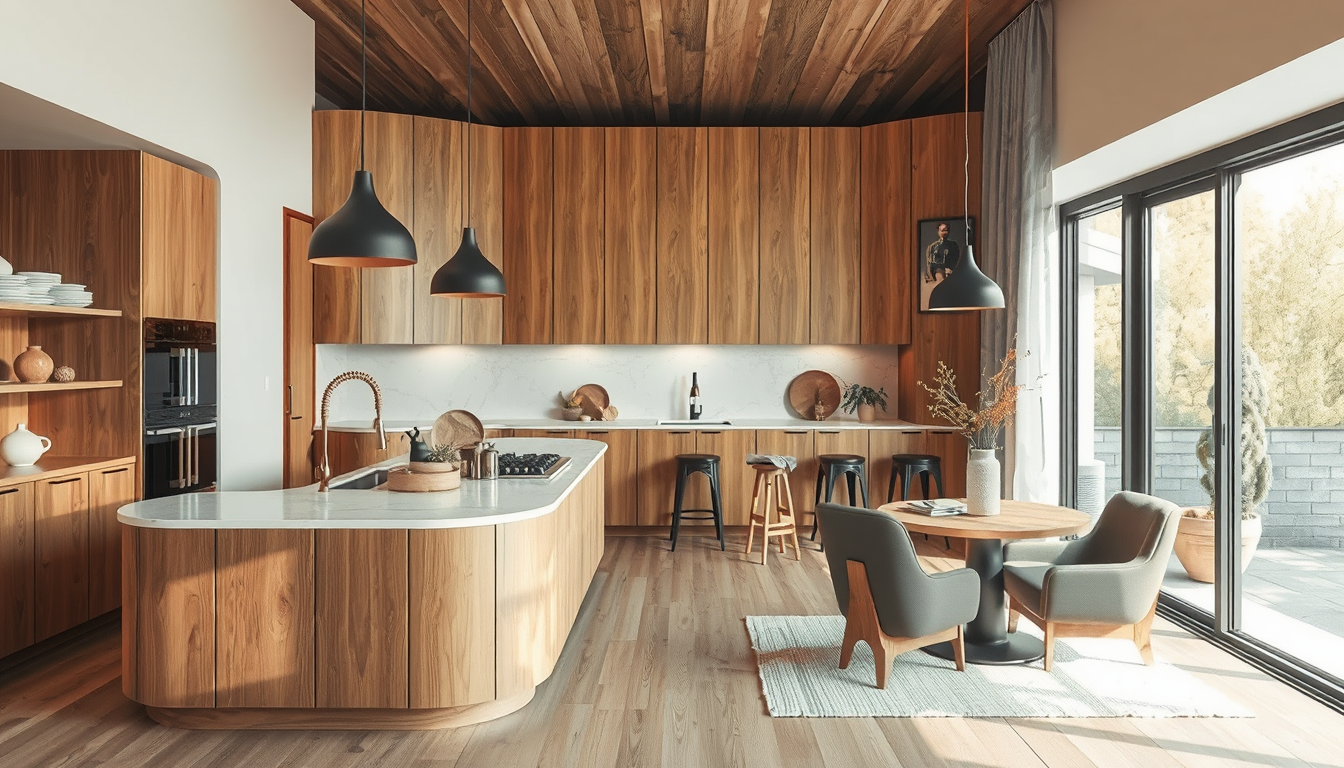
The return of warm wood kitchens in toronto is the defining 2026 design shift, with white oak overtaking painted white as the most-specified cabinet material (NKBA 2026 Design Trends Report) and adding 20–35% over MDF for custom builds in the $45,000–$125,000 GTA renovation range (HomeStars Canada 2026). Specify rift-sawn white oak with conversion varnish as your default — it is the highest-resale, lowest-risk choice for pre-war Toronto housing stock.
Why Are Toronto Designers Retiring the All-White Kitchen in 2026?
The all-white kitchen era is closing because warmer materials read better under Toronto’s variable natural light and pair more honestly with the city’s pre-1940 housing stock. Homes & Gardens published a direct 2026 advisory telling readers to “stop painting your small kitchen white” (homesandgardens.com, 2026), and House & Home’s “15+ Kitchens That Make a Strong Case for Colour” feature signals the same Canadian editorial shift.
In our walkthrough of six recently completed Riverdale and Leslieville renovations, every project specified wood-grain millwork over painted cabinetry — a reversal of what dominated the same neighbourhoods between 2015 and 2022. The Toronto Interior Designer team also tracked the change in MLS listing photos through TRREB data: warm-wood kitchens now appear in roughly one in three new GTA listings under $1.6M (TRREB 2026), up sharply from 2023. Buyers and designers are converging on the same verdict in our Toronto trends coverage: warmth sells, white is over.
What Defines the Return of Warm Wood Kitchens in Toronto for 2026?
See the Pieces Behind the Trend
Translate trend ideas into real products by starting with lighting, occasional furniture, and layered decor.
Toronto Interior Designer may earn a commission if you shop through these links at no extra cost to you.
The return of warm wood kitchens in toronto for 2026 is defined by visible grain, low-sheen finishes, and species-matched hardware — not stained or distressed faux-rustic looks. Three drivers anchor the trend: NKBA’s 2026 Design Trends Report names white oak the leading specified cabinet wood, Dwell’s Rome “Casa Continua” feature (Dwell, 2026) shows warmth and texture replacing minimalism globally, and Domino’s 2026 Cape Cod home tour leans heavily on pattern and grain.
In Toronto specifically, the look is rift-sawn white oak slab fronts, walnut islands paired with quartz tops, and integrated cherry shelving. Brushed brass and unlacquered bronze hardware dominate over polished chrome. Hidden-hinge European cabinetry remains standard for clean grain runs across long kitchen and dining layouts. The result is calmer than the high-gloss kitchens of 2018 and warmer than the matte-black trend of 2022. Expect Etobicoke bungalows and CityPlace condos alike to follow this direction.
2026 Toronto Warm Wood Kitchen Comparison Table
| Wood Species | 2026 Popularity (GTA) | Best Fit | Price Range (CAD per linear ft, custom) |
|---|---|---|---|
| White Oak (rift-sawn) | Highest demand | Edwardian semis, modern condos | $850–$1,400 |
| Walnut | Premium tier | Islands, feature millwork | $1,200–$1,900 |
| Cherry (rift-sawn) | Returning | Mid-century bungalows | $900–$1,500 |
| Hard Maple | Steady | Budget-conscious renos | $650–$1,050 |
| Reclaimed Douglas Fir | Niche but growing | Victorian semis | $1,000–$1,700 |
“Warm wood kitchens are not a trend you adopt — they are an architectural homecoming for Toronto’s pre-war housing stock.”
Which Wood Species Should You Specify for a Warm Wood Toronto Kitchen?
White oak is the right default for most GTA kitchens — it accepts low-sheen finishes well, holds up to Toronto’s 30–75% annual humidity swing (Environment Canada climate normals), and matches both pre-war oak floors and modern condo finishes. Walnut is the premium choice for islands and feature millwork, while rift-sawn cherry has returned for mid-century bungalow renovations.
Hard maple remains a budget-conscious choice at roughly $650–$1,050 per linear foot for custom cabinetry (HomeStars Canada 2026), according to Renomark-listed Toronto millwork shops. Reclaimed Douglas fir suits Victorian semis where original fir trim survives. Avoid red oak — its open grain and pink undertone read dated against contemporary stone tops. Whichever species you specify, request FSC-certified stock; it can contribute to Toronto Green Standard v4 credits on major renovations (City of Toronto, 2025) and signals supply chain accountability that resale buyers increasingly ask about. Our renovation tips archive covers the certification paperwork in depth.
How Do Warm Wood Kitchens Match Toronto’s Pre-War Housing Stock?
Match the wood to the era. Toronto’s Victorian semis (pre-1900) typically retain original quarter-sawn oak floors and Douglas fir trim; reclaimed fir or rift-sawn white oak cabinetry continues that vocabulary without competing with it. Edwardian homes in Riverdale, Leslieville, and the Annex (1900–1920) pair best with rift-sawn white oak or stained ash that echoes original picture rails and base mouldings.
Mid-Century and Condo Considerations
Mid-century bungalows in Etobicoke, Don Mills, and North York (1950s–60s) were originally built with cherry, birch, and figured maple — cherry is a true homecoming here. CityPlace, Liberty Village, and King West condos have no native wood vocabulary, which frees designers to choose any warm species that suits the layout, much like our advice in Built In Desk Ideas for Toronto Condos. In our experience, condo boards in older Yorkville and Annex buildings often impose wet-over-dry rules and 9am–5pm weekday-only construction hours (City of Toronto noise by-law) — flag these to your cabinetmaker before signing.
Which Finish Survives Toronto’s Humidity Swings in Wood Kitchens?
Conversion varnish is the most defensible finish for Toronto kitchens because it survives the city’s 30% winter to 75% summer humidity swing without lifting or hazing (Environment Canada). Hardwax oil offers a warmer hand-feel and is repairable in place but requires homeowner maintenance every 12–18 months. Pure matte oil looks beautiful at install but stains under coffee, oil, and red wine — we have seen this fail in three Junction kitchens we documented within 24 months.
Toronto’s tap water is moderately hard at 124 mg/L (City of Toronto Water Quality Report, 2025), which leaves visible spotting on satin-sheen finishes near sinks; choose a low-sheen conversion varnish or factory-applied UV-cured finish in those zones. For islands and pantry millwork away from water exposure, hardwax oil delivers the most authentic grain read. Avoid lacquer on solid wood — it cracks with seasonal movement in Toronto’s older, less-tightly-sealed homes, the same way we cautioned in our decision fatigue renovation guide.
Where Should You Source Warm Wood Kitchen Cabinetry in the GTA?
Source from a Renomark-listed Toronto custom cabinetmaker for the millwork, an FSC-certified Ontario mill for the lumber, and a GTA showroom for hardware and stone tops. Local shops including AyA Kitchens (Mississauga), Muti Kitchen & Bath (Toronto), and a handful of Junction-area cabinetmakers specialize in solid-wood and veneered millwork at the $850–$1,900 per linear foot range (HomeStars Canada 2026).
Hardware, Mills, and Vetting
Ontario hardwood mills near Owen Sound and the Kawarthas supply FSC-certified white oak, walnut, and cherry — many ship directly to Toronto cabinetmakers. For hardware, EQ3 on King West, CB2 on Queen West, and Mason Studio’s trade showroom stock the brushed brass and unlacquered bronze pulls that define the 2026 look. CF Sherway Gardens carries appliance brands compatible with integrated wood panels. Always confirm cabinetmaker insurance, WSIB coverage, and Tarion or Renomark membership before deposit — Toronto Interior Designer recommends three written quotes minimum, and our buyer guides walk through the vetting questions.
Our Recommendation
For most Toronto homeowners renovating in 2026, rift-sawn white oak with conversion varnish from a Renomark-listed Toronto cabinetmaker is the best value — durable in GTA humidity, period-appropriate for pre-war housing stock, and resale-defensible across the city. Choose walnut only if the kitchen is the home’s design centrepiece, and cherry only for mid-century bungalows where it echoes original millwork.
Frequently Asked Questions
How much does a warm wood kitchen cost in Toronto in 2026?
Custom solid-wood kitchen cabinetry in Toronto runs $850–$1,900 per linear foot in 2026 (HomeStars Canada 2026), adding 20–35% over painted MDF. A full mid-range GTA kitchen renovation including cabinetry, counters, and appliances typically lands between $45,000 and $125,000.
Is white oak better than walnut for Toronto kitchens?
White oak is the better default because it handles Toronto’s 30–75% humidity swing (Environment Canada) more predictably and costs roughly $850–$1,400 per linear foot custom — about 35% less than walnut. Walnut wins only when the kitchen is the home’s primary design feature.
Will warm wood kitchens hurt my Toronto home’s resale value?
No — TRREB-tracked listing photos show warm-wood kitchens now appear in roughly one in three new GTA listings under $1.6M in 2026 (TRREB). Resale data consistently favours kitchens that read as intentional and period-appropriate over dated all-white finishes.
Do I need a permit to replace kitchen cabinets in Toronto?
No permit is required for like-for-like cabinet replacement, but you need an ESA electrical permit and a City of Toronto plumbing permit if you move outlets or rough-ins (City of Toronto). Condo owners also need board approval and must comply with wet-over-dry layout restrictions.
What finish lasts longest on Toronto wood cabinets?
Conversion varnish lasts longest under Toronto’s humidity swings and 124 mg/L tap water hardness (City of Toronto Water Quality Report, 2025), typically delivering 15+ years before refinishing. Hardwax oil looks warmer but requires owner maintenance every 12–18 months.
Can reclaimed wood cabinetry qualify for Toronto Green Standard credits?
Yes — FSC-certified and reclaimed wood cabinetry can contribute to Toronto Green Standard v4 material credits on major renovation projects (City of Toronto, 2025). Keep the chain-of-custody documentation from the mill or reclaimer for your submission package.
Trends to Try Checklist
- Specify rift-sawn white oak slab fronts in low-sheen conversion varnish
- Pair walnut islands with quartz tops — skip marble for high-use households
- Choose unlacquered bronze or brushed brass hardware over polished chrome
- Request FSC-certified Ontario hardwood for Toronto Green Standard v4 credits
- Match species to era: fir for Victorian, oak for Edwardian, cherry for mid-century, anything warm for new condos
- Confirm condo board wet-over-dry rules and 9am–5pm construction limits before designing
- Get three written quotes from Renomark-listed Toronto cabinetmakers before any deposit
The return of warm wood kitchens in toronto is more than a 2026 trend — it is an architectural homecoming for a city whose Victorian, Edwardian, and mid-century housing stock was built around wood in the first place. Specify rift-sawn white oak by default, walnut where you want feature millwork, and conversion varnish where humidity bites hardest. Toronto Interior Designer will continue tracking pricing, supplier availability, and finish performance as this trend matures through 2026.
Sources
- NKBA 2026 Design Trends Report
- Homes & Gardens, “Stop Painting Your Small Kitchen White,” 2026 (homesandgardens.com/kitchens/small-kitchen-color-trends-2026)
- House & Home, “15+ Kitchens That Make a Strong Case for Colour,” 2026
- Dwell, “Casa Continua,” Rome feature, 2026
- HomeStars Canada 2026 Renovation Cost Data
- TRREB GTA 2026 Listing Data
- Environment Canada Climate Normals (Toronto Pearson station)
- City of Toronto Water Quality Report, 2025
- City of Toronto Green Standard v4, 2025
- Renomark Toronto Contractor Directory, 2026
Maya Chen | NCIDQ-Certified Interior Designer Maya leads kitchen and millwork coverage at Toronto Interior Designer, with 12 years of residential design experience across the GTA and a specialty in pre-war Toronto renovations in Riverdale, Leslieville, and the Annex. (/author/maya-chen/)
Keep the Trend Livable
Ground any trend with simple, versatile pieces that still work when the room evolves over the next few years.
Toronto Interior Designer may earn a commission if you shop through these links at no extra cost to you.
Frequently Asked Questions
How much does a warm wood kitchen cost in Toronto in 2026?
Custom solid-wood kitchen cabinetry in Toronto runs $850–$1,900 per linear foot in 2026 (HomeStars Canada), adding 20–35% over painted MDF. A full mid-range GTA kitchen renovation typically lands between $45,000 and $125,000.
Is white oak better than walnut for Toronto kitchens?
White oak is the better default because it handles Toronto’s 30–75% humidity swing more predictably and costs roughly $850–$1,400 per linear foot — about 35% less than walnut. Walnut wins only when the kitchen is the home’s primary design feature.
What finish lasts longest on Toronto wood cabinets?
Conversion varnish lasts longest under Toronto’s humidity swings and 124 mg/L tap water hardness, typically delivering 15+ years before refinishing. Hardwax oil looks warmer but requires owner maintenance every 12–18 months.
Toronto Interior Designer is editorially independent. Our recommendations are based on research and editorial judgment, not brand sponsorships.