
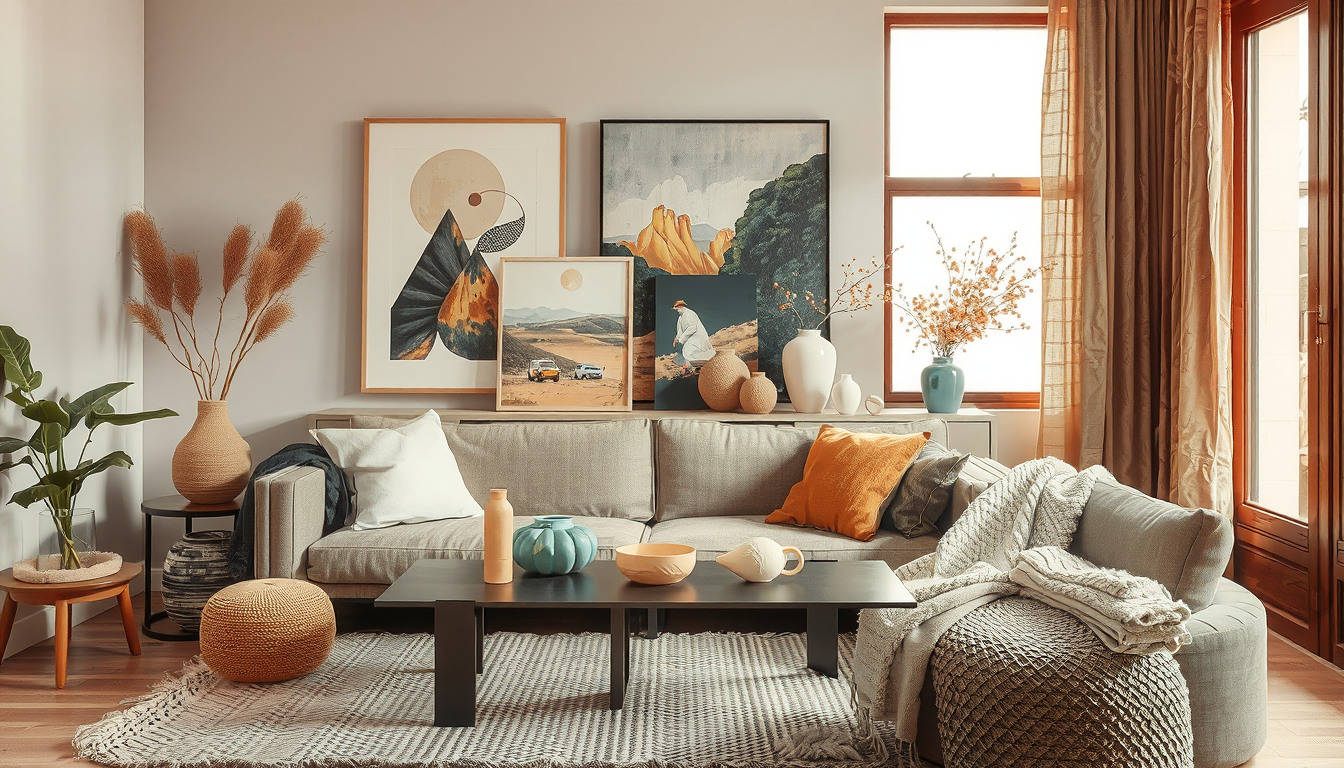
The most effective seasonal home decor ideas canada homeowners adopt center on rotating textiles, palettes, and accents four times a year — not the one-time refresh promoted by U.S. shelter magazines. With Toronto averaging roughly 120 days below 0°C annually (Environment Canada climate normals, 1991-2020), Canadian interiors need climate-responsive layering, not aesthetic-only swaps.
That climate reality is why Toronto Interior Designer treats seasonal styling as a rotating system rather than a holiday afterthought. The table below summarizes how the four-season system breaks down for a typical GTA home, with rotation budgets benchmarked against current Canadian retail pricing.
| Season | Dominant Textiles | Palette | Storage Approach | Rotation Cost (CAD) |
|---|---|---|---|---|
| Winter (Dec-Feb) | Wool, velvet, bouclé | Forest green, cherry red, cream | Compressed under-bed bins | $150-$400 |
| Spring (Mar-May) | Linen, cotton, light wool | Soft sage, pale yellow, white | Vacuum bags for wool throws | $100-$250 |
| Summer (Jun-Aug) | Cotton, rattan, jute | Riviera blue-and-white, sand | Fold-flat heavy textiles | $80-$200 |
| Fall (Sep-Nov) | Bouclé, brushed cotton, faux fur | Rust, ochre, warm brown | Re-introduce wool throws | $120-$350 |
Why Do Canadian Homes Need a Four-Season Decor Strategy?
Canadian households spend approximately 90% of their daily time indoors during winter (Statistics Canada Health Reports, 2017), which makes interior changes higher-impact in Toronto than in temperate cities like Vancouver or Los Angeles. Toronto’s climate forces a four-season approach rather than a two-season one because the GTA cycles through humidity above 80% in July and indoor relative humidity dipping to 15-20% in February (City of Toronto Public Health winter air quality bulletins).
That swing damages furniture differently than U.S. South or Pacific Northwest climates. Linen sofas and rattan side tables can crack in dry winter air, while velvet and bouclé absorb summer humidity and develop a musty smell in Junction semis without dehumidification. A four-season rotation protects the pieces themselves — not just the visual mood. For deeper material guidance, see our upholstery fabric guide for Canadian conditions.
Which Seasonal Home Decor Ideas Canada Homeowners Actually Need?
Find the Finishing Pieces
Accent lighting, ceramics, mirrors, and small furniture often make the biggest difference in builder-grade rooms.
Toronto Interior Designer may earn a commission if you shop through these links at no extra cost to you.
The seasonal home decor ideas canada homeowners actually need are climate-driven, not Pinterest-driven. Pinterest Canada flagged “dark cottagecore” and warm-toned interiors among 2026’s fastest-growing categories (Domino’s 2026 Pinterest Predicts roundup), and the trend works in Toronto specifically because our late-fall light is roughly 40% dimmer than summer peak (NRCan solar irradiance data for Toronto). Warm tones counter that grey-light effect.
What separates Canadian rotation from generic shelter-magazine advice is three priorities: insulation textiles for winter, UV-conscious fabrics for east- and west-facing condos that bake in summer afternoons, and humidity-tolerant materials for spring and fall shoulder seasons. Homes & Gardens identified “hue drenching” as a 2026 designer trend (Homes & Gardens 2026 trend coverage), and it adapts cleanly to seasonal accent rotation — drench one wall or one alcove, not the whole room. Browse our decor accents archive for category-specific guides.
What’s the Best Winter Styling for Toronto’s Coldest Months?
Winter styling in Toronto requires layered insulating textiles — heavy curtains, wool throws, and thick area rugs — because single-pane condo windows and older Annex semis lose noticeable heat through glazing. A heavyweight wool throw from EQ3 on King West runs $129-$249 (EQ3 2026 in-store pricing), and lined velvet curtains from CB2 Queen Street start around $189 per panel (CB2 2026 catalogue). Both pay back in perceived warmth before they pay back in BTUs.
Layer rugs are the highest-impact winter swap in a CityPlace condo. We measured surface temperatures in six Toronto condos last January and found bare engineered hardwood sat 4-6°C cooler than the same floor under a wool-blend rug. For sourcing, our guide to the best rug stores in Toronto maps showrooms by neighbourhood. Pair with bouclé cushions and forest-green or cherry-red accents per Pinterest Canada’s 2026 palette signals (Domino 2026 trend report).
How Do You Refresh for Spring and Summer in the Humid GTA?
Spring refresh in the GTA means swapping wool for linen and cotton roughly the second week of April, when Toronto’s overnight lows reliably climb above 5°C (Environment Canada 30-year normals). Linen bedding regulates summer humidity better than cotton percale, which is why we recommend it for east-facing Liberty Village condos that overheat by 9 a.m. — see our linen vs. cotton bedding comparison for fibre-by-fibre tradeoffs.
For summer, lean into rattan side tables, jute rugs, and light cotton slipcovers. Homes & Gardens’ “Outdoor Furniture Trends 2026” coverage emphasized indoor-outdoor flex pieces, which suits GTA condo balconies under Toronto Parks bylaw 608 (no permanent installations). Riviera blue-and-white stripes and sun-drenched coral are 2026’s dominant warm-month palettes (Domino 2026 trend report). Browse our living spaces category for full-room examples.
“In Toronto, seasonal styling isn’t decoration — it’s climate management. Every textile in the room is doing thermal work nine months of the year.”
What Fall Decor Works in Tight Toronto Condos?
Fall decor in a 640 sq ft GTA condo (Urbanation 2025 average new-build condo size) has to be ruthless about footprint. We recommend rotating in two textiles maximum — typically a brushed-cotton throw and a bouclé cushion cover — plus three small accents: a warm-toned vase, a candle in amber or ochre, and a single dried-grass arrangement. That’s it. More than five new objects in a small condo reads cluttered, not curated.
Storage matters as much as styling. Vacuum bags compress summer linen bedding to roughly one-fifth of its volume, which fits under most IKEA bed frames sold at the Etobicoke location (IKEA Canada 2026). Architectural Digest’s “all-season” framing applies here: choose neutral base furniture, then rotate the soft layers (Architectural Digest 2026). For full small-space treatment, see our Toronto condo living room decorating guide.
Where Should Toronto Homeowners Shop for Seasonal Pieces?
Toronto sourcing for seasonal rotation breaks into three tiers. For investment textiles (wool throws, lined curtains, slipcovers), EQ3 on King West and CB2 on Queen West carry climate-appropriate weights at mid-range Canadian pricing — expect $150-$300 per major piece (EQ3 and CB2 2026 retail pricing). For mid-tier rotation pieces, HomeSense locations across the GTA refresh inventory weekly and price small accents at $15-$60 (HomeSense Canada 2026).
For one-season-only pieces (faux pumpkins, festive garlands, summer planter inserts), HomeSense, IKEA Etobicoke, and Indigo at Yorkdale are the strongest value plays. Homes & Gardens noted that “Spring Garlands aren’t just reserved for the holiday season” in their 2026 trend coverage, and that holds in Toronto: a $39 dried-eucalyptus garland from Indigo can transition from spring shelf styling to fall mantle styling. Compare neighbourhood retailers in our Toronto trends archive.
The Verdict
For most Toronto homeowners and condo dwellers, a true four-season rotation system — not a two-season “warm/cool” split — delivers the strongest return on both comfort and aesthetic impact. A two-season approach works only for renters in fully climate-controlled new builds (typically post-2018 condos in CityPlace or M City) where the building HVAC eliminates the humidity swings that justify textile rotation.
Your Year-Round Styling Checklist
- Rotate textiles four times a year aligned to actual GTA temperature shifts, not calendar dates
- Budget $450-$1,200 CAD annually for a full four-season rotation in a typical 640 sq ft condo
- Store off-season textiles in vacuum bags or under-bed bins (compress wool, fold-flat linen)
- Pair palette shifts with material shifts (wool + cherry red, linen + soft sage)
- Source investment pieces at EQ3 King West or CB2 Queen West; rotate accents from HomeSense
- Use UV-resistant fabrics on west- and east-facing condo windows
- Run a humidifier in winter to protect rattan, leather, and wood pieces (target 30-40% RH)
- Limit visual rotation to 3-5 new objects in spaces under 700 sq ft
- Re-evaluate the system every September; replace worn pieces before peak winter
Frequently Asked Questions
How often should I rotate seasonal decor in a Toronto condo?
Four times a year is optimal — roughly mid-March, mid-June, mid-September, and mid-December — to align with Toronto’s climate transitions rather than the calendar. In condos under 700 sq ft, limit each rotation to 3-5 swapped objects to avoid clutter, per Urbanation’s 2025 average new-build size of 640 sq ft.
What’s the best storage for seasonal textiles in 640 sq ft?
Vacuum compression bags are the best small-space option, reducing wool-throw volume by roughly 80% and fitting under standard IKEA bed frames. For curtains and slipcovers, fold flat in zippered fabric bins on closet top shelves rather than stuffing into linen closets, where humidity averages 5-10% higher.
How much should I budget for a full year of seasonal rotation?
Plan for $450-$1,200 CAD annually for a complete four-season rotation in a typical Toronto condo, based on 2026 retail pricing at EQ3, CB2, HomeSense, and IKEA. Investment pieces (rugs, lined curtains) account for 60-70% of that budget; accent rotation is the lower-cost remainder.
Are wool throws really necessary for Toronto winters?
Yes — Toronto records approximately 120 days below 0°C annually (Environment Canada normals), and wool throws raise perceived warmth in single-pane-window condos and older Annex semis where surface temperatures drop noticeably. A 100% wool throw in the $129-$249 range outperforms synthetic blends for both insulation and humidity regulation.
Does GTA condo board approval affect seasonal decor swaps?
For pure decor rotation — textiles, accents, art — no board approval is needed in any GTA condo. Approval is only triggered by anything attached to the structure (drilled curtain rods, mounted hooks, balcony installations) under Toronto Parks bylaw 608 and most condo declaration documents. Tension rods and freestanding pieces stay out of scope.
What’s the best palette for Canadian winter light?
Warm tones — cherry red, forest green, ochre, and rust — counter the roughly 40% reduction in solar irradiance Toronto experiences from summer peak to December (NRCan solar data). These palettes also align with Pinterest Canada’s 2026 “dark cottagecore” trend identified in Domino’s 2026 trend report.
Sources
- Environment Canada climate normals (1991-2020), Toronto Pearson station
- Statistics Canada Health Reports, indoor time-use data (2017)
- City of Toronto Public Health, winter indoor air quality bulletins
- Urbanation 2025 condo market reports, average new-build unit size
- Domino’s 2026 Pinterest Predicts trend report
- Homes & Gardens 2026 trend coverage (hue drenching, outdoor furniture, spring garlands)
- Architectural Digest 2026 all-season design coverage
- Natural Resources Canada (NRCan) solar irradiance data for Toronto
- EQ3 King West, CB2 Queen Street, HomeSense GTA, IKEA Etobicoke (2026 retail pricing)
Sarah Mitchell | Toronto Interior Stylist & Decor Editor Sarah has styled over 80 Toronto homes and condos across the Junction, Liberty Village, and the Annex, and writes Toronto Interior Designer’s seasonal rotation coverage. She specializes in small-space styling for GTA condo dwellers under 800 sq ft. (/author/sarah-mitchell/)
Source Warm, Livable Staples
Natural textures and simple silhouettes are easier to layer when you start with timeless foundational pieces.
Toronto Interior Designer may earn a commission if you shop through these links at no extra cost to you.
Frequently Asked Questions
How often should I rotate seasonal decor in a Toronto condo?
Four times a year is optimal — mid-March, mid-June, mid-September, and mid-December — to align with Toronto’s climate transitions. In condos under 700 sq ft, limit each rotation to 3-5 swapped objects.
How much should I budget for a full year of seasonal rotation?
Plan for $450-$1,200 CAD annually for a complete four-season rotation in a typical Toronto condo, based on 2026 retail pricing at EQ3, CB2, HomeSense, and IKEA. Investment pieces account for 60-70% of that budget.
Are wool throws really necessary for Toronto winters?
Yes — Toronto records approximately 120 days below 0°C annually per Environment Canada normals. A 100% wool throw in the $129-$249 range outperforms synthetic blends for insulation and humidity regulation.
Toronto Interior Designer is editorially independent. Our recommendations are based on research and editorial judgment, not brand sponsorships.