
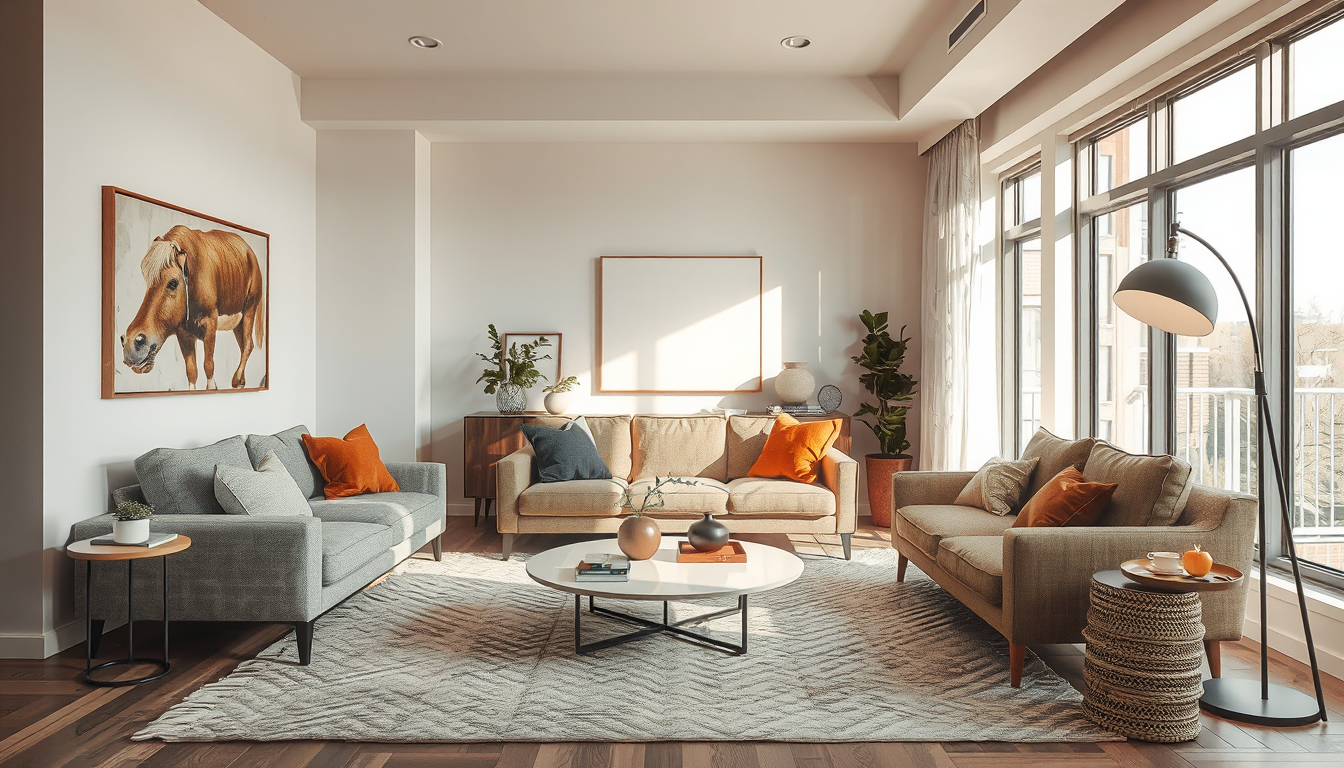
A transitional style living room Canada homeowners can build on already exists in most Toronto houses — it just needs editing. If you own a century home in Leslieville, an Edwardian semi in Roncesvalles, or a post-war bungalow near The Danforth, you are sitting on the classic half of the equation: original crown mouldings, solid hardwood floors, maybe a leaded glass transom above the front door. The modern half is what you bring in — clean-lined sofas, uncluttered surfaces, warm neutral tones that let those heritage details breathe instead of compete. Transitional design is not a compromise between old and new. It is a deliberate conversation between them, and Canadian housing stock makes that conversation easier than almost anywhere else.
What Transitional Style Means and Why It Fits Canadian Homes
Transitional style sits between traditional and contemporary without fully committing to either. You keep architectural bones — wainscoting, panelled doors, deep baseboards — but pair them with furniture that has simpler silhouettes, fewer ornamental curves, and a restrained material palette. The result feels layered and lived-in without tipping into grandma’s parlour or a sterile showroom.
This approach consistently ranks among the top three most-requested residential design styles in North America . The reason it resonates so strongly here is practical: Toronto has hundreds of thousands of homes built before 1960, many with architectural details that would be expensive to replicate and wasteful to strip out . Instead of fighting those details, transitional design treats them as assets.
Canada’s northern latitude also plays a role. Lower-angle sunlight for much of the year means rooms can feel dim if you lean too heavily into dark traditional palettes or too cold if you go full Scandinavian minimalism. Transitional’s sweet spot — warm neutrals, textured fabrics, strategic contrast — handles our light conditions better than either extreme.
5 Essential Elements of a Transitional Style Living Room in Canada
Source Scaled-Right Living Room Pieces
Start with apartment-scale sofas, nesting tables, and layered lighting that fit Toronto floor plans without overwhelming them.
Toronto Interior Designer may earn a commission if you shop through these links at no extra cost to you.
Getting the balance right comes down to five categories. Here is a practical breakdown with budget guidance in Canadian dollars.
| Element | Recommendation | Budget Range (CAD) | Works Best In |
|---|---|---|---|
| Seating | Clean-lined sofa in a warm neutral (greige, oatmeal, soft taupe) with a tight back or low track arm. Avoid heavy skirts and tufted rolled arms. | $1,800–$4,500 | Rooms with ornate mouldings — the simple sofa lets the architecture stand out. |
| Anchor Rug | Wool or wool-blend in a subtle tone-on-tone pattern. Skip bold geometrics and busy florals alike. | $800–$2,500 | Open-plan living areas where the rug defines the seating zone. |
| Lighting | One sculptural pendant or chandelier that reads modern but uses warm metals (brass, aged bronze). | $400–$1,600 | Rooms with high ceilings or original ceiling medallions. |
| Accent Furniture | One or two vintage or vintage-inspired pieces — a mid-century credenza, a reclaimed-wood side table — to ground the room in history. | $300–$1,500 | Newer-build condos that need warmth and character. |
| Textiles | Layered throws and cushions in boucle, linen, and velvet. Stick to a two- or three-colour story. | $200–$800 | Every room — textiles are the fastest way to shift a space from cool to warm. |
For more ideas on mixing old and new pieces, our guide to vintage decor sourcing across Canada covers thrifting strategies that pair naturally with a transitional approach.
How Toronto Designers Blend Century-Home Character With Modern Comfort
The best transitional rooms in Toronto share a pattern: designers identify the strongest heritage feature in the room and build outward from it.
- Start with the bones. If the room has original hardwood, keep it exposed and refinish in a natural or light walnut tone. If it has crown moulding, paint it the same colour as the walls to modernize it without removing it.
- Choose one statement contrast. A contemporary light fixture against a traditional ceiling medallion. A low-profile sectional beneath a tall Victorian window. The contrast is the point — it signals intention, not neglect.
- Edit aggressively. Traditional rooms tend toward clutter; contemporary rooms can feel empty. Transitional style requires restraint. One curated shelf beats a full bookcase. A single large art piece outperforms a scattered gallery wall — a shift that aligns with the growing preference for picture ledges over permanent nail-and-wire arrangements .
- Warm the base, cool the accents. Use warm tones (cream walls, walnut furniture, brass hardware) for the largest surfaces, then add cooler accents (a slate-blue cushion, a charcoal throw) for depth.
- Invest in built-ins. Pantry-style built-in cabinetry and window-seat storage are among the most requested features in 2026, and they solve Toronto’s perennial storage problem while adding architectural substance to plain walls .
Transitional design works because it respects what a home already has. The worst thing you can do with a 1920s Roncesvalles semi is pretend it was built yesterday — the best thing is to make it feel like it has been thoughtfully updated by every owner since.
At Toronto Interior Designer, we see this philosophy play out in neighbourhoods across the city, from High Park to the Danforth, where homeowners are choosing to enhance rather than erase.
Best Colour Palettes for Transitional Living Rooms in Canada’s Northern Light
Colour is where transitional style earns its keep in Canadian rooms. House & Home’s 2026 decorating trends report highlights warm neutrals, layered textures, and heritage-modern fusion as leading directions for Canadian interiors . Here is a five-step approach to building a palette that handles our light:
- Base wall colour: Choose a warm white or greige (Benjamin Moore Classic Gray OC-23 or Edgecomb Gray HC-173 are Toronto designer staples). These read warm even on overcast January afternoons.
- Secondary tone: Add depth with a mid-tone warm neutral on built-ins, an accent wall, or the fireplace surround — think warm taupe or mushroom.
- Wood tone: Pick one dominant wood finish and repeat it. Walnut is the transitional workhorse because it is warm without being rustic.
- Metal finish: Brushed brass or aged bronze for hardware, lighting, and frames. Limit yourself to one metal family.
- Accent colour: One muted colour — sage green, dusty blue, or soft terracotta — used sparingly in textiles and art. This is where personality enters without overwhelming the room.
If you are rethinking your living room layout alongside the palette, our guide to TV-free living room layouts offers five proven arrangements that work especially well in transitional spaces.
Where to Shop Transitional Furniture in Toronto and Across Canada
You do not need a trade account to furnish a transitional room well. Canadian retailers have caught up to the demand, and the right mix of new and salvaged pieces is more accessible than ever.
- EQ3 (Winnipeg-founded, with Toronto showrooms) offers clean-lined sofas and dining pieces in warm materials — their walnut and boucle combinations are transitional by default.
- Avenue Road (Toronto) carries high-end European and North American pieces that bridge sculptural contemporary and timeless traditional.
- Bouclair provides affordable textiles and accent furniture with enough restraint to work in a transitional scheme.
- Vintage and salvage: Toronto’s Adjective (Queen West), Smash Salvage (Geary Ave), and the Leslieville strip of antique shops are strong sources for the one or two heritage accent pieces every transitional room needs.
For broader living space inspiration, Toronto Interior Designer publishes regular sourcing roundups tailored to Canadian retailers and budgets.
What to Do Next
A transitional style living room does not require a gut renovation — it requires clear priorities. Here is your starting checklist:
- Audit your architectural details. Walk through your living room and list every heritage feature worth keeping: mouldings, hardwood, built-ins, original hardware.
- Pick your one modern statement. Choose a single contemporary piece — a sofa, a light fixture, a large-scale artwork — that will create intentional contrast with your existing character.
- Set a palette of three. One warm base, one mid-tone, one muted accent. Pin fabric swatches and paint chips to a board before you buy anything.
- Source one vintage piece. Visit a Toronto salvage shop or online marketplace for a credenza, side table, or mirror that adds depth your room cannot get from new furniture alone.
- Edit before you add. Remove anything that does not serve the room’s new direction. Transitional style rewards restraint — every item should earn its place.
Toronto Interior Designer covers transitional projects, sourcing guides, and renovation planning across every room in the house. Start with the steps above, and you will find the line between classic and modern is not a line at all — it is exactly where the best rooms live.
Finish the Room With Texture
Layer in rugs, side tables, and decor accents that warm up condo living rooms without adding clutter.
Toronto Interior Designer may earn a commission if you shop through these links at no extra cost to you.
Sources
- Houzz Design Trends Survey — https://www.houzz.com/magazine/home-design-trends
- City of Toronto Open Data — https://open.toronto.ca/
- Homes & Gardens — https://www.homesandgardens.com/
- Domino — https://www.domino.com/
- House & Home — https://houseandhome.com/
Frequently Asked Questions
What is transitional style in a living room?
Transitional style blends traditional architectural details like crown mouldings and hardwood floors with clean-lined modern furniture and warm neutral palettes. It creates a layered, lived-in feel without leaning too far into either classic or contemporary design.
Why does transitional design work so well in Canadian homes?
Canada’s housing stock includes hundreds of thousands of pre-1960 homes with heritage details worth preserving. Transitional design treats those features as assets rather than obstacles, and its warm neutral palettes handle northern low-angle light better than dark traditional or cool minimalist schemes.
How much does it cost to create a transitional living room in Canada?
A transitional living room refresh in Canada typically ranges from $3,500 to $10,900 CAD, covering seating, an anchor rug, lighting, accent furniture, and layered textiles. You can start smaller by editing existing pieces and adding one modern statement item.