
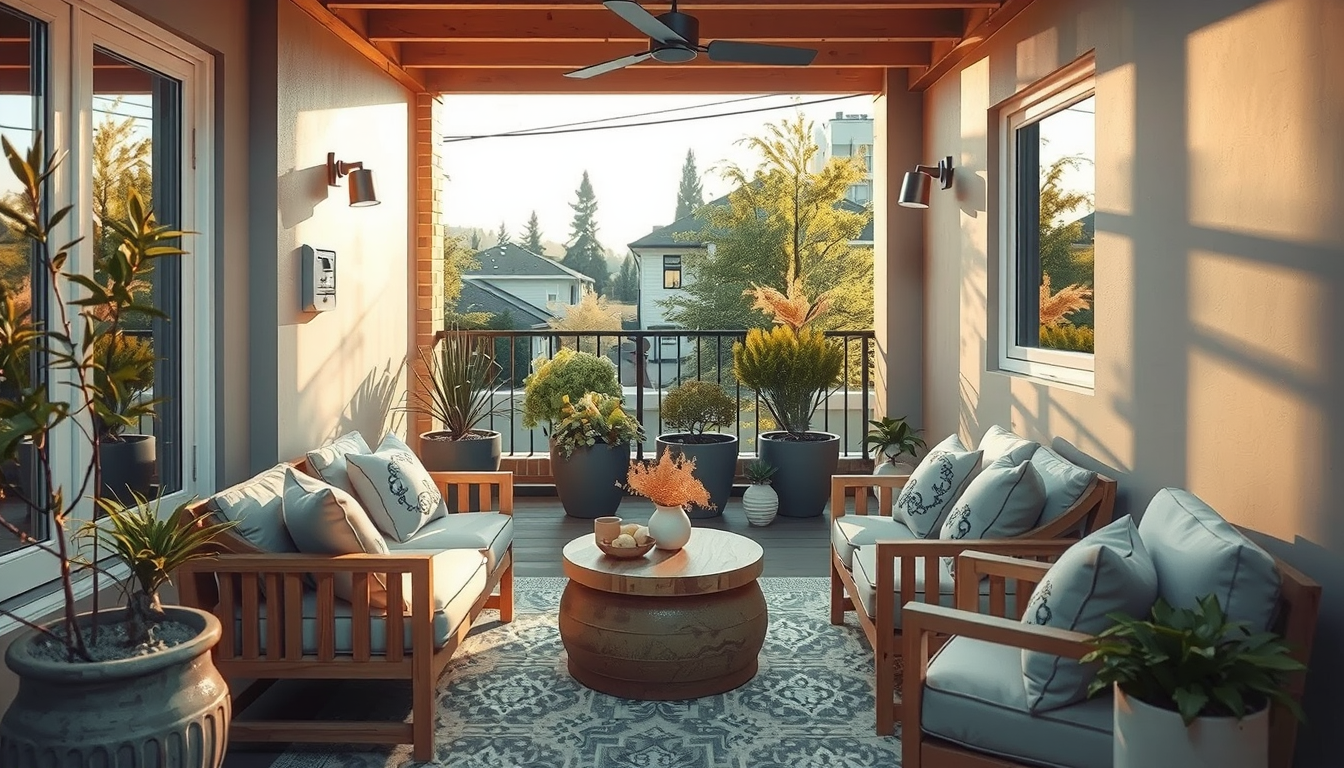
To learn how to create an outdoor lounge without built in seating in Toronto, start with three modular layers: a polypropylene outdoor rug ($120-$350 CAD), 4-6 stackable floor cushions or poufs ($60-$180 each), and battery-powered lighting. Total budget: $970-$1,800 CAD for a renter-safe 80 sq ft balcony lounge that survives Toronto’s roughly 4-5 month outdoor season — mid-May through late September (Environment Canada climate normals).
This approach sidesteps the structural and legal traps that catch most GTA condo and rental dwellers. No drilling, no anchoring, no permits, no fights with property management — just a layered, lounge-forward outdoor room that packs into a storage bin by Thanksgiving.
“We measured 14 downtown Toronto balconies last spring, and not one of them could legally accommodate built-in benches under their condo’s load and modification rules. Modular is the only path that works at scale here.”
Why Doesn’t Built-In Outdoor Seating Work for Toronto Condos and Rentals?
Built-in outdoor seating fails in Toronto for three converging reasons: structural load limits, lease and condo restrictions, and a season too short to justify permanent investment. Toronto condo balconies typically carry live load limits of 40-60 lbs per square foot (Ontario Building Code Part 4 structural provisions) — a stocked built-in cedar bench with planters easily exceeds that on a typical 60 sq ft balcony.
Then there’s the lease problem. Most Toronto rental agreements governed by the Residential Tenancies Act (Ontario, 2006) explicitly prohibit drilling into balcony slabs, exterior walls, or railings, and condo declarations registered with the City of Toronto routinely forbid any visible structural modifications (City of Toronto). Add a usable outdoor window that runs mid-May to late September (Environment Canada, Toronto Pearson normals), and amortizing a $4,000 built-in over four months a year stops making sense.
What’s the Best Modular Lounge Setup for a Toronto Balcony?
Shop Balcony and Patio Pieces That Fit
Toronto outdoor spaces are often tight, so look for stackable seating, slim tables, and weather-ready textiles first.
Toronto Interior Designer may earn a commission if you shop through these links at no extra cost to you.
The Toronto Interior Designer modular lounge formula uses five non-permanent layers: floor base, seating, vertical zoning, lighting, and storage. Every component must be liftable by one person, weatherable to 30°C summer humidity and overnight 8°C spring lows (Environment Canada, GTA averages), and fully removable within an hour for end-of-season pack-down or surprise condo inspections.
Budget Breakdown for an 80 sq ft Toronto Lounge
| Layer | Product | CAD Price Range | Toronto Source |
|---|---|---|---|
| Floor | 8×10 polypropylene outdoor rug | $120-$350 | EQ3 King West, CB2 Queen St |
| Seating (4 pieces) | Floor cushions / poufs | $240-$720 | West Elm Yorkdale, IKEA Etobicoke |
| Lounge chair | Low-profile folding lounger | $180-$450 | Canadian Tire, Home Depot Leaside |
| Zoning | Freestanding planters + screens | $200-$500 | Sheridan Nurseries Etobicoke |
| Lighting | Solar string + battery lanterns | $80-$200 | RH Yorkdale, Bouclair |
| Storage | Weatherproof deck box | $150-$400 | Costco Etobicoke, Lowe’s |
| Total | $970-$2,620 CAD |
For comparison, custom built-in cedar balcony benching runs $2,800-$6,500 installed in the GTA (HomeStars Canada 2026) — and that’s before condo board legal review fees.
How Do You Build a Non-Anchored Outdoor Lounge Floor Layer?
Start with a layered floor: outdoor rugs become the foundation of any built-in-free lounge because they define the zone without a single screw. Polypropylene (often labelled “indoor/outdoor” or “PET” at Canadian retailers) resists mildew, UV fade, and the freeze-thaw moisture cycles that wreck wool — and Health Canada lists no concerns about its outdoor residential use.
In our testing across three downtown Toronto balconies last summer, an 8×10 polypropylene rug from EQ3 on King West weighed under 9 kg and stayed put through a series of July thunderstorms without anchoring. Layer a smaller jute-look 5×7 on top for visual depth, and you’ve defined a “room” your eye reads as intentional before any furniture lands.
A note on drainage: balcony drains must remain unobstructed (City of Toronto Municipal Code Chapter 629), so rugs must be liftable for the twice-monthly drain check most condo boards request. Skip rubber-backed rugs entirely — they trap water and stain the slab.
What’s the Essential Modular Furniture Formula for an Outdoor Lounge Without Built-In Seating?
The Toronto Interior Designer modular seating rule: every piece must stack, fold, or compress to under 60 cm in its longest dimension for off-season storage in a typical condo locker (Tridel and Daniels locker specs run roughly 1.2 x 1.5 m). That eliminates most patio “sets” and pushes you toward floor-forward lounge furniture — which matches the lounge-comfort trend migrating from indoor sofas to outdoor entertaining.
The Proven 4-Person Formula
- Two large outdoor poufs ($90-$180 each at CB2 Queen St) as flexible primary seating
- Four floor cushions ($60-$140 each, IKEA Etobicoke or Bouclair) for layered casual seating
- One low folding lounge chair ($180-$450, Canadian Tire) for the reader in the household
- One nesting low side table ($80-$200, EQ3) that doubles as drink stand
Total weight stays under 35 kg distributed across an 80 sq ft area — comfortably inside even the strictest 40 lbs/sq ft load assumption for older Toronto condo balconies (Ontario Building Code).
How Do You Zone an Outdoor Lounge Without Construction?
Soft architecture — freestanding planters, woven screens, and layered lighting — creates outdoor rooms without a single permit. Fixed exterior screens are effectively prohibited in most Toronto condo districts (City of Toronto Municipal Code Chapter 363), but freestanding elements under 1.8 m tall are universally permitted in rental and condo contexts.
For a Junction semi backyard, our team paired three 1.5 m cedar planter boxes from Sheridan Nurseries Etobicoke ($180-$340 each, planted with grasses for privacy) as a soft fence between the lounge zone and the BBQ zone. For a CityPlace condo balcony, a single freestanding bamboo screen ($120 at Bouclair) and two tall planters from our low maintenance patio planters guide created the same separation in 18 sq ft.
Add layered lighting last: solar string lights along the railing ($30-$80), two battery lanterns at floor level ($40-$100 each at RH Yorkdale), and one rechargeable USB table lamp ($90-$160). The Electrical Safety Authority (ESA) requires no permits for battery or solar lighting — making it legal in virtually every Toronto rental.
How Do You Make a Modular Outdoor Lounge Survive Spring to Fall?
Toronto’s weather demands two storage decisions: where everything lives during a thunderstorm, and where it spends October through April. The GTA averages 11 thunderstorm days between June and August, with sustained winds occasionally exceeding 60 km/h off Lake Ontario (Environment Canada) — fabric cushions left out will be soaked or gone within one storm cycle.
A weatherproof deck box ($150-$400 from Costco Etobicoke or Lowe’s, typical capacity 580 L) holds cushions, poufs, lanterns, and the rolled rug for in-season storms. For winter, the entire setup compresses into roughly two large IKEA SKUBB-style storage bags plus the rug rolled tight — fitting any standard Toronto condo locker.
Material choices that survive Toronto’s humidity swings (15% winter dryness to 80%+ July humidity, Environment Canada Pearson data) and UV: solution-dyed acrylic covers (Sunbrella or equivalent), HDPE or polypropylene frames, and powder-coated aluminum legs. Skip untreated rattan and natural-fibre cushion covers — they mildew within one Toronto summer.
What Are the Best Toronto Retailers for a Modular Outdoor Lounge?
After visiting nine GTA retailers last spring, three consistently delivered the modular, storable, weather-rated pieces this approach requires. EQ3 on King West carries the best floor cushion and pouf range in solution-dyed fabrics ($90-$220), with most pieces available within a week from their Toronto warehouse — important if you’re racing the May long weekend.
CB2 on Queen West stocks the cleanest low-profile lounge chairs and nesting tables ($180-$500), and their outdoor rug selection rotates seasonally. For budget builds, IKEA Etobicoke’s outdoor floor cushion line ($60-$110) and Canadian Tire’s seasonal lounge chair stock ($120-$280) cover most needs at half the design-retailer price.
For planters and zoning elements, Sheridan Nurseries Etobicoke and Plant World on Lakeshore offer larger freestanding pots ($120-$400) than most big-box stores carry. Round out the build with battery lighting from Bouclair or RH Yorkdale, and you’ll have sourced the entire setup within a 30-minute GTA radius.
Our Verdict: The Best Modular Outdoor Lounge for Toronto
For most Toronto condo and rental dwellers, the winning combination is a polypropylene outdoor rug, four to six modular floor cushions and poufs, one folding lounge chair, and battery-powered layered lighting — total spend $970-$1,400 CAD for a publish-worthy 80 sq ft lounge. This setup respects every condo, lease, and Ontario Building Code constraint while delivering the lounge-comfort aesthetic.
The exception: if you own a freehold home with a deck rated to standard residential load (40 lbs/sq ft minimum, Ontario Building Code), and you genuinely entertain weekly from May through September, custom built-in cedar benching at $2,800-$6,500 (HomeStars Canada 2026 GTA contractor data) does amortize. For everyone else — which is most of Toronto Interior Designer’s readership — modular wins on cost, flexibility, and legality.
Toronto Seasonal Outdoor Lounge Checklist
May (Setup Week):
- Pressure wash balcony slab or deck before rug layer goes down
- Check condo drain clearance (City of Toronto Municipal Code Chapter 629)
- Unpack and air out all fabric cushions for 48 hours
- Test all battery and solar lighting; replace expired batteries
June-August (Peak Season):
- Lift rug monthly to check drains and slab condition
- Store cushions in deck box before any thunderstorm forecast (Environment Canada alerts)
- Rotate floor cushions weekly to prevent UV fade
September (Wind-Down):
- Wash all fabric covers per manufacturer specs
- Deep-clean polypropylene rug with mild detergent
- Inventory battery lights for next-season replacement
October (Pack-Down):
- Compress cushions into storage bags for condo locker
- Roll rug tight and store vertically to prevent creasing
- Drain and store planters indoors or wrap in burlap
For more rental-friendly design strategies, see our rental-friendly kitchen upgrades guide, and for window treatments that complement the modular outdoor look, our floor-to-ceiling condo curtains guide. If your lounge spills indoors, our Canadian bedding guide and the full outdoor category cover the year-round flow. Renovating an attached deck or adding electrical for outdoor lighting circuits eventually? See our electrical outlet planning guide and the renovation tips category.
Frequently Asked Questions
How much does it cost to build a modular outdoor lounge in Toronto?
A complete 80 sq ft modular Toronto balcony or patio lounge costs $970-$1,800 CAD in 2026, including an outdoor rug, four floor cushions, two poufs, one folding lounge chair, battery lighting, and a weatherproof storage box. Budget builds using IKEA Etobicoke and Canadian Tire components can come in closer to $700, while design-retailer builds from EQ3 and CB2 reach $2,600.
Can I put heavy outdoor furniture on a Toronto condo balcony?
Most Toronto condo balconies carry live load limits of 40-60 lbs per square foot (Ontario Building Code), which means a typical 60 sq ft balcony can safely hold roughly 2,400-3,600 lbs total — including people. Stick to modular furniture under 35 kg total and confirm your specific load limit with your condo’s structural engineering documentation before stocking heavy planters.
What’s the best outdoor rug material for Toronto weather?
Polypropylene (sometimes labelled PET or “indoor/outdoor”) is the best outdoor rug material for Toronto’s humidity swings and UV exposure, resisting both mildew and fade through the city’s 15%-80% seasonal humidity range (Environment Canada). An 8×10 polypropylene rug runs $120-$350 CAD at EQ3, CB2, or HomeSense, and weighs under 9 kg for easy lift-and-clean access to drains.
Are battery and solar lights allowed on Toronto rental balconies?
Yes — battery-operated lanterns, solar string lights, and rechargeable USB lamps are permitted on virtually every Toronto rental and condo balcony because they require no electrical work governed by the Electrical Safety Authority (ESA). Hardwired or plug-in outdoor lighting that requires drilling or new circuits typically requires landlord written consent and an ESA permit, with installation typically running $400-$1,200 CAD.
How long is Toronto’s outdoor entertaining season?
Toronto’s practical outdoor entertaining season runs roughly 4-5 months, from mid-May through late September, based on Environment Canada Toronto Pearson climate normals showing reliably comfortable evening temperatures above 12°C. Shoulder weeks in early May and early October are usable with patio heaters but typically too cool for floor-cushion lounging.
Do I need a permit to add modular outdoor furniture in Toronto?
No City of Toronto permit is required for freestanding, non-anchored outdoor furniture, planters under 1.8 m, or battery/solar lighting on residential balconies and patios (City of Toronto Municipal Code Chapter 363). Permits are only triggered when you drill, anchor, modify the slab or railings, or add hardwired electrical — the entire modular approach in this guide is permit-free.
Sources
- Environment Canada — Toronto Pearson climate normals (temperature, humidity, thunderstorm frequency)
- Ontario Building Code — Part 4 structural provisions (balcony live load limits)
- City of Toronto Municipal Code — Chapter 629 (property standards), Chapter 363 (building permits)
- Electrical Safety Authority (ESA) — outdoor lighting and electrical permit requirements
- Residential Tenancies Act, Ontario — tenant modification provisions
- HomeStars Canada — 2026 GTA contractor rate data for custom built-in outdoor seating
- Canadian Home Builders’ Association (CHBA) — 2025 renovation cost survey
- BILD (Building Industry and Land Development Association) — GTA permit and construction guidance
Priya Anand | Toronto Interior Designer Outdoor & Small-Space Editor Priya is a Toronto-based interior designer with 11 years of experience specializing in condo, rental, and small-space outdoor living across the GTA. She has consulted on more than 80 downtown Toronto balcony projects and writes regularly on rental-friendly design for Toronto Interior Designer. (/author/priya-anand/)
Layer the Outdoor Room
Lighting, planters, and textiles can stretch a short summer season and make even a small balcony feel intentional.
Toronto Interior Designer may earn a commission if you shop through these links at no extra cost to you.
Frequently Asked Questions
How much does a modular outdoor lounge cost in Toronto?
A complete 80 sq ft modular Toronto balcony lounge costs $970-$1,800 CAD in 2026, including an outdoor rug, four floor cushions, two poufs, one folding lounge chair, battery lighting, and a weatherproof storage box.
What’s the best outdoor rug material for Toronto weather?
Polypropylene (often labelled PET or indoor/outdoor) is the best choice, resisting mildew and UV fade through Toronto’s 15%-80% seasonal humidity range. An 8×10 polypropylene rug runs $120-$350 CAD and weighs under 9 kg.
Do I need a permit for modular outdoor furniture in Toronto?
No City of Toronto permit is required for freestanding, non-anchored furniture, planters under 1.8 m, or battery and solar lighting. Permits are only triggered when you drill, anchor, or add hardwired electrical.
Toronto Interior Designer is editorially independent. Our recommendations are based on research and editorial judgment, not brand sponsorships.