
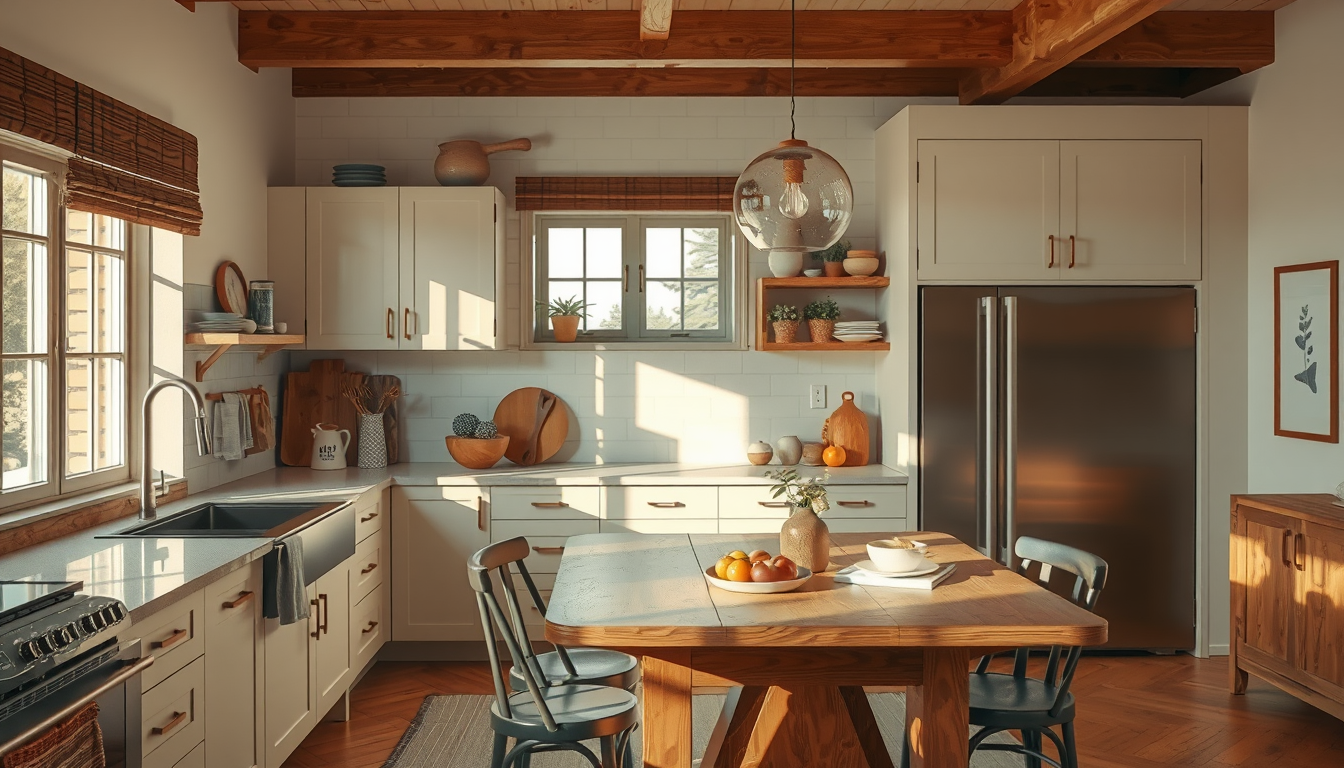
The best farmhouse kitchen ideas Canada homeowners are embracing in 2026 skip the Pinterest clichés and start with what actually works in our homes. Whether you own a narrow Victorian row house in Cabbagetown or a sprawling suburban build in Oakville, the modern Canadian farmhouse kitchen balances reclaimed character with real-life function — think heritage barn wood on the island, a built-in pantry cabinet for bulk Costco runs, and stained wood finishes replacing the all-white look that dominated the last decade. This is not about copying a rural aesthetic. It is about sourcing honest materials, building for Canadian seasons, and creating a kitchen that feels collected rather than decorated.
What Defines a Canadian Farmhouse Kitchen in 2026
The farmhouse kitchen has evolved well past shiplap and mason jars. In Canada, the 2026 version leans heavily on craft-forward restoration — honouring existing character in older homes while integrating modern storage and appliances. Three shifts define the look right now:
- Stained and natural wood over painted cabinetry. Sage green and olive tones still appear, but the momentum has moved toward warm stained finishes — white oak, maple, and reclaimed pine — that show the grain rather than hide it .
- Pantry cabinets as the centrepiece. The 2026 Houzz Kitchen Trends Study found pantry cabinets are the number-one most-requested built-in feature in kitchen renovations, and they fit naturally into farmhouse layouts as a modern take on the butler’s pantry .
- Checkerboard flooring comeback. House & Home’s 2026 decorating trends report highlighted the checkerboard floor revival, and black-and-white tile remains one of the most-searched farmhouse floor patterns in Canada .
At Toronto Interior Designer, we see these trends playing out in local projects where homeowners want warmth and history without sacrificing the workflow of a modern kitchen. The key difference from American farmhouse design is scale — Toronto Victorian-era homes from the 1870s to 1910s typically have galley or corridor kitchens under 120 square feet, which demands smarter layout thinking than a wide-open rural floor plan.
Where to Source Reclaimed Farmhouse Materials in Ontario
Shop Dining Pieces for Narrow Layouts
Extendable tables, slim dining chairs, and compact pendants make a bigger impact than oversized statement pieces.
Toronto Interior Designer may earn a commission if you shop through these links at no extra cost to you.
The soul of a farmhouse kitchen lives in its materials. Reclaimed Ontario barn wood, salvaged hardware, and vintage light fixtures give a kitchen provenance that new materials cannot replicate. Expect to pay roughly $8 to $15 per square foot for reclaimed barn wood compared to $3 to $6 for new pine — but the patina and story are worth the premium.
Here is where to start sourcing in Ontario:
| Element | Recommended Source | Budget Range (CAD) | Works Best In |
|---|---|---|---|
| Barn wood (beams, cladding) | Timeless Materials, Ontario salvage yards | $8–$15/sq ft | Islands, accent walls, open shelving |
| Heritage cabinet hardware | Architectural Salvage dealers, Aberfoyle Antique Market | $5–$40/piece | Shaker doors, pantry pulls |
| Farmhouse sinks (apron-front) | Canadian kitchen showrooms, Vintage Tub & Bath | $600–$2,500 | Any layout with 30″+ base cabinet |
| Reclaimed flooring (pine, oak) | Espace Bois, local demolition salvage | $10–$20/sq ft installed | Open-plan kitchens, mudroom transitions |
| Vintage pendant lighting | Local estate sales, 1stDibs, Facebook Marketplace | $75–$500/fixture | Above islands, over sink |
If you enjoy the hunt for one-of-a-kind pieces, our guide to vintage decor sourcing across Canada covers how to thrift with intention and avoid overpaying.
“A farmhouse kitchen should look like it was built over time, not bought in a single weekend. The best ones mix three eras: something old, something built yesterday, and something handed down.”
Best Farmhouse Kitchen Cabinetry Styles for Canadian Homes
Cabinetry typically accounts for about 35 percent of a Canadian kitchen renovation budget, which ranges from $25,000 to $75,000 depending on scope. That makes your cabinet choice the single biggest design decision in the room.
For farmhouse kitchens, three styles work consistently well across Canadian home layouts:
- Shaker-profile doors in natural wood. The flat centre panel and clean rail-and-stile frame pair with almost any hardware. In stained white oak or maple, Shaker cabinets read as farmhouse without feeling costume-like. They also age gracefully — a real advantage when you want a kitchen that improves over the years rather than dates within five.
- Open upper shelving with closed lowers. This combination is especially effective in Toronto’s narrow galley kitchens where wall cabinets can make the space feel closed in. Floating reclaimed wood shelves on the upper section keep the room visually open while the lower cabinetry handles heavy storage.
- Beadboard or tongue-and-groove panels on the island. If you have room for an island, wrapping its base in vertical beadboard painted in a muted tone — think warm linen, soft putty, or sage — anchors the farmhouse feel without committing every surface.
Canadian cabinetmakers who specialize in country and Shaker-style work often build with local hardwoods and can accommodate the tighter dimensions of Toronto kitchens. Ask for soft-close hinges, dovetail drawer joints, and a finish that lets the wood move through seasonal humidity shifts — a real concern in homes heated for six months of the year.
For readers weighing a full farmhouse approach against a cleaner direction, our modern kitchen ideas guide breaks down five essential 2026 trends that can blend with rustic elements.
How to Balance Modern Function With Farmhouse Character
The mistake most people make with a farmhouse kitchen is prioritizing look over workflow. A beautiful open shelf means nothing if you cannot find the olive oil at 6 p.m. on a Tuesday. Here is how to keep the character while building in real function:
- Zone your storage. Dedicate one pantry cabinet or closet to dry goods and small appliances. Use the open shelving for daily-reach items — mugs, plates, oils, and spices — and keep everything else behind doors.
- Upgrade the sink area. An apron-front farmhouse sink is non-negotiable for the look, but pair it with a modern pull-down faucet and a built-in soap dispenser. Function first, charm second.
- Mix metals intentionally. Brushed brass hardware with a matte black faucet and iron pendant lights reads as collected. Matching everything to one finish reads as showroom.
- Add task lighting under open shelves. LED strip lights under floating shelves solve the shadow problem that plagues kitchens without upper cabinets.
- Choose durable countertops. Honed quartz or leathered granite give you the matte, tactile warmth of soapstone without the maintenance. Butcher block works beautifully on an island but needs oiling every few months — plan accordingly.
Farmhouse Kitchen Ideas Canada: Colour Palettes and Finishes for 2026
The colour direction this year favours depth over brightness. The all-white farmhouse kitchen is fading in favour of layered tones that feel grounded and warm:
- Warm whites and putty tones on walls, letting wood cabinetry take centre stage.
- Sage, olive, and forest greens on lower cabinets or the island — a trend that continues from 2025 but now skews toward stained rather than painted finishes .
- Matte black or aged brass accents on hardware, lighting, and faucets.
- Natural stone or terracotta tile for backsplashes, replacing the subway tile default.
- Black-and-white checkerboard flooring for homeowners who want a classic farmhouse statement underfoot.
Toronto Interior Designer recommends testing paint and stain samples directly on your cabinet material and viewing them at different times of day. North-facing Toronto kitchens — common in semi-detached homes — absorb warm tones differently than south-facing rooms flooded with afternoon light.
Next Steps to Plan Your Canadian Farmhouse Kitchen
If you are ready to bring farmhouse warmth into your own home, start here:
- Measure your kitchen footprint and note whether you are working with a galley, L-shape, or open plan — this determines your cabinetry and island strategy.
- Visit one Ontario salvage yard or antique market before committing to materials. Touch the barn wood, hold the hardware, and see what speaks to you.
- Set your cabinetry budget first — it will consume roughly a third of your total spend and dictate every other finish choice.
- Collect 10 to 15 reference images that show kitchens with a similar footprint to yours, not just aspirational open-plan spreads.
- Book a consultation with a designer who understands older Canadian home layouts and local sourcing — it will save you from costly mismatches between vision and structure.
Browse more kitchen and dining inspiration from Toronto Interior Designer to see how local homeowners are making these ideas work in real Canadian homes.
Start With Functional Basics
For budget-friendly kitchen and dining updates, focus on stools, storage, and lighting before decorative extras.
Toronto Interior Designer may earn a commission if you shop through these links at no extra cost to you.
Sources
- Domino 2026 kitchen trends — https://www.domino.com
- Houzz Kitchen Trends Study via Domino — https://www.domino.com
- House & Home 2026 trends — https://houseandhome.com
- House & Home 2026 paint colours — https://houseandhome.com
Frequently Asked Questions
What materials define a Canadian farmhouse kitchen in 2026?
Canadian farmhouse kitchens in 2026 feature reclaimed Ontario barn wood, stained white oak or maple cabinetry, apron-front sinks, and checkerboard flooring. The trend favours natural grain finishes over painted cabinetry, with pantry cabinets as the most requested built-in feature.
How much does a farmhouse kitchen renovation cost in Canada?
A Canadian farmhouse kitchen renovation typically ranges from $25,000 to $75,000 depending on scope. Cabinetry accounts for roughly 35 percent of the budget. Reclaimed barn wood costs $8 to $15 per square foot compared to $3 to $6 for new pine.
Where can I source reclaimed materials for a farmhouse kitchen in Ontario?
Ontario homeowners can source reclaimed barn wood from Timeless Materials and local salvage yards, heritage hardware from the Aberfoyle Antique Market, and reclaimed flooring from Espace Bois. Estate sales and Facebook Marketplace are excellent for vintage pendant lighting.