
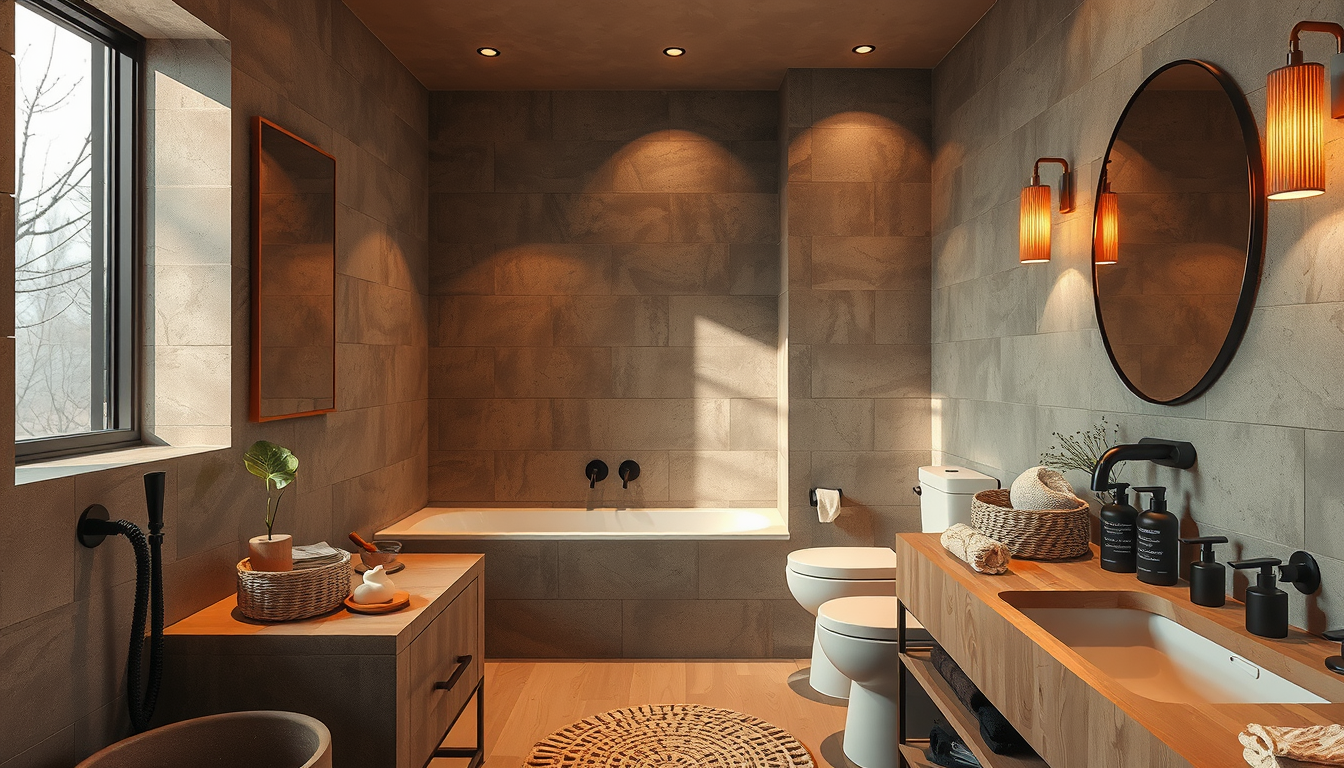
Choosing the best toilet Canada 2026 has to offer is no longer just about flushing power — it’s a decision that touches your daily comfort, your water bill, and even your home’s resale value. Canadian households flush roughly 30% of their total indoor water use down the toilet, which means the model sitting in your bathroom has an outsized impact on both your utility costs and your environmental footprint. At Toronto Interior Designer, we evaluated seven top-performing models across flush efficiency, comfort height, Canadian certification, and real availability at retailers you can actually visit. Whether you’re renovating a 1950s Toronto semi or finishing a new-build condo, this guide gives you the specific, Canada-ready answers that American “best of” lists simply can’t.
How We Tested the Best Toilets in Canada for 2026
We focused on four criteria that matter most to Canadian homeowners:
- WaterSense + CSA certification — Every toilet on our list carries both WaterSense certification (≤4.8 L per flush) and CSA Group approval, which is required for code-compliant installation in every province.
- MaP flush performance — We referenced Maximum Performance (MaP) testing scores, the industry-standard bulk-removal test. All our picks score 800g or higher, meaning fewer double-flushes and less maintenance.
- Canadian retail availability — We confirmed that every model is stocked or orderable through Home Depot Canada, Lowe’s Canada, or GTA showrooms. No grey-market imports.
- Rough-in flexibility — Because pre-1970 Toronto homes commonly use a 10-inch rough-in instead of the standard 12-inch, we flagged which models offer both configurations.
“A toilet is the hardest-working fixture in your home — it gets used five to eight times a day per person. Spending an extra $100 on the right model pays for itself in water savings within two years.”
Top 7 Best Toilets Canada 2026: Rated by Flush Power & Value
Upgrade the Details That Change Everything
Lighting, mirrors, and matte hardware can make a modest bathroom renovation feel far more custom.
Toronto Interior Designer may earn a commission if you shop through these links at no extra cost to you.
| Model | Type | Flush (L) | MaP Score | Rough-In Options | Price Range (CAD) | Best For |
|---|---|---|---|---|---|---|
| TOTO Drake II | Two-piece elongated | 4.8 | 1,000g | 10″ / 12″ | $450–$550 | Overall best performer |
| Kohler Highline Arc | Two-piece elongated | 4.8 | 1,000g | 10″ / 12″ | $380–$480 | Budget-friendly reliability |
| American Standard Cadet PRO | Two-piece elongated | 4.8 | 1,000g | 10″ / 12″ | $320–$400 | Tight budgets, older homes |
| TOTO Nexus | One-piece elongated | 4.8 | 1,000g | 12″ | $750–$900 | Modern, seamless look |
| Kohler Persuade Curv | Two-piece dual-flush | 3.0 / 4.8 | 800g | 12″ | $500–$620 | Maximum water savings |
| Swiss Madison St. Tropez | One-piece elongated | 4.8 | 800g | 12″ | $400–$520 | Condo-friendly compact design |
| American Standard ActiClean | Two-piece, self-cleaning | 4.8 | 1,000g | 12″ | $550–$700 | Low-maintenance households |
Our top pick is the TOTO Drake II. It pairs a 1,000g MaP score with a remarkably quiet flush, comes in both 10-inch and 12-inch rough-in configurations, and is widely stocked across Canadian retailers. For homeowners on a tighter budget, the American Standard Cadet PRO delivers nearly identical flush performance for roughly $130 less — making it the strongest value on this list.
If water savings are your priority, the Kohler Persuade Curv’s dual-flush system (3.0 L for liquids, 4.8 L for solids) can save a family of four an estimated 13,000 litres per year compared to older 13 L-per-flush models . Over a decade, that adds up to enough water to fill a backyard swimming pool — twice.
WaterSense, CSA & Rebates: What Makes a Toilet Canadian-Ready
Not every toilet sold online is legal to install in Canada. Before you add anything to your cart, run through this compliance checklist:
- CSA certification mark — Required by the National Plumbing Code of Canada. No CSA mark means your plumber shouldn’t install it, and your municipality won’t pass the inspection.
- WaterSense label — Confirms the toilet uses ≤4.8 L/flush and has been independently tested for performance. This label also unlocks rebate eligibility.
- Rebate eligibility — The City of Toronto has historically offered $75 per WaterSense-certified toilet through its Toilet Replacement Program . Check the program’s current 2026 status before purchasing, as funding cycles vary. Peel Region and York Region have run similar programs.
- Dual-flush compliance — Under the National Plumbing Code, dual-flush toilets (3 L / 4.8 L) are now the default specification for Canadian new construction, making them a future-proof choice for any renovation.
- MaP testing threshold — Look for a MaP score of at least 600g; we recommend 800g+ to minimize callbacks and clogs.
When budgeting for your bathroom renovation, factor in these rebates — they can offset a meaningful portion of the upgrade cost.
Comfort Height vs Standard Toilets: Essential Guide for Canadian Buyers
“Comfort height” (sometimes branded as “Right Height” or “Chair Height”) places the seat 430–480 mm from the floor — roughly the height of a standard dining chair. Standard-height toilets sit noticeably lower at 380–400 mm. The difference might sound minor on paper, but it dramatically changes the experience of sitting down and standing up, especially over years of daily use.
Choose comfort height if:
- Anyone in the household has knee or hip mobility concerns
- You’re designing for aging-in-place — a key consideration as more Toronto homeowners plan homes for long-term livability
- You prefer a toilet that aligns with universal design principles used in accessible renovations
Choose standard height if:
- Shorter adults or children are the primary users
- Your bathroom has very low ceilings or a tight layout where visual bulk matters
- You want a closer-to-traditional aesthetic in a heritage home
At Toronto Interior Designer, we generally recommend comfort height for primary bathrooms and standard height for kids’ bathrooms or powder rooms — but the right call depends on who uses the space daily.
Toronto Bathroom Renovation: Rough-In Sizes, Costs & Installation Tips
Before you order a single fixture, grab a tape measure. Getting the rough-in wrong is the most common — and most frustrating — toilet-buying mistake we see.
Rough-in measurement: Measure from the wall (not the baseboard) to the centre of the floor bolts. Most post-1970 Canadian homes have a 12-inch rough-in, but many Toronto houses built before that era — Annex semis, East York bungalows, Scarborough war-times — have a 10-inch rough-in. Installing a 12-inch toilet on a 10-inch rough-in leaves an unsightly gap behind the tank; installing a 10-inch model on a 12-inch rough-in means the toilet simply won’t fit. Measure first, buy second.
Ventilation code: Ontario Building Code requires mechanical exhaust ventilation in every bathroom. If your reno involves moving the toilet location, you may also need to upgrade or relocate the exhaust fan — budget accordingly.
Installation costs: Average toilet installation in the GTA runs $250–$450 for labour alone as of early 2026, assuming a straightforward swap on an existing flange. If your plumber needs to modify the DWV (drain-waste-vent) stack, expect $600–$1,000+. Ontario building code requires a licensed plumber for any work affecting the DWV system.
If you’re tackling a broader renovation and considering new flooring at the same time, our LVP flooring buying guide covers waterproof options that pair perfectly with bathroom upgrades.
What to Do Next
Finding the best toilet for your Canadian home comes down to matching the right model to your space, your budget, and your household’s daily needs. Here’s your action checklist:
- Measure your rough-in — wall to bolt centre — before shopping. This single step eliminates 90% of buying mistakes.
- Confirm WaterSense + CSA certification on any model you’re considering.
- Check your municipality’s rebate program — the City of Toronto, Peel, and York Region have all offered toilet replacement incentives.
- Budget $250–$450 for installation if you’re hiring a licensed GTA plumber for a standard swap.
- Pick comfort height for primary bathrooms and standard height for secondary or kids’ spaces.
- Choose a MaP score of 800g+ for worry-free, single-flush performance.
- Buy from a Canadian retailer (Home Depot Canada, Lowe’s Canada, or a local showroom) to ensure warranty coverage and parts availability.
A smart toilet upgrade is one of the highest-return, lowest-disruption improvements you can make to any bathroom. Get the specs right, claim your rebate, and enjoy a fixture that works harder while using less.
Keep Small Bathrooms Working Hard
Compact storage, simple shelving, and clean-lined accessories are the fastest way to add polish without crowding the room.
Toronto Interior Designer may earn a commission if you shop through these links at no extra cost to you.
Sources
- NRCan Water Efficiency — https://natural-resources.canada.ca/energy-efficiency/products/watersense
- City of Toronto Water Programs — https://www.toronto.ca/services-payments/water-environment/
Frequently Asked Questions
What is the best toilet to buy in Canada in 2026?
The TOTO Drake II is our top pick for the best toilet in Canada in 2026. It scores 1,000g on MaP flush testing, uses only 4.8 litres per flush, carries both WaterSense and CSA certification, and comes in 10-inch and 12-inch rough-in options — making it ideal for both older Toronto homes and new builds.
Do you need CSA certification to install a toilet in Canada?
Yes. The National Plumbing Code of Canada requires all toilets to carry a CSA certification mark. Without it, a licensed plumber should not install the unit, and your municipality will not pass the plumbing inspection. Always confirm CSA and WaterSense labels before purchasing.
Are there rebates for replacing a toilet in Toronto?
The City of Toronto has historically offered up to $75 per WaterSense-certified toilet through its Toilet Replacement Program. Peel Region and York Region have run similar incentives. Check your municipality’s website for current 2026 program availability, as funding cycles vary year to year.