
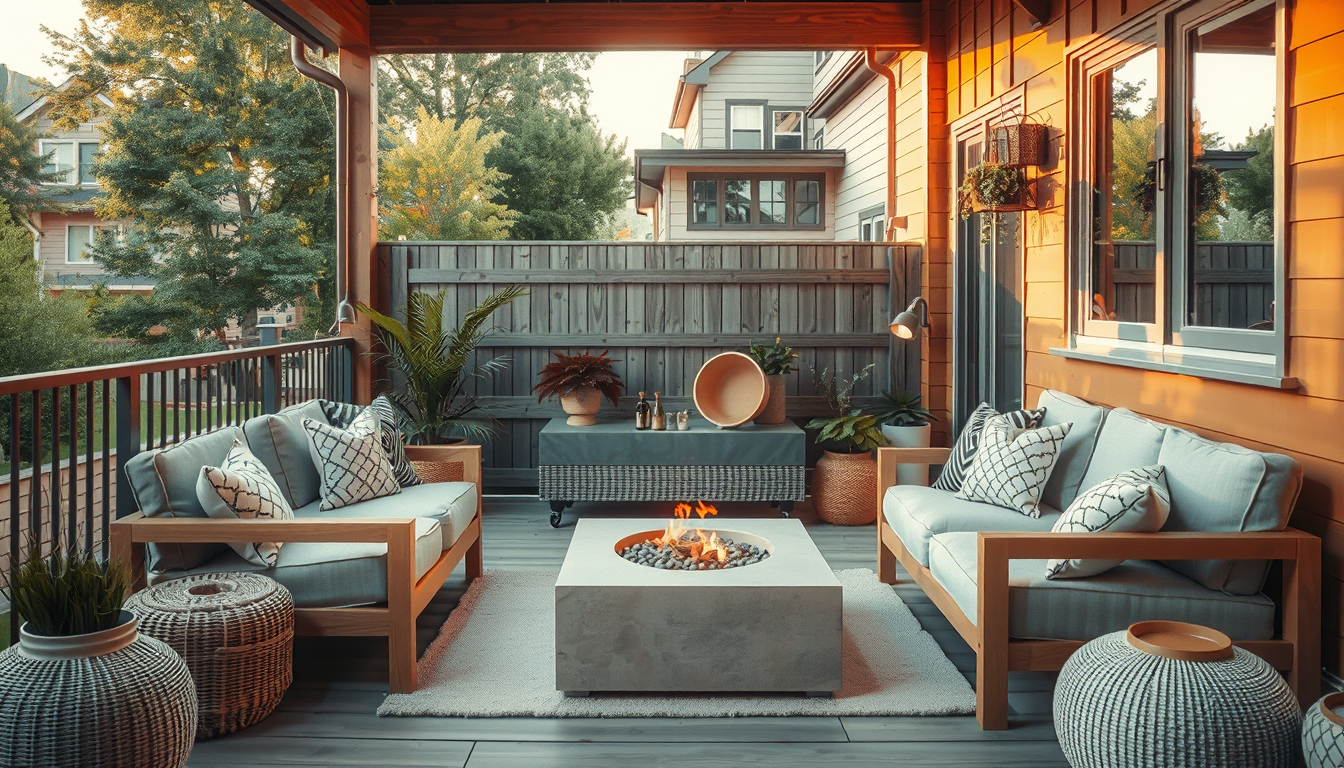
The best backyard fire pit seating ideas Canada homeowners can invest in solve a problem most design magazines ignore: how to sit comfortably around an open flame from April through November without your cushions disintegrating, your layout violating municipal bylaws, or your furniture cracking after a January deep freeze. In Toronto, where lot widths often measure just 20 to 30 feet and winter temperatures swing wildly above and below zero, a fire pit circle needs to be compact, weather-rated, and legal. This guide covers layouts, materials, regulations, and budget tiers so you can build a seating area that actually survives Canadian conditions — and looks good doing it.
Best Fire Pit Seating Layouts for Narrow Toronto Lots
Most fire pit inspiration you see online assumes a sprawling American backyard. Toronto reality is different. A typical detached home sits on a 25-foot-wide lot, and even semi-detached properties rarely exceed 18 feet of usable rear yard width. That means your seating layout has to earn every square foot.
Curved built-in benches are the highest-value option for tight spaces. A U-shaped or semi-circular bench with integrated storage underneath reduces your footprint by roughly 30 percent compared to a freestanding Adirondack chair circle, because you eliminate the dead space between individual seats . You seat more people in less area, and the storage compartments handle cushions, blankets, and firewood.
For wider lots (30 feet or more), a symmetrical four-zone layout works well: two facing benches flanking the fire pit, with a pair of swivel chairs at the open ends. This creates natural conversation flow without blocking sightlines to the garden. If you’re working with a condo townhome patio, a half-moon arrangement — one curved loveseat plus two stools — keeps the layout open while still fitting within a 10-by-12-foot footprint.
A fire pit circle isn’t just furniture around a flame — it’s the architectural anchor of your outdoor room. Get the geometry right, and everything else follows.
Pair your seating area with vertical elements like raised garden beds or privacy screens to define the zone without eating into floor space.
Weather-Resistant Seating Materials That Survive Canadian Freeze-Thaw
Shop Balcony and Patio Pieces That Fit
Toronto outdoor spaces are often tight, so look for stackable seating, slim tables, and weather-ready textiles first.
Toronto Interior Designer may earn a commission if you shop through these links at no extra cost to you.
Toronto averages over 30 freeze-thaw cycles per winter — relentless expansion and contraction that destroys materials designed for milder climates. Choosing the right palette from the start saves you from replacing furniture every two seasons. Here’s what holds up and what doesn’t.
| Material | Best Use | Freeze-Thaw Rating | Budget Range (CAD) | Notes |
|---|---|---|---|---|
| Corten steel | Fire bowls, surrounds | Excellent — no cracking | $800–$2,500 | Develops natural rust patina; no maintenance |
| Granite or Canadian Shield stone | Built-in bench caps, paving | Excellent | $1,200–$4,000 installed | Source from Ontario quarries to reduce cost |
| Solution-dyed acrylic (Sunbrella) | Cushions, throw pillows | 150+ freeze-thaw cycles | $300–$900 per set | Mildew-resistant; retains colour for years |
| Powder-coated aluminum | Chair and bench frames | Very good | $500–$2,000 per set | Lightweight; won’t rust |
| Poured concrete | Fire pit base, benches | Fair — needs sealing | $600–$1,500 | Can spall if water infiltrates unsealed surfaces |
| Teak (Grade A) | Bench slats, side tables | Good with annual oiling | $1,500–$4,000 | Greys naturally; some homeowners prefer that patina |
Corten steel fire bowls have surged in popularity across Canadian landscape design because they embrace weathering rather than fighting it — no cracking risk like unsealed concrete, and the rust patina deepens each season. At Toronto Interior Designer, we recommend pairing Corten bowls with granite bench caps for a material palette that looks intentional and handles decades of Canadian winters.
Avoid cast iron (rusts aggressively without constant maintenance), untreated softwoods (warp and split within two seasons), and standard polyester cushions (trap moisture, grow mildew by October).
Toronto and Ontario Fire Pit Bylaws You Must Follow
This is the section most design blogs skip entirely, and it’s the one that can cost you a fine or a visit from Toronto Fire Services. Understanding the rules before you buy saves headaches after installation.
Toronto’s open-air burning regulations under Municipal Code Chapter 423 set clear rules for residential fire pits:
- Setback distance: Your fire pit must sit a minimum of 2 metres from any building, fence, property line, or overhanging branch.
- Fuel type: Only dry, clean wood or approved gas connections. No burning of yard waste, construction lumber, or painted wood.
- Containment: The fire must be in a non-combustible container or a permanently installed pit with a spark screen.
- Supervision: An adult must attend the fire at all times, with a hose or extinguisher within reach.
- Wind conditions: Open burning is prohibited during Environment Canada wind warnings or municipal burn bans.
If you live in Mississauga, Markham, or other GTA municipalities, check your local bylaw — setback distances and fuel rules vary. Gas fire pits (natural gas or propane) generally face fewer restrictions than wood-burning models and produce no sparks, making them the safer default for tight urban lots.
Planning your full outdoor space? Factor bylaw compliance into your layout from day one rather than retrofitting after installation.
Budget-Friendly Fire Pit Seating Ideas Under $2,000 CAD
The average Canadian homeowner spends between $3,000 and $8,000 CAD on a complete backyard fire pit area including hardscaping and seating . But you can build a compelling setup for under $2,000 if you prioritize wisely.
The $1,800 starter circle:
- Corten steel fire bowl (30-inch): ~$600
- Three powder-coated aluminum stacking chairs: ~$450
- Two Sunbrella outdoor cushion sets: ~$350
- Pea gravel base (DIY, 10×10 area): ~$200
- Cedar windbreak screen (DIY, two panels): ~$200
Swap the gravel for flagstone pavers and you’re closer to $2,400, but the gravel option drains beautifully through spring thaw and costs a fraction of hardscaping. For a wabi-sabi aesthetic — embracing natural imperfection — mismatched salvaged stone and weathered wood benches can look more intentional than a matched patio set at half the price.
How to Extend Your Fire Pit Season From April to November
Ontario’s outdoor living season runs approximately 180 to 210 days, roughly mid-April through late October . A well-designed fire pit setup can stretch that by four to six weeks on either end, giving you usable outdoor evenings from early April into late November. The key is treating weather as a design variable, not an obstacle.
Five strategies that work in Toronto’s climate:
- Install a permanent windbreak on the north and west sides of your seating circle. A 5-foot cedar screen or tempered glass panel blocks prevailing winds and raises the perceived temperature by several degrees.
- Use radiant seating geometry. Arrange seats in a tight semi-circle (4 to 5 feet from the flame) rather than a wide ring. You capture more heat with less fuel.
- Add heated seat pads. Battery-powered or USB-rechargeable heated cushions now run 4 to 6 hours per charge and cost $40–$80 CAD each.
- Invest in a gas fire pit with a high BTU rating. Look for 60,000+ BTU models — they throw meaningful heat, not just ambiance.
- Store cushions properly. A ventilated deck box near the seating area lets you pull cushions out for use and stow them between sessions, preventing moisture damage during shoulder-season rain.
Toronto Interior Designer has seen a clear shift toward clients treating their fire pit area as a true outdoor room — with weather strategy, not just furniture selection, driving the design decisions.
What to Do Next
Your search for backyard fire pit seating ideas canada ends with action. Here’s your checklist:
- Measure your lot width and setback distances before choosing a layout — confirm your fire pit location meets the 2-metre rule under Toronto Municipal Code Chapter 423.
- Choose your material palette starting with the fire pit itself (Corten steel or gas insert), then match seating frames and cushion fabrics to the same weather-resistance tier.
- Set your budget tier — starter setups run under $2,000 CAD; full hardscaped circles with built-in benches range from $5,000 to $8,000.
- Plan for three-season use by adding windbreaks, radiant seating geometry, and proper cushion storage from the start.
- Check your municipal bylaw — especially if you’re outside Toronto proper — before purchasing a wood-burning pit.
- Book a landscape consultation to translate your layout sketch into a build-ready plan with grading, drainage, and electrical (if gas) sorted before ground breaks in spring.
Layer the Outdoor Room
Lighting, planters, and textiles can stretch a short summer season and make even a small balcony feel intentional.
Toronto Interior Designer may earn a commission if you shop through these links at no extra cost to you.
Sources
- Landscape Ontario design guidelines — https://landscapeontario.com
- City of Toronto Municipal Code Chapter 423, Fire Prevention — https://www.toronto.ca/legdocs/municode/toronto-code-423.pdf
- HomeStars renovation cost data — https://homestars.com
- Environment Canada climate normals — https://climate.weather.gc.ca
Frequently Asked Questions
What is the legal setback distance for a fire pit in Toronto?
Under Toronto Municipal Code Chapter 423, your fire pit must be at least 2 metres from any building, fence, property line, or overhanging branch. An adult must supervise the fire at all times with a hose or extinguisher within reach.
What is the best material for outdoor fire pit seating in Canada?
Powder-coated aluminum frames paired with solution-dyed acrylic cushions like Sunbrella offer the best freeze-thaw durability for Canadian winters. For built-in benches, granite or Canadian Shield stone caps resist over 30 annual freeze-thaw cycles without cracking.
How much does a backyard fire pit seating area cost in Canada?
A starter fire pit seating setup costs under $2,000 CAD using a Corten steel bowl, aluminum chairs, and a pea gravel base. Full hardscaped circles with built-in benches typically range from $5,000 to $8,000 CAD installed.