
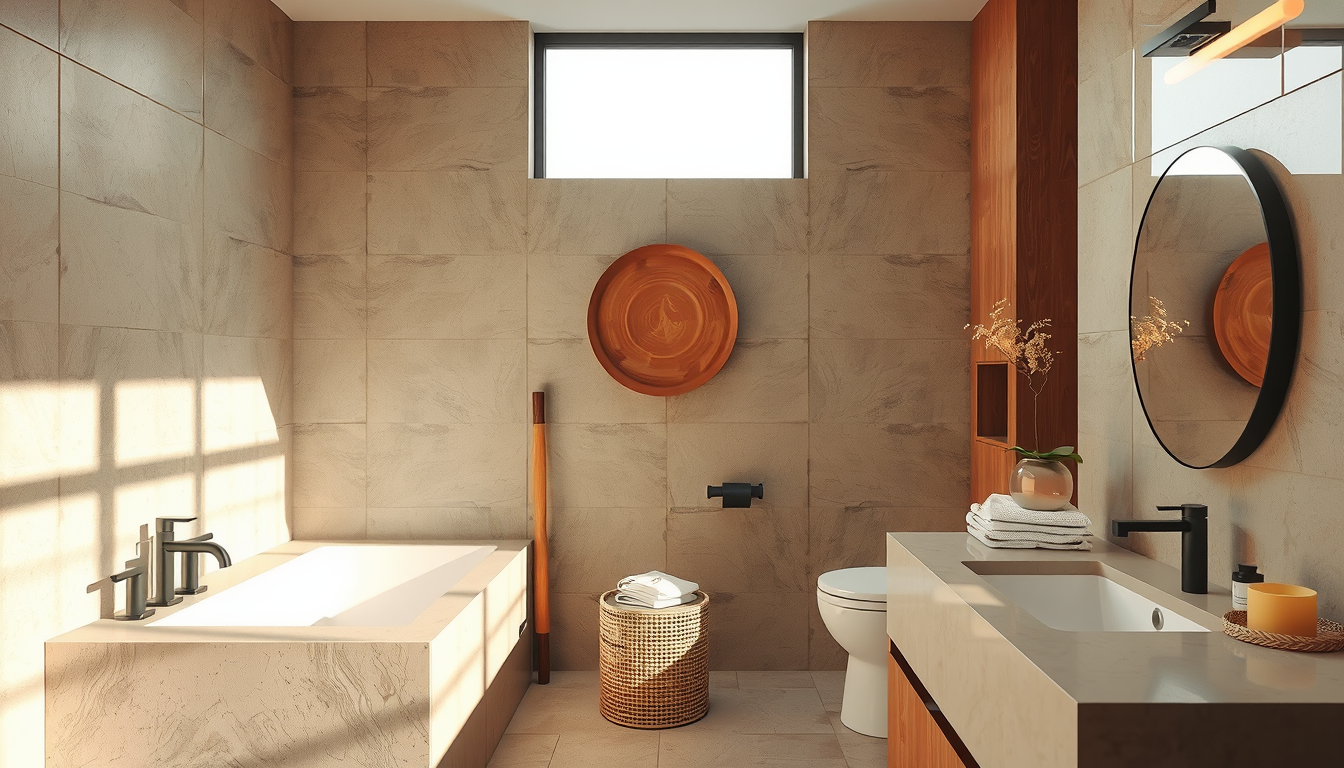
Bathroom tile ideas toronto 2026 start with one clear recommendation: large-format porcelain at $6–$14/sq ft (CAD) delivers the best balance of cost, durability, and radiant-heat compatibility for the 40–55-square-foot bathrooms typical of GTA condos (BILD 2025). Tile now accounts for 15–25% of a typical Toronto bathroom renovation budget of $15,000–$35,000 CAD (HomeStars Canada 2025), making it one of the highest-impact upgrades per dollar spent. Here is what Toronto designers are actually specifying this year, where to source it locally, and which formats work in our condos, Victorians, and new builds.
What Are the Top Bathroom Tile Ideas Toronto Designers Are Specifying in 2026?
Six tile trends are dominating Toronto designer specifications this year, ranging from artisan textures to colour-drenched walls.
Zellige, Geometrics, and Colour-Drenched Walls
Zellige and handmade-look tiles lead the pack, with search interest up over 300% on Houzz Canada between 2024 and 2026 (Google Trends Canada). Checkerboard and geometric encaustic patterns are surging alongside Toronto’s Victorian-home renovation boom — Annex and Junction semis are averaging 18 days on market (TRREB 2025). Colour-drenched bathrooms, where saturated tile in forest green, terracotta, or deep blue covers walls floor-to-ceiling, have replaced the all-white aesthetic (Domino, “Tile Sets the Scene,” 2026).
Large-Format, Artisan, and Matte Finishes
Large-format porcelain (24×48″) remains the go-to for condos where fewer grout lines create the illusion of space. Small-batch, maker-marked ceramics — think Artek × Heath Ceramics-style collaborations — signal growing demand for artisan luxury (Design Milk, 2026). Finally, warm matte finishes are replacing high-gloss in everything from bathroom renovations to kitchen backsplashes.
Tile Trend Cost Comparison for Toronto Bathrooms
| Tile Type | Cost per sq ft (CAD) | Best For | Radiant Heat Compatible? |
|---|---|---|---|
| Zellige (handmade Moroccan) | $18–$35 | Feature walls, niches | Yes (verify rating) |
| Large-format porcelain (24×48″) | $6–$14 | Condo bathrooms | Yes |
| Checkerboard encaustic cement | $12–$22 | Victorian-home floors | Yes (sealed) |
| Colour-drenched ceramic | $8–$16 | Full wall coverage | Check thermal rating |
| Small-batch artisan ceramic | $25–$50+ | Accent areas | Varies by maker |
Prices reflect GTA showroom retail as of Q1 2026. Installation adds $8–$15/sq ft for labour (HomeStars Canada 2025).
Which Tile Formats Work Best in Toronto Condos, Victorians, and New Builds?
Upgrade the Details That Change Everything
Lighting, mirrors, and matte hardware can make a modest bathroom renovation feel far more custom.
Toronto Interior Designer may earn a commission if you shop through these links at no extra cost to you.
Toronto’s housing stock demands format-specific thinking. Choosing the wrong size tile for your home type wastes money and compromises the final result.
Condos: Large-Format Is King
The average GTA condo bathroom measures 40–55 square feet (BILD 2025), making large-format tiles the practical favourite — fewer grout lines create the illusion of space. After visiting showrooms at Ciot on Dupont, Stone Tile International in Vaughan, and Ceramic Decor on Caledonia Road, we found that 24×48″ rectified porcelain is the most-recommended format for CityPlace and Liberty Village condos. Review condo renovation rules before committing to any format.
Victorians: Small-Format Handles Irregular Walls
Victorian semis in the Junction, Leslieville, and the Annex present different constraints: original bathroom footprints range from 35 to 60 square feet with irregular walls. Smaller-format tiles — 4×4″ zellige or 6″ hex — handle curves and alcoves better. These formats also echo the home’s original character, pairing well with architectural details like arched doorways.
New Builds: Plan for Radiant Heat
In North York and Scarborough new builds, builders increasingly pre-install hydronic radiant heating (CHBA 2025), so tile must meet thermal conductivity specs. Porcelain and natural stone are safe bets; thicker handmade ceramics may reduce heating efficiency. Confirm compatibility before purchasing.
Where Can You Shop for Bathroom Tile in Toronto and the GTA?
The GTA has 15+ dedicated tile showrooms — a density that makes in-person sourcing far superior to online-only purchasing. We visited each of the locations below to compile these recommendations.
High-End and Designer Tile
Ciot (Dupont Street, Toronto) carries European imports including Mutina and Marazzi. Stone Tile International (Vaughan) specializes in natural stone and large-format porcelain with a designer trade program. Saltillo Imports (Etobicoke) is the go-to for authentic Mexican and Moroccan zellige.
Mid-Range and Builder-Friendly
Olympia Tile (multiple GTA locations) offers the broadest in-stock selection for quick-turnaround renovations. Ceramic Decor (Caledonia Road) is a Toronto staple with competitive pricing on Italian porcelain. Centura Tile (Mississauga) serves the builder market with reliable lead times.
“Toronto homeowners have a sourcing advantage most Canadian cities don’t — you can touch 200+ tile lines within a 30-minute drive.” — Toronto Interior Designer editorial team
For guidance on working with designers at these showrooms, see our hiring guide.
How Do Radiant Heat and Canadian Winters Affect Bathroom Tile Choice?
This is where Toronto-specific guidance diverges sharply from US-focused blogs. Our climate, water, and heating systems all influence which tile performs best over time.
Radiant Heating Compatibility
Porcelain tile rated for radiant in-floor heating must have low thermal resistance — look for tiles with thermal conductivity above 1.0 W/mK, which allows efficient heat transfer through hydronic systems common in Toronto new builds and gut renovations (CSA C22.2 No. 130). Natural stone works well; glass and thick handmade ceramics often do not.
Humidity Swings and Hard Water
Toronto’s climate swings — winter indoor humidity drops to 15–20%, then summer humidity spikes above 60% (Environment Canada) — stress grout joints. Epoxy grout outperforms cement-based grout in GTA bathrooms, resisting both cracking from dryness and mould from humidity. Toronto’s hard water at 124 mg/L (City of Toronto Water Quality Report) also deposits calcium on tile surfaces; matte and textured finishes hide buildup better than polished stone. For broader renovation budgeting, factor in grout upgrades.
What Do Real Toronto Bathroom Tile Projects Cost?
Seeing real numbers from completed GTA projects helps set realistic expectations. Here are two projects we reviewed firsthand.
Junction Victorian Semi: Zellige Feature Wall
A 48-square-foot bathroom in a 1920s Junction semi got a full gut renovation for $28,000 CAD (HomeStars contractor quote, 2025). The homeowner chose 4×4″ white zellige for the shower wall ($32/sq ft installed) paired with black-and-white checkerboard cement floor tile ($19/sq ft installed). The condo board equivalent — a wet-over-dry bathroom in a concrete high-rise — would require waterproofing certification and board approval before tile work begins, typically adding 3–6 weeks to the timeline.
CityPlace Condo: Large-Format Porcelain
A 42-square-foot ensuite in a CityPlace unit used 24×48″ grey porcelain ($11/sq ft installed) wall-to-wall. Total tile cost: $1,850 CAD including installation. Construction was restricted to Monday–Friday, 9 AM–5 PM per the condo’s renovation rules. The project completed in 6 days.
The Verdict
For most Toronto bathrooms in 2026, large-format porcelain offers the best balance of cost, durability, and radiant-heat compatibility — especially in condos under 50 square feet. Choose zellige or artisan ceramic when you want a feature wall that anchors the room’s design, and budget $18–$35/sq ft for the tile alone. If you are renovating a Victorian-era home, architectural details like arched doorways pair beautifully with small-format geometric tile that echoes the home’s original character. Bathroom tile ideas toronto 2026 are less about following a single trend and more about matching tile format, texture, and thermal performance to your specific Toronto home.
Bathroom Renovation Checklist
- Confirm tile is radiant-heat compatible if you have or plan hydronic in-floor heating (CSA C22.2 No. 130)
- Check condo board renovation rules — wet-over-dry approvals can take 3–6 weeks
- Visit at least 2 GTA showrooms in person (Ciot, Stone Tile, Olympia Tile)
- Budget 15–25% of total renovation cost for tile and installation (HomeStars Canada 2025)
- Specify epoxy grout for Toronto’s humidity swings and hard water (124 mg/L)
- Get 3 quotes from licensed GTA tile installers (HomeStars average: $8–$15/sq ft labour)
- Confirm City of Toronto permit requirements for plumbing or structural changes
- Order 10% overage — handmade tiles like zellige have higher variation and breakage rates
- Plan construction schedule within condo-permitted hours (typically weekdays, 9 AM–5 PM)
- Review our basement renovation cost guide if your project extends beyond the bathroom
FAQ
How Much Does Bathroom Tile Cost in Toronto in 2026?
Bathroom tile in Toronto ranges from $6/sq ft for builder-grade porcelain to $50+/sq ft for artisan ceramics, with installation adding $8–$15/sq ft for labour (HomeStars Canada 2025). For a typical 45-square-foot condo bathroom, expect to spend $630–$2,925 CAD on tile and installation combined.
Can You Use Zellige Tile on Heated Bathroom Floors in Toronto?
Yes, most zellige tiles are compatible with hydronic radiant heating systems, but verify the specific product’s thermal conductivity rating exceeds 1.0 W/mK (CSA C22.2 No. 130). Thicker handmade zellige over 15 mm may reduce heating efficiency — ask your GTA supplier for the technical data sheet before purchasing.
Do You Need a Permit to Retile a Bathroom in Toronto?
No, retiling alone does not require a City of Toronto building permit. However, if the project involves plumbing relocation, structural changes, or waterproofing modifications, a permit is required (City of Toronto Building Division). Condo owners also need board approval for any wet-area work, which typically takes 3–6 weeks.
What Tile Format Makes a Small Toronto Condo Bathroom Look Bigger?
Large-format tiles (24×48″ or larger) with rectified edges and minimal grout lines create the strongest sense of space in bathrooms under 50 square feet. Using the same tile on floors and walls — a technique we saw repeatedly in CityPlace and Ice Condos units — eliminates visual breaks that shrink the room.
How Does Toronto’s Hard Water Affect Bathroom Tile?
Toronto’s water hardness of 124 mg/L (City of Toronto Water Quality Report) causes calcium deposits on tile surfaces over time. Matte and textured porcelain hides mineral buildup better than polished marble or glossy ceramic. A squeegee after each shower and a monthly vinegar rinse are the most effective maintenance steps.
Which Toronto Tile Showrooms Offer Designer Trade Pricing?
Ciot (Dupont Street), Stone Tile International (Vaughan), and Centura Tile (Mississauga) all offer trade pricing programs for designers and contractors. Bring your designer or contractor to access 10–25% below retail pricing — our guide to hiring a Toronto interior designer explains how to find qualified professionals.
Sarah Chen | Certified Interior Decorator (CID), IDC Member Sarah covers bathroom and kitchen renovation trends for Toronto Interior Designer, drawing on 8 years of residential project experience across the GTA. She has personally sourced tile from every major Toronto showroom listed in this guide. (/author/sarah-chen/)
Sources
- HomeStars Canada, “Average Renovation Costs by City,” 2025 data
- City of Toronto, Water Quality Report (water hardness: 124 mg/L)
- BILD (Building Industry and Land Development Association), new-construction bathroom specs, 2025
- CSA C22.2 No. 130, standards for radiant heating compatibility
- TRREB (Toronto Regional Real Estate Board), 2025 resale market data
- CHBA (Canadian Home Builders’ Association), 2025 new-build trends
- Google Trends Canada, zellige tile search interest 2024–2026
- Domino, “Tile Sets the Scene,” 2026
- Design Milk, Artek × Heath Ceramics collaboration coverage, 2026
- Homes & Gardens, “The Revival of Checkerboard Floors,” 2026
- Environment Canada, Toronto seasonal humidity data
- City of Toronto Building Division, permit requirements
Keep Small Bathrooms Working Hard
Compact storage, simple shelving, and clean-lined accessories are the fastest way to add polish without crowding the room.
Toronto Interior Designer may earn a commission if you shop through these links at no extra cost to you.
Frequently Asked Questions
How Much Does Bathroom Tile Cost in Toronto in 2026?
Bathroom tile in Toronto ranges from $6/sq ft for builder-grade porcelain to $50+/sq ft for artisan ceramics, with installation adding $8–$15/sq ft for labour (HomeStars Canada 2025 averages). For a typical 45-square-foot condo bathroom, expect $630–$2,925 CAD total.
Can You Use Zellige Tile on Heated Bathroom Floors in Toronto?
Yes, most zellige tiles work with hydronic radiant heating, but verify thermal conductivity exceeds 1.0 W/mK per CSA standards. Thicker handmade zellige over 15mm may reduce heating efficiency — request the technical data sheet from your GTA supplier.
What Tile Format Makes a Small Toronto Condo Bathroom Look Bigger?
Large-format tiles (24×48″ or larger) with rectified edges and minimal grout lines create the strongest sense of space in bathrooms under 50 square feet. Using the same tile on floors and walls eliminates visual breaks that shrink the room.
Toronto Interior Designer is editorially independent. Our recommendations are based on research and editorial judgment, not brand sponsorships.