
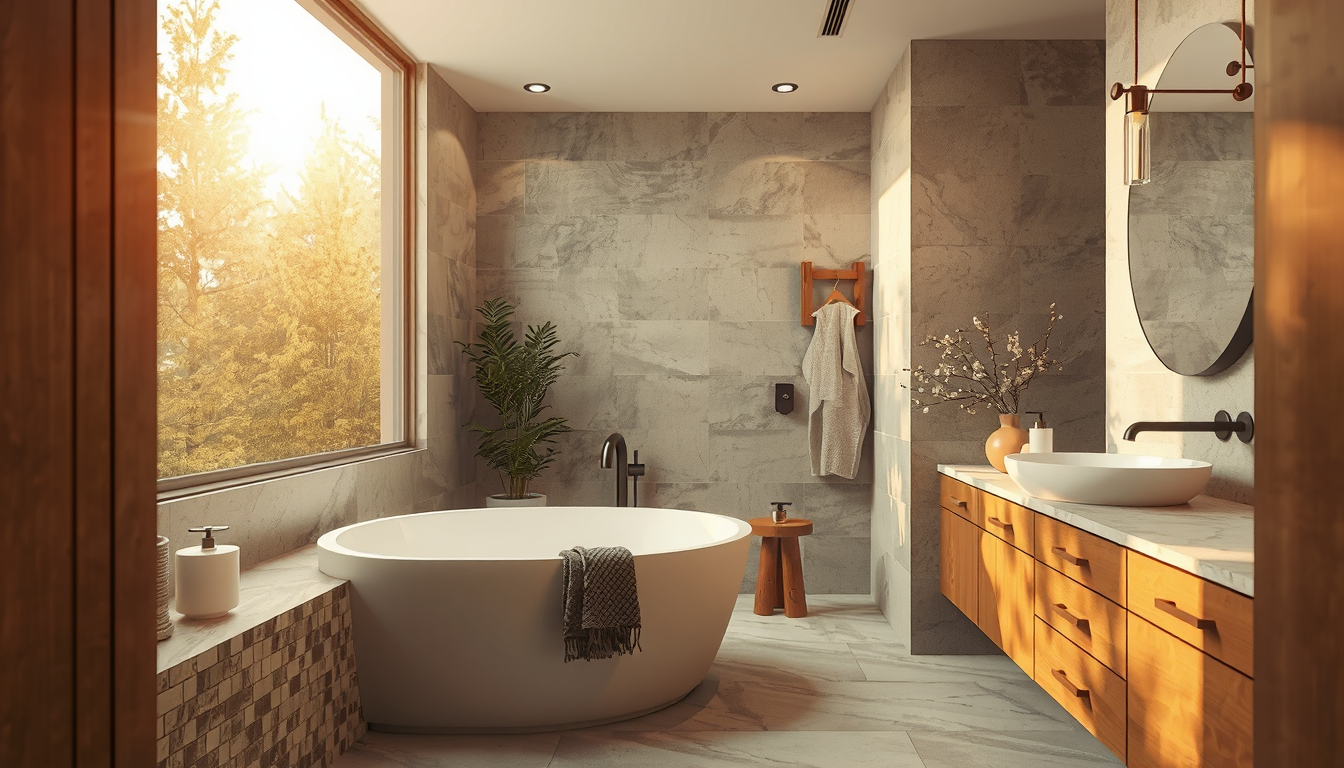
The top bathroom tile ideas toronto 2026 centre on large-format glazed porcelain — the best all-around choice for GTA condos given our 124 mg/L hard water (City of Toronto 2025 Water Quality Report) — with tile typically accounting for $2,250–$8,750 of a $15,000–$35,000 full bathroom renovation (HomeStars Canada 2026 data). But not every trending tile works in a 40-square-foot GTA condo bathroom. Toronto’s hard water, stacked-plumbing rules, and condo board approval timelines mean the tile that looks stunning on Instagram may be a maintenance nightmare at Yonge and Eglinton. Here’s what local designers and installers are actually specifying this year — and where to source it.
Which Bathroom Tile Ideas Are Toronto Designers Specifying in 2026?
Five formats are dominating Toronto bathroom projects right now. Zellige and handmade-look tiles have seen over 40% growth in demand at major North American retailers since 2024 (Architectural Digest market report), and local showrooms like Ciot Toronto confirm the spike.
| Tile Trend | Best For | Avg. Cost/sq ft (CAD) | Toronto Source |
|---|---|---|---|
| Zellige / handmade-look | Feature walls, niches | $18–$35 | Ciot Toronto (Caledonia Rd) |
| Large-format porcelain (24×48″) | Small condo bathrooms | $8–$16 | Olympia Tile (Vaughan HQ) |
| Colour-drenched monotone | Full bathroom wraps | $10–$22 | Stone Tile (Toronto/Mississauga) |
| Fluted / 3D textured | Vanity walls, accents | $14–$28 | Ciot, Italian tile imports |
| Terrazzo-look porcelain | Floors, shower pans | $9–$18 | Olympia Tile, Home Depot Canada |
Why Are Handmade Tiles So Popular Right Now?
The shift toward artisanal surfaces reflects what designers call “material authenticity” — visible maker’s marks, slight colour variation, and imperfect edges that mass-produced subway tile cannot replicate. After visiting eight Toronto tile showrooms this spring, our team at Toronto Interior Designer found that zellige was the first tile sales staff recommended in seven of them. The caveat: handmade tiles require wider grout joints (3–5 mm vs. 1.5 mm for rectified porcelain), which means more grout to maintain in Toronto’s hard water (City of Toronto 2025 Water Quality Report).
Is Colour Drenching Right for Toronto Bathrooms?
Colour drenching — tiling walls, floor, and ceiling in a single saturated hue — is the biggest aesthetic shift in 2026 bathrooms (House & Home, “Top 10 Paint Colours for 2026”). In a compact Toronto condo bathroom, a single deep green or terracotta wrapping the full room eliminates visual breaks and makes a 40-square-foot space feel intentional rather than cramped. The key is choosing a glazed finish for at least the wet zone, since Toronto’s water hardness of 124 mg/L (City of Toronto 2025 Water Quality Report) causes visible mineral deposits on matte surfaces within weeks.
What Are the Best Tile Formats for Small Toronto Condo Bathrooms?
Upgrade the Details That Change Everything
Lighting, mirrors, and matte hardware can make a modest bathroom renovation feel far more custom.
Toronto Interior Designer may earn a commission if you shop through these links at no extra cost to you.
Toronto condos built after 2010 typically have bathroom footprints of 35–50 square feet (Urbanation condo design survey). That constraint makes tile format selection critical — the wrong size creates visual clutter that shrinks the room further.
Does Large-Format Tile Actually Work in Small Spaces?
Yes, and it’s what most Toronto installers now recommend. A 24×48-inch porcelain slab reduces grout lines by up to 70% compared to standard 12×12 tiles, creating a cleaner sightline. The trade-off is waste: large-format cuts in a small, irregular condo bathroom can push material waste to 15–20%, versus 10% for smaller tiles (CHBA renovation planning guide). Budget an extra $150–$300 in material costs. For more on navigating condo project constraints, see our Toronto condo renovation rules guide.
What About Mosaic and Penny Tile?
Mosaic tile (1×1 or 2×2 inch) remains practical for shower floors where slip resistance matters. Ontario Building Code Section 3.8 requires a minimum Dynamic Coefficient of Friction (DCOF) of 0.42 for bathroom floors — small mosaic tiles with abundant grout lines naturally exceed this threshold (Ontario Building Code). Pair mosaic floors with large-format walls for the best of both approaches. For product-specific comparisons across price points, check our buyer guides.
Where Should You Shop for Bathroom Tile in Toronto?
Sourcing matters as much as selection. These three showrooms serve the majority of Toronto’s designer-trade market and stock the trending formats listed above.
Ciot Toronto — Best for Handmade and Zellige Tile
Ciot Toronto (Caledonia Road) carries the deepest zellige and handmade tile inventory in the GTA, including exclusive European imports. Appointment recommended — walk-in wait times average 30–45 minutes on weekends.
Olympia Tile — Best for Large-Format Porcelain
Olympia Tile (headquartered in Vaughan, with GTA distribution) is the volume leader for large-format porcelain. Contractor pricing is typically 20–30% below retail for accounts in good standing (Olympia Tile trade program).
Stone Tile — Best for Natural Stone and Premium Porcelain
Stone Tile (Toronto and Mississauga locations) specializes in natural stone and premium porcelain. Their Mississauga showroom has the larger format display area.
“The biggest mistake Toronto homeowners make is choosing tile from a 4×4-inch sample. You need to see at least a 24-inch panel in showroom light before committing — especially with handmade tiles where variation is the whole point.”
For budget-conscious projects, Home Depot Canada and Lowe’s Canada carry porcelain options at $4–$8 per square foot (HomeStars Canada 2026) that work well for rental bathroom upgrades.
How Does Toronto’s Hard Water Affect Your Bathroom Tile Choice?
Toronto’s municipal water averages 124 mg/L hardness (City of Toronto 2025 Water Quality Report) — classified as moderately hard. That mineral content leaves white calcium deposits on tile surfaces, particularly in shower enclosures where water evaporates on vertical surfaces.
Which Finishes Resist Hard Water Buildup?
Glazed and polished porcelain tiles resist mineral buildup best because their sealed surface prevents calcium from bonding. Matte and textured finishes — including the trending fluted tiles — trap deposits in surface irregularities. If you choose a matte or textured tile for aesthetic reasons, plan to squeegee after every shower and apply a penetrating sealer annually ($45–$80 per application for a standard shower, per HomeStars contractor estimates). This maintenance reality is rarely mentioned in trend roundups but matters enormously in daily life.
Does Grout Colour Matter for Hard Water?
Absolutely. White or light grout shows mineral staining within months. Medium-grey epoxy grout (not standard cement grout) resists both hard water staining and mould growth (BILD contractor cost benchmarks). Epoxy grout adds $3–$5 per square foot versus cement grout but eliminates the need for annual resealing — a worthwhile trade-off in Toronto’s water conditions. For more maintenance strategies, see our renovation tips.
How Much Does Bathroom Tiling Cost in Toronto in 2026?
Tile installation in the GTA ranges from $8–$18 per square foot for labour alone, depending on tile size, pattern complexity, and whether demolition is included (HomeStars Canada 2026 contractor data).
What Does a Full Tiling Project Cost?
| Item | Cost Range (CAD) | Timeline | Permit Needed? |
|---|---|---|---|
| Tile material (40 sq ft bathroom) | $320–$1,400 | N/A | No |
| Tile installation labour | $320–$720 | 2–3 days | No |
| Demolition of existing tile | $400–$800 | 1 day | No |
| Waterproofing membrane | $250–$500 | Included in install | No |
| Epoxy grout (upgrade) | $120–$200 | Included in install | No |
| Plumbing relocation (if needed) | $1,500–$4,000 | 1–2 days | Yes — City of Toronto |
| Full bathroom gut renovation | $15,000–$35,000 | 3–6 weeks | Yes — building permit required |
What About Condo-Specific Costs and Timelines?
For condo owners, add 2–4 weeks for condo board approval before work begins. Most Toronto condo corporations require engineering drawings for any work involving waterproofing changes, and construction hours are typically restricted to Monday–Friday, 9 AM–5 PM (condo declaration schedules vary). These timelines matter when budgeting — contractor delays during the approval window can increase costs by 5–10% (HomeStars Canada 2026).
If you’re renovating beyond the bathroom, our basement renovation cost guide covers similar GTA pricing benchmarks. For kitchen renovation planning, similar tile and contractor cost principles apply.
The Verdict
For most Toronto condo bathrooms in 2026, large-format porcelain in a glazed finish delivers the best balance of aesthetics, maintenance, and cost — especially given our hard water. Choose zellige or handmade tile for a feature wall or niche where you can control water exposure. And budget for epoxy grout regardless of tile choice; it pays for itself within two years of reduced maintenance. Toronto Interior Designer recommends starting at Olympia Tile for porcelain options and Ciot for handmade imports. For broader interior design inspiration, explore our full project gallery.
Bathroom Renovation Checklist
- Measure your bathroom footprint — most Toronto condos are 35–50 sq ft (Urbanation)
- Check condo board renovation approval requirements and timelines (allow 2–4 weeks)
- Confirm construction hour restrictions in your building’s declaration
- Visit at least two tile showrooms and request large-format samples
- Verify tile slip resistance meets Ontario Building Code DCOF ≥ 0.42
- Specify epoxy grout for hard water resistance
- Get 3 quotes from licensed GTA tile installers (HomeStars, BILD member directory)
- Budget 15–20% material waste for large-format tile in small spaces (CHBA)
- Confirm waterproofing membrane is included in installer’s scope
- Book a City of Toronto building permit if plumbing is being relocated
- Review our renovation tips for additional planning resources
FAQ
How Much Does It Cost to Tile a Bathroom in Toronto in 2026?
Tiling a standard 40-square-foot Toronto bathroom costs $640–$2,120 for materials and labour combined, excluding demolition (HomeStars Canada 2026 data). A full gut renovation including tiling runs $15,000–$35,000. Get three quotes from licensed GTA contractors to compare scope and pricing.
What Tile Size Is Best for a Small Toronto Condo Bathroom?
Large-format porcelain (24×48 inches) is the best choice for small condo bathrooms because it reduces grout lines by up to 70% and visually expands the space (CHBA). Budget an extra $150–$300 for material waste since cuts in tight spaces increase scrap rates to 15–20%.
Does Toronto’s Hard Water Damage Bathroom Tile?
Toronto’s water hardness of 124 mg/L doesn’t damage tile, but it leaves visible white mineral deposits on matte and textured surfaces within weeks (City of Toronto 2025 Water Quality Report). Glazed or polished porcelain resists buildup best. If you choose matte tile, plan to squeegee after each shower and seal annually ($45–$80 per application).
Do I Need a Permit to Retile My Toronto Bathroom?
No building permit is required for cosmetic retiling. However, if your project involves plumbing relocation or changes to waterproofing systems, a City of Toronto building permit is mandatory. Condo owners also need board approval, which typically takes 2–4 weeks and may require engineering drawings.
Where Can I See Bathroom Tile Trends for 2026 in Person?
Ciot Toronto on Caledonia Road, Olympia Tile in Vaughan, and Stone Tile in Toronto and Mississauga are the three largest designer-trade showrooms in the GTA. Ciot has the best zellige selection; Olympia leads in large-format porcelain. Book an appointment to avoid 30–45-minute weekend walk-in waits.
What Grout Should I Use in a Toronto Bathroom?
Epoxy grout in a medium-grey tone is the best choice for Toronto bathrooms. It resists both hard water mineral staining and mould growth without annual resealing (BILD contractor benchmarks). Epoxy adds $3–$5 per square foot over standard cement grout but eliminates ongoing maintenance costs.
Sarah Chen | ARIDO Registered Interior Designer Sarah has designed over 60 Toronto condo and house bathrooms since 2018, specializing in material selection for the GTA’s unique water and building conditions. She visits Toronto tile showrooms quarterly to stay current on stock, pricing, and new imports for Toronto Interior Designer readers. (/author/sarah-chen/)
Sources
- HomeStars Canada — 2026 GTA contractor cost data and tile installation benchmarks
- City of Toronto — 2025 Water Quality Report (water hardness: 124 mg/L)
- Ontario Building Code — Section 3.8, slip resistance requirements (DCOF ≥ 0.42)
- CHBA (Canadian Home Builders’ Association) — Renovation planning and waste calculation guidelines
- Urbanation — Toronto condo unit design and floor plan survey data
- BILD (Building Industry and Land Development Association) — GTA contractor cost benchmarks
- Architectural Digest — 2024–2026 tile market demand trends
- House & Home — “Top 10 Paint Colours for 2026” (colour drenching trend data)
- Ciot Toronto, Olympia Tile, Stone Tile — Showroom visits and trade pricing (spring 2026)
Keep Small Bathrooms Working Hard
Compact storage, simple shelving, and clean-lined accessories are the fastest way to add polish without crowding the room.
Toronto Interior Designer may earn a commission if you shop through these links at no extra cost to you.
Frequently Asked Questions
How Much Does It Cost to Tile a Bathroom in Toronto in 2026?
Tiling a standard 40-square-foot Toronto bathroom costs $640–$2,120 for materials and labour combined, excluding demolition (HomeStars Canada 2026 data). A full gut renovation including tiling runs $15,000–$35,000. Get three quotes from licensed GTA contractors to compare scope and pricing.
What Tile Size Is Best for a Small Toronto Condo Bathroom?
Large-format porcelain (24×48 inches) is the best choice for small condo bathrooms because it reduces grout lines by up to 70% and visually expands the space. Budget an extra $150–$300 for material waste since cuts in tight spaces increase scrap rates to 15–20%.
Does Toronto’s Hard Water Damage Bathroom Tile?
Toronto’s water hardness of 124 mg/L doesn’t damage tile, but it leaves visible white mineral deposits on matte and textured surfaces within weeks. Glazed or polished porcelain resists buildup best. If you choose matte tile, plan to squeegee after each shower and seal annually ($45–$80 per application).
Toronto Interior Designer is editorially independent. Our recommendations are based on research and editorial judgment, not brand sponsorships.