
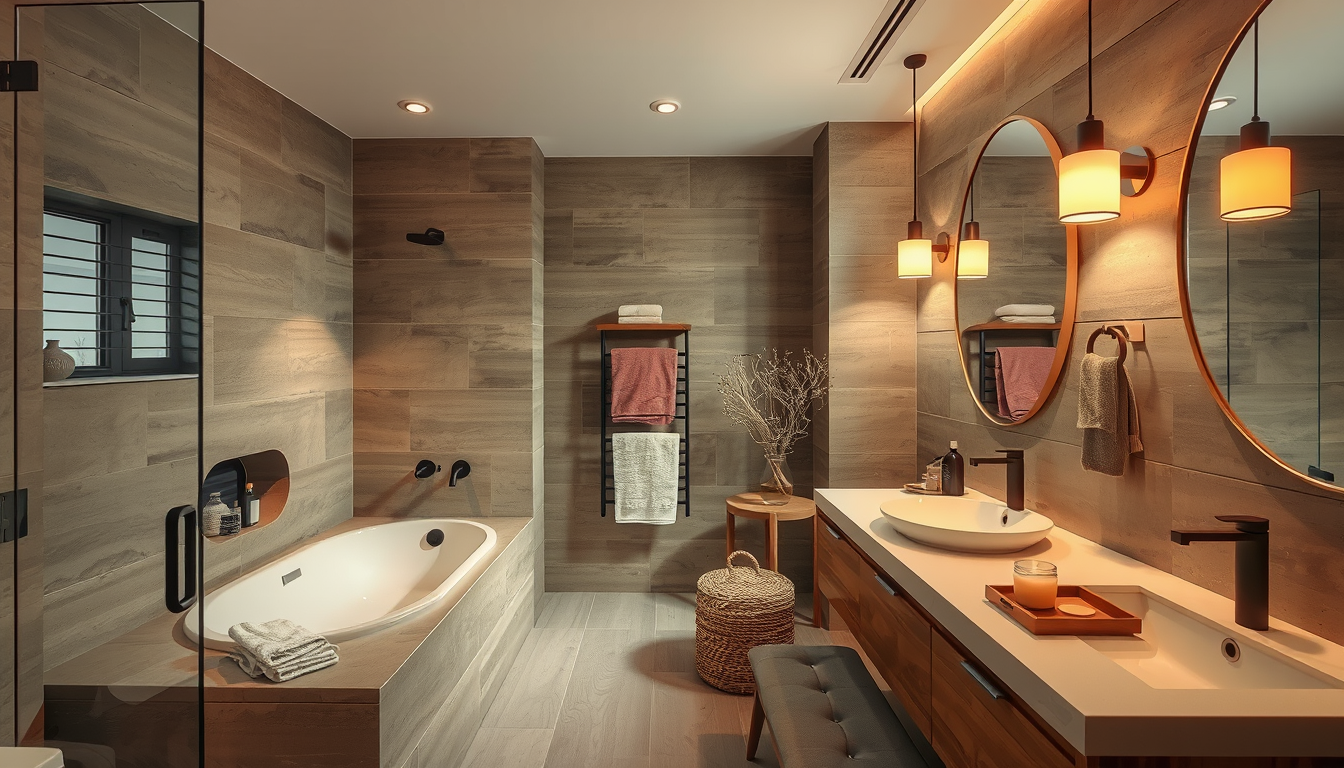
The top bathroom tile ideas Toronto 2026 designers recommend start with matte stone-look porcelain at $6–$12 per square foot — slip-rated, radiant-heat compatible, and built for Toronto’s humidity extremes — while tile typically accounts for 15–20% of a full bathroom renovation budget of $25,000–$45,000 CAD (BILD GTA Renovation Cost Guide 2025). The shift is decisive: mass-produced subway tile is out, and texture-forward surfaces with visible maker’s marks are in. Choosing the right tile in the GTA means navigating condo board material restrictions, radiant heat compatibility, and Toronto’s punishing humidity swings — factors that generic trend roundups ignore entirely. Here’s what local designers are actually sourcing, specifying, and installing right now.
What Are the Top Bathroom Tile Ideas Toronto Designers Specify in 2026?
Seven tile trends dominate Toronto designer specifications this year. Handmade zellige — with its irregular glaze and light-catching texture — leads the pack, with Canadian Pinterest saves for zellige up over 40% between 2024 and 2025 (Pinterest Predicts 2025). Large-format porcelain slabs (24×48 and larger) remain the default for condo bathroom renovations because they minimize grout lines in compact layouts. Checkerboard patterns are back, echoing the heritage floors in Annex and Cabbagetown Victorians.
Which Specific Styles Are Trending?
Fluted and three-dimensional wall tiles add tactile depth to shower surrounds — a detail we spotted in nearly every new model suite at the Interior Design Show Toronto this past January. Warm terracotta tones are replacing cool greys, and matte-finish stone-look porcelain is specified for floors where slip resistance matters (Ontario Building Code). Micro-mosaic accent strips in brass or aged bronze tones provide visual framing without overwhelming small Toronto bathrooms.
| Tile Trend | Price Per Sq Ft (CAD) | Best For | Lead Time (GTA) |
|---|---|---|---|
| Handmade zellige | $18–$35 | Feature walls, niches | 6–10 weeks |
| Large-format porcelain (24×48) | $7–$15 | Condo floors, shower walls | 2–4 weeks |
| Checkerboard porcelain | $8–$14 | Heritage home floors | 2–3 weeks |
| Fluted/3D wall tile | $12–$22 | Shower surrounds | 3–6 weeks |
| Matte stone-look porcelain | $6–$12 | Floors (slip-rated) | 2–3 weeks |
| Terracotta-look porcelain | $9–$16 | Floors, accent walls | 3–5 weeks |
| Micro-mosaic accents | $25–$45 | Niche borders, trim | 4–8 weeks |
Where Can You Source Bathroom Tile in Toronto and the GTA?
Upgrade the Details That Change Everything
Lighting, mirrors, and matte hardware can make a modest bathroom renovation feel far more custom.
Toronto Interior Designer may earn a commission if you shop through these links at no extra cost to you.
The GTA has three dominant tile distributors — Olympia Tile (headquarters in Mississauga, showroom on Keele Street), Ciot (flagship on Caledonia Road), and Stone Tile (Castlefield Design District). Each carries 2026 European collections alongside Canadian-made options. After visiting all three showrooms plus six independent studios in spring 2026, we found that Ciot’s zellige selection is the deepest in the city, while Olympia offers the best pricing on large-format porcelain.
What About Canadian-Made Options?
Ceratec, a Quebec-based manufacturer, produces frost-rated porcelain that performs well in Toronto’s climate — and buying domestic cuts lead times to under two weeks (CHBA). Saltillo Imports on the Danforth carries authentic Mexican terracotta with a devoted following among maximalist designers in Toronto. For custom handmade tile, Mercury Mosaics ships to the GTA in 8–12 weeks.
Which Tile Materials Perform Best in Toronto Bathroom Renovations?
Toronto’s climate is the hidden variable in every tile decision. Winter indoor humidity drops to 15–20%, then summer lake-effect moisture pushes it back above 70% (Environment Canada) — a swing that punishes porous materials. Porcelain (water absorption under 0.5%) is the safest all-around choice. Natural stone like marble requires annual sealing in Toronto’s hard water (124 mg/L, City of Toronto Water Quality Report), which deposits mineral buildup faster than in soft-water cities.
What About Radiant In-Floor Heating Compatibility?
Roughly 30% of new Toronto condo bathroom builds include radiant in-floor heating (BILD). Porcelain and natural stone have the lowest thermal resistance, transferring heat efficiently. Thick handmade ceramic and encaustic cement tiles insulate against the heating system, reducing efficiency by up to 25% (CHBA). If you’re planning radiant heat, confirm your tile’s R-value with your installer before ordering.
Do Condo Boards Restrict Tile Choices?
Yes. Most Toronto condo corporations require tile installations to meet sound-transmission ratings (STC/IIC of 55+), meaning you’ll need an acoustic underlayment like Schlüter DITRA-SOUND beneath hard tile floors (BILD). Wet-over-dry rules in buildings like those at CityPlace and the Harbourfront towers may prohibit relocating drains, limiting your renovation layout options. Always request your condo’s renovation guidelines before selecting materials.
“The biggest mistake Toronto condo owners make is choosing tile before reading their building’s renovation agreement. Acoustic underlayment alone can add $3–$5 per square foot to your install cost.” — Toronto Interior Designer editorial team
What Bathroom Tile Layout and Pattern Ideas Are Trending in Toronto?
Pattern-forward installations are replacing the minimal, all-white aesthetic that defined the past decade of Toronto condo design. Herringbone remains popular for floors, but vertical stack-bond — where rectangular tiles are laid in straight vertical columns — is the emerging choice for shower walls. It elongates ceiling height, which matters in standard 8-foot Toronto condos (CHBA).
Which Patterns Work in Small Bathrooms?
In compact GTA condos (many under 500 square feet), designers recommend large-format tiles on floors and one feature wall to reduce visual clutter. A single accent material — zellige in a shower niche, or a mosaic border at chair-rail height — adds character without overwhelming the room. Diagonal layouts trick the eye into perceiving more space, a technique our editors have seen applied effectively in recent Japandi-style GTA bathrooms.
What Do Bathroom Tile Budgets Look Like in Toronto for 2026?
Tile material typically runs $6–$35 per square foot in the GTA, but installation labour adds $8–$15 per square foot depending on complexity (HomeStars Canada 2025). A standard 40-square-foot Toronto bathroom floor costs $560–$2,000 for material and labour combined. Waterproofing membranes (required by Ontario Building Code for shower surrounds) add another $400–$800.
Full Bathroom Tile Cost Breakdown
| Item | Cost Range (CAD) | Timeline | Permit Needed? |
|---|---|---|---|
| Porcelain floor tile (material + install) | $14–$30/sq ft | 2–3 days | No |
| Zellige feature wall (material + install) | $26–$50/sq ft | 3–5 days | No |
| Waterproofing membrane | $400–$800 flat | 1 day | No |
| Acoustic underlayment (condo) | $3–$5/sq ft | 1 day | No |
| Heated floor system + tile | $22–$40/sq ft | 2–3 days | ESA permit required |
| Drain relocation (if allowed) | $1,500–$3,000 | 1–2 days | Plumbing permit (City of Toronto) |
| Full gut bathroom reno (tile-inclusive) | $25,000–$45,000 total | 3–6 weeks | Building permit if structural |
How to Budget for Waste and Extras
Porcelain tile rated ≥0.50 DCOF (dynamic coefficient of friction) is required for wet bathroom floors under Ontario Building Code slip-resistance guidelines. Budget an additional 10% for cuts and waste — more if your layout includes diagonal or herringbone patterns. For buyer guide comparisons across material types, factor installation complexity into your total cost, not just the per-square-foot price.
The Verdict
For most Toronto homeowners, matte stone-look porcelain ($6–$12/sq ft) is the best all-around bathroom floor tile in 2026: it’s slip-rated, radiant-heat compatible, and handles Toronto’s humidity extremes without sealing. Choose handmade zellige ($18–$35/sq ft) for a single feature wall or shower niche where you want visual impact and texture. If you’re in a condo, confirm acoustic and material requirements with your board before committing — the wrong tile can mean ripping it all out.
Bathroom Renovation Checklist
- Read your condo corporation’s renovation agreement (if applicable)
- Confirm STC/IIC sound ratings required for your building
- Verify tile DCOF rating is ≥0.50 for wet floors (Ontario Building Code)
- Check radiant heat compatibility (R-value) if heated floors are planned
- Budget 15–20% of total reno cost for tile material and installation (BILD)
- Add 10% material overage for cuts and pattern waste
- Get 3 quotes from GTA-based tile installers (HomeStars, BILD member directory)
- Confirm ESA permit for electric radiant heating
- Check City of Toronto permit requirements for plumbing or structural changes
- Order imported tile 6–10 weeks ahead; domestic tile 2–4 weeks ahead
- Factor in Toronto’s hard water (124 mg/L) — seal natural stone annually (City of Toronto)
- Review more bathroom design ideas and renovation tips before finalizing selections
FAQ
How Much Does Bathroom Tile Cost Per Square Foot in Toronto?
Porcelain tile costs $6–$15 per square foot for material, with installation adding $8–$15 per square foot in the GTA (HomeStars Canada 2025). Handmade zellige runs $18–$35 per square foot before installation. Budget $14–$50 per square foot total depending on material and pattern complexity.
Can You Install Any Tile in a Toronto Condo?
No. Most Toronto condo boards require acoustic underlayment (STC/IIC rating of 55+) beneath hard tile floors, adding $3–$5 per square foot (BILD). Wet-over-dry relocation rules may limit drain placement, and construction is typically restricted to weekdays between 9 AM and 5 PM. Always request your building’s renovation guidelines first.
Is Porcelain or Ceramic Tile Better for Toronto Bathrooms?
Porcelain is the stronger choice. Its water absorption rate is under 0.5% versus up to 3% for standard ceramic, making it better suited to Toronto’s extreme humidity swings of 15–70%+ across seasons (Environment Canada). Porcelain also conducts radiant floor heat more efficiently and meets the ≥0.50 DCOF slip rating required by the Ontario Building Code.
How Long Does a Bathroom Tile Renovation Take in Toronto?
A straightforward tile replacement takes 5–8 days, including waterproofing cure time. A full gut renovation runs 3–6 weeks (BILD). Add 6–10 weeks of lead time for imported zellige or handmade tile — domestic options from manufacturers like Ceratec ship in under two weeks.
Do You Need a Permit to Retile a Bathroom in Toronto?
Retiling alone does not require a City of Toronto building permit. However, plumbing relocation, structural changes, or electrical work (including radiant heated floors) require permits. Electric radiant heating requires an ESA (Electrical Safety Authority) permit, with fees starting at approximately $200 for basic plumbing work (City of Toronto).
What Is the Best Tile for Radiant Heated Floors?
Porcelain and natural stone transfer heat most efficiently from in-floor radiant systems due to their low thermal resistance. Thick handmade ceramic and encaustic cement tiles can insulate against the heating element, reducing system efficiency by up to 25% (CHBA). Confirm your tile’s R-value with both your tile supplier and HVAC installer before purchasing.
Sarah Chen | ARIDO-Registered Interior Designer Sarah is a registered interior designer with 11 years of experience specializing in Toronto condo and heritage home renovations. She leads the bathroom and kitchen content at Toronto Interior Designer, drawing on project work across the GTA from CityPlace to the Danforth. (/author/sarah-chen/)
Sources
- BILD (Building Industry and Land Development Association) — GTA Renovation Cost Guide 2025
- HomeStars Canada — 2025 Contractor Cost Data
- City of Toronto — Water Quality Report (124 mg/L hardness)
- Ontario Building Code — Slip Resistance (DCOF ≥0.50) and Waterproofing Requirements
- ESA (Electrical Safety Authority) — Permit Requirements for Radiant Heating
- Pinterest Predicts — 2025 Canadian Trend Data (Zellige Saves)
- Environment Canada — Toronto Humidity and Climate Data
- CHBA (Canadian Home Builders’ Association) — Renovation Industry Statistics
Keep Small Bathrooms Working Hard
Compact storage, simple shelving, and clean-lined accessories are the fastest way to add polish without crowding the room.
Toronto Interior Designer may earn a commission if you shop through these links at no extra cost to you.
Frequently Asked Questions
How Much Does Bathroom Tile Cost Per Square Foot in Toronto in 2026?
Porcelain tile costs $6–$15 per square foot for material, with GTA installation adding $8–$15 per square foot (HomeStars Canada 2025). Handmade zellige runs $18–$35 before install. Budget $14–$50 per square foot total depending on material and complexity.
Can You Install Any Tile in a Toronto Condo Bathroom?
No. Most Toronto condo boards require acoustic underlayment with an STC/IIC rating of 55+ beneath hard tile floors, adding $3–$5 per square foot. Wet-over-dry rules may restrict drain relocation, and construction hours are typically limited to weekdays 9 AM–5 PM.
Is Porcelain or Ceramic Tile Better for Toronto Bathrooms?
Porcelain is the stronger choice. Its water absorption rate is under 0.5% versus up to 3% for ceramic, handling Toronto’s humidity swings (15–20% winter, 70%+ summer) far better. Porcelain also conducts radiant heat efficiently and meets the ≥0.50 DCOF slip rating required by the Ontario Building Code.
Toronto Interior Designer is editorially independent. Our recommendations are based on research and editorial judgment, not brand sponsorships.