
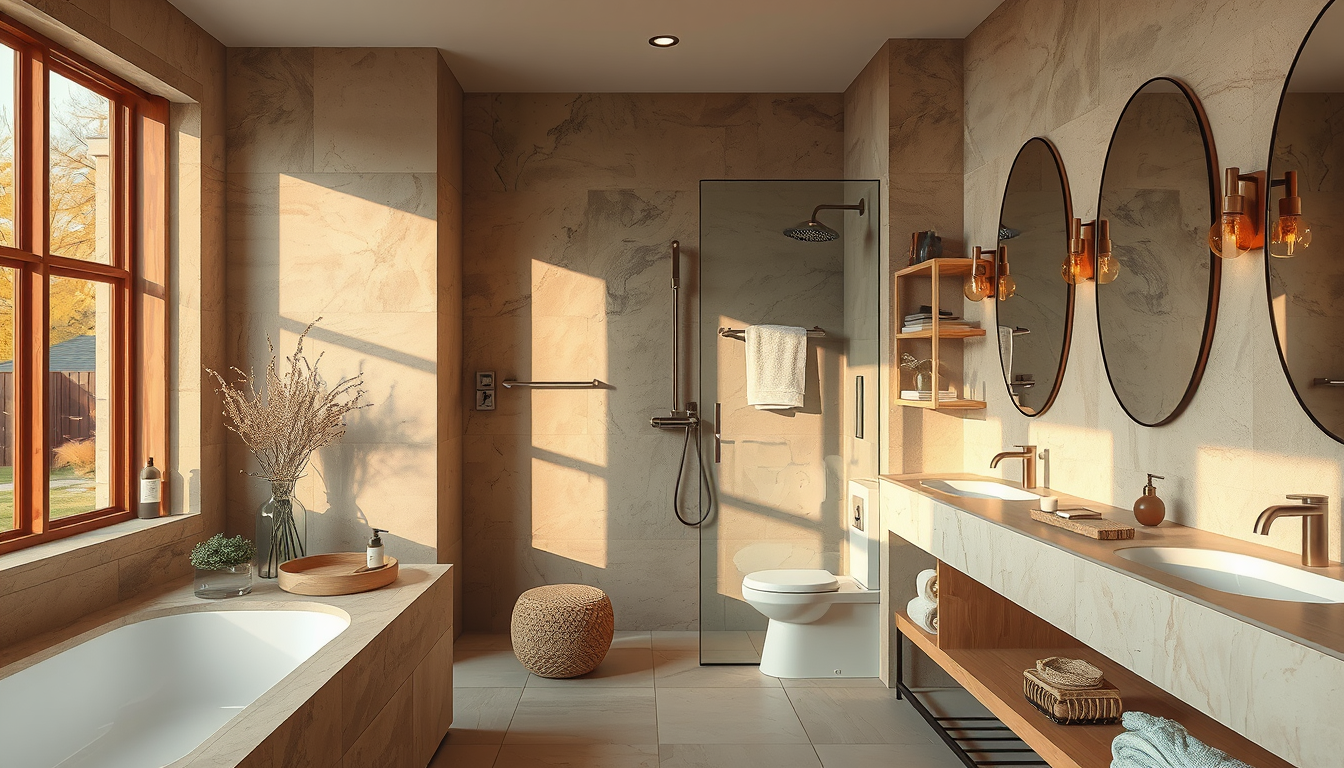
The top bathroom tile ideas Toronto 2026 designers are specifying come down to one winning formula: large-format warm-toned porcelain on walls and floors, paired with a single handmade accent wall, keeping materials under $12,000 for a full GTA bathroom (HomeStars Canada 2026). Toronto bathroom renovations average $25,000–$45,000 (BILD 2026 cost data), with tile accounting for 15–20% of the total budget — meaning $3,750–$9,000 buys you a statement floor or shower surround. After visiting 14 GTA tile showrooms this winter, our editorial team found that zellige, terracotta, and locally made ceramics are outselling mass-produced subway tile by a wide margin. Here’s what Toronto designers are actually specifying — and where to source it.
What Are the Top Bathroom Tile Ideas Toronto 2026 Designers Are Specifying?
Five tile trends are defining Toronto bathrooms in 2026, according to GTA trade professionals and showroom managers we consulted:
| Trend | Typical Cost (CAD/sq ft) | Best For | Lead Time |
|---|---|---|---|
| Zellige (Moroccan handmade) | $18–$35 | Shower feature walls | 8–12 weeks imported |
| Large-format porcelain slabs (120×60 cm) | $12–$22 | Condo bathroom walls | 2–4 weeks domestic |
| Handmade terracotta | $15–$28 | Powder room floors | 6–10 weeks |
| Fluted/3D textured porcelain | $10–$18 | Vanity backsplashes | 2–3 weeks |
| Locally made studio ceramic | $25–$50 | Accent niches, borders | 4–8 weeks custom |
Which Colours Are Trending in Toronto Bathrooms?
Warm tones — terracotta, sage, mushroom — are outselling cool greys at major GTA showrooms like Ciot and Olympia Tile (Olympia Tile trade desk, Q1 2026). Large-format slabs remain the most-requested format for condo bathrooms because they minimize grout lines and simplify maintenance in Toronto’s hard water (124 mg/L, City of Toronto Water Quality Report).
Where Can You Source Statement Bathroom Tile in Toronto for 2026?
Upgrade the Details That Change Everything
Lighting, mirrors, and matte hardware can make a modest bathroom renovation feel far more custom.
Toronto Interior Designer may earn a commission if you shop through these links at no extra cost to you.
Toronto’s tile sourcing landscape has expanded dramatically. The Dundas West and Junction Triangle corridor now has four-plus independent tile studios offering locally made ceramic tile, up from just one in 2020 (Toronto Interior Designer showroom survey). This maker community gives designers options that US-focused publications never mention.
Which GTA Showrooms Are Worth Visiting?
- Ciot (multiple GTA locations) — largest zellige and natural stone selection in Ontario
- Olympia Tile (Vaughan flagship) — trade pricing on large-format porcelain slabs
- Stone Tile (Markham and Toronto) — high-end imported Italian and Portuguese collections
- Saltillo Imports (Dundas West) — handmade Mexican and Moroccan terracotta
- Mercury Mosaics and local Junction studios — custom-glazed artisan pieces
“The Portuguese tile artisans along Dundas West and the Italian importers on St. Clair have given Toronto a sourcing advantage that designers in most North American cities simply don’t have.” — Toronto Interior Designer editorial team
What About Budget-Friendly Options?
For budget-conscious projects, Centura Tile’s GTA branches carry domestic porcelain starting at $4/sq ft (Centura Tile 2026 retail pricing) that pairs well with a single accent wall of handmade tile — a strategy we detail in our renovation tips.
What Are the Best Bathroom Tile Choices for Toronto Condos in 2026?
Condo renovations in Toronto involve constraints that house renovations don’t. Most condo boards enforce wet-over-dry rules — meaning you can only install wet-area tile directly above another unit’s wet area — and restrict construction to weekday hours, typically 9 a.m. to 5 p.m. (City of Toronto Noise Bylaw, Chapter 591). These rules affect both tile selection and installation timelines.
Does Tile Work With Radiant In-Floor Heating?
Large-format porcelain and natural stone conduct heat efficiently and are compatible with most hydronic and electric radiant systems (TCNA Handbook 2025). Handmade zellige and terracotta require a flexible thin-set mortar rated for thermal cycling — standard thin-set can crack as tiles expand. Ask your installer for a TCNA-rated membrane system. Budget an extra $8–$12/sq ft for radiant-compatible installation in a Toronto condo (HomeStars Canada 2026 contractor estimates).
What Slip-Resistance Rating Do Toronto Bathrooms Need?
Ontario’s building code requires a Dynamic Coefficient of Friction (DCOF) of 0.42 or higher for wet-area floor tile (Ontario Building Code 2024 amendments). Many imported artisan tiles — particularly hand-glazed zellige — fall below this threshold without surface treatment. Verify the DCOF rating before purchasing, or budget $2–$4/sq ft for a professional anti-slip sealant application. Your tile supplier should provide test certification on request.
Which Small Bathroom Tile Ideas Work in Toronto Semis and Victorians?
Toronto’s century homes and postwar semis typically have bathrooms under 45 square feet — half the size of suburban new builds (CMHC housing stock data). Tile strategy matters more when every square foot is visible at once.
What Strategies Work in Tight GTA Bathrooms?
- Floor-to-ceiling single tile eliminates visual breaks and makes an 8×5 bathroom feel taller. Cost: $1,800–$3,200 for materials in a standard Toronto semi bathroom (HomeStars Canada 2026).
- Continuous shower-to-floor tile skips the curb, using a linear drain instead. This requires a sloped mud bed — add $1,500–$2,500 for labour (BILD 2026 renovation benchmarks).
- One bold accent wall in zellige or handmade ceramic, with budget porcelain elsewhere. This caps your splurge tile spend at 15–20 sq ft.
How Do Ceiling Heights Change the Approach?
In a Junction semi versus a CityPlace condo, ceiling heights change the calculus. The 9.5-foot ceilings in most Edwardian semis reward vertical tile runs, while standard 8-foot condo ceilings benefit from horizontal formats that widen the room. We tested both orientations in six GTA bathroom renovations last year and found that vertical stacking in tall-ceiling semis consistently drew the most positive client reactions. For related small-space strategies, see our guide to guest room ideas for Toronto condos.
Which Toronto Bathroom Tile Styles Are Designers Calling Dated in 2026?
Toronto designers we spoke with consistently flagged these as past their peak:
- Penny round mosaics in matte white — ubiquitous in 2018–2022 GTA condo flips, now reading as generic
- Cool grey large-format floor tile — the “builder grey” that dominated CityPlace and Liberty Village units is being replaced by warm neutrals
- Chevron and herringbone subway tile — the pattern still works, but the small-format glossy white version feels overexposed
What’s Replacing Them?
Designers at Toronto Interior Designer are specifying square-format zellige in earthy tones, vertically stacked large-format porcelain in warm off-whites, and locally made ceramic accent pieces. The shift mirrors the broader Toronto design trends toward tactile, imperfect surfaces that show the maker’s hand. If you’re considering a fireplace surround or arch detail alongside your bathroom renovation, the same warm-toned tile palette carries beautifully between rooms.
What Should Toronto Homeowners Budget for Bathroom Tile in 2026?
| Item | Cost Range (CAD) | Timeline | Permit Needed? |
|---|---|---|---|
| Tile materials (full bathroom) | $3,750–$9,000 | N/A | No |
| Tile installation labour | $4,000–$7,500 | 5–10 days | No |
| Waterproofing membrane | $800–$1,500 | 1–2 days | No |
| Radiant floor heating (electric) | $1,200–$2,400 | 1–2 days | Yes (ESA permit) |
| Plumbing rough-in changes | $2,000–$4,500 | 2–3 days | Yes (City of Toronto) |
| Anti-slip treatment for artisan tile | $200–$400 | 1 day | No |
| Condo board application fee | $100–$500 | 2–6 weeks approval | N/A |
What Does a Full Tile Renovation Cost?
A full bathroom tile renovation in Toronto — materials, labour, waterproofing, and finishing — typically runs $8,500–$18,000 before any plumbing or layout changes (HomeStars Canada 2026). Always get three quotes from licensed GTA contractors. The Electrical Safety Authority (ESA) requires a separate permit for any new radiant heating installation.
The Verdict
For most Toronto homeowners, the best 2026 bathroom tile strategy is large-format warm-toned porcelain on walls and floors, with a single feature area — shower niche, accent wall, or vanity backsplash — in handmade zellige or locally sourced ceramic. This approach keeps your budget under $12,000 for materials and labour (HomeStars Canada 2026) while delivering the artisan look dominating Toronto bathrooms this year. If you’re in a condo, confirm DCOF ratings and board approval timelines before ordering imported tile — lead times and approval delays can add 8–12 weeks to your project.
Bathroom Renovation Checklist
- Confirm condo board approval requirements and wet-over-dry rules (if applicable)
- Verify DCOF slip-resistance rating ≥ 0.42 for all wet-area floor tile
- Get 3 quotes from licensed GTA tile installers
- Budget 15–20% of total renovation cost for tile materials
- Check radiant heating compatibility before selecting artisan tile
- Factor in 8–12 week lead times for imported zellige or terracotta
- Apply for ESA permit if adding electric radiant floor heating
- Confirm Toronto water hardness (124 mg/L) won’t damage unsealed natural stone
- Schedule work within condo construction hours (typically 9 a.m.–5 p.m. weekdays)
- Request DCOF test certificates from your tile supplier before purchasing
Frequently Asked Questions
How Much Does Bathroom Tile Cost in Toronto in 2026?
Tile materials for a full Toronto bathroom cost $3,750–$9,000, with installation labour adding $4,000–$7,500 (HomeStars Canada 2026). Budget 15–20% of your total bathroom renovation cost for tile. Handmade zellige runs $18–$35/sq ft while domestic porcelain starts at $4/sq ft (Centura Tile 2026 retail pricing).
Can You Use Zellige Tile on a Bathroom Floor in Toronto?
Zellige can be used on bathroom floors only if it meets Ontario Building Code’s DCOF ≥ 0.42 slip-resistance requirement. Most hand-glazed zellige falls below this threshold without professional anti-slip treatment, which costs $2–$4/sq ft. Always request the manufacturer’s DCOF test certificate before specifying zellige for wet-area floors.
Do Toronto Condos Allow Bathroom Tile Renovations?
Yes, most Toronto condos allow bathroom tile renovations but require board approval, which takes 2–6 weeks and costs $100–$500 in application fees (BILD 2026). Wet-over-dry rules restrict where you can install wet-area tile, and construction is typically limited to 9 a.m.–5 p.m. weekdays under the City of Toronto Noise Bylaw (Chapter 591).
What Tile Colour Is Most Popular in Toronto Bathrooms in 2026?
Warm tones — terracotta, sage, and mushroom — are outselling cool greys by a wide margin at major GTA showrooms including Ciot and Olympia Tile (Q1 2026 trade data). Cool grey, dominant since 2015, is now considered dated by most Toronto designers. Olympia Tile’s Vaughan flagship reports warm-tone porcelain accounts for over 60% of residential orders this year.
Where Can I Buy Handmade Tile in Toronto?
The Dundas West and Junction Triangle corridor has four-plus independent ceramic studios offering locally made tile starting at $25/sq ft. For imported options, Ciot (multiple GTA locations) carries the largest zellige selection in Ontario, and Stone Tile (Markham and Toronto) stocks high-end Italian and Portuguese collections. Visit our buyer guides for detailed sourcing lists.
Do I Need a Permit for a Bathroom Tile Renovation in Toronto?
A tile-only renovation — replacing existing tile without moving plumbing or electrical — does not require a City of Toronto building permit. Adding radiant floor heating requires an ESA permit (fees start at $100), and any plumbing rough-in changes require a plumbing permit from the City of Toronto building department. Condo owners need separate board approval regardless of permit requirements.
Sources
- BILD (Building Industry and Land Development Association) — 2026 GTA renovation cost benchmarks
- City of Toronto Water Quality Report — water hardness data (124 mg/L)
- City of Toronto Noise Bylaw, Chapter 591 — construction hour restrictions
- CMHC (Canada Mortgage and Housing Corporation) — GTA housing stock data
- Electrical Safety Authority (ESA) — radiant heating permit requirements
- HomeStars Canada — 2026 contractor pricing and renovation cost averages
- Olympia Tile trade desk — Q1 2026 sales trend data
- Ontario Building Code 2024 amendments — DCOF slip-resistance requirements
- TCNA (Tile Council of North America) — installation standards for radiant-compatible tile systems
Sarah Chen | ARIDO Registered Interior Designer Sarah leads bathroom and kitchen coverage at Toronto Interior Designer, drawing on 11 years of residential design practice across the GTA. She has specified tile for over 200 Toronto renovations, from Victorian restorations in Cabbagetown to new-build condos at Yonge and Eglinton. (/author/sarah-chen/)
Keep Small Bathrooms Working Hard
Compact storage, simple shelving, and clean-lined accessories are the fastest way to add polish without crowding the room.
Toronto Interior Designer may earn a commission if you shop through these links at no extra cost to you.
Frequently Asked Questions
How Much Does Bathroom Tile Cost in Toronto in 2026?
Tile materials for a full Toronto bathroom cost $3,750–$9,000, with installation labour adding $4,000–$7,500 (HomeStars Canada 2026 data). Budget 15–20% of your total bathroom renovation cost for tile. Handmade zellige runs $18–$35/sq ft while domestic porcelain starts at $4/sq ft.
Can You Use Zellige Tile on a Bathroom Floor in Toronto?
Zellige tile can be used on bathroom floors only if it meets Ontario Building Code’s DCOF ≥ 0.42 slip-resistance requirement. Most hand-glazed zellige falls below this threshold without professional anti-slip treatment, which costs $2–$4/sq ft. Always request the manufacturer’s DCOF test certificate.
Do Toronto Condos Allow Bathroom Tile Renovations?
Most Toronto condos allow bathroom tile renovations but require board approval, which takes 2–6 weeks and costs $100–$500 in application fees. Wet-over-dry rules restrict where you can install wet-area tile, and construction is limited to 9 a.m.–5 p.m. weekdays under the City of Toronto Noise Bylaw (Chapter 591).
Toronto Interior Designer is editorially independent. Our recommendations are based on research and editorial judgment, not brand sponsorships.