
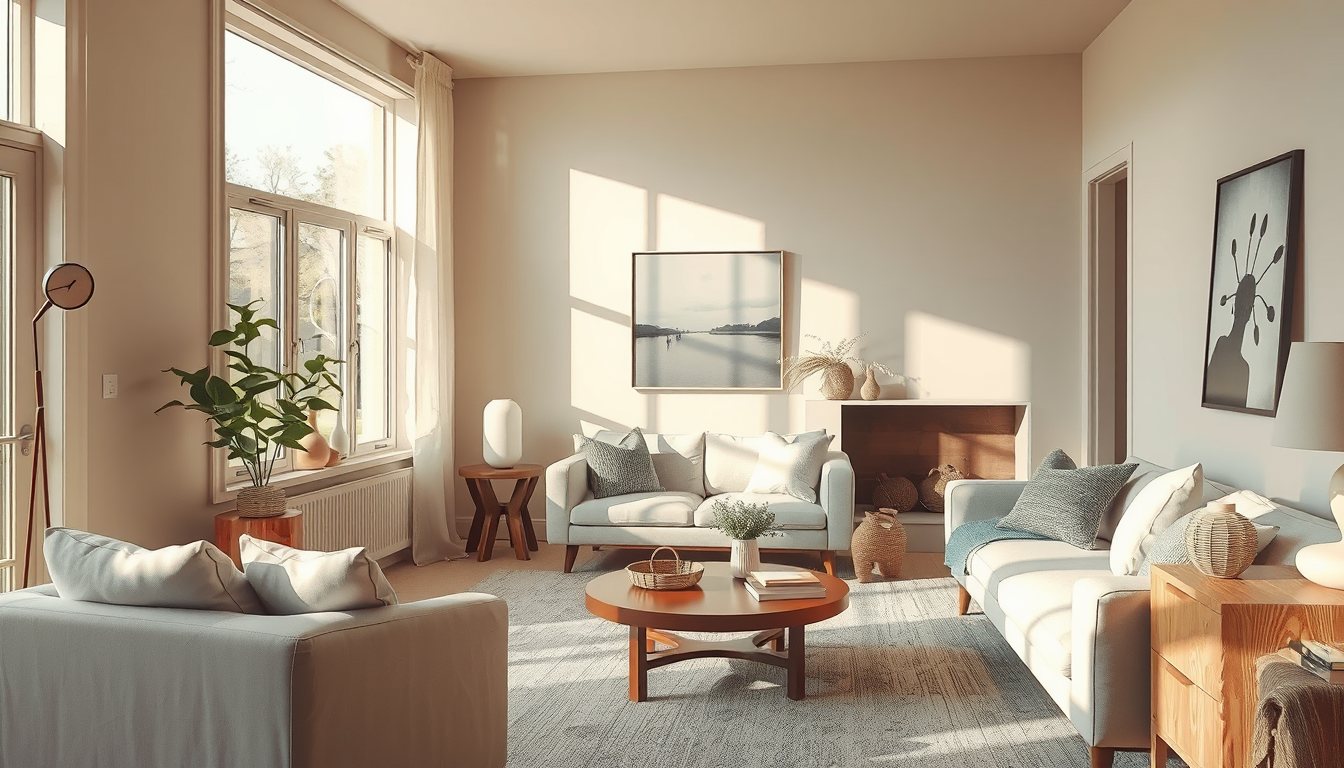
Finding the best air purifier Canada 2026 has to offer isn’t just a wellness trend — it’s becoming a seasonal necessity for anyone living in a Canadian city. After three consecutive years of wildfire smoke advisories blanketing Toronto, Montreal, and Vancouver, the air inside your home deserves the same design attention you give your furniture and finishes. Indoor air can be two to five times more polluted than outdoor air, and that gap widens during our long winters when homes stay sealed for months . The good news? Today’s air purifiers have finally caught up to the standards interior designers set for everything else in a room: they work hard and look good doing it.
Why Every Toronto Home Needs the Best Air Purifier in 2026
Canada’s 2023 wildfire season burned over 18.4 million hectares — a record that sent smoke plumes across Ontario and triggered multiple air quality advisories in the GTA . The summers since haven’t let up, and Environment Canada data shows that fine particulate levels during peak smoke events regularly exceed safe thresholds by three to five times in downtown Toronto.
At Toronto Interior Designer, we treat air purifiers the way we treat lighting or textiles — as functional elements that need to earn their place in a room. A clunky white box shoved behind the sofa isn’t a solution. The right purifier sits confidently in your layout, runs quietly enough for a bedroom, and handles the particulate load that wildfire smoke, city pollution, and winter dust throw at it.
If your condo is under 700 square feet — which describes a large share of Toronto’s housing stock — a single well-placed unit can cover your entire living space. Larger homes need a room-by-room strategy, which we’ll cover below.
HEPA, CADR, and Room Coverage: What to Look For in Canada
Compare the Retailers Mentioned Here
Use the same shortlist from the article and compare scale, finish options, and delivery fit before you buy.
Toronto Interior Designer may earn a commission if you shop through these links at no extra cost to you.
Before you compare brands, understand three specs that actually matter:
True HEPA filtration captures 99.97% of particles down to 0.3 microns. This is non-negotiable for wildfire smoke, which produces PM2.5 particulate — the fine stuff that penetrates deep into your lungs. Skip anything labelled “HEPA-type” or “HEPA-style.” Those are marketing terms with no standardized performance behind them .
CADR (Clean Air Delivery Rate) tells you how many cubic feet of air the unit can filter per minute. Match this to your room size. A 200-square-foot bedroom needs a CADR of at least 130; a 400-square-foot living room needs 260 or higher. When in doubt, size up — an oversized CADR means the purifier runs on a lower, quieter setting while still keeping the air clean.
Noise level matters more than most buyers realize. Anything above 50 dB on its highest setting will compete with conversation. For bedrooms, look for units that drop below 30 dB on sleep mode — roughly the volume of a whisper at arm’s length.
6 Design-Forward Air Purifiers That Blend Into Your Space
| Product / Brand | Price Range (CAD) | Best For | Design Style |
|---|---|---|---|
| Coway Airmega 250S | $450–$550 | Open-concept living rooms | Minimal white/charcoal, low profile |
| Blueair Blue 3210 | $180–$230 | Bedrooms and small condos | Fabric pre-filter in multiple colours |
| Dyson Purifier Big Quiet Formaldehyde | $1,050–$1,200 | Large family rooms, design statement | Sculptural tower, gold/nickel accents |
| Levoit Core 400S | $250–$320 | Home offices, mid-size rooms | Cylindrical white, compact footprint |
| Molekule Air Pro | $800–$1,000 | Allergy-prone households | Leather handle, aluminium body |
| Winix 5500-2 | $220–$280 | Budget-conscious full coverage | Understated dark panel, washable pre-filter |
Running costs: A mid-size purifier operating 24/7 costs roughly $30–$60 per year in Ontario at current hydro rates. Replacement HEPA filters typically run $40–$80 annually depending on the brand.
The units worth recommending are the ones you don’t have to apologize for when guests walk in. Here’s how designers approach the shortlist:
The Blueair Blue 3210 is a Toronto condo favourite for a reason. Its fabric pre-filter comes in muted tones — Arctic Trail grey, Archipelago sand — that sit comfortably beside a linen sofa or on a bedroom nightstand without screaming “appliance.” At under eight inches wide, it disappears on a shelf.
The Dyson Purifier Big Quiet Formaldehyde earns its price tag in rooms where you want a sculptural anchor. It reads more like a floor lamp than a filter, and the formaldehyde-sensing technology adds genuine value in newly renovated spaces where off-gassing from cabinetry and flooring is a real concern. If you’ve recently tackled a kitchen renovation, this is the unit to pair with it.
The Molekule Air Pro looks like a piece of Scandinavian furniture. The leather carry handle and brushed aluminium shell give it an object quality that most competitors lack. It’s the pick for a living room credenza or an open-plan dining area where the purifier will be visible from multiple angles.
A well-chosen air purifier should feel like it was specified by your designer, not purchased in a panic during smoke season.
How to Place an Air Purifier for Best Performance at Home
Placement determines performance as much as the spec sheet does. Toronto Interior Designer projects follow a few consistent rules:
Keep purifiers away from walls and corners. Most units intake air from multiple sides. Pushing them flush against a wall cuts efficiency by up to 20%. Leave at least 15 centimetres of clearance on all sides.
Place bedroom units at nightstand height. Breathing-zone filtration is more effective than floor-level placement while you sleep, and it keeps the unit accessible for filter changes and speed adjustments.
In open-concept condos, position the purifier where airflow naturally converges. That’s usually the transition zone between the kitchen and living area, near the return air vent. This lets the purifier work with your HVAC system rather than against it.
Use furniture to frame, not hide. A tower-style purifier beside a floor lamp or between two low bookcases looks intentional. Tucking it behind a curtain or inside a cabinet chokes airflow and defeats the purpose.
Who Should Buy an Air Purifier
- Condo owners under 800 sq ft — one quality unit handles your entire space
- Families with young children or allergy sufferers — HEPA filtration is the single most effective indoor air intervention
- Anyone who renovated in the past 12 months — new finishes, paint, and engineered flooring off-gas VOCs for up to a year
- Pet owners — dander and fur accumulate faster in sealed Canadian winters
- Work-from-home professionals — cleaner air measurably improves focus and reduces afternoon fatigue
What to Do Next: Your Clean-Air Action Plan
Choosing the best air purifier for your Canadian home comes down to matching the unit to your room, your budget, and your design standards. Don’t settle for a machine that works but looks like it belongs in a hospital.
- Measure your largest room and note the square footage. Match it to a CADR rating using the guideline above.
- Set a realistic budget. The $200–$350 range covers most bedrooms and home offices. Spend $500+ only for open-concept living areas or design-statement units.
- Check filter replacement costs before you buy. A $180 purifier with $90 annual filters costs more over three years than a $300 unit with $50 filters.
- Plan placement before purchase. Walk your room and identify the spot with the best clearance and airflow — then pick a unit whose footprint and height fit that location.
- Run it 24/7 on auto mode. Modern purifiers use minimal energy on low speed and ramp up only when air quality drops. Set it and forget it.
- Browse our buyer guides for more product recommendations that meet real design standards.
Wildfire season will come again. Winter will seal your home tight again. The best time to add clean air to your design plan is before you need it.
Shop Elevated Alternatives
If you want a step up in materials or silhouette, compare mid-range brands before locking into the first affordable option.
Toronto Interior Designer may earn a commission if you shop through these links at no extra cost to you.
Sources
- Health Canada — Indoor Air Quality — https://www.canada.ca/en/health-canada/services/air-quality.html
- Natural Resources Canada — https://natural-resources.canada.ca/climate-change/climate-change-impacts-forests/forest-change-indicators/forest-fires/13050
- Health Canada — Portable Air Cleaners — https://www.canada.ca/en/health-canada/services/publications/healthy-living/guidance-fine-particulate-matter-pm2-5.html
Frequently Asked Questions
What is the best air purifier for wildfire smoke in Canada?
Look for a True HEPA air purifier with a CADR of at least 200. The Coway Airmega 250S and Blueair Blue 3210 are top picks for Canadian homes dealing with seasonal wildfire smoke, capturing 99.97% of PM2.5 particles.
How much does it cost to run an air purifier in Ontario?
A mid-size HEPA air purifier running 24/7 costs roughly $30–$60 per year in Ontario at current hydro rates. Annual replacement filters add $40–$80 depending on the brand, bringing total yearly costs to $70–$140.
Do I need more than one air purifier for a Toronto condo?
Most Toronto condos under 700–800 square feet can be effectively covered by a single air purifier with a matched CADR rating. Larger homes or open-concept layouts over 800 square feet benefit from a room-by-room strategy with multiple units.