
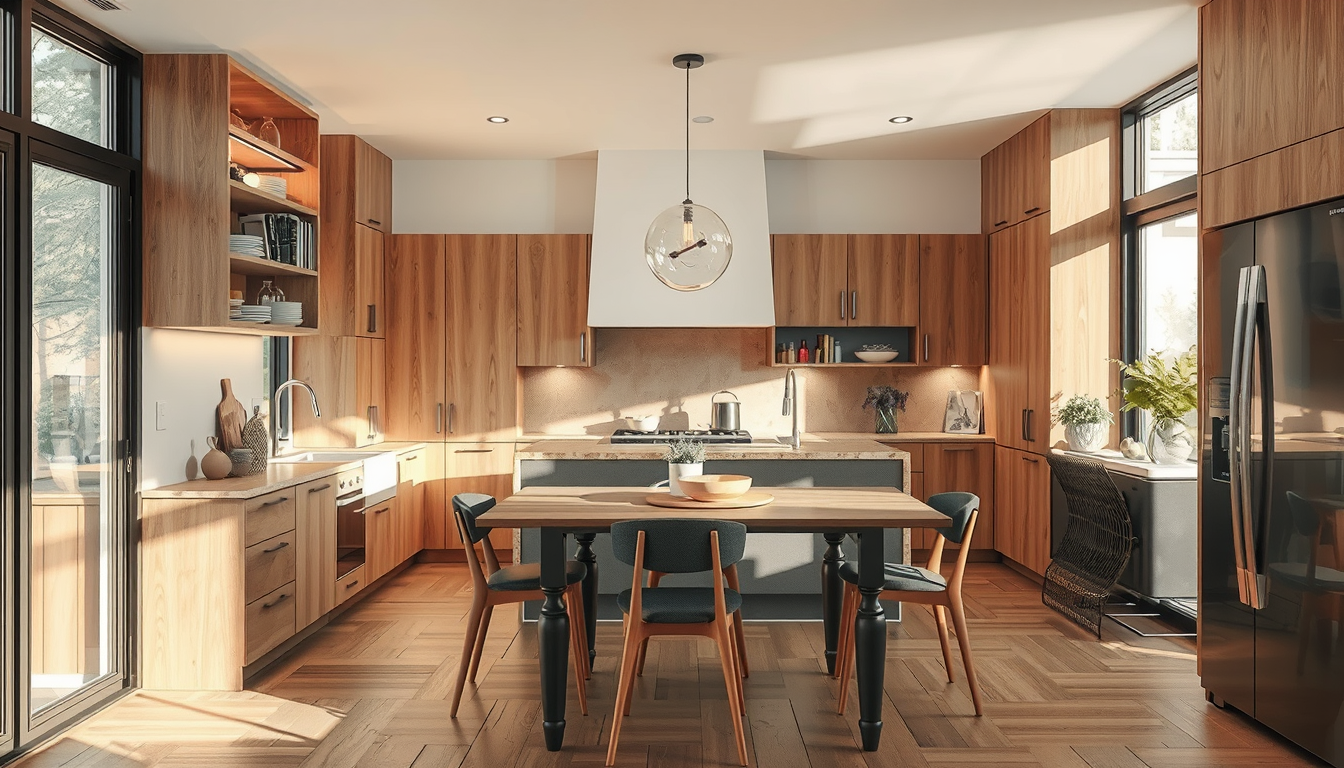
If you’re searching for breakfast nook ideas Canada homeowners can actually execute, start with one truth most design guides ignore: our homes, our light, and our winters are fundamentally different from the sun-drenched California kitchens filling your Pinterest board. A breakfast nook in Toronto needs to earn its square footage twelve months a year — functioning as a morning coffee spot in July, a homework station in November, and a cozy reading corner during a February ice storm. Whether you own a Victorian semi in the Annex, a post-war bungalow in Scarborough, or a 650-square-foot condo in Liberty Village, the right nook design turns dead kitchen space into the most-used seat in your home.
Built-In Breakfast Nook Ideas That Maximize Storage in Small Canadian Kitchens
The average Toronto condo kitchen runs roughly 80–100 square feet , which means every inch of seating needs to double as storage. An L-shaped built-in banquette tucked into a corner eliminates the need for two to three chairs while hiding seasonal items, extra linens, or small appliances under the seat.
For the best results in tight layouts, follow this approach:
- Measure your corner first. You need a minimum 42-inch-wide table surface for two people to eat comfortably across from each other, plus 18 inches of seat depth on each banquette side.
- Use flip-top hinged seats rather than drawer-pull storage — they’re easier to access in cramped kitchens and cost less to build.
- Choose a pedestal or single-leg table so banquette users can slide in and out without bumping table legs.
- Add a narrow open shelf along the wall above the banquette for cookbooks, a small plant, or morning essentials like vitamins and coffee mugs.
- Install outlet access inside or behind the banquette — charging phones while eating breakfast is non-negotiable in 2026.
- Keep the backrest angle at 95–100 degrees for comfort during longer sits. A perfectly vertical back looks clean but becomes painful after fifteen minutes.
Built-in banquettes also pair beautifully with the wainscoting and beadboard finishes trending across Canadian design media . A beadboard-panelled banquette back in a warm white gives a classic English-kitchen feel without a full renovation. For more ideas on pairing natural textures with functional design, see our guide to wabi-sabi interior design in Canada.
Freestanding Breakfast Nook Ideas for Renters and Condo Dwellers in Canada
Shop Dining Pieces for Narrow Layouts
Extendable tables, slim dining chairs, and compact pendants make a bigger impact than oversized statement pieces.
Toronto Interior Designer may earn a commission if you shop through these links at no extra cost to you.
Not everyone can — or should — commit to a built-in. Renters, condo owners with restrictive bylaws, and anyone who might move within five years should consider a freestanding nook instead.
The formula is simple: a round or oval table no wider than 36 inches, two upholstered chairs or a small settee, and a wall-mounted shelf or pegboard above for vertical storage. This configuration fits in a kitchen corner, a wide hallway, or even the dead space between a galley kitchen and a living room — a layout common in Toronto’s newer condo developments. When you move, every piece comes with you.
A breakfast nook doesn’t need to be built into the architecture. Sometimes the best nook is just a great chair, a small table, and the right light — placed where you’ll actually use them every morning.
Look for chairs with washable performance fabric. Canadian homes deal with salt-tracked boots and wet winter coats landing on nearby furniture far more than design magazines acknowledge. At Toronto Interior Designer, we consistently recommend performance velvet or crypton-coated linen for any kitchen-adjacent seating — they resist stains while still feeling warm to the touch.
Best Breakfast Nook Materials That Survive Canadian Winters
Material selection for a breakfast nook in Canada isn’t just aesthetic — it’s structural. The swing between bone-dry winter heating and humid summer air punishes the wrong choices fast. Here’s what holds up and what doesn’t:
| Element | Recommended Material | Avoid | Why It Matters in Canada |
|---|---|---|---|
| Flooring under nook | Engineered hardwood, ceramic tile, LVP | Solid hardwood | Solid hardwood warps over radiant heat systems, now common in Canadian renovations |
| Banquette seat | Baltic birch plywood (¾”) with polyurethane seal | MDF or particleboard | MDF swells with humidity shifts between dry winter heating and humid summers |
| Upholstery | Crypton fabric, performance velvet, vinyl | Natural untreated cotton or silk | Salt, slush, and window condensation demand wipeable surfaces |
| Table surface | Solid maple, white oak, quartz top | Glass (cold in winter), soft pine | Maple and oak handle temperature swings; quartz pairs with radiant-heat counters |
| Wall finish behind nook | Semi-gloss or satin paint, tile backsplash, beadboard | Flat matte paint, wallpaper near windows | Condensation on cold exterior walls in winter causes peeling on flat finishes |
One compliance note US guides never mention: under the Ontario Building Code, any built-in seating installed near a window must maintain minimum egress clearance if that window serves as an emergency exit . Always confirm with your contractor before blocking a window path with a fixed banquette.
How to Design a Breakfast Nook Around Natural Light in Canada
Light is the single biggest factor in whether a breakfast nook feels inviting or forgotten. Toronto averages roughly 1.7 hours of sunlight per day in December , so nook placement must be strategic.
South- and east-facing windows capture the best morning light. If your kitchen has an east-facing window, position your nook directly beside it — you’ll get the strongest natural light during breakfast hours even in mid-winter. South-facing windows provide consistent light throughout the day, making them ideal for nooks that double as work-from-home spots.
For homes with limited window access, compensate with these strategies:
- Under-cabinet LED strips in warm white (2700K–3000K) mounted above the nook to mimic morning light
- A large-format mirror on the wall opposite the nearest window to bounce available light across the seating area
- Light-toned banquette fabric and wall colour — pale oak, warm cream, or soft sage amplify whatever light enters the space
In Toronto’s Victorian semis, bay windows are a natural nook location. The curved alcove fits a custom banquette perfectly, and the three-sided glass maximizes light from multiple angles. If you’re renovating an older Toronto home, explore our renovation tips for guidance on working with heritage features.
Breakfast Nook Cost in Canada: Full 2026 Budget Breakdown
A custom built-in breakfast nook in Canada typically runs $3,000–$8,000 CAD for materials and labour, depending on complexity, region, and finish level. Here’s how that breaks down:
- Basic L-shaped banquette with storage (contractor-built, painted MDF or plywood): $2,500–$4,000
- Upgraded banquette with hardwood frame, upholstered cushions, and wainscoting: $5,000–$8,000
- Freestanding nook setup (table + two chairs + shelf): $800–$2,500
- Lighting additions (pendant swap or under-cabinet LEDs): $200–$600
- Flooring transition (if adding tile or engineered hardwood under the nook area): $500–$1,500
These ranges reflect Greater Toronto Area pricing. Costs in smaller Ontario cities or Western Canada may run 10–20% lower.
What to Do Next
Whether you’re planning a full custom build or assembling a freestanding setup this weekend, here’s your action checklist:
- Measure your available space — you need a minimum footprint of 5′ × 5′ for a comfortable two-person nook
- Check your window orientation — south and east exposures are ideal for morning light
- Choose your format — built-in banquette for long-term homeowners, freestanding for renters or anyone planning to move
- Select radiant-heat-compatible materials if you have or plan in-floor heating
- Confirm OBC egress compliance with your contractor before blocking any window with built-in seating
- Set your budget — even $1,000 can transform a dead corner into a functional breakfast nook with the freestanding approach
The best breakfast nook ideas Canada designers keep returning to share one quality: they’re built around how you actually live, not how a space looks in a single photograph. Start with your light, your layout, and your mornings — the design follows from there.
Start With Functional Basics
For budget-friendly kitchen and dining updates, focus on stools, storage, and lighting before decorative extras.
Toronto Interior Designer may earn a commission if you shop through these links at no extra cost to you.
Sources
- CMHC Housing Market Insight — https://www.cmhc-schl.gc.ca/
- House & Home trend report — https://houseandhome.com/
- Ontario Building Code Section 9.9.10 — https://www.ontario.ca/laws/regulation/120332
- Environment Canada Climate Normals — https://climate.weather.gc.ca/
Frequently Asked Questions
How much does a custom breakfast nook cost in Canada?
A built-in breakfast nook in Canada typically costs $3,000–$8,000 CAD depending on materials and complexity. Freestanding nook setups using a small table, chairs, and shelving can be assembled for $800–$2,500 CAD, making them a budget-friendly option for renters and condo owners.
What materials work best for breakfast nooks in Canadian homes?
Engineered hardwood or LVP flooring, Baltic birch plywood for banquette frames, and performance fabrics like Crypton or performance velvet are ideal. These materials handle Canada’s humidity swings, radiant heat systems, and winter condensation far better than solid hardwood, MDF, or untreated natural fabrics.
Can you install a breakfast nook in a small Toronto condo?
Yes. A freestanding nook with a round table under 36 inches wide, two compact chairs, and a wall-mounted shelf fits most Toronto condo kitchens. For built-in banquettes, you need a minimum 5-by-5-foot footprint and should confirm condo bylaw compliance before any permanent installation.