
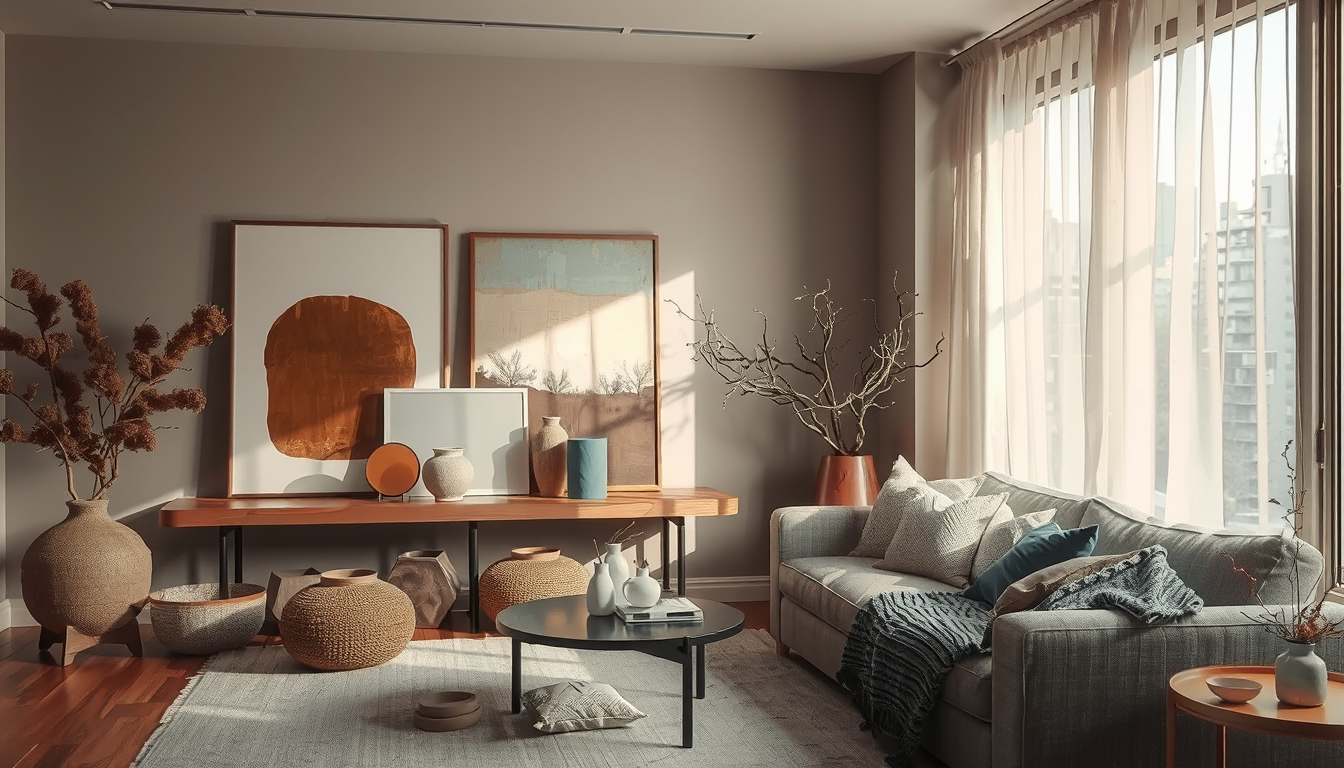
Wabi sabi interior design canada is not a trend imported from overseas — it is a philosophy already woven into our craft traditions, from reclaimed Ontario barn wood to hand-thrown Quebec ceramics. Rooted in 15th-century Japanese tea ceremony aesthetics and Zen Buddhism, wabi-sabi teaches three principles: nothing lasts, nothing is finished, nothing is perfect. For Canadian homeowners tired of sterile, Instagram-perfect interiors, this approach offers something radical — permission to let your home age, breathe, and tell a real story. In a country where harsh winters demand warmth and texture, embracing imperfection is not just beautiful. It is practical.
What Is Wabi Sabi Interior Design and Why Canadians Love It
Wabi-sabi celebrates the beauty found in wear, irregularity, and natural aging. A dining table with visible wood grain. A linen curtain that wrinkles. A ceramic mug with an uneven glaze. These are not flaws — they are features.
The philosophy has gained steady traction in North American design since 2022, with search interest in wabi-sabi interiors spiking notably in early 2026 alongside the broader longevity and wellness home movement . Publications like AD, Dwell, and Domino have all run major features celebrating aged spaces, craft-forward restoration, and small-space essentialism — core wabi-sabi principles repackaged for Western audiences.
No major publication, however, has localized wabi-sabi for Canada’s climate, materials, or maker community. That is the gap. At Toronto Interior Designer, we see this philosophy not as a foreign aesthetic import but as something already embedded in how Canadians build, source, and live. The reclaimed beam in a Leslieville loft. The soapstone countertop quarried in Quebec. The hand-forged iron hardware from a Muskoka blacksmith. Wabi-sabi is here — it just needed a name.
“Wabi-sabi asks you to stop chasing perfection and start noticing what is already beautiful about the materials and spaces you have.”
Best Natural Materials for Wabi Sabi Homes in Canada’s Climate
Find the Finishing Pieces
Accent lighting, ceramics, mirrors, and small furniture often make the biggest difference in builder-grade rooms.
Toronto Interior Designer may earn a commission if you shop through these links at no extra cost to you.
Canada’s geography offers a rich material palette for wabi-sabi interiors, and the key is choosing finishes that age gracefully rather than fighting time.
Reclaimed wood is the foundation. Ontario alone has tens of thousands of pre-Confederation barns, many now being carefully deconstructed for salvage timber . This wood — wide-plank hemlock, hand-hewn pine, weathered elm — carries a century of patina that no factory distressing can replicate. Use it for accent walls, open shelving, or dining tables.
Natural-finish products are surging in popularity. Lime wash paint, tung oil, and beeswax sealants allow surfaces to develop character over time rather than chipping or peeling. Canadian retailers report significant sales increases in non-toxic, natural finishes since 2024, driven by the wellness home movement .
Stone and ceramic round out the palette. Raw BC soapstone, unpolished granite, and hand-thrown stoneware bring organic texture that softens against Toronto’s long grey winters. For more on integrating earthy materials into Canadian homes, terracotta pairs beautifully with the wabi-sabi approach.
Textiles matter equally. Undyed linen, raw wool throws, and jute rugs add layers of imperfect texture that a polyester-blend space simply cannot achieve. Source from Canadian mills where possible — several Maritime and Ontario producers still work with natural fibres using traditional weaving methods that produce subtle irregularities in each piece.
Room-by-Room Wabi Sabi Guide for Toronto Homes and Condos
Wabi-sabi works in every room, but the approach shifts depending on function. Here is a practical breakdown for Toronto homes and condos, where space is often tight and every material choice needs to earn its place.
| Element | Recommendation | Budget Range (CAD) | Works Best In |
|---|---|---|---|
| Reclaimed wood accent wall | Salvage barn board, oil-finished, single feature wall | $800–$2,500 | Living room, bedroom |
| Lime wash paint | Apply over drywall for soft, mottled depth — colours shift with light | $300–$900 per room | Any room |
| Hand-thrown ceramic vessels | Source from Canadian potters, display in odd-numbered groupings | $60–$400 each | Kitchen, dining, entryway |
| Raw stone countertop | Honed or leathered soapstone — develops patina with cooking oils | $3,500–$7,000 installed | Kitchen, bathroom |
| Undyed linen curtains | Relaxed pleat, floor-length, allow natural wrinkling | $200–$600 per window | Living room, bedroom |
| Woven jute or wool rug | Flatweave or chunky knit, natural tones, imperfect edges welcome | $400–$1,200 | Living room, bedroom |
| Handmade iron hardware | Blacksmith-forged pulls and hooks — no two are identical | $25–$80 per piece | Kitchen, bathroom, entryway |
For kitchens specifically, wabi-sabi pairs well with open shelving, visible dishware, and unlacquered brass fixtures that patina over months. If you are planning a broader kitchen overhaul, understanding the full renovation timeline helps you phase in these details without budget surprises.
In living spaces, the approach is simpler: layer natural textures, reduce visual clutter, and let one or two imperfect statement pieces anchor the room — a weathered wood coffee table, a cracked ceramic lamp base repaired with visible mending.
Canadian Artisans Crafting Essential Wabi Sabi Pieces
The materials only tell half the story — the hands that shape them complete it. Supporting local makers is central to wabi-sabi done right. Mass-produced “imperfect-look” decor from big-box retailers misses the point entirely. The philosophy demands that objects carry real history, real hands, real irregularity.
Toronto’s design community includes several studios working at the intersection of Japanese and Canadian craft traditions, influenced by George Nakashima’s legacy of celebrating wood grain imperfections and live edges. Seek out:
- Ceramicists in the Distillery District and Hamilton who fire with wood kilns, producing ash-glazed pieces with natural colour variation.
- Woodworkers in Muskoka and the Kawarthas who mill salvaged timber into furniture with visible knots, checks, and grain figure left intact.
- Textile artists in rural Ontario and the Maritimes hand-weaving with undyed wool and linen.
- Blacksmiths and metalworkers forging hardware with hammer marks deliberately preserved.
- Natural plaster and lime wash applicators trained in European and Japanese techniques now practising in the GTA.
Visit local maker markets, open studio events, and craft fairs to source pieces directly. The One of a Kind Show, Toronto Outdoor Art Fair, and smaller neighbourhood markets are strong starting points.
Wabi Sabi vs Minimalism: Why Imperfection Wins in 2026
Wabi-sabi is often confused with minimalism, but the two philosophies diverge sharply. Minimalism strips away until only the essential remains — clean lines, monochrome palettes, hidden storage. It can feel cold, especially through a Canadian winter.
Wabi-sabi also values restraint, but it welcomes warmth, texture, and visible age. A minimalist kitchen hides everything behind flat-panel doors. A wabi-sabi kitchen puts the handmade bowls on open shelves and lets the wooden cutting board stay on the counter, knife marks and all.
This distinction matters now more than ever. The biophilic design movement — projected to be a $10B-plus global market growing at 12% annually — aligns closely with wabi-sabi’s emphasis on natural materials and organic forms . Homeowners are moving past the all-white, perfectly curated interiors of the 2010s toward spaces that feel lived-in, grounded, and connected to the natural world.
For Canadian homes specifically, wabi-sabi combats the seasonal sterility that sets in during long winters. Warm wood, rough stone, and soft natural textiles make a space feel alive when everything outside is frozen and grey.
What to Do Next
Wabi-sabi is not about buying a specific product line or following a rigid formula. It is about shifting how you see your home — valuing what ages well over what looks perfect on day one. Start small and build intentionally.
- Audit one room for synthetic or overly polished materials you could swap for natural alternatives.
- Visit a local maker market and source one handmade ceramic, textile, or wood piece to anchor a space.
- Try lime wash paint on a single accent wall — the mottled, luminous finish transforms a room for under $300.
- Stop hiding imperfections — let the patina on your brass fixtures develop, leave the wood grain unsealed, and embrace visible mending on favourite textiles.
- Research Canadian suppliers for reclaimed wood, natural stone, and non-toxic finishes before your next renovation.
Wabi sabi interior design canada starts with a single honest material choice. Make it count.
Source Warm, Livable Staples
Natural textures and simple silhouettes are easier to layer when you start with timeless foundational pieces.
Toronto Interior Designer may earn a commission if you shop through these links at no extra cost to you.
Sources
- Architectural Digest, “The Longevity Home” — https://www.architecturaldigest.com/
- Ontario Barn Preservation — https://www.ontariobarns.ca/
- Benjamin Moore Canada — https://www.benjaminmoore.com/en-ca
- Grand View Research, Biophilic Design Market — https://www.grandviewresearch.com/
Frequently Asked Questions
What is wabi sabi interior design and how does it work in Canadian homes?
Wabi sabi interior design is a Japanese philosophy that celebrates imperfection, natural aging, and organic materials. In Canadian homes, it translates to using reclaimed Ontario barn wood, hand-thrown Quebec ceramics, raw soapstone, and undyed linen textiles that age gracefully through harsh winters while adding warmth and character.
How much does it cost to add wabi sabi elements to a Toronto home?
Wabi sabi updates range from $60 for a hand-thrown ceramic vessel to $7,000 for an installed soapstone countertop. Budget-friendly starting points include lime wash paint at $300–$900 per room, undyed linen curtains at $200–$600 per window, and reclaimed wood accent walls from $800–$2,500.
What is the difference between wabi sabi and minimalism?
While both value restraint, minimalism strips spaces down to clean lines and hidden storage, often feeling cold. Wabi sabi welcomes warmth, visible texture, and natural aging — open shelves with handmade bowls, unsealed wood grain, and patina on brass fixtures — making it better suited to Canadian winters.