
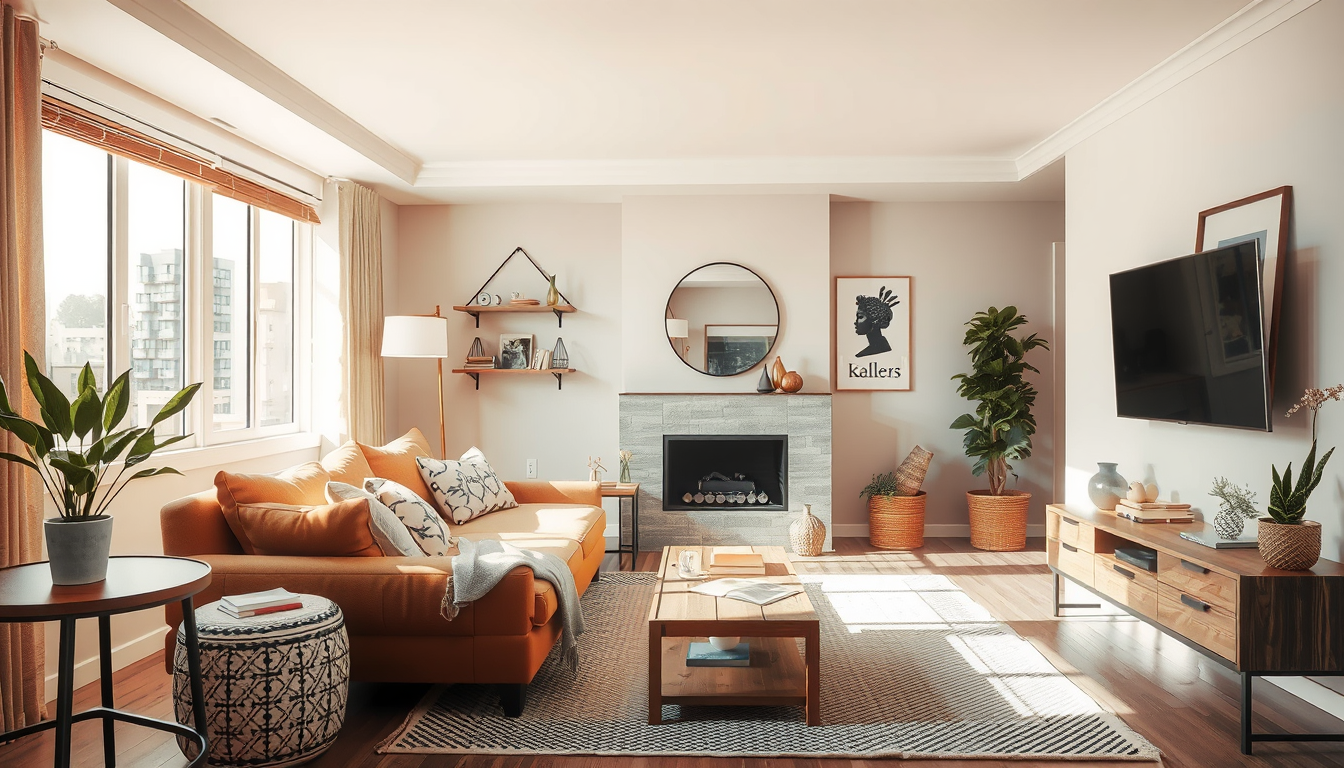
A budget condo makeover toronto owners can actually pull off doesn’t require gutting your unit or battling your condo board for six months of permits. It requires knowing which three or four upgrades deliver 80% of the visual punch — and skipping everything else. The average Toronto condo hovers around 660 square feet, and most units roll off the builder’s line with the same flat-panel cabinets, laminate counters, hollow-core doors, and flush-mount “boob lights” you’ll find in every tower from Liberty Village to North York. The good news: swapping these builder-grade finishes for pieces with actual character costs far less than most owners assume, and most changes don’t need condo board approval at all.
Why Every Toronto Condo Looks the Same — And What to Fix First
Developers build to a formula. They install the same slab cabinet fronts, the same frameless builder mirror, and the same brushed-nickel bar pulls across hundreds of units because it’s cheap and inoffensive. The result is that a condo at Yonge and Eglinton looks identical to one at Queen and Dufferin.
The fastest way to break that sameness is to target what designers call the “builder-grade hit list” — the handful of finishes that scream mass-produced. Replace just the lighting fixtures, cabinet hardware, and bathroom mirror and you’ll account for roughly 60–70% of the visual transformation in a typical unit. Add a new faucet or a coat of cabinet paint and you’re most of the way to a space that feels designed rather than assigned.
Here’s a planning table to anchor your project:
| Upgrade | Typical Toronto Cost (CAD) | Best For | Notes |
|---|---|---|---|
| Swap all flush-mount lights for pendants/sconces | $300–$800 | Every room | No permit needed; keep existing junction boxes |
| Replace cabinet hardware (knobs + pulls) | $150–$400 | Kitchen, bathroom | Choose a consistent finish across the unit |
| Upgrade bathroom mirror to framed or arched style | $200–$500 | Bathroom | Oversized mirrors make small baths feel larger |
| Paint cabinet fronts (kitchen or vanity) | $400–$1,200 | Kitchen, bathroom | Use a bonding primer on laminate; allow 3–5 days |
| Install peel-and-stick backsplash tile | $150–$350 | Kitchen | Removable option works well for rental investors |
| Replace hollow-core interior doors (per door) | $250–$450 | Bedroom, bathroom | Solid-core doors improve both look and sound |
| Add floating shelves or built-in-look storage | $200–$600 | Living room, kitchen | Critical in sub-600 sq ft units for vertical storage |
Most of these upgrades fall under cosmetic renovations, which Toronto condo boards typically allow without formal approval. However, any work involving flooring changes, plumbing, or electrical requires written notice plus proof of contractor insurance — a constraint that most U.S.-focused design advice skips entirely. Check your condo’s declaration and rules before scheduling trades.
The 3-Swap Rule: Best Lighting, Hardware, and Mirror Upgrades
Price Out the High-Impact Pieces First
Before committing to a renovation mood board, benchmark the furniture, lighting, and storage pieces that set the tone.
Toronto Interior Designer may earn a commission if you shop through these links at no extra cost to you.
If your total budget sits under $1,500, spend it all on these three categories. The return is disproportionate because these are the finishes your eye hits first when entering a room.
Lighting. Ditch every builder flush-mount. A sculptural pendant over the kitchen island, a linen drum shade in the bedroom, and a pair of wall sconces flanking the bathroom mirror will transform the atmosphere for $300–$800 total. Shops like DERA Design Centre on King East and the Habitat for Humanity ReStore locations across the GTA carry quality fixtures at steep discounts. For more ideas on upgrading your bathroom lighting and finishes, see our guide to Toronto bathroom renovation ideas.
Hardware. New knobs and pulls are the cheapest per-unit upgrade with the highest visibility. Budget roughly $5–$12 per piece in matte black, unlacquered brass, or champagne bronze — all trending finishes that read custom. A standard condo kitchen has 20 to 30 handles, so the full swap takes under two hours with a drill template and costs less than a single dinner out. CB2 at Yorkdale and Amazon.ca both carry solid options.
Mirrors. The clip-on frameless mirror is the single most builder-grade element in any Toronto condo bathroom. Replace it with a framed, arched, or oversized leaning mirror and the entire room shifts upmarket. Choose a mirror at least 24 inches wide — in a tight five-piece bath, the added surface reflects more light and visually doubles the sense of depth.
“You don’t need to renovate the whole condo — you just need to remove the three things that make it look like every other unit in the building. That’s lighting, hardware, and mirrors, every time.” — Toronto Interior Designer contributor roundtable
Room-by-Room Budget Condo Makeover Playbook for 500–800 Sq Ft Units
With the three-swap foundation in place, these room-specific moves stretch whatever budget remains.
Kitchen. In a galley or single-wall condo kitchen, paint the lower cabinets a rich colour (deep forest green and navy both photograph well) and leave uppers white or remove them entirely for open shelving. Swap the countertop only if budget allows — otherwise, a quality peel-and-stick backsplash and new hardware carry the room. Our Toronto kitchen renovation ideas guide covers layout options if you’re considering a bigger scope.
Bathroom. Focus on the vanity area. A new mirror, updated light bar, and matte-black faucet create a spa-adjacent feel for under $600. If the vanity itself is damaged, replacing a 24–30″ builder unit with a furniture-style piece from a local surplus store runs $400–$800 installed.
Living room and bedroom. In compact Toronto condos, the living room does triple duty — lounge, dining, home office. Prioritize a cohesive living room layout over buying more furniture. A single oversized piece of art, a consistent curtain rod height across all windows, and warm-toned LED bulbs (2700K) pull a small space together faster than any accent wall.
Entryway. Most condos waste the first four feet inside the door. A slim console, a hook rail, and a narrow shoe bench instantly signal intention and keep daily clutter from spilling into the living area. Budget: $200–$400 total.
Where Toronto Designers Source Budget Condo Makeover Materials
Skip the big-box showrooms for anything visible. Local designers working on budget projects repeatedly cite these sources:
- Habitat for Humanity ReStore (multiple GTA locations) — lighting, hardware, tile, and sometimes solid-core doors at salvage prices.
- DERA Design Centre (King St. East) — curated surplus tile, vanities, and fixtures from cancelled condo projects.
- CB2 Yorkdale “Smalls” section — compact-scale furniture and accessories designed for condo living.
- Facebook Marketplace and Kijiji — vintage dressers, mirrors, and art at a fraction of retail. Search “mid-century” or “solid wood” and filter to GTA pickup.
- Centura Tile (multiple locations) — budget porcelain and ceramic with GTA delivery, useful when your condo board approves a flooring swap.
Avoid This Mistake
Don’t start with flooring. It’s the most expensive single upgrade, requires condo board approval with an acoustic underlay requirement (typically STC/IIC 50+), and forces you to move every piece of furniture. In a sub-$5K budget, flooring eats most of your money and locks you into permit timelines. Layer a quality area rug instead — it solves both acoustics and aesthetics without any approvals. Save flooring for a future phase when you can do it properly.
What a Real Budget Condo Makeover Toronto Project Looks Like
A typical all-in spend for the upgrades outlined above — lighting, hardware, mirrors, cabinet paint, backsplash, and a few décor anchors — lands between $2,500 and $5,000. Against the average Toronto condo resale price near $700K , that’s less than 1% of the asset value for a transformation that makes your unit photograph and show dramatically better.
At Toronto Interior Designer, we’ve seen owners recoup two to three times their cosmetic upgrade spend at resale simply because their listing photos stand out from the sea of identical builder finishes.
What to Do Next
- Walk your unit with fresh eyes. Photograph every builder-grade fixture, hardware piece, and mirror. That’s your hit list.
- Check your condo’s rules. Request the declaration summary or rules document from your property manager. Confirm which upgrades are cosmetic (no approval) and which need written notice.
- Set a hard budget. Pick a number between $1,500 and $5,000 and allocate using the table above. Don’t start buying until the full plan is set.
- Source before you shop. Visit ReStore and DERA first — you may find your mirror, pendant, or tile there and save 40–60% off retail.
- Schedule trades smart. Book a handyperson for a single half-day to swap lights, mirrors, and hardware all at once. Batching saves on labour callout fees.
- Browse our renovation tips for more Toronto-specific project guides and sourcing intel.
Balance Budget and Finish Quality
Mix accessible basics with a few standout pieces so the room feels layered rather than one-note.
Toronto Interior Designer may earn a commission if you shop through these links at no extra cost to you.
Sources
- TRREB Market Watch — https://trreb.ca/
Frequently Asked Questions
Do I need condo board approval for a budget condo makeover in Toronto?
Most cosmetic upgrades like swapping lighting fixtures, cabinet hardware, and mirrors do not require condo board approval in Toronto. However, any work involving flooring, plumbing, or electrical changes will need written notice and proof of contractor insurance. Always check your condo’s declaration and rules before scheduling trades.
How much does a budget condo makeover cost in Toronto?
A typical budget condo makeover in Toronto costs between $2,500 and $5,000 for lighting, hardware, mirrors, cabinet paint, backsplash, and décor upgrades. If your budget is under $1,500, focusing on lighting, hardware, and mirrors alone delivers roughly 60–70% of the visual transformation.
Where do Toronto designers source affordable condo renovation materials?
Local designers recommend Habitat for Humanity ReStore for discounted lighting and hardware, DERA Design Centre on King East for surplus tile and vanities from cancelled condo projects, and Facebook Marketplace or Kijiji for vintage furniture and mirrors at a fraction of retail price.