
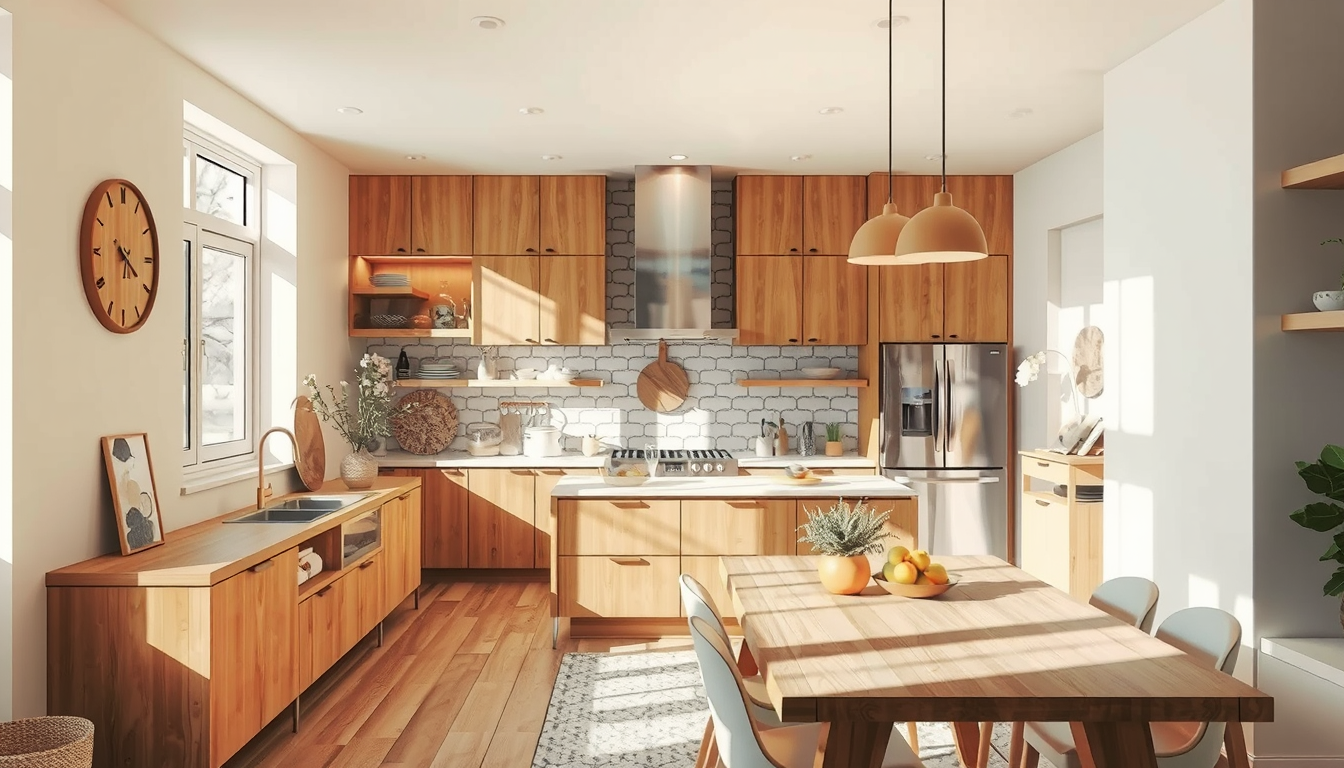
The best toronto kitchen renovation ideas for 2026 share one thing in common: they treat every square inch like it costs what it actually does in this city. Whether you own a 600-square-foot condo at Yonge and Eglinton or a century-old semi in Leslieville with a galley kitchen barely wide enough for two people, the goal is the same — make the room work harder without blowing past your budget. Toronto’s housing stock forces design constraints that most renovation guides ignore, but those constraints, when handled well, produce kitchens that outperform sprawling suburban layouts on function per square foot. This guide breaks down layouts, storage, costs, and the permit realities every Toronto homeowner should understand before signing a contract.
Why Toronto Kitchen Renovation Ideas Demand Smarter Layouts
Toronto’s residential footprint creates kitchen challenges you will not find in most North American renovation content. The standard semi-detached lot runs 15 to 20 feet wide, which means kitchens are typically long and narrow — galley or single-wall configurations that leave little room for islands or open-concept flow . Condo kitchens face even tighter constraints. Units built before 2010 routinely allocate under 70 square feet to the kitchen, with fixed plumbing stacks that limit where sinks and dishwashers can go.
This is not a disadvantage. Tight kitchens force better decisions. Every cabinet must earn its place. Every countertop inch needs a purpose. That discipline is exactly what separates a kitchen that photographs well from one that actually functions during a weeknight dinner with two kids underfoot.
The designers at Toronto Interior Designer consistently see homeowners benefit from starting with workflow — the path between fridge, sink, and stove — before choosing finishes. Get the triangle right in a compact space, and the kitchen feels twice its size.
5 High-Function Kitchen Layouts for Toronto Homes
Shop Dining Pieces for Narrow Layouts
Extendable tables, slim dining chairs, and compact pendants make a bigger impact than oversized statement pieces.
Toronto Interior Designer may earn a commission if you shop through these links at no extra cost to you.
Not every layout works in every home. Here are five configurations ranked by the Toronto housing types they serve best, along with the functional upgrades that make each one perform.
| Layout | Best For | Key Functional Upgrade | Budget Range (CAD) |
|---|---|---|---|
| Galley with pass-through | Pre-war semis (15–18 ft wide lots) | Pocket door to dining room, upper cabinets to ceiling | $45,000–$70,000 |
| L-shaped with rolling island | Mid-century bungalows, townhouses | Butcher-block island on locking casters for flexible prep space | $50,000–$80,000 |
| Single-wall with pantry closet | Condos under 700 sq ft | Floor-to-ceiling pull-out pantry beside fridge column | $35,000–$55,000 |
| U-shaped compact | Detached homes with eat-in kitchens | Deep corner drawers replacing lazy Susans, integrated appliance garage | $60,000–$90,000 |
| Open peninsula | New-build condos (800+ sq ft) | Waterfall counter with hidden outlet strip, bar seating for 3 | $55,000–$85,000 |
The rolling island deserves special attention. In a Toronto semi where a permanent island blocks the walkway, a well-built rolling island — 30 inches wide with a butcher-block top and open shelving below — gives you prep surface when cooking and disappears against the wall when you need floor space. It is one of the highest-value additions per dollar in a compact kitchen. For more renovation strategies, we cover layout principles across every room type.
Compact Kitchen Storage Solutions Every Toronto Homeowner Needs
Once your layout is set, storage determines whether the renovation truly delivers. This is where most Toronto kitchen projects either succeed or fall short. The temptation is to prioritize aesthetics — open shelving, glass-front uppers — but in a city where kitchens double as pantries and sometimes home offices, you need every cubic foot working.
Here is a five-point storage checklist ranked by impact:
- Cabinets to the ceiling. Standard Toronto kitchen ceilings sit at 8 or 9 feet. Building uppers all the way up adds 25 to 40 percent more storage. Use the top shelf for seasonal items and install a library-style step stool on a rail for easy access.
- Pull-out pantry towers. A 12-inch-wide pull-out beside the fridge holds more than a traditional pantry shelf because every item faces forward. Budget roughly $1,200 to $2,500 installed.
- Drawer-base cabinets instead of door-base. Deep drawers below the counter let you see and reach everything. Pots, pans, and baking sheets stack vertically in dividers instead of piling behind a door.
- Integrated appliance garage. A tambour-door cabinet on the counter hides the toaster, kettle, and stand mixer while keeping them plugged in and accessible. This single feature eliminates the most common countertop clutter complaint.
- Under-sink organizers with cut-outs for plumbing. Toronto condos often have awkward plumbing stacks. Custom-fit pull-out trays that route around pipes recover space most homeowners assume is unusable.
“The kitchen that works best is the one where you never have to move something to reach something else. That is the real test of a Toronto renovation — not how it looks empty, but how it performs fully loaded.”
Toronto Kitchen Renovation Costs in 2026: What to Expect
Smart layouts and storage upgrades only matter if the budget holds. Cost transparency is essential, especially in a market where material and labour prices shift quarterly.
A mid-range renovation — replacing cabinets, countertops, backsplash, and appliances without moving plumbing or walls — runs $35,000 to $75,000 in the GTA as of early 2026 . A high-end renovation involving layout changes, structural work, and premium materials lands between $80,000 and $150,000 or more .
Condo renovations carry extra costs that freehold projects do not. Board approval fees, mandatory contractor insurance, restricted delivery and noise hours, and elevator booking for material transport typically add 4 to 8 weeks and $3,000 to $8,000 to the total project cost.
Kitchens with functional upgrades — pot-filler faucets, pull-out pantry systems, integrated appliance garages — recoup 75 to 100 percent of costs at resale in the GTA, outperforming purely cosmetic refreshes . If you are weighing where to invest, function beats finish every time. Toronto Interior Designer’s kitchen and dining coverage includes more breakdowns by project type.
Permits and Timelines for Toronto Kitchen Renovations
Before any demolition begins, understand what the city requires. The City of Toronto mandates a building permit for any plumbing relocation, electrical panel upgrade, or structural wall removal — roughly 60 percent of kitchen renovations that go beyond a cosmetic refresh . Toronto’s 2025 Green Standard updates may also affect ventilation and energy requirements for new permits issued in 2026, so confirm current specs before finalizing your scope .
Three mistakes Toronto homeowners consistently make:
- Assuming cosmetic work never needs a permit. If your contractor touches the electrical panel or moves a gas line even six inches, you need a permit. Skipping it risks failed resale inspections and insurance issues.
- Underestimating condo board timelines. Submit your renovation application to the board at least 6 weeks before your target start date. Some buildings in the downtown core require 8 to 10 weeks.
- Not budgeting for temporary kitchen costs. A full renovation takes 8 to 14 weeks. Budget $1,500 to $3,000 for takeout, a temporary microwave and coffee setup, and disposable supplies. It sounds minor until week six.
For homeowners also planning adjacent rooms, our buyer guides cover appliance and material selection across categories.
What to Do Next
The best toronto kitchen renovation ideas start with honest assessment, not Pinterest boards. Here is your action checklist:
- Measure your kitchen footprint — length, width, and ceiling height — and identify fixed plumbing and electrical locations before contacting any designer or contractor.
- Set a realistic budget range using the 2026 cost data above, and add a 15 percent contingency for surprises behind walls.
- Check permit requirements with the City of Toronto Building Division or your condo board before finalizing scope.
- Prioritize function upgrades — pull-out pantry, ceiling-height cabinets, drawer bases — over cosmetic finishes if budget is tight.
- Interview at least three contractors with verified Toronto kitchen experience, and ask for references from projects in your specific housing type.
- Book a consultation with Toronto Interior Designer if you want a layout plan tailored to your home’s constraints before committing to a contractor.
Toronto kitchens are small by national standards. That is exactly why they reward smarter planning — and why toronto kitchen renovation ideas rooted in function, not just aesthetics, deliver the best return on every dollar and every square foot you have.
Start With Functional Basics
For budget-friendly kitchen and dining updates, focus on stools, storage, and lighting before decorative extras.
Toronto Interior Designer may earn a commission if you shop through these links at no extra cost to you.
Sources
- Toronto Regional Real Estate Board lot data — https://trreb.ca
- HomeStars renovation cost guide — https://homestars.com
- RenoAssistance cost data — https://renoassistance.ca
- Appraisal Institute of Canada — https://aicanada.ca
- City of Toronto Building Division — https://toronto.ca/services-payments/building-construction/
- Toronto Green Standard v4 — https://toronto.ca/city-government/planning-development/official-plan-guidelines/toronto-green-standard/
Frequently Asked Questions
How much does a kitchen renovation cost in Toronto in 2026?
A mid-range Toronto kitchen renovation replacing cabinets, countertops, backsplash, and appliances costs $35,000 to $75,000. High-end projects involving layout changes and structural work range from $80,000 to $150,000 or more. Condo renovations add $3,000 to $8,000 in extra fees for board approval, insurance, and logistics.
Do I need a permit for a kitchen renovation in Toronto?
Yes, the City of Toronto requires a building permit for any plumbing relocation, electrical panel upgrade, or structural wall removal. This covers roughly 60 percent of kitchen renovations beyond cosmetic refreshes. Skipping permits risks failed resale inspections and insurance complications.
What kitchen layout works best for small Toronto homes?
Galley kitchens with a pass-through work best for narrow pre-war semis, while single-wall layouts with pull-out pantry towers suit condos under 700 square feet. A rolling island on locking casters is one of the highest-value additions for compact Toronto kitchens, offering flexible prep space that stores flat against the wall.