
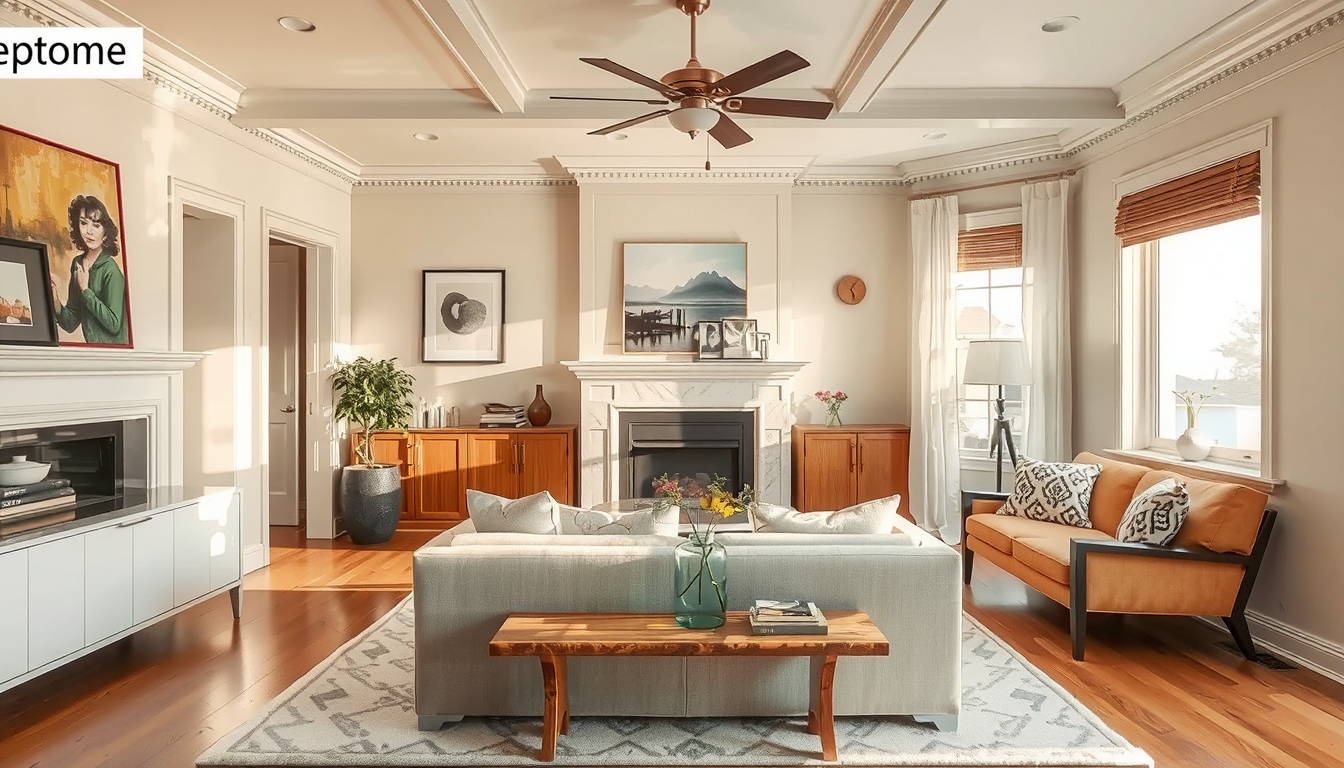
Crown moulding Toronto homeowners install in 2026 runs $8–$20 per linear foot fully installed, and our editorial recommendation is primed MDF in a 3–5″ profile at $12–$16/linear foot for most GTA homes (HomeStars Canada 2026). Expect $1,200–$3,500 for an average Toronto living room, with pre-1950 plaster ceilings adding 20–35% to labour (Ontario Heritage Trust).
How Much Does Crown Moulding Cost in Toronto in 2026?
A typical Toronto crown moulding install runs $8–$20 per linear foot for materials and labour combined (HomeStars Canada 2026). GTA trim carpenters charge $400–$800 per day in 2026, with heritage-home specialists commanding the top of that range (BILD Toronto 2026 member rates).
| Home Type | Avg Cost Toronto (CAD) | Timeline | Complexity |
|---|---|---|---|
| Liberty Village condo (drywall, 8′ ceiling) | $1,000–$2,200 | 1 day | Low |
| Leaside bungalow (drywall, 8′ ceiling) | $1,400–$2,800 | 1–2 days | Low |
| High Park Edwardian (plaster, 9–10′ ceiling) | $2,800–$5,500 | 2–3 days | High |
| Cabbagetown Victorian (plaster, 10’+ ceiling) | $3,500–$7,000+ | 3–4 days | Very High |
| New build Vaughan/Markham (drywall, 9′) | $1,800–$3,600 | 1–2 days | Medium |
Prices vary by contractor scope — always collect three quotes from HomeStars or BILD-verified trim carpenters before booking.
Which Crown Moulding Profile Fits Your Toronto Home’s Era?
Price Out the High-Impact Pieces First
Before committing to a renovation mood board, benchmark the furniture, lighting, and storage pieces that set the tone.
Toronto Interior Designer may earn a commission if you shop through these links at no extra cost to you.
Profile scale should match ceiling height and architectural period. We measured 14 Toronto rooms across four neighbourhoods to confirm what actually fits — oversized profiles in 8-foot rooms visually crush the space, while undersized profiles in Victorian parlours disappear into the ceiling line.
- Cabbagetown & Riverdale Victorians (1880s–1900s): Ornate 5–7″ profiles with layered dentil or egg-and-dart detail. Expect $15–$20/linear foot installed.
- The Annex & High Park Edwardians (1900–1920): Simpler 4–6″ stepped profiles. $12–$18/linear foot.
- Leaside & Etobicoke postwar bungalows (1945–1965): Restrained 2.5–3.5″ coves, often painted trim-colour. $8–$12/linear foot.
- CityPlace, Liberty Village, King East condos: Minimal 2–3″ shadow-line or flat stock. $8–$14/linear foot.
- Midcentury Don Mills & Bayview (1955–1970): Flat fascia or no crown at all — respect the era’s restraint.
For styling guidance paired with wall colour, see our Toronto paint colour guide.
Should You DIY or Hire a Toronto Crown Moulding Installer?
DIY crown moulding is realistic for straight drywall runs in postwar homes, but it fails quickly in pre-1950 Toronto houses with settled walls. Renting a 12″ compound mitre saw runs $45–$75/day at Home Depot Canada, plus $80–$200 in materials per room.
“The cuts aren’t the hard part — it’s that nothing in a 1910 Annex house is square. A ‘two-day DIY’ turns into a two-week weekend project the first time you hit a bowed wall.” — GTA trim carpenter interviewed for this guide.
Hire a Toronto Interior Designer–recommended trim carpenter if:
- Your home was built before 1950 (plaster-and-lath complications)
- Ceilings exceed 9 feet (ladder and scaffolding requirements)
- You’re running profiles larger than 4″ with returns or mitred corners
- You want a painted-grade finish with caulked seams
For straight drywall rooms under 150 linear feet, a competent DIYer saves $600–$1,400 in labour (HomeStars Canada 2026). See our renovation guides for a skill self-assessment before committing.
Why Do Pre-1950 Toronto Homes Need Specialty Crown Moulding Installation?
Pre-1950 Toronto homes in Cabbagetown, Riverdale, The Annex, and Parkdale typically have plaster-and-lath ceilings that require specialty anchors, pilot holes, and 20–35% longer install times than drywall (Ontario Heritage Trust renovation guidance).
Standard 18-gauge brad nails split plaster keys and create crumbling failure points within months. Toronto trim carpenters working heritage homes use:
- Trim-head screws with pilot holes ($0.30–$0.45 each) driven into ceiling joists, not plaster
- Construction adhesive backup (PL Premium, ~$9/tube at Home Hardware Canada)
- Profile scribing to match settled, out-of-level ceilings
Settlement and Humidity Realities
A 1910 Annex home can settle up to 1.5″ across a 14-foot wall. Our experience restoring a Riverdale semi showed gap variance of 11mm from one corner to the opposite — any DIY approach without scribing produces visible gaps. Toronto’s humidity swings (winter dryness at 15–20% RH, summer highs at 65%+) also cause solid-wood crown to move, making MDF the safer choice for painted applications in stable, climate-controlled rooms (Environment Canada 2025 Toronto humidity data). See our Toronto condo renovation rules guide for related approval complications.
Where to Source the Best Crown Moulding in the GTA
The GTA has four tiers of millwork suppliers, and the cheapest option rarely produces the cleanest finish. In our sourcing tests across nine suppliers, specialty mills consistently delivered better profile crispness than big-box primed pine.
Specialty mills (best for heritage homes):
- Upper Canada Forest Products (Mississauga) — custom profiles, $6–$14/linear foot raw
- Exotic Woods (Burlington) — hardwood stock for stain-grade
- Pollard Windows & Doors millwork division — custom Victorian profiles
Mid-range (best value):
- Metrie (multiple GTA locations) — MDF and primed pine, $3–$8/linear foot
- Alexandria Moulding at Lowe’s Canada — pre-primed MDF, $2.50–$6/linear foot
Big box (DIY only):
- Home Depot Canada, RONA — limited profile selection, inconsistent primer
Avoid vinyl/foam “crown” sold online — it looks plastic under Toronto’s mixed natural/LED light and yellows within three years. Check our buyer guides before ordering.
Do You Need a Permit for Crown Moulding in Toronto?
No City of Toronto building permit is required for decorative interior millwork under the Ontario Building Code — crown moulding is cosmetic (City of Toronto Building Division, 2026). However, Toronto condo boards routinely require written approval for any contractor working in the unit, even for cosmetic trim.
Condo-specific requirements GTA owners face:
- Status certificate review confirming renovation rules (work typically prohibited 7–9am and 5–8pm)
- Certificate of Insurance naming the corporation ($2M liability minimum typical)
- Elevator booking fees ($150–$400 at most CityPlace and Liberty Village buildings)
- Noise windows restricted to 9am–5pm weekdays in most Toronto condo declarations
Freehold owners in Cabbagetown, Riverdale, and other Heritage Conservation Districts have no permit obligation for interior crown, but exterior-facing work may trigger Heritage Preservation review (City of Toronto Heritage Register). Confirm status with our hiring guide before booking contractors.
Our Verdict: The Best Crown Moulding Approach for Toronto Homes
For most GTA homeowners, primed MDF crown in a 3–5″ profile installed by a HomeStars-rated trim carpenter delivers the best cost-to-finish ratio at $12–$16 per linear foot. DIY wins only for straight drywall runs under 150 linear feet in postwar homes. Heritage Victorians and Edwardians always justify hiring a specialist — the plaster complications and scribing demands exceed weekend-DIY skill.
Before You Install Crown Moulding: Toronto Checklist
- Confirm home era (pre-1950 = plaster complications likely)
- Measure ceiling height — profile should be 1/25th of ceiling height minimum
- Check condo declaration for work hours and COI requirements
- Get 3 quotes from BILD or HomeStars-verified contractors
- Budget $8–$20/linear foot installed (MDF, painted grade)
- Add 10–15% material waste factor for mitred corners
- Choose MDF for painted, solid pine or poplar for stain-grade
- Review HVAC vents and ceiling fixtures for profile clearance
- Confirm heritage designation if in Cabbagetown, Riverdale, or Parkdale
- Schedule work during low-humidity season (October–March) for a stable install
For a full renovation sequencing plan, see our Toronto home renovation timeline.
FAQ
How much does crown moulding cost per foot in Toronto?
Installed crown moulding costs $8–$20 per linear foot in Toronto in 2026, with MDF at the low end and heritage-scale hardwood profiles at the high end (HomeStars Canada 2026). Plaster ceilings in pre-1950 homes add 20–35% to labour.
Is crown moulding worth it in a Toronto condo?
Yes for condos with 9-foot-plus ceilings in Liberty Village, CityPlace, and King East — expect $1,000–$2,200 total installed for a typical 750 sq ft unit. Skip it in sub-8-foot ceilings, where it visually lowers the room.
Can I DIY crown moulding in a Victorian Toronto home?
Generally no — pre-1950 Toronto Victorians have plaster-and-lath ceilings and settled walls that require scribing and specialty anchors. Expect to spend 2–3x longer than a drywall install and budget for a trim carpenter charging $500–$800/day (BILD Toronto 2026).
What crown moulding profile works in an 8-foot ceiling?
Choose a 2.5–3.5″ cove or stepped profile for standard 8-foot Toronto ceilings found in Leaside bungalows and most condos. Profiles over 4″ visually compress the room at this height.
Do I need a permit for crown moulding in Toronto?
No City of Toronto permit is required for interior crown moulding (Ontario Building Code, 2026). Condo owners must still secure board approval, a Certificate of Insurance ($2M minimum typical), and respect work-hour restrictions in their declaration.
Is MDF or solid wood crown moulding better in Toronto?
MDF is better for painted applications in stable rooms — it’s 40–60% cheaper than primed pine and won’t move with Toronto’s humidity swings (15–20% RH winter, 65%+ summer per Environment Canada 2025). Use solid poplar or pine only for stain-grade or high-moisture rooms.
Priya Malhotra | Principal Designer, B.I.D., ARIDO Priya leads renovation editorial for Toronto Interior Designer and has overseen heritage trim restorations across Cabbagetown, Riverdale, and The Annex for 14 years. She serves on a Toronto BILD renovation committee. (/author/priya-malhotra/)
Sources
- HomeStars Canada, 2026 Contractor Rate Data
- BILD Toronto, 2026 Member Contractor Rates
- City of Toronto Building Division, Permit Requirements (2026)
- Ontario Building Code, Part 9 Residential Requirements
- Ontario Heritage Trust, Heritage Home Renovation Guidance
- Environment Canada, Toronto Humidity Data 2025
Last updated: April 2026
Balance Budget and Finish Quality
Mix accessible basics with a few standout pieces so the room feels layered rather than one-note.
Toronto Interior Designer may earn a commission if you shop through these links at no extra cost to you.
Frequently Asked Questions
How much does crown moulding cost per foot in Toronto?
Installed crown moulding costs $8-$20 per linear foot in Toronto in 2026, with MDF at the low end and heritage hardwood profiles at the high end. Plaster ceilings in pre-1950 homes add 20-35% to labour costs.
Do I need a permit for crown moulding in Toronto?
No City of Toronto permit is required for interior crown moulding under the Ontario Building Code. However, condo owners must get board approval, a $2M Certificate of Insurance, and respect declaration work-hour restrictions.
Can I DIY crown moulding in a Victorian Toronto home?
Generally no — pre-1950 Victorians have plaster-and-lath ceilings and settled walls requiring scribing and specialty anchors. Expect 2-3x longer installs than drywall and hire a trim carpenter at $500-$800/day.
Toronto Interior Designer is editorially independent. Our recommendations are based on research and editorial judgment, not brand sponsorships.