
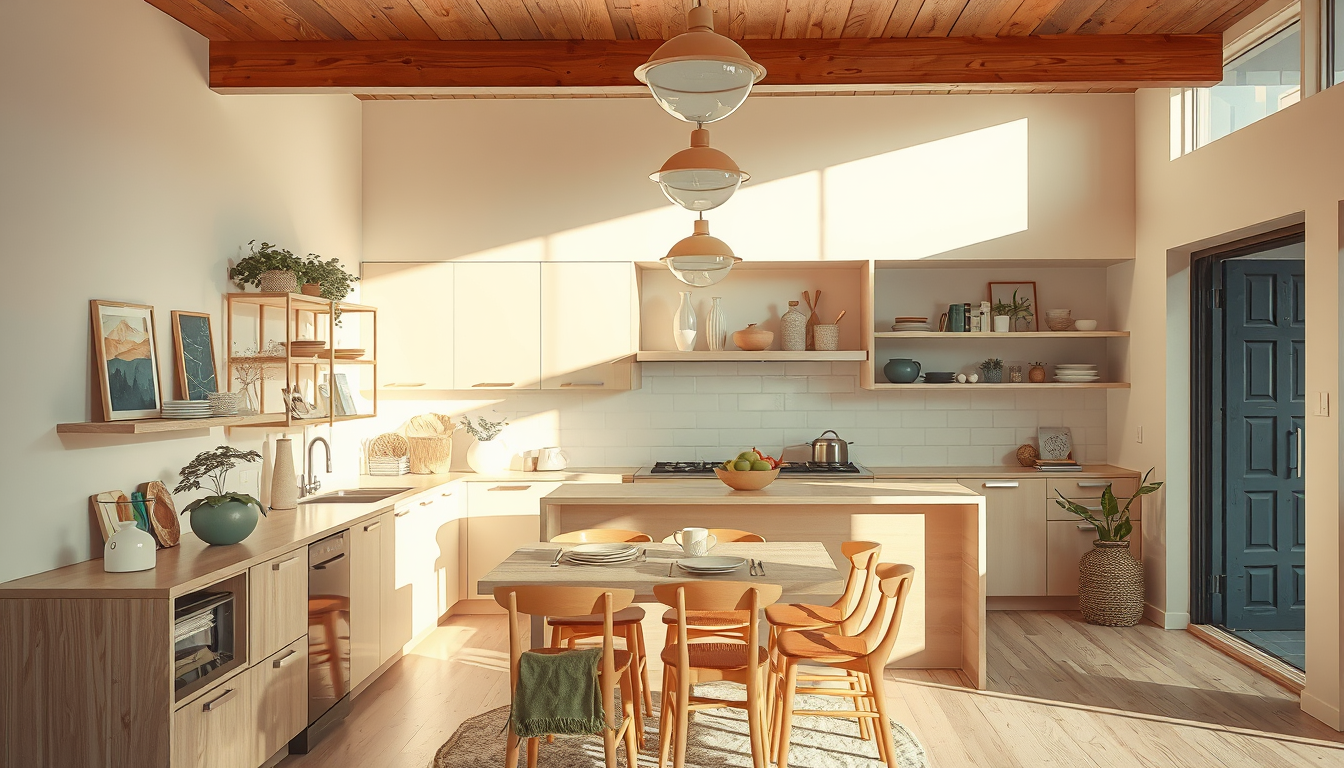
The single fastest way to transform a dining room is to change what hangs above the table — and dining room lighting Canada homeowners choose today looks nothing like it did five years ago. Handcrafted pendants, sculptural chandeliers, and linear suspensions have moved from accent pieces to the centrepiece of the room, setting mood, defining style, and even influencing how food tastes. Yet most lighting guides are written for American homes with nine-foot-plus ceilings and US-only retailers. If you live in a Toronto condo with eight-foot ceilings or a GTA new build with an open-concept great room, you need sizing, sourcing, and installation advice built for Canadian spaces. This is that guide.
How to Size Dining Room Lighting for Canadian Ceiling Heights
The most-cited rule in the industry is simple: add your room’s length and width in feet, then convert that number to inches for your fixture’s diameter. A 12-by-14-foot dining room calls for roughly a 26-inch fixture . It works well as a starting point, but it ignores ceiling height — and that matters enormously in Canada.
Toronto condos built after 2018 typically offer nine-foot ceilings on lower floors and eight-foot ceilings on upper levels . At eight feet, a standard chandelier with a 24-inch drop chain leaves almost no visual breathing room. Here is how to adjust:
| Ceiling Height | Best Fixture Type | Max Drop from Ceiling | Diameter Sweet Spot | Common In |
|---|---|---|---|---|
| 8 ft | Flush-mount, semi-flush, or short-stem pendant | 28–32 in above table | 18–24 in | Toronto condos (upper floors) |
| 9 ft | Pendant cluster, mid-size chandelier | 30–36 in above table | 22–30 in | GTA new-build condos, townhomes |
| 10 ft+ | Full chandelier, linear suspension, multi-drop pendant | 32–40 in above table | 26–36 in | Detached homes, lofts |
The target clearance between the bottom of the fixture and your dining table surface should be 28 to 34 inches — enough for good light spread without blocking sightlines across the table .
A chandelier that’s too small for the room disappears; one hung too low becomes a wall between dinner guests. Get the height right first, then worry about style.
Best Canadian Lighting Brands and Toronto Showrooms
Shop Dining Pieces for Narrow Layouts
Extendable tables, slim dining chairs, and compact pendants make a bigger impact than oversized statement pieces.
Toronto Interior Designer may earn a commission if you shop through these links at no extra cost to you.
Canada produces some of the most respected artisan lighting studios in the world, and buying local means no cross-border duty headaches and guaranteed CSA or cUL certification — a legal requirement for any fixture installed by a licensed electrician in Ontario .
Here are the brands Toronto Interior Designer editors recommend most:
- Bocci (Vancouver) — Mouth-blown glass pendants like the 14 and 28 series. Prices start around $800 CAD per single pendant; multi-pendant chandeliers climb into the thousands. Stocked at select Toronto showrooms and available direct.
- Lambert & Fils (Montreal) — Modular, architectural fixtures with a mid-century-meets-industrial sensibility. The Dorval and Atelier lines suit both condo dining nooks and larger spaces. Expect $1,200–$4,000 CAD.
- ANDlight (Vancouver) — Clean, geometric designs in brass, glass, and aluminum. Their Pipeline and Pebble collections offer linear suspensions perfect for rectangular dining tables. Mid-range to high-end pricing.
- Luminaire Authentik (Montreal) — More accessible price points ($300–$1,200 CAD) with handsome industrial-craft designs, available online with Canadian shipping.
- Union Lighting & Furnishings (Toronto) — Not a manufacturer but the city’s largest multi-brand lighting showroom at 1491 Castlefield Avenue. Worth a visit to compare scale in person.
For budget-conscious options, Canadian retailers like Structube and EQ3 carry well-designed pendants in the $150–$500 range that still carry proper Canadian safety certification.
Chandelier vs Pendant vs Linear Suspension: Shape Guide
Fixture shape should follow table shape — it sounds obvious, but it is the most common mistake we see at Toronto Interior Designer.
Round or square tables pair best with a single centred fixture: a chandelier, a pendant cluster, or a globe-style pendant. The fixture should be roughly two-thirds the width of the table to anchor the space visually without overwhelming it.
Rectangular or oval tables call for linear suspensions or a row of two to three pendants evenly spaced along the table’s length. For a six-seater rectangular table (roughly 72 inches long), a linear fixture between 36 and 48 inches wide keeps proportions balanced.
Open-concept dining areas — increasingly the norm in GTA homes — benefit from a fixture with visual weight. When there are no walls to define the dining zone, the light above the table does the work of architecture. A sculptural chandelier or a clustered pendant arrangement signals “this is where we eat” far more effectively than a recessed pot light. For more ideas on defining functional zones in open layouts, see our kitchen and dining design coverage.
Layering Dining Room Lighting: Ambient, Task, and Accent
A single overhead fixture handles the centrepiece role, but a well-lit dining room uses at least three layers:
- Ambient (general) light — Your chandelier or pendant provides this. Choose LED fixtures in the 2700K–3000K colour temperature range; warmer tones make food look more appetizing and skin tones more flattering . LED fixtures now account for over 80 per cent of new residential lighting sales in North America.
- Task light — A dimmer switch on your main fixture is the simplest upgrade. It lets the same chandelier serve bright weeknight homework sessions and low, warm dinner parties. Budget $80–$200 CAD for a quality dimmer installed by a licensed electrician.
- Accent light — Wall sconces flanking a buffet, LED strip lighting inside a glass-front china cabinet, or a table lamp on a sideboard. These create depth and visual interest after dark. Brass and walnut finishes are trending heavily in 2026 for accent fixtures, aligning with the broader move toward warm, nostalgic material palettes in Canadian interiors .
- Decorative or sculptural light — This is where artisan fixtures like Bocci’s hand-blown glass or Draga & Aurel’s Crisalide collection earn their place: pieces chosen as much for their daytime visual impact as their nighttime glow .
Dining Room Lighting Canada Ideas by Home Type
Downtown condo (600–900 sq ft, 8-ft ceilings): Choose a single semi-flush pendant or a slim-profile chandelier no wider than 20 inches. Avoid anything with dangling crystals or excessive drop chains — you need every inch of headroom. A matte black or brushed brass finish adds warmth without visual clutter.
Midtown townhome (9-ft ceilings, dedicated dining room): You have more room to play. A three-pendant linear arrangement over a rectangular table or a mid-size chandelier (24–28 inches) over a round table works beautifully. Consider a dimmer and a pair of wall sconces to create genuine atmosphere for entertaining.
GTA detached home (10-ft ceilings, open-concept layout): Go bold. This is where a showpiece chandelier or a multi-drop pendant cluster earns its keep. A fixture in the 30-to-36-inch range anchors the dining area within the open floor plan. You can also explore how thoughtful lighting extends into outdoor entertaining spaces as the seasons warm up.
What to Do Next
- Measure your ceiling height and table dimensions before shopping — bring these numbers to any showroom visit.
- Check for CSA or cUL certification on every fixture; uncertified imports cannot be legally installed in Ontario.
- Visit Union Lighting or another Toronto showroom to see scale in person — online photos are notoriously misleading for fixture size.
- Install a dimmer switch on your main dining fixture — it is the single highest-impact, lowest-cost lighting upgrade.
- Choose 2700K–3000K LED bulbs for any fixture that accepts replaceable bulbs; avoid cool white in dining spaces.
- Layer your lighting with at least one accent source beyond the main overhead fixture.
Dining room lighting Canada homeowners invest in today does more than illuminate a meal — it sets the emotional tone of the room, defines the space architecturally, and, when chosen well, becomes a piece of art you live with every day. At Toronto Interior Designer, we believe the right fixture is the one that fits your ceiling, your table, and the way you actually use the room. Start with the measurements, shop Canadian where you can, and do not be afraid to let the light above your table be the boldest thing in it.
Start With Functional Basics
For budget-friendly kitchen and dining updates, focus on stools, storage, and lighting before decorative extras.
Toronto Interior Designer may earn a commission if you shop through these links at no extra cost to you.
Sources
- American Lighting Association — https://www.americanlightingassoc.com
- Ontario Building Code — https://www.ontario.ca/page/ontarios-building-code
- Electrical Safety Authority Ontario — https://esasafe.com
- U.S. Department of Energy — https://www.energy.gov/energysaver/lighting-choices-save-you-money
- House & Home — https://houseandhome.com
- Design Milk — https://design-milk.com
Frequently Asked Questions
How high should a dining room chandelier hang in a Canadian condo with 8-foot ceilings?
In an 8-foot ceiling condo, choose a flush-mount or short-stem pendant and keep the bottom of the fixture 28 to 32 inches above the table surface. This maintains clear sightlines while providing adequate light spread for the dining area.
Do dining room light fixtures need CSA certification in Canada?
Yes. Any light fixture installed by a licensed electrician in Ontario must carry CSA or cUL certification. Uncertified imports cannot be legally installed, so always check for the certification mark before purchasing, especially when ordering from international retailers.
What colour temperature is best for dining room lighting in Canada?
Choose LED bulbs in the 2700K to 3000K range for dining rooms. These warm tones make food look more appetizing and create a flattering, inviting atmosphere for dinner guests. Avoid cool white bulbs above 4000K in dining spaces.