
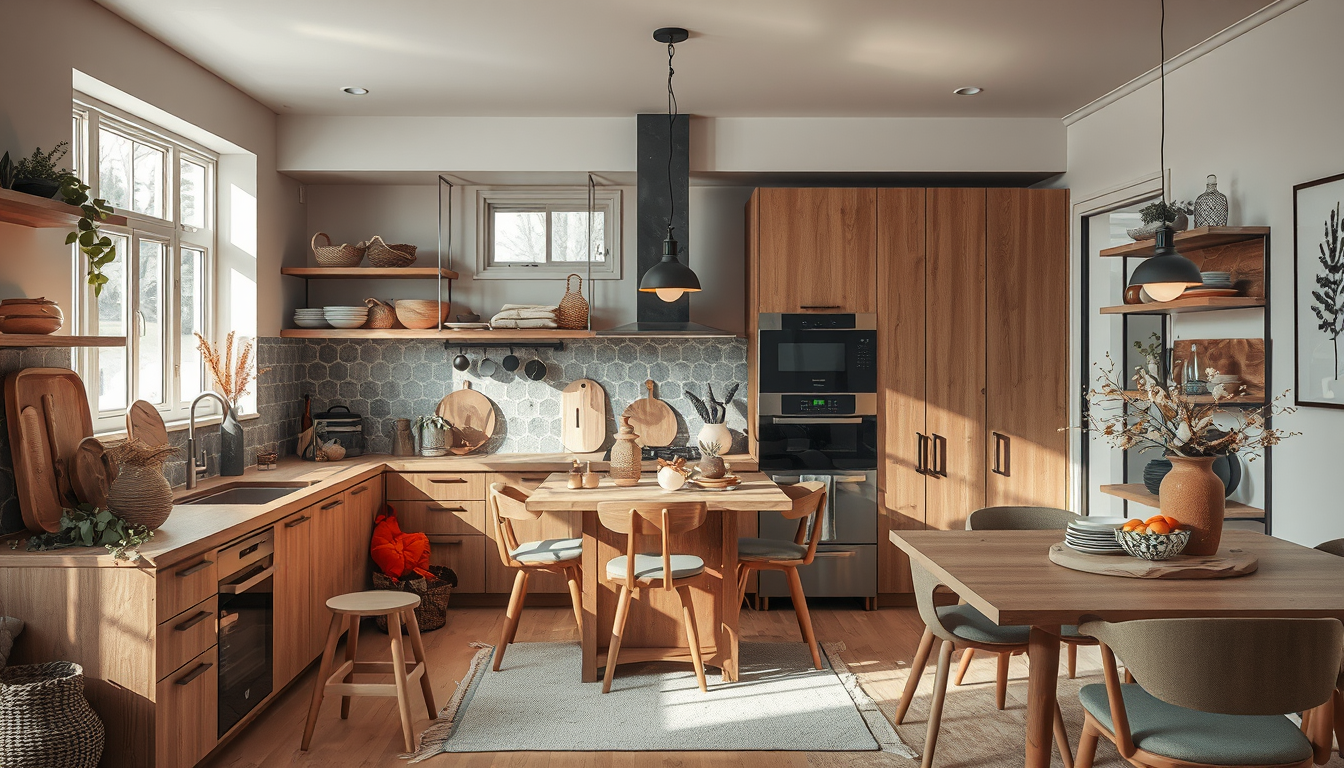
Most eat in kitchen ideas Canada homeowners search for assume you have a sprawling open-concept layout to play with. The reality in Toronto is different. You are working with a 650-square-foot condo galley, a narrow Victorian semi where the kitchen was walled off a century ago, or a post-war bungalow with a layout that predates the island-and-barstool era. At $1,200 to $1,800 per square foot in the GTA, every inch you dedicate to casual dining is a financial commitment — so it needs to earn its place. This guide is built around real Toronto floor plans and Canadian materials, not Pinterest loft fantasies.
What Makes Eat-In Kitchen Ideas Work in Canadian Homes
An eat-in kitchen succeeds when it removes friction from daily life. In Canada, that means accounting for heavy winter coats piled on chairs, grocery delivery bags that need a landing zone, and the six months of the year when nobody wants to eat on the balcony. The best eat-in zones share three traits: they keep the cook connected to the table, they do double duty as homework or work-from-home stations, and they use materials tough enough for daily family meals rather than occasional entertaining.
The 2026 Houzz Kitchen Trends Study found that pantry cabinets are now the most-requested built-in feature in kitchen renovations, signalling a shift toward kitchens that store and serve everything — including the dining function . When your kitchen absorbs the dining room, you need serious storage to compensate for the lost buffet or hutch.
At Toronto Interior Designer, we see this play out weekly in client consultations: the formal dining room is becoming a home office or playroom, and the kitchen table is where life actually happens.
5 Eat-In Kitchen Layouts for Toronto Condos, Semis, and Bungalows
Shop Dining Pieces for Narrow Layouts
Extendable tables, slim dining chairs, and compact pendants make a bigger impact than oversized statement pieces.
Toronto Interior Designer may earn a commission if you shop through these links at no extra cost to you.
Not every layout calls for the same solution. Here are five approaches matched to the housing stock you will actually find in the GTA.
| Layout Type | Best Floor Plan | Seating Capacity | Space Required | Budget Range (CAD) |
|---|---|---|---|---|
| Built-in banquette with wall table | Condo galley (550–700 sq ft) | 3–4 | As little as 24 sq ft | $2,500–$6,000 |
| Peninsula with bar seating | Open-concept condo (700–900 sq ft) | 2–3 | 8–10 linear feet of counter | $4,000–$10,000 |
| Drop-leaf table against window wall | Victorian semi kitchen (narrow, 9–10 ft wide) | 2–4 | Folds to 12 inches deep | $400–$1,200 |
| Round pedestal table, no island | Post-war bungalow eat-in kitchen | 4–6 | 48-inch diameter clear zone | $800–$2,500 |
| Island with integrated dining ledge | Semi or detached with 12+ ft kitchen width | 3–4 | Minimum 42-inch clearance on all sides | $8,000–$18,000 |
The banquette is the standout for tight Toronto condos. Trade sources estimate that built-in bench seating saves roughly 25 to 30 percent of floor space compared to a freestanding table and four chairs, because you eliminate the pull-out clearance behind each seat . Pair it with a wall-mounted table and you have an eat-in zone that functionally disappears when you need floor space for a yoga mat or a toddler’s play area.
If you are renovating a narrow Victorian semi, explore proven kitchen layouts that maximize tight footprints before committing to a configuration — many of those modular strategies translate directly to eat-in planning.
Best Materials and Finishes for Canadian Eat-In Kitchens
A surface that serves as both prep counter and dinner table needs to handle hot pots, red wine, craft glue, and laptop keyboards. In Canada, quartz has overtaken marble as the practical favourite, holding an estimated 34 percent market share in Canadian countertops thanks to its stain resistance and zero-maintenance profile .
For eat-in tables and banquette tops, butcher block remains a strong choice. It is warm underfoot in a Canadian winter kitchen, repairable with a sanding block, and pairs naturally with the stained wood and warm metal finishes that House & Home and Domino both flag as defining the 2026 Canadian kitchen aesthetic . Think oiled white oak table surfaces, matte brass pendant lights over the eating nook, and dark green or charcoal cabinetry framing the zone.
A kitchen that handles Tuesday night homework and Saturday morning pancakes with equal ease is not a compromise — it is the whole point of eat-in design.
This layered, textured approach — what the industry is calling warm materiality — replaces the all-white, cold minimalism that dominated the last decade. Warm-toned finishes hide the wear of daily use far better than glossy white lacquer ever did, which matters when your dining surface doubles as a craft station, laptop desk, and breakfast bar seven days a week.
If you are drawn to this quieter, richer material palette, our guide to quiet luxury materials for Canadian interiors covers sourcing and budgeting in detail.
Small-Space Eat-In Kitchen Tricks: Banquettes, Drop-Leafs, and Storage
When square footage is tight, every element should serve at least two purposes. Here is a checklist of high-impact moves for compact eat-in kitchens:
- Banquette with hidden storage — Build the bench seat with a hinged top. You gain 6 to 10 cubic feet of storage for table linens, small appliances, or seasonal items without losing any floor area.
- Wall-mounted drop-leaf table — A birch plywood drop-leaf folds flat against the wall at 2 to 3 inches deep. Extend it for meals, fold it after. Ideal for condo galleys under 60 square feet of kitchen space.
- Slim pendant over the table — A single pendant on a 10-inch shade defines the dining zone visually without crowding headroom. This is the simplest way to signal “this is the eating area” in a multi-use kitchen.
- Bench against the window wall — In Toronto semis, the window wall is often the only unbroken stretch. A bench with cushions turns a dead zone into seating, and natural light makes the spot feel larger.
- Open shelving above the banquette — Replace upper cabinets with two open shelves for everyday dishes and glasses. You save visual weight and keep table-setting items within arm’s reach.
- Round table over rectangular — A 36-inch round pedestal table seats three comfortably, four in a squeeze, and eliminates corner-bump injuries in narrow walkways. No chair legs to trip over when the table sits in a traffic zone.
Eat-In Kitchen Conversion Costs in the GTA: Budget Planning Guide
Kitchen renovations in the Greater Toronto Area average $35,000 to $75,000 for a mid-range remodel . Adding an eat-in zone within an existing kitchen footprint costs significantly less, because you are not moving plumbing or gas lines. Here is what to expect:
- Banquette build-out (custom, with storage): $2,500–$6,000 including upholstery
- Drop-leaf table and wall bracket (ready-made): $400–$1,200
- Pendant lighting for dining zone: $250–$800 installed
- Quartz or butcher block surface for a dining ledge: $1,200–$3,500 depending on linear footage
- Paint and finish refresh to unify the zone: $500–$1,500
A focused eat-in conversion — banquette, table surface, lighting, and finish work — typically lands between $5,000 and $12,000, a fraction of a full kitchen gut. That makes it one of the highest-return moves for small-scale kitchen and dining upgrades.
What to Do Next
Turning your kitchen into a functional eat-in space starts with understanding exactly what you have to work with. These are your first moves:
- Measure your kitchen’s clear floor area and identify the longest unbroken wall — that is your most likely banquette or table location.
- Decide on seating capacity — design for your weeknight reality (usually two to three people), not your holiday maximum.
- Choose your surface material early — quartz for zero maintenance, butcher block for warmth, or a combination of both.
- Set a budget ceiling before talking to contractors — the $5,000 to $12,000 range covers most eat-in conversions without touching plumbing.
- Consult a designer who knows Toronto housing stock — generic advice from American shelter magazines will not account for our narrow lots, condo bylaws, or Canadian material sourcing.
The best eat-in kitchen ideas Canada homeowners can act on are the ones built around real constraints — your actual floor plan, your actual budget, and how your household actually eats. At Toronto Interior Designer, that is the only kind of advice we publish.
Start With Functional Basics
For budget-friendly kitchen and dining updates, focus on stools, storage, and lighting before decorative extras.
Toronto Interior Designer may earn a commission if you shop through these links at no extra cost to you.
Sources
- Houzz 2026 Kitchen Trends Study — https://www.houzz.com/magazine/kitchen-trends
- NKBA Space Planning Guidelines — https://nkba.org/
- Freedonia Group — https://www.freedoniagroup.com/
- House & Home 2026 Kitchen Trends — https://houseandhome.com/
- HomeStars Cost Guide — https://homestars.com/cost-guides
Frequently Asked Questions
How much does an eat-in kitchen conversion cost in Canada?
A focused eat-in kitchen conversion in the GTA typically costs between $5,000 and $12,000 CAD, covering a banquette, table surface, pendant lighting, and finish work — far less than a full kitchen renovation.
What is the best eat-in layout for a small Toronto condo?
A built-in banquette with a wall-mounted table is the best option for condos under 700 square feet. It saves 25 to 30 percent of floor space compared to freestanding furniture and adds hidden storage beneath the bench seat.
What table shape works best in a narrow Canadian kitchen?
A 36-inch round pedestal table is ideal for narrow kitchens. It seats three to four people, eliminates corner injuries in tight walkways, and has no protruding chair legs to block traffic zones.