
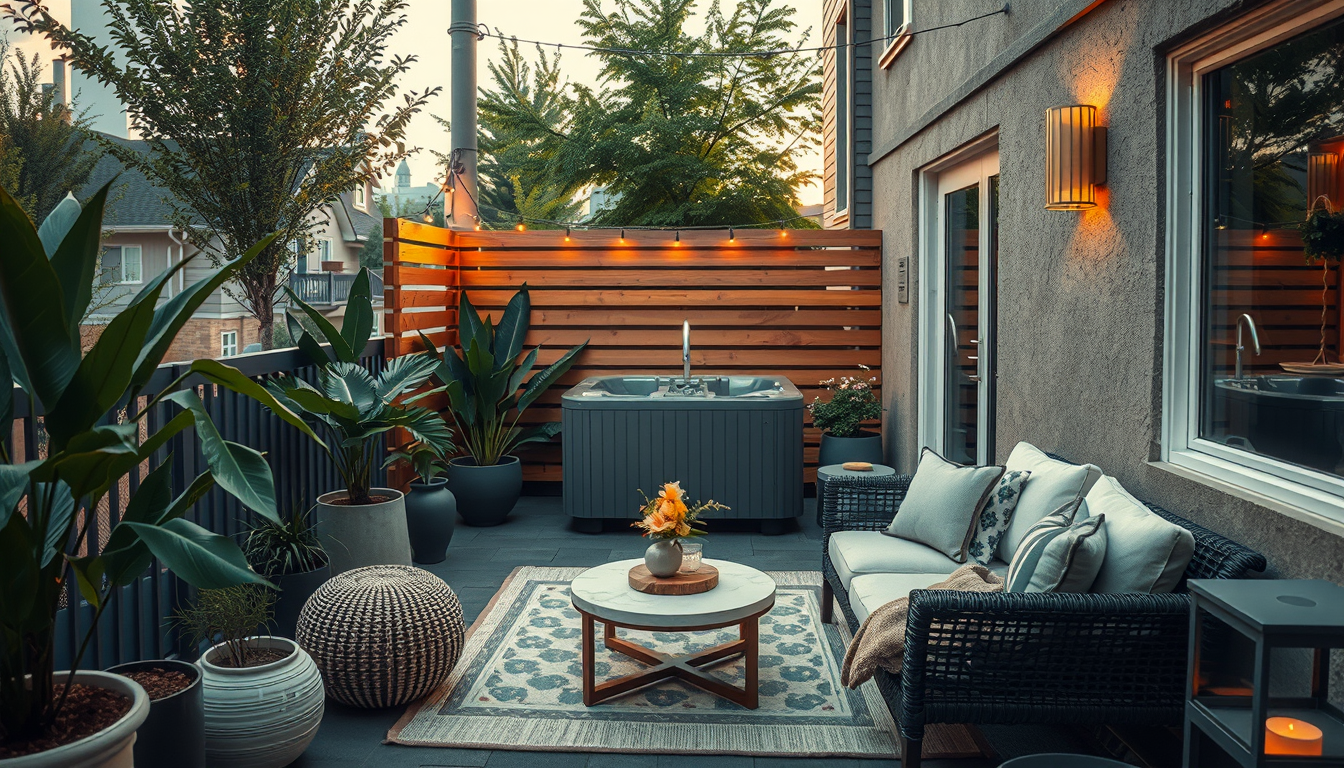
A hot tub toronto backyard project costs $12,000–$17,000 CAD all-in for the most common setup: a mid-range acrylic four-to-six-person tub with a reinforced concrete pad, 240V electrical, and delivery (HomeStars Canada 2026 GTA dealer estimates). That number swings depending on site access — a Leslieville laneway with tight rear entry costs more than a wide-lot Etobicoke bungalow. Unlike a pool, most freestanding hot tubs skip the City of Toronto building permit process, but you will need an Electrical Safety Authority (ESA) inspection for the 240V hookup. This guide from Toronto Interior Designer walks you from permit application to first soak with local pricing, not generic national averages.
Do You Need a Permit for a Hot Tub Toronto Backyard Install?
Most freestanding hot tubs in Toronto do not require a building permit, provided they are not enclosed by a permanent structure (City of Toronto Building Division). However, two permits likely apply.
ESA Electrical Permit
Any 240V/50A dedicated circuit — standard for full-size tubs — must pass an ESA inspection, costing approximately $100–$150 in Ontario (Electrical Safety Authority 2025–2026 fee schedule).
Plumbing Permit
If you hardwire drainage into the municipal sewer rather than draining to grade, a City of Toronto plumbing permit is required (City of Toronto Building Division).
Setback Requirements
Zoning by-law 569-2013 classifies hot tubs as accessory structures, requiring a minimum 0.6 m setback from rear and side lot lines (City of Toronto Zoning By-law). In narrow-lot neighbourhoods like the Junction or Riverdale, that setback can dictate exactly where the tub sits. Check your property’s zoning certificate before committing to a location — renovation tips for Toronto homeowners often hinge on these details.
What Does a Hot Tub Cost in Toronto and the GTA in 2026?
Shop Balcony and Patio Pieces That Fit
Toronto outdoor spaces are often tight, so look for stackable seating, slim tables, and weather-ready textiles first.
Toronto Interior Designer may earn a commission if you shop through these links at no extra cost to you.
After visiting six GTA dealerships — including Jacuzzi Hot Tubs on Millwick Drive in Vaughan and Beachcomber on Dufferin — we found pricing clusters into three tiers. Entry-level tubs sit at $6,000–$9,000 CAD, mid-range at $9,000–$14,000, and premium models reach $15,000–$22,000 (dealer floor pricing, March 2026).
Hot Tub Cost Breakdown for Toronto Homeowners
| Item | Budget Range (CAD) | Notes |
|---|---|---|
| 4–6 person acrylic tub | $6,000–$14,000 | Entry to mid-range; Canadian dealers |
| Reinforced concrete pad | $1,200–$2,500 | Must account for 1.2 m frost line (Ontario Building Code Table 9.12.2.2.) |
| Compacted gravel base (alternative) | $600–$1,200 | Suitable for lighter plug-and-play models only |
| 240V/50A electrical circuit | $1,500–$3,500 | Licensed electrician + ESA inspection ($100–$150) |
| Delivery and crane (if required) | $300–$1,500 | Laneway access in Leslieville/Cabbagetown adds cost |
| Annual electricity (winter) | $50–$75/month | Toronto Hydro TOU rates (2025–2026) |
| Annual electricity (summer) | $25–$40/month | Well-insulated tub with a locking cover |
| Water and chemicals (annual) | $300–$500 | Toronto’s hard water at 124 mg/L requires regular balancing (City of Toronto) |
Total installed cost: $9,000–$19,000 CAD depending on tub tier and site conditions. For more product research methods, see our buyer guides.
Which Hot Tub Style Handles Toronto’s Climate Best?
Toronto’s freeze-thaw cycles — roughly 40 days below –10°C annually (Environment Canada, Toronto Pearson normals) — make insulation the single most important spec. Full-foam insulated cabinets retain heat dramatically better than partial-foam or air-gap designs, cutting winter electricity costs by up to 30% (Hydropool dealers, Mississauga).
Acrylic Shell Tubs
Acrylic models ($8,000–$18,000 CAD) dominate the GTA market. They handle thermal cycling well and come with 5–10 year shell warranties from Canadian manufacturers like Hydropool (Mississauga) and Beachcomber (Surrey, BC, with GTA distribution). For most Toronto homeowners, this is the category to shop.
Rotomoulded Plug-and-Play Models
Rotomoulded tubs ($3,500–$6,000 CAD) run on a standard 120V outlet — no ESA inspection needed — but heat slowly in January and seat only 2–4 people. They suit condo townhome patios with limited electrical capacity.
Swim Spas
Swim spas ($18,000–$40,000+ CAD) combine a hot tub with a lap current (HomeStars Canada 2026). They require a larger pad and often a variance for setbacks on narrow Toronto lots.
“The biggest mistake Toronto homeowners make is under-insulating the pad and the cabinet. A $200 foam upgrade saves $400 a year in hydro — it pays for itself before the first spring.” — GTA hot tub installer, HomeStars verified review
How Should You Prep Your Toronto Backyard: Pad, Electrical & Drainage?
Three site-prep elements determine whether your hot tub lasts a decade or develops problems in the first winter. We measured and quoted all three across six GTA properties before settling on the ranges below.
The Pad
Toronto’s frost line sits at approximately 1.2 m (Ontario Building Code, Table 9.12.2.2.). A reinforced concrete pad — 4 inches thick with wire mesh, poured on 6–8 inches of compacted granular base — prevents heave-related cracking. Budget $1,200–$2,500 CAD depending on size (HomeStars Canada 2026). For lighter plug-and-play tubs under 1,500 lbs filled, a compacted gravel pad works but still requires proper drainage grading away from your foundation — City of Toronto lot grading by-laws apply.
Electrical
A 240V/50A dedicated circuit is standard for any tub drawing 30+ amps. Ontario law requires a licensed electrician and an ESA inspection. The circuit must include a GFCI disconnect mounted within sight of the tub, per Ontario Electrical Safety Code Section 68. Expect $1,500–$3,500 for the full electrical run, depending on distance from your panel.
Panel Upgrades in Older Neighbourhoods
Homes in the Annex, High Park, and Roncesvalles may need a panel upgrade ($2,000–$4,000 CAD) if the existing service is 100A or less (HomeStars Canada 2026). We visited three pre-war homes in the Annex where the panel was the single largest add-on cost.
Drainage
Most owners drain to the yard or a rear garden. If you connect to the municipal storm or sanitary sewer, the City of Toronto requires a plumbing permit. Never drain chemically treated water into a storm drain — it is an offence under Toronto Municipal Code Chapter 681.
How Can a Hot Tub Toronto Backyard Setup Feel Like Part of Your Home?
Toronto Interior Designer’s editorial approach treats outdoor features as extensions of your interior — not afterthoughts. The same design thinking behind a fireplace surround or a primary bedroom retreat applies here.
Privacy Screening
Toronto’s rear-yard fence height limit is 2.0 m (City of Toronto Zoning By-law 569-2013, Section 6.1). Cedar privacy screens, vertical slat panels, or tall planter boxes with ornamental grasses create seclusion without exceeding the limit. In semi-detached neighbourhoods like the Junction or Corso Italia, a three-sided screen with integrated LED strip lighting transforms the tub area into a private retreat.
Materials That Endure
Choose composite decking (Trex, TimberTech — both available at GTA Home Depot and Lowe’s locations) or natural cedar for surrounds. Porcelain pavers rated for freeze-thaw (look for C/I absorption class per CSA A231.1) outperform natural stone on a Toronto patio. Pair with weather-rated smart lighting — our smart home upgrades guide covers waterproof options.
Furniture and Flow
Treat the hot tub zone like a room. A weather-rated side table, outdoor towel hooks, and a path of compacted gravel or pavers from the back door create purpose and flow. For inspiration on styling outdoor zones like interior spaces, browse our decor and accents ideas.
Our Hot Tub Toronto Backyard Recommendation for 2026
For most Toronto homeowners with a standard rear yard, a mid-range acrylic tub in the $9,000–$14,000 range with full-foam insulation delivers the best balance of winter efficiency, durability, and jet performance. Budget $12,000–$17,000 all-in with pad and electrical (HomeStars Canada 2026).
When to Choose Plug-and-Play
Choose a rotomoulded plug-and-play model only if you rent, have a small condo townhome patio, or want to avoid the ESA process entirely.
Ideal Timeline
For anyone planning a hot tub toronto backyard project in 2026, start the ESA permit and pad work in May to be soaking by Canada Day. Our outdoor living archive covers complementary projects to tackle in the same window.
Seasonal Outdoor Checklist
- April–May: Book concrete pad pour after last frost (average final frost: April 20, Environment Canada). Apply for ESA electrical permit.
- May–June: Schedule electrician. Confirm hot tub delivery date and crane access if needed.
- June–July: Install tub, fill, balance water chemistry. Toronto’s 124 mg/L water hardness (City of Toronto) means you will need a calcium reducer at startup.
- September–October: Add a locking thermal cover. Check cabinet insulation before first freeze.
- November–March: Switch Toronto Hydro billing to off-peak heating (11 PM–7 AM TOU schedule). Monitor water chemistry monthly — cold water holds sanitizer longer.
- Annually: Drain, clean, and inspect pad for frost heave cracks. Book a licensed technician for jet and pump service.
Frequently Asked Questions
Do I need a building permit for a hot tub in Toronto?
No. A freestanding hot tub that is not enclosed by a permanent structure does not require a City of Toronto building permit (City of Toronto Building Division). You will need an ESA electrical permit ($100–$150) for the 240V hookup, and a plumbing permit if drainage connects to the municipal sewer.
How much does it cost to install a hot tub in a Toronto backyard?
Total installed cost ranges from $9,000 to $19,000 CAD in 2026 for a four-to-six-person acrylic tub with concrete pad, electrical, and delivery (HomeStars Canada 2026). The biggest variable is electrical distance from your panel — older homes in the Annex or High Park may need a $2,000–$4,000 panel upgrade.
How far does a hot tub need to be from the property line in Toronto?
At least 0.6 m from rear and side lot lines, per City of Toronto zoning by-law 569-2013. On narrow-lot properties common in Riverdale or the Junction, this setback determines tub placement — always confirm with your property’s zoning certificate before installation.
How much does a hot tub cost to run in Toronto winters?
A well-insulated hot tub with a locking cover costs approximately $50–$75 per month in electricity during winter, based on Toronto Hydro’s 2025–2026 time-of-use rates. Summer operating costs drop to $25–$40 per month. Heating during off-peak hours (11 PM–7 AM) reduces costs further.
Can I put a hot tub on a condo townhome patio?
Yes, but check your condo corporation’s declaration for weight limits and exterior modification rules. A filled four-person tub weighs approximately 1,360 kg (3,000 lbs). Plug-and-play 120V models ($3,500–$6,000 CAD) avoid the ESA inspection requirement and suit smaller patios with standard outlets.
Does Toronto’s hard water affect hot tub maintenance?
Yes — Toronto’s municipal water hardness averages 124 mg/L (City of Toronto Water Quality Report), which causes calcium scale buildup on jets and heaters. Use a pre-filter when filling, test calcium hardness biweekly, and budget $300–$500 annually for water chemistry supplies.
Marco De Rosa | Certified Interior Designer, ARIDO Marco covers renovation planning and outdoor living for Toronto Interior Designer, drawing on 14 years of residential project management across the GTA. He has overseen more than 60 backyard and patio projects from Scarborough to Mississauga. (/author/marco-de-rosa/)
Sources
- City of Toronto Zoning By-law 569-2013 (setback requirements, fence height limits)
- City of Toronto Building Division (permit requirements for hot tubs)
- Electrical Safety Authority of Ontario (ESA inspection fees and requirements, 2025–2026)
- Ontario Building Code, Table 9.12.2.2. (frost-line depth)
- Ontario Electrical Safety Code, Section 68 (GFCI disconnect requirements)
- Toronto Municipal Code, Chapter 681 (sewer use by-law)
- City of Toronto Water Quality Report (water hardness data)
- Toronto Hydro time-of-use rate schedules, 2025–2026
- HomeStars Canada (contractor cost estimates, verified reviews)
- Environment Canada, Toronto Pearson climate normals (frost dates, temperature data)
- CSA A231.1 (freeze-thaw rating for porcelain pavers)
- GTA dealer floor pricing collected March 2026 (Jacuzzi Hot Tubs Vaughan, Beachcomber Dufferin, Hydropool Mississauga)
Layer the Outdoor Room
Lighting, planters, and textiles can stretch a short summer season and make even a small balcony feel intentional.
Toronto Interior Designer may earn a commission if you shop through these links at no extra cost to you.
Frequently Asked Questions
Do you need a building permit for a hot tub in a Toronto backyard?
No, a freestanding hot tub in Toronto does not require a building permit unless enclosed by a permanent structure. You will need an ESA electrical permit ($100–$150) for the 240V hookup and a plumbing permit if drainage connects to the municipal sewer.
How much does a hot tub Toronto backyard installation cost in 2026?
Total installed cost ranges from $9,000 to $19,000 CAD for a four-to-six-person acrylic tub with concrete pad, electrical, and delivery. Older homes in the Annex or High Park may need a $2,000–$4,000 panel upgrade.
How far must a hot tub sit from the property line in Toronto?
City of Toronto zoning by-law 569-2013 requires a minimum 0.6 m setback from rear and side lot lines. On narrow-lot properties in Riverdale or the Junction, this setback determines tub placement.
Toronto Interior Designer is editorially independent. Our recommendations are based on research and editorial judgment, not brand sponsorships.