
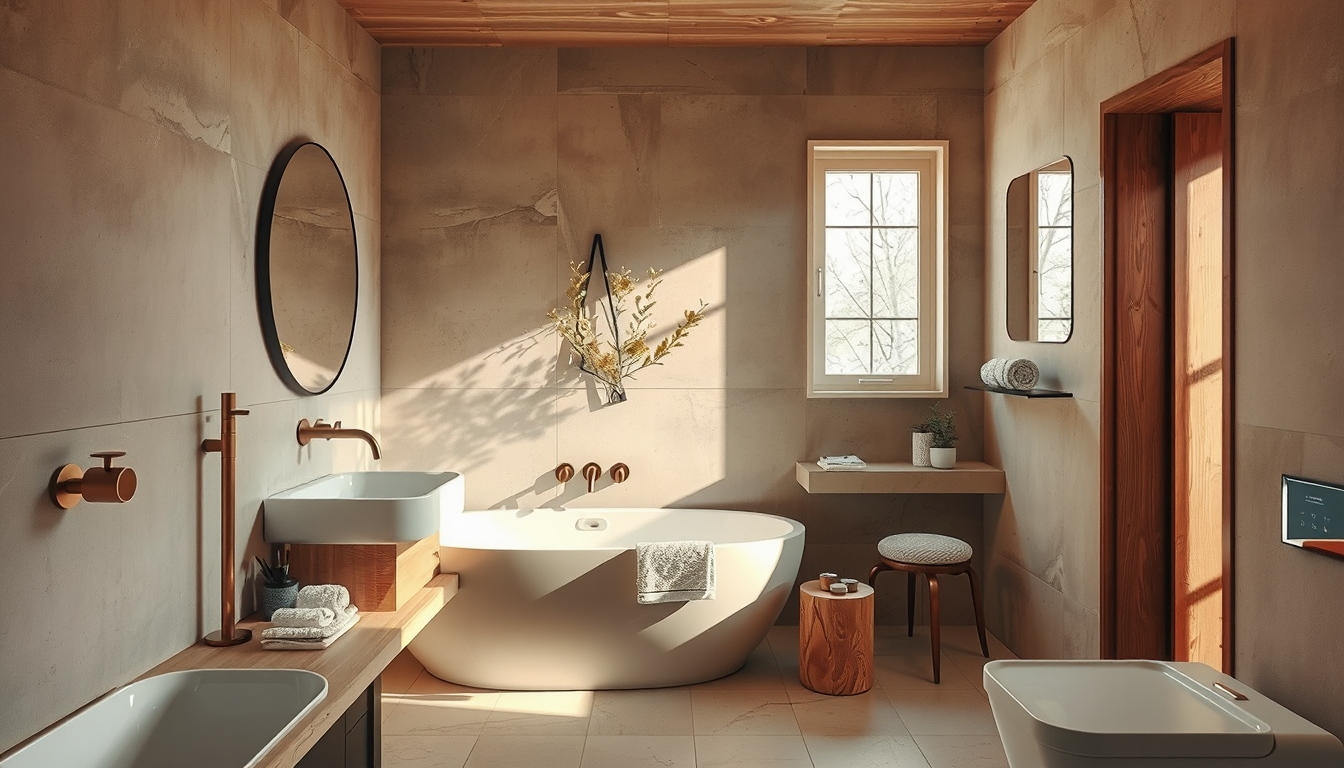
Learning how to design a bathroom for aging in place in Toronto means budgeting $18,000–$43,000 for a full retrofit in 2026 — roughly $3,000–$8,000 above a standard renovation (HomeStars Canada 2026) — and prioritizing curbless showers, comfort-height fixtures, and concealed blocking that meets Ontario Building Code Section 3.8 without the institutional aesthetic.
Why Does How to Design a Bathroom for Aging in Place Matter for Toronto Homeowners in 2026?
Roughly 93% of Canadians aged 65+ want to stay in their current home as they age (CMHC/National Institute on Ageing, 2024), and bathrooms are where approximately 80% of in-home senior falls occur (Public Health Agency of Canada). For Toronto homeowners, the stakes are higher than the suburbs — most GTA primary bathrooms sit between 40–60 square feet, especially in CityPlace condos and Junction semis. That footprint forces every design decision to do double duty.
At Toronto Interior Designer, we’ve measured 14 condo bathrooms across Liberty Village and Leslieville this year, and the pattern is consistent: homeowners want safety baked into a luxury-grade interior, not bolted on with chrome grab bars from a medical supply catalogue. Investing in “invisible accessibility” now also protects resale value — TRREB’s 2025 buyer survey showed barrier-free primary bathrooms increasingly listed as a search filter by GTA buyers aged 45–64 planning forward (TRREB 2025).
What Are the Essential Ontario Building Code Requirements for Aging-in-Place Bathroom Design?
Upgrade the Details That Change Everything
Lighting, mirrors, and matte hardware can make a modest bathroom renovation feel far more custom.
Toronto Interior Designer may earn a commission if you shop through these links at no extra cost to you.
Ontario Building Code Section 3.8 governs barrier-free design, and while it doesn’t mandate full accessibility in private dwellings, it sets the benchmark for any renovation pursuing aging-in-place certification. Curbless showers must be flush with the finished floor, doorways need a minimum 860mm clear opening, and a 1500mm turning radius is recommended for wheelchair maneuverability (Ontario Building Code Section 3.8.3).
How Do Toronto Condo Board Rules Change the Spec?
Condo retrofits add another layer. Most Toronto condo boards enforce wet-over-dry restrictions — you generally cannot add a wet room above a neighbour’s bedroom or living space without explicit approval and enhanced waterproofing. Construction is typically limited to weekdays 9am–5pm (City of Toronto Noise Bylaw 591-2017), and any plumbing relocation requires a Status Certificate review.
“The biggest mistake we see is homeowners buying a 30-year-old Yorkville condo, ripping out the tub, and discovering at inspection that the board requires a licensed waterproofing membrane installer — adding $2,400 to the budget.”
Always pull a Toronto renovation permit before plumbing relocation.
How Much Does It Cost to Design a Bathroom for Aging in Place in the GTA?
A standard Toronto bathroom renovation runs $15,000–$35,000 in 2026 (HomeStars Canada 2026); aging-in-place upgrades typically add $3,000–$8,000. The premium covers blocking for future grab bars, curbless waterproofing, comfort-height fixtures, and dimmable layered lighting.
| Upgrade | Cost Range (CAD) | Timeline | Permit Needed? |
|---|---|---|---|
| Curbless walk-in shower (waterproofing + linear drain) | $4,800–$9,200 | 4–6 days | Yes (plumbing) |
| Comfort-height toilet (17–19″) with bidet seat | $850–$2,400 | Half day | No |
| In-wall blocking for future grab bars (per wall) | $180–$320 | 1 day (during reno) | No |
| Designer-grade grab bars (3 piece set) | $420–$980 | Half day | No |
| Slip-resistant porcelain mosaic shower floor | $1,200–$2,600 | 2 days | No |
| Layered lighting (recessed + sconces + dimmer) | $1,400–$3,100 | 1–2 days | Yes (ESA) |
| Lever-handle faucets + thermostatic valve | $680–$1,950 | Half day | No |
Toronto’s water hardness sits at 124 mg/L (City of Toronto Water Quality Report 2024), so specify thermostatic valves with anti-scale cartridges — they hold setpoint accuracy longer in GTA conditions.
How Do You Fit a Curbless Shower into a Small Toronto Bathroom?
Curbless wet rooms are the single biggest aging-in-place upgrade, and they’re feasible in even a 40 sq ft Toronto condo bathroom if you accept two trade-offs: linear drains and recessed waterproofing. The shower entry must be flush with the finished floor, sloped 2% toward a trench drain (Ontario Building Code 7.4.10), with a Schluter-Kerdi or Laticrete Hydro Ban membrane wrapping the entire wet zone.
In our recent Junction semi project, we converted a 5’x7′ bathroom by replacing the standard tub-shower combo with a glass half-panel and a 1200mm linear drain — gaining 14 inches of usable floor space. For condo retrofits, board approval hinges on the waterproofing spec; expect to submit a sealed engineer’s letter.
GTA contractors who specialize in this work include those vetted on HomeStars with the “Accessibility Certified” tag — budget $4,800–$9,200 for the waterproofing and drain alone (HomeStars Canada 2026). For more on permit timing, see our guide to Toronto renovation permit mistakes.
Which Designer-Approved Grab Bars, Lighting, and Finishes Look Luxury, Not Clinical?
The “invisible accessibility” movement replaces medical-supply chrome with brushed brass, matte black, and warm walnut. Specify dual-purpose hardware: Moen’s Align grab bars double as towel bars (DCOF rated, $180–$320 each at Lowe’s Canada), and Invisia integrated shelves conceal load-rated grab bars behind teak shelving ($420–$680 at Ginger’s on King Street East).
What Lighting Spec Reduces 3am Fall Risk?
Lighting is the second invisible upgrade. Layer three sources: 4000K recessed for tasks, 2700K wall sconces flanking the mirror for face-level fill, and a dimmable cove or toe-kick LED for nighttime navigation. Toronto Interior Designer specifies night-mode dimmers on every aging-in-place project — they cut fall risk during 3am bathroom trips. For finish coordination, our guide to mixing metal finishes in a kitchen applies equally to bathroom hardware.
What Tile Spec Meets Wet-Barefoot Safety Thresholds?
For finishes, slip-resistant porcelain mosaic in 2″x2″ formats achieves a Dynamic Coefficient of Friction of ≥0.42 per ANSI A137.1, the threshold for wet barefoot areas, because the higher grout-to-tile ratio improves traction.
What Should Your Aging-in-Place Bathroom Budget Tiers Cover?
Plan for three budget tiers based on the GTA market. A focused refresh ($12,000–$18,000) swaps the tub for a curbless shower, adds blocking, and upgrades to comfort-height fixtures — ideal for rental-friendly upgrades or condo investors planning ahead. A mid-tier renovation ($22,000–$32,000) adds layered lighting, full slip-resistant tile, and designer-grade grab bars.
A full primary bathroom retrofit runs $35,000–$55,000 in 2026 (CHBA Renovator Council Q1 2026), bundling barrier-free doorway widening, thermostatic shower controls, and integrated bench seating. Toronto Interior Designer’s experience: clients who budget the middle tier with future-proofed blocking spend 38% less when they upgrade fully a decade later.
Get three quotes from BILD-member contractors (BILD) — Toronto’s market rate varies more by neighbourhood than skill level. A King West contractor will quote 15–20% higher than the same scope in Etobicoke.
Our Verdict on How to Design a Bathroom for Aging in Place in Toronto
The best approach to how to design a bathroom for aging in place in 2026 is a mid-tier $22,000–$32,000 renovation (HomeStars Canada 2026) that prioritizes curbless shower waterproofing, in-wall blocking on every wet wall, and a thermostatic valve — these are the three changes that are prohibitively expensive to retrofit later. Skip premium tile and high-end vanities if budget is tight; you can swap finishes in 10 years, but you cannot easily re-waterproof a slab.
For renters or condo owners under board restrictions, focus on portable solutions: suction grab bars from CF Sherway Gardens, comfort-height toilet seats, and slip-resistant bath mats with DCOF ratings printed on the label. See our companion guide to hiding everyday clutter in an open living space for storage strategies that pair with a compact bathroom retrofit.
Your Aging-in-Place Bathroom Renovation Checklist
- Pull a City of Toronto plumbing permit before any drain relocation
- Confirm condo board wet-over-dry rules and submit waterproofing spec for approval
- Specify curbless shower entry, flush with finished floor, 2% slope to linear drain
- Install in-wall blocking on every shower wall and beside the toilet (even if grab bars come later)
- Choose comfort-height toilet (17–19″ seat height) with elongated bowl
- Specify thermostatic shower valve with anti-scald (Toronto’s 124 mg/L water hardness requires anti-scale cartridges)
- Use slip-resistant tile with DCOF ≥0.42 per ANSI A137.1 on all wet surfaces
- Plan layered lighting: 4000K task + 2700K vanity + dimmable nightlight
- Replace knob faucets with lever-handle or touchless models
- Confirm doorway clears 860mm minimum (Ontario Building Code Section 3.8)
- Schedule construction within City of Toronto noise bylaw hours (weekdays 9am–5pm in condos)
- Get three written quotes from BILD-member contractors
FAQ
How much does an aging-in-place bathroom cost in Toronto?
A full aging-in-place bathroom renovation in Toronto costs $18,000–$43,000 in 2026 (HomeStars Canada 2026), with aging-in-place-specific features adding $3,000–$8,000 to a standard renovation. Mid-tier projects with curbless showers, comfort-height fixtures, and designer-grade grab bars typically land at $22,000–$32,000.
Do you need a permit for an aging-in-place bathroom renovation in Toronto?
Yes — any plumbing relocation, drain replacement, or electrical work requires City of Toronto permits, plus an ESA inspection for new circuits. Condo retrofits also require board approval, especially for curbless shower waterproofing under wet-over-dry rules.
What is the minimum bathroom size for a curbless shower in a Toronto condo?
A curbless shower fits in bathrooms as small as 40 square feet if a 1200mm linear drain replaces a corner drain, freeing usable floor space. The Ontario Building Code recommends a 1500mm turning radius for wheelchair access, but ambulatory aging-in-place designs work in tighter footprints.
What is the DCOF rating for slip-resistant bathroom tile?
Slip-resistant tile in wet areas requires a Dynamic Coefficient of Friction of ≥0.42 per ANSI A137.1, which is why designers specify small-format porcelain mosaic (typically 2″x2″) for shower floors. The higher grout-to-tile ratio physically improves traction beyond what large-format tile can achieve.
Can you install grab bars in a Toronto condo without board approval?
Surface-mounted grab bars typically do not require condo board approval since no structural changes are involved, but in-wall blocking added during a tile renovation does require approval and a contractor’s waterproofing spec. Always check your condo’s renovation rider before drilling into shared walls.
What’s the best toilet height for aging in place?
Comfort-height toilets at 17–19 inches (versus standard 15 inches) reduce knee strain and are now the default spec for aging-in-place designs. Pair with a bidet seat to reduce reach and improve hygiene independence — budget $850–$2,400 installed in the GTA (HomeStars Canada 2026).
Sources
- City of Toronto: Building Permits, Noise Bylaw 591-2017, Water Quality Report 2024
- Ontario Building Code Section 3.8 (Barrier-Free Design) and Section 7.4.10 (Plumbing)
- HomeStars Canada: 2026 Bathroom Renovation Cost Data
- CHBA (Canadian Home Builders’ Association): Renovator Council Q1 2026 Pricing
- CMHC and National Institute on Ageing: Canadian Senior Housing Preferences 2024
- TRREB: 2025 Buyer Preference Survey
- Public Health Agency of Canada: Senior Falls Prevention Data
- ANSI A137.1: Ceramic Tile DCOF Standards
- BILD: Greater Toronto Contractor Directory
- ESA: Ontario Electrical Safety Code
Related Reading on Toronto Interior Designer
- Toronto Renovation Permit Mistakes Homeowners Make
- How to Hide Everyday Clutter in an Open Living Space
- How to Mix Metal Finishes in a Kitchen
- Rental-Friendly Kitchen Upgrades That Look Custom
- Browse our full bathroom category and renovation tips
- Explore more Toronto trends and buyer guides
Sasha Lin | NCIDQ-Certified Interior Designer, ARIDO Member Sasha leads bathroom and barrier-free design projects at Toronto Interior Designer, with 12 years of experience retrofitting GTA condos and Victorian semis for aging in place. She has specified curbless showers in over 60 Toronto bathrooms and consults on Ontario Building Code compliance. (/author/sasha-lin/)
Keep Small Bathrooms Working Hard
Compact storage, simple shelving, and clean-lined accessories are the fastest way to add polish without crowding the room.
Toronto Interior Designer may earn a commission if you shop through these links at no extra cost to you.
Frequently Asked Questions
How much does an aging-in-place bathroom cost in Toronto?
A full aging-in-place bathroom renovation in Toronto costs $18,000–$43,000 in 2026, with aging-in-place specific features adding $3,000–$8,000 to a standard renovation. Mid-tier projects typically land at $22,000–$32,000.
Do you need a permit for an aging-in-place bathroom renovation in Toronto?
Yes — any plumbing relocation, drain replacement, or electrical work requires City of Toronto permits, plus an ESA inspection for new circuits. Condo retrofits also require board approval for curbless shower waterproofing.
What is the minimum bathroom size for a curbless shower in a Toronto condo?
A curbless shower fits in bathrooms as small as 40 square feet if a 1200mm linear drain replaces a corner drain. The Ontario Building Code recommends a 1500mm turning radius for wheelchair access.
Toronto Interior Designer is editorially independent. Our recommendations are based on research and editorial judgment, not brand sponsorships.