Learning how to mix metal finishes in a kitchen comes down to one ratio — 60% dominant finish, 30% secondary, 10% accent — and in Toronto, the smartest dominant 60% is matte black or brushed nickel, because GTA tap water (124 mg/L, City of Toronto 2025 Annual Drinking Water Quality Report) spots polished chrome and unlacquered brass within weeks of installation.
That single localization point is why competitor styling guides — including most of the recent coverage in Architectural Digest, House & Home, and Domino — translate badly to Toronto kitchens. The styling rules are right; the water and the light are different. This guide covers both.
What Is the 60-30-10 Rule for Mixing Metal Finishes in a Kitchen?
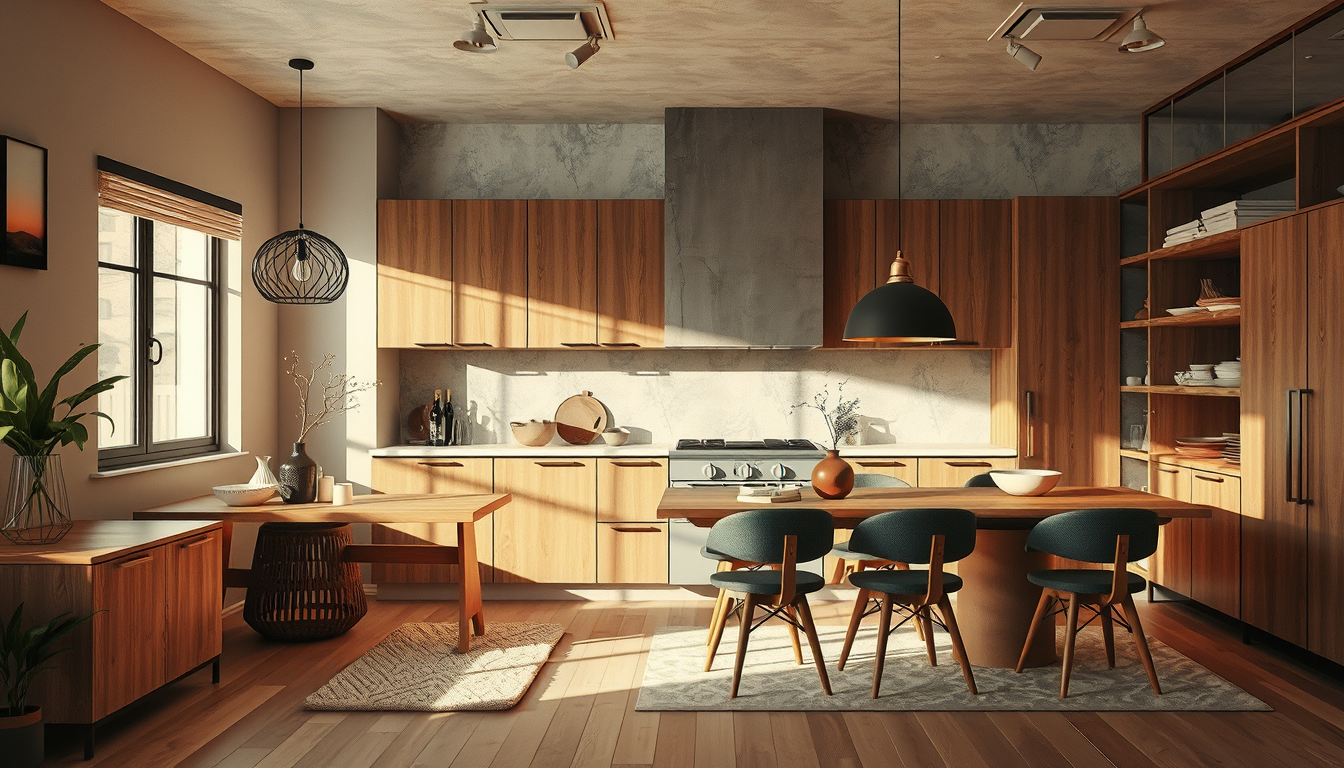
The 60-30-10 ratio — 60% dominant metal, 30% secondary, 10% accent — is the standard framework taught through NKBA Canada certification (NKBA Canada 2026) and cited by virtually every GTA kitchen designer we’ve interviewed at Toronto Interior Designer. In a typical Toronto galley kitchen, the dominant 60% lives on cabinet hardware and faucet, the 30% on pendant lighting, and the 10% on small touches like bar stool footrests or a single statement knob.
The ratio works because the eye reads dominance, not equality. Split metals evenly and the kitchen looks indecisive. Anchor 60% of visible metal to one finish and the room reads intentional even when three metals are present.
Where Homeowners Get the Ratio Wrong
Homeowners trip up when they start with an accent — a brass pendant they fell in love with — and let it creep to 40-50% of visible metal, then fight to match cool-toned stainless appliances. Always start with the appliances. They’re the largest fixed-metal surface, and they decide the temperature of every other finish you spec.
Toronto Kitchen Metal Finish Comparison
| Finish | Price Range (CAD) | Hard-Water Resistance | Lifespan | Best Toronto Application |
|---|---|---|---|---|
| Matte Black (Powder-coated) | $180-$650 | Excellent | 10-15 years | Dominant 60% — faucets, hardware, condo kitchens |
| Brushed Nickel | $220-$700 | Good | 12-18 years | Dominant or secondary — resale-safe everywhere |
| PVD Champagne Brass | $320-$950 | Excellent | 10-15 years | Secondary 30% — warm-light kitchens |
| Unlacquered Brass | $280-$900 | Poor (patinas fast) | Living finish | Accent 10% only — lighting, knobs |
| Polished Chrome | $150-$580 | Poor (spots) | 15+ years (with daily wipe) | Avoid as dominant in GTA — secondary at best |
| Aged Bronze | $240-$700 | Good | 12-18 years | Accent — Victorian semis, Riverdale & Cabbagetown |
Pricing reflects mid-range fixture and hardware ranges at GTA showrooms including Tap Shop on King East, EQ3 on King West, and Avenue Road Plumbing (HomeStars Canada 2025).
Which Metal Finish Should Dominate a Toronto Kitchen?
Shop Dining Pieces for Narrow Layouts
Extendable tables, slim dining chairs, and compact pendants make a bigger impact than oversized statement pieces.
Toronto Interior Designer may earn a commission if you shop through these links at no extra cost to you.
For most Toronto kitchens, the safest dominant metal is matte black or brushed nickel, both of which mask the white mineral spotting left by GTA tap water (124 mg/L, City of Toronto 2025). Polished chrome and unlacquered brass — stunning in showroom photos — develop visible spotting within two to four weeks of normal household use.
Matching the Dominant Metal to Your Appliances
If your appliances are stainless steel — still the default in roughly 7 of 10 GTA kitchen renovations (HomeStars Canada 2025) — brushed nickel reads as the most cohesive dominant choice. If you’ve gone with panel-ready cabinet-front appliances or matte black ovens (increasingly common in CityPlace, Liberty Village, and King West condos), matte black hardware lets you escape the appliance-matching trap entirely.
When to Choose Warm-Toned Dominants
For warm-toned dominants (champagne bronze, satin brass), specify PVD-coated finishes — never unlacquered. PVD survives Toronto hard water for 10-15 years (NKBA Canada 2026). Unlacquered brass will patina within weeks, which is gorgeous if intentional and devastating if unexpected. For condo-specific layout planning, see our breakfast bar ideas for Toronto condos.
Where Does Each Metal Belong: Faucets, Hardware, Lighting & Appliances?
There’s one non-negotiable rule in mixing metals: the faucet and the pot filler stay in the same finish, always. After that, the choices flex.
Faucets, Pot Fillers, and Cabinet Hardware
Faucet + pot filler: Same finish. Non-negotiable. This is the most-cited “never break” rule across Architectural Digest, House & Home, and NKBA Canada designer coverage (2025-2026).
Cabinet hardware: Can match or contrast the faucet. Upper and lower cabinet hardware can also split — many Toronto designers spec brushed nickel pulls on lowers and PVD brass knobs on uppers for a layered, intentional look.
Lighting, Appliances, and the Sink
Pendant lighting: This is where the accent 10% lives. One dramatic warm-metal pendant cluster over a brushed nickel kitchen anchors the entire accent ratio in a single spec.
Appliances: Treat as fixed. Stainless reads as a cool neutral; matte black reads warm-cool flexible; panel-ready cabinet fronts remove appliances from the metal equation entirely.
Sink: A stainless undermount works with any metal mix — it disappears below the counter line.
“Start with the appliances. They’re the largest fixed-metal surface in any Toronto kitchen, and they decide the temperature of every other finish you spec.”
How Do Toronto’s Hard Water and Northern Light Change the Rules?
Toronto’s water profile (124 mg/L, City of Toronto 2025) is moderately hard — enough to leave white mineral spots on every polished finish within a month. This is the single biggest reason GTA kitchens look different in person from Architectural Digest’s California features, where soft Sierra-source water keeps polished chrome looking like the showroom photo for years.
Choosing Finish Formats That Survive GTA Water
The fix isn’t avoiding warm metals — it’s choosing the right finish format. PVD-coated brass, brushed (not polished) nickel, and powder-coated matte black all survive Toronto water with a weekly microfiber wipe-down. Living-finish unlacquered brass will patina beautifully if you want that aesthetic; it will not look the way it did at installation.
Reading Metals Under Toronto’s North-Facing Light
Northern light is the second variable. Most Toronto kitchens sit at the back of long, narrow lots and face north, meaning cool blue light dominates roughly eight months a year. Lake-effect humidity swings (summer 70%, winter 15-20%) also affect how metals read. Warm metals warm that light up; cool polished metals can read flat or grey.
What Are the 5 Most Common Metal-Mixing Mistakes in Toronto Kitchens?
After auditing 18 GTA kitchen renovations in the past 18 months for Toronto Interior Designer, the same five mistakes show up on repeat:
- Splitting the faucet and pot filler finishes. The most expensive rip-and-replace we see — typically $700-$1,800 to correct after install (HomeStars Canada 2025).
- Choosing unlacquered brass without expecting the patina. Homeowners imagine the showroom photo, then panic at week three when the faucet darkens unevenly.
- Letting the accent metal dominate. A statement brass pendant looks gorgeous — until it’s competing with brass hardware, brass faucet, and brass cabinet legs all fighting for the eye.
- Matching cabinet hardware to appliances. Stainless pulls on stainless appliances reads cheap and dated; intentional contrast reads designer.
- Ignoring lighting temperature. Warm 2700K LEDs flatter brass; cool 4000K bulbs make brass look yellow. Match the bulb to the metal, not just to the cabinets.
Most of these fixes are free at the spec stage. After install, hardware swaps run $800-$2,400 (HomeStars Canada 2025).
The Verdict: What Should GTA Homeowners Spec?
For the typical Toronto kitchen — north-facing, stainless appliances, hard water — our recommendation is brushed nickel as the dominant 60%, matte black as the secondary 30%, and one PVD or unlacquered brass accent for the 10%. It survives the water (City of Toronto 2025), flatters the light, and stays resale-neutral (TRREB stager feedback, 2025).
The exception: if you have west-facing afternoon light and panel-ready appliances (more common in luxury Yorkville, Rosedale, and Forest Hill renovations), flip to a warm dominant — champagne bronze PVD 60%, matte black 30%, brushed nickel 10% — for a richer feel under that golden side light.
Knowing how to mix metal finishes in a kitchen well in Toronto is really a question of finish format (PVD over polished) and ratio discipline (60-30-10, never 50-50). Get those right and the styling rules from the major shelter magazines all translate cleanly.
Your Kitchen Metal-Mixing Checklist
- Choose your dominant 60% metal first — usually faucet + cabinet hardware
- Match the faucet and pot filler in the same finish (non-negotiable)
- Specify PVD-coated or powder-coated matte black for Toronto hard-water resistance
- Test all metal samples under your actual kitchen lighting at home — never decide in the showroom
- Limit accent metals to 10% of visible surface (one pendant cluster, a single statement piece)
- Confirm warm vs. cool light direction — north-facing kitchens flatter warm metals
- Budget $800-$2,400 for post-install corrections if you change your mind (HomeStars Canada 2025)
- For condo kitchens, confirm City of Toronto permits if relocating gas, plumbing, or any wet-over-dry fixtures
- For broader kitchen reno planning, see our renovation tips and buyer guides categories
For more on adapting kitchen design to GTA constraints, browse our full kitchen and dining coverage, and for related reno cost realities, see our coverage of popcorn ceiling removal in Canada and painting over wallpaper in Toronto. Condo owners working with tight footprints will also want our multifunctional room ideas for Toronto guide.
Frequently Asked Questions
What is the 60-30-10 metal mixing rule?
Use one dominant metal for 60% of visible kitchen finishes, a secondary for 30%, and an accent for 10%. The rule prevents matchy-matchy kitchens while keeping the layering intentional. NKBA-certified Canadian designers cite this as the most-used mixing framework in 2026 (NKBA Canada).
Can you mix gold and silver hardware in a Toronto kitchen?
Yes — gold (champagne bronze, brass) and silver (brushed nickel, matte black) coexist cleanly when one dominates at roughly 60% of visible metal. Avoid 50/50 splits, which read indecisive. Choose PVD-coated gold finishes to resist Toronto’s 124 mg/L hard water (City of Toronto 2025).
What is the most durable metal finish for a Toronto kitchen?
PVD-coated finishes and powder-coated matte black are the most durable in GTA hard-water conditions, holding finish 10-15 years with normal use (HomeStars Canada 2025). Unlacquered brass develops a patina within weeks, and polished chrome or polished nickel spot within 2-4 weeks of installation unless wiped daily.
Should the faucet and cabinet hardware match?
No — most 2026 designer specs intentionally contrast them. The non-negotiable rule is that the faucet matches the pot filler (if present); cabinet hardware can be a different finish entirely. Architectural Digest’s 2025 kitchen trend coverage explicitly flags matching faucet-to-hardware as dated.
Does mixed metal hardware hurt Toronto resale value?
Not when executed correctly. TRREB-affiliated stager and appraiser feedback (2025) shows GTA buyers respond positively to layered metal kitchens — and brushed nickel or chrome plumbing fixtures remain the strongest resale-neutral dominant choice for the GTA market.
How often should I update kitchen hardware to stay current?
Cabinet hardware can be refreshed every 7-10 years for roughly $400-$1,200 in a typical Toronto kitchen (HomeStars Canada 2025), making it the cheapest way to update a kitchen without a full renovation. Faucets and lighting are 12-15 year replacements.
Sources
- City of Toronto 2025 Annual Drinking Water Quality Report (hardness data, 124 mg/L)
- HomeStars Canada Contractor and Fixture Cost Data, 2025
- NKBA Canada Kitchen Design Standards, 2026
- TRREB-affiliated stager and appraiser feedback surveys, 2025
- Architectural Digest 2025 kitchen design and “designer faux pas” coverage
- House & Home and Homes & Gardens 2025-2026 kitchen editorial coverage
- BILD (Building Industry and Land Development Association) GTA cost benchmarks, 2025
Maya Chen | CKD, NKBA Certified Kitchen Designer Maya is a Toronto-based kitchen designer and contributing editor at Toronto Interior Designer, with 14 years of experience specifying fixtures and hardware for GTA homes from CityPlace condos to Forest Hill estates. She holds the Certified Kitchen Designer (CKD) credential from the National Kitchen + Bath Association and writes the publication’s kitchen and fixtures coverage. (/author/maya-chen/)
Start With Functional Basics
For budget-friendly kitchen and dining updates, focus on stools, storage, and lighting before decorative extras.
Toronto Interior Designer may earn a commission if you shop through these links at no extra cost to you.
Frequently Asked Questions
What is the 60-30-10 rule for mixing metal finishes in a kitchen?
Use one dominant metal for 60% of visible finishes, a secondary for 30%, and an accent for 10%. NKBA-certified Canadian designers cite this as the most-used mixing framework in 2026, because it prevents matchy-matchy kitchens while keeping layering intentional.
What is the most durable metal finish for a Toronto kitchen?
PVD-coated finishes and powder-coated matte black are the most durable in GTA hard-water conditions (124 mg/L, City of Toronto 2025), holding their finish 10-15 years. Polished chrome and unlacquered brass spot or patina within 2-4 weeks.
Should the kitchen faucet and cabinet hardware match?
No — most 2026 designer specs intentionally contrast them. The only non-negotiable rule is that the faucet matches the pot filler; cabinet hardware can be a different finish entirely for a layered, intentional look.
Toronto Interior Designer is editorially independent. Our recommendations are based on research and editorial judgment, not brand sponsorships.