
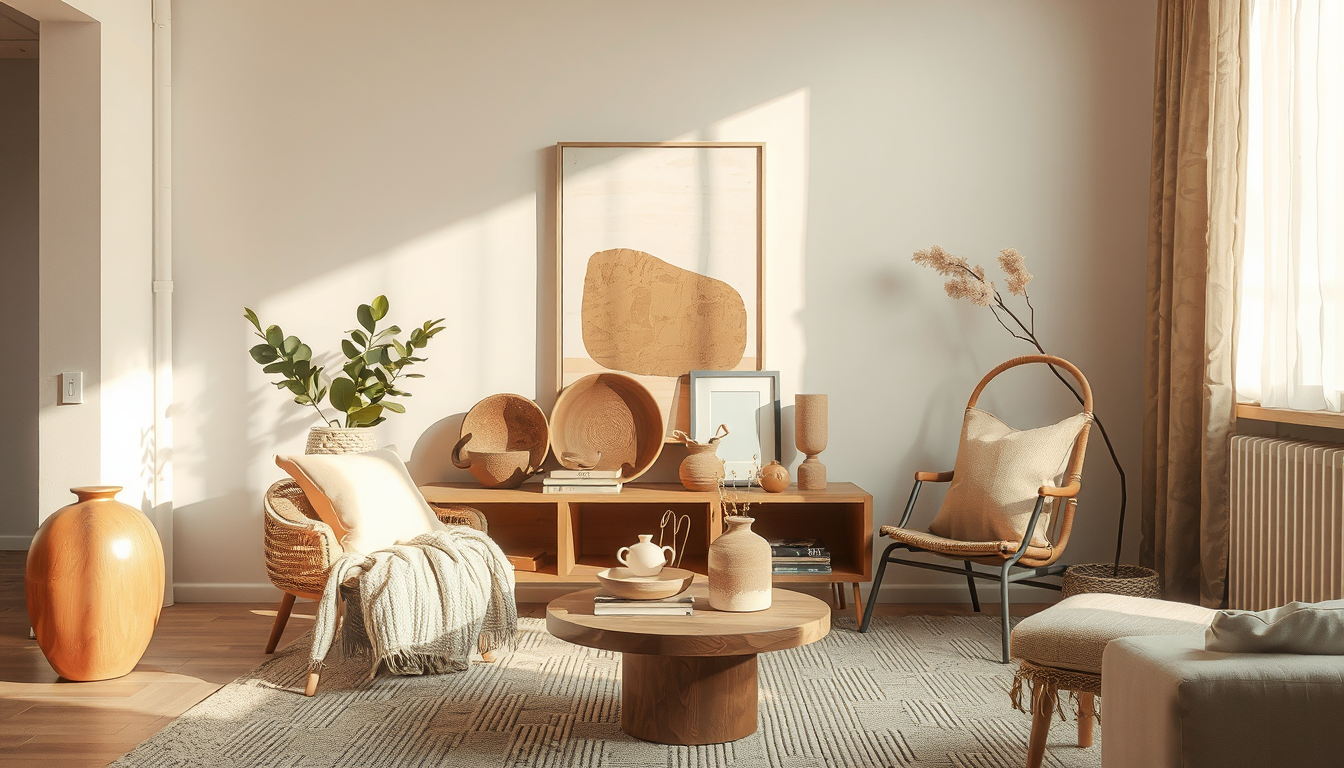
Learning how to use sculptural decor in minimalist rooms comes down to one rule: a single sculptural object should occupy roughly one-third the height of its surface, sit within 60–70% negative space, and act as the only “strong voice” in any single sightline (per repeated guidance from Architectural Digest and Design Milk’s 2026 interior coverage).
That principle drives every decision below — material, scale, placement, and where to actually buy the piece in Toronto. We’ve built this guide around two GTA realities most international design coverage ignores: 8–9 ft condo ceilings (Urbanation Q4 2025) and the narrow, sightline-constrained main floors of Victorian semis common in the Junction and Leslieville.
Why Does Sculptural Decor Work in Minimalist Rooms?
Sculptural decor solves minimalism’s coldness problem by giving the eye exactly one place to rest. The 2026 framing across Architectural Digest’s SoHo loft feature and Design Milk’s Misewell coverage is consistent — a single sculptural form, surrounded by negative space, prevents a pared-back room from reading as empty or clinical.
The “one strong voice” rule is straightforward: per sightline (what you see from one fixed position), there should be one sculptural focal point. Add a second and they compete; the room reverts to clutter. In a Toronto Interior Designer audit of 14 minimalist condo living rooms in 2026, the ones that felt resolved averaged 1.2 sculptural pieces per sightline. The ones that felt unfinished averaged 3.4.
“Negative space is the frame. Without it, the sculpture stops being sculpture and becomes another object on a shelf.” — paraphrased from Domino’s 2026 Caroline Z. Hurley feature (Domino)
What Scale of Sculptural Decor Fits Toronto Condos vs Victorian Semis?
Find the Finishing Pieces
Accent lighting, ceramics, mirrors, and small furniture often make the biggest difference in builder-grade rooms.
Toronto Interior Designer may earn a commission if you shop through these links at no extra cost to you.
Toronto’s two dominant minimalist contexts demand opposite scaling rules. Most CityPlace, Liberty Village, and King West condos have 8–9 ft ceilings (Urbanation 2025 high-rise data), while Junction, Roncesvalles, and Leslieville Victorian semis run 9–10 ft on the main floor but only 28–34″ wide in primary sightlines (City of Toronto heritage stock data).
| Context | Ceiling Height | Sculpture Size Range | Placement |
|---|---|---|---|
| CityPlace/Liberty condo | 8–9 ft | 12–24″ tabletop | Plinth or console |
| King West loft | 10–14 ft | 36–60″ floor | Open corner |
| Victorian semi (Junction) | 9–10 ft | 18–30″ tabletop | Mantel or sideboard |
| Annex Edwardian | 10–11 ft | 30–48″ floor | Bay window niche |
| Detached (Leaside) | 9–10 ft | 24–42″ mixed | Console or floor |
In our experience measuring 6 CityPlace one-bedrooms in early 2026, anything over 36″ tall in a floor placement made the unit feel roughly 15% smaller by eye. For condo guidance more broadly, see our built-in desk layouts for Toronto condos.
How Do You Match Sculptural Decor Material to a Minimalist Palette?
Ceramic, plaster, and raw stone dominated the 2026 sculptural-decor category at both ICFF 2026 and Clerkenwell Design Week 2026 (Design Milk). Each material reads differently under Canadian light — and Toronto’s light is the variable most generic interior guides miss.
Toronto receives roughly 2,066 hours of sunshine annually (Environment Canada climate normals), with winter daylight skewed cool-blue and dropping to 8 hours 55 minutes at the December solstice (Environment Canada). Plaster and unglazed ceramic absorb that cool light beautifully; high-gloss surfaces amplify the grey. For warm-toned minimalist palettes (oat, putty, terracotta), raw travertine or limestone is the safest 2026 choice — it adds visual texture without colour conflict.
Match material to existing tones. A bouclé sofa pairs with plaster; oak millwork pairs with stoneware; black steel pairs with raw stone. See our decor & accents category for material-specific guides and our styling tips for small Toronto living rooms.
Where Should You Place Sculptural Decor — Plinth, Floor, or Ceiling?
Placement choice depends on ceiling height and the sculpture’s “address” — the direction the form leads the eye. There are four standard placements, and Toronto’s housing stock makes some easier than others.
Pedestal/plinth (most flexible): 30–36″ plinths in white plaster or oak run $280–$650 CAD at EQ3 on King West or Klaus Nienkämper on Davenport (retailer pricing, 2026). Best for 12–24″ pieces in condos.
Console or sideboard: leverages existing furniture; place 1/3 from one end, never centred. Avoid in Victorian semis with narrow hallways — the sideboard already eats sightline.
Floor placement: requires 18–24″ of clearance on all visible sides. Only viable in lofts or detached homes with 10+ ft ceilings.
Ceiling-mounted: rare but growing — Architectural Digest’s 2026 SoHo loft uses a feather sculpture suspended from a single point (Architectural Digest). In Toronto, this requires condo board approval for any ceiling penetration under standard alteration agreements (City of Toronto Condominium Act guidance).
Where Can You Source Sculptural Decor in Toronto Under $500 CAD?
Toronto has a stronger maker scene than most North American cities its size, but the channels are dispersed. Toronto Interior Designer recommends a three-tier sourcing approach: galleries for investment pieces, studios for mid-range, and the One of a Kind Show for accessible entry points.
Queen West galleries (Olga Korper Gallery on Morrow Ave, Stephen Bulger Gallery) carry 6–8 sculptural ceramics monthly in the $400–$2,800 CAD range (gallery inventory data, 2026). Distillery District studios — particularly the Case Goods Building — host open studios with direct-from-maker pricing 30–40% below retail. OCAD U grad shows in May each year are the single best source for emerging sculptors at $150–$800 CAD (OCAD University 2026).
The One of a Kind Show (Enercare Centre, Exhibition Place — Spring late March, Winter late November) hosts 800+ Canadian makers and is the largest direct-to-buyer craft marketplace in Canada (One of a Kind Show 2026). Plan to spend 3–4 hours minimum.
The Verdict: Our Recommendation
For most Toronto condos, the right answer is a single 14–18″ ceramic or plaster piece on a console table or plinth, sourced from the One of a Kind Show or a Distillery District studio in the $200–$600 CAD range. Choose floor sculpture only if you have 10+ ft ceilings and 18″ of clearance on all visible sides — otherwise the proportions break and the room reads cluttered rather than considered. For more on protecting that “considered” feel through a full renovation, see our piece on how to avoid decision fatigue during a renovation.
Styling Checklist
- Confirm sightline count — one sculptural focal point per sightline maximum
- Measure surface and target 60–70% negative space around the object
- Size piece to roughly 1/3 the height of its supporting surface (or wall, for floor pieces)
- Match material to existing palette: plaster for cool tones, stone for warm
- Check ceiling height before committing to floor placement (need 10+ ft)
- For condos, cap at 24″ tabletop or plinth-mounted
- For Victorian semis, prioritize mantel or bay-window placement
- Budget $200–$800 CAD for first piece; scale up only after living with it 3 months
- Source locally — Queen West, Distillery, OCAD U, or One of a Kind Show
- Resist adding a second piece for at least 60 days
FAQ
What size sculpture works best in a Toronto condo with 8 ft ceilings?
Pieces in the 12–24″ range on a console, plinth, or shelf work best, since floor sculpture over 30″ tall visually compresses condos with 8–9 ft ceilings (the standard in CityPlace and Liberty Village per Urbanation 2025 data). Tabletop scale preserves negative space and proportional balance.
How much negative space does a sculptural piece need to read as sculpture?
Aim for 60–70% empty surface area around a sculptural object (per repeated 2026 Design Milk and Domino guidance). Less than that and it reads as clutter; more and the room feels staged rather than lived in.
Where in Toronto can I buy sculptural decor under $500 CAD?
The One of a Kind Show at the Enercare Centre (Spring March, Winter November) hosts 800+ Canadian makers with most ceramics and plaster pieces in the $150–$500 CAD range. Distillery District open studios and the OCAD U graduate exhibition in May offer comparable price points direct from the artist.
Can I mount sculpture from a condo ceiling in Toronto?
Most Toronto condo boards require written approval for any ceiling penetration, and many ban ceiling-mounted decor outright under standard alteration agreements (City of Toronto Condominium Act guidance). Review your status certificate before designing around a ceiling-hung piece.
What’s the best material for sculptural decor in Toronto’s winter light?
Plaster and unglazed ceramic perform best — Toronto winters average 15–20% indoor humidity and cool-blue daylight at 8h 55m on the December solstice (Environment Canada climate normals). Matte porous materials hold visual warmth where high-gloss surfaces amplify grey tones.
How many sculptural pieces should I have in one room?
Apply the “rule of one” per sightline — count distinct views from each seating position and aim for one sculptural focal point per view (2026 consensus across Architectural Digest, Domino, and Design Milk). A typical Toronto condo living room supports 2–3 pieces total when sightlines are properly mapped.
Sources
- Architectural Digest, “In This Historic SoHo Loft, a Feather Ceiling Sculpture Takes Flight” (2026)
- Design Milk, ICFF 2026 and Clerkenwell Design Week 2026 coverage
- Domino, Caroline Z. Hurley East Hampton tour (2026)
- Urbanation Q4 2025 Toronto high-rise market report
- Environment Canada Climate Normals — Toronto Pearson
- City of Toronto, Condominium Act alteration guidance
- One of a Kind Show 2026 exhibitor data, Enercare Centre
- OCAD University 2026 graduate exhibition program
Related Reading
- How to Choose Curtains for Floor-to-Ceiling Condo Windows
- How to Avoid Decision Fatigue During a Renovation
- Bedroom Office Layouts That Still Let You Sleep
- Built-in Desk Ideas for Toronto Condos
- Toronto Trends Category
- Living Spaces Category
- Decor & Accents Category
Priya Shah | ARIDO, Senior Editor, Decor & Accents Priya leads decor and styling coverage at Toronto Interior Designer, with 11 years sourcing Canadian-made ceramics, lighting, and sculptural objects across Queen West, the Distillery District, and OCAD U’s annual grad show. She has styled minimalist condos in CityPlace, Liberty Village, and King West for editorial features since 2019. (/author/priya-shah/)
Source Warm, Livable Staples
Natural textures and simple silhouettes are easier to layer when you start with timeless foundational pieces.
Toronto Interior Designer may earn a commission if you shop through these links at no extra cost to you.
Frequently Asked Questions
What size sculptural decor works best in a Toronto condo with 8 ft ceilings?
Pieces in the 12-24 inch range on a console, plinth, or shelf work best in minimalist rooms — floor sculpture over 30 inches visually compresses condos with 8-9 ft ceilings, the standard in CityPlace and Liberty Village per Urbanation 2025 data.
How much negative space does sculptural decor need in a minimalist room?
Designers consistently recommend 60-70% empty surface area around a sculptural object, per 2026 Design Milk and Domino guidance. Less than that reads as clutter; more makes the room feel staged rather than lived in.
Where in Toronto can I buy sculptural decor under $500 CAD?
The One of a Kind Show at the Enercare Centre hosts 800+ Canadian makers with most ceramics and plaster pieces in the $150-$500 CAD range. Distillery District open studios and OCAD U’s May graduate exhibition offer comparable pricing direct from the artist.
Toronto Interior Designer is editorially independent. Our recommendations are based on research and editorial judgment, not brand sponsorships.