
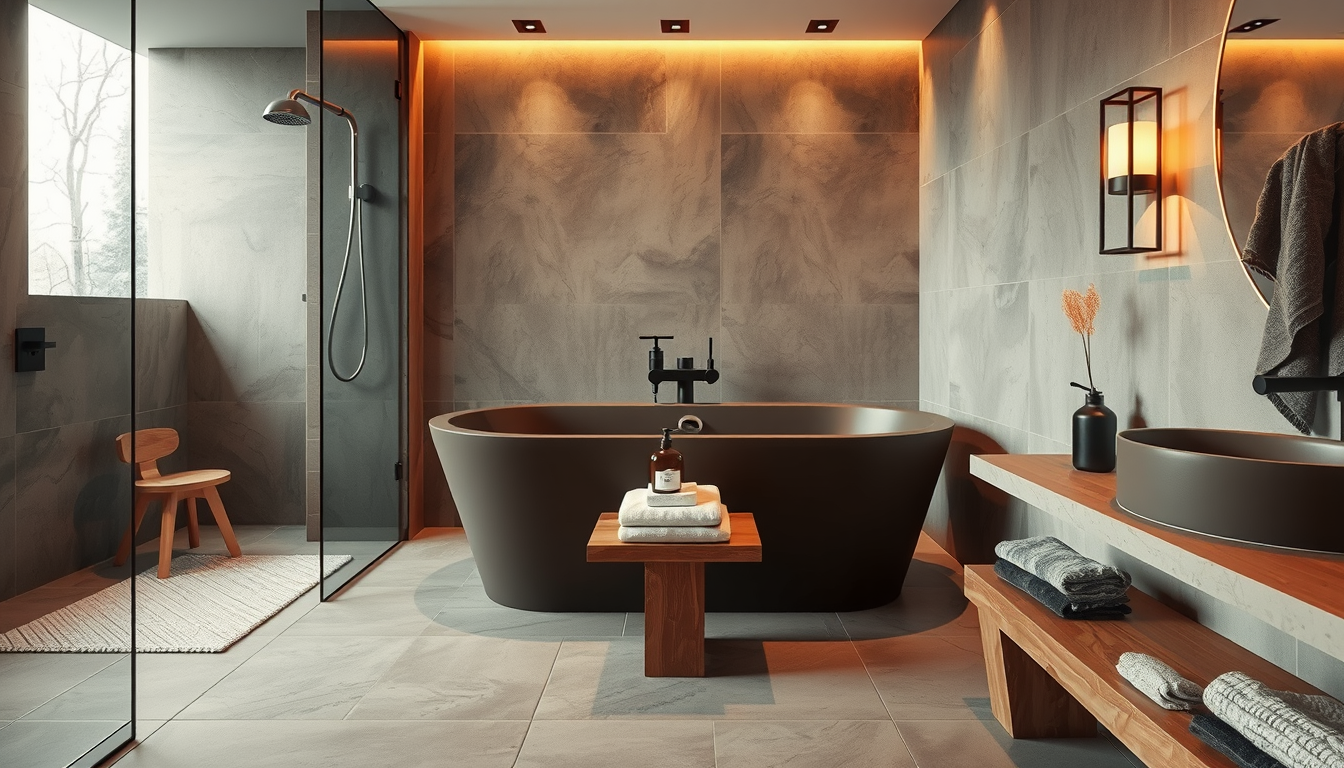
If you have been searching for a japanese soaking tub canada retailers actually stock, you are not alone — and you are closer to a perfect fit than you think. The traditional Japanese ofuro is typically only 36 to 48 inches long, roughly 40 percent shorter than a standard 60-inch North American bathtub, yet its 27-to-34-inch depth delivers a full-shoulder immersion that flat-bottomed tubs cannot match. For Canadians living in compact Toronto condos or narrow century homes, that combination of shorter footprint and deeper soak is not just a design trend — it is a practical upgrade. This guide covers materials, Canadian sourcing, sizing for real Toronto bathrooms, and styling ideas from local designers working with these tubs right now.
What Is a Japanese Soaking Tub and Why Canadian Homes Need One
A Japanese soaking tub, or ofuro, is designed for one purpose: deep, still-water immersion up to your shoulders. Unlike a Western bathtub built for reclining, an ofuro is meant for upright sitting. The bather showers first, then enters the tub purely for relaxation — a ritual that dates back centuries in Japanese bathing culture.
What makes this relevant to Canadian homeowners in 2026 is a convergence of three things. First, the Japandi aesthetic — blending Japanese minimalism with Scandinavian warmth — has moved beyond living rooms into bathrooms and ensuites across the country. Second, Architectural Digest’s ongoing “Longevity Home” series has put wellness-driven design squarely in the mainstream, with bathrooms as a centrepiece room . Third, and most practically, Canadian winters make a long, deep hot soak a genuine lifestyle necessity. A hinoki wood tub retains heat significantly longer than a standard acrylic bath, and the natural phytoncides released by hinoki cypress have been linked to stress reduction and improved immune function in forest-bathing research .
A deep soaking tub is not a luxury addition to a small bathroom — it is often the smartest use of the space you already have.
Best Materials for a Japanese Soaking Tub in Canada: Hinoki, Acrylic, Stone, and Cast Iron
Upgrade the Details That Change Everything
Lighting, mirrors, and matte hardware can make a modest bathroom renovation feel far more custom.
Toronto Interior Designer may earn a commission if you shop through these links at no extra cost to you.
Choosing the right material is the biggest decision after sizing. Here is how the main options compare for Canadian buyers:
| Material | Heat Retention | Maintenance | Price Range (CAD) | Best For |
|---|---|---|---|---|
| Hinoki wood | Excellent — stays warm 30–45 min | Moderate — needs drying after use, occasional oiling | $5,000–$15,000+ | Homeowners wanting an authentic, aromatic experience |
| Acrylic | Good — standard insulation | Low — wipe clean | $1,800–$3,500 | Condo owners and budget-conscious renovators |
| Natural stone (granite, marble) | Very good — dense mass holds heat | Low–moderate — seal annually | $4,000–$10,000 | Statement bathrooms with strong structural support |
| Cast iron (enamelled) | Excellent — retains heat long-term | Low — durable enamel surface | $3,000–$7,000 | Century homes with reinforced floors |
For most Toronto Interior Designer projects, acrylic offers the best balance of price, weight, and condo-board compliance. Hinoki is the aspirational choice — its cedar-like scent transforms a bathroom into a private onsen — but it requires commitment to the drying and care routine. If you choose hinoki, ensure your bathroom has adequate ventilation; a ceiling exhaust fan rated at 80 CFM or higher will protect the wood between uses and prevent moisture damage to surrounding finishes.
Where to Buy a Japanese Soaking Tub in Canada: Retailers, Pricing, and Lead Times
Finding a japanese soaking tub canada suppliers carry in stock takes more legwork than ordering a standard fixture, but several reliable channels exist:
- Aquabrass (Quebec-based manufacturer) — produces CSA-certified acrylic soaking tubs designed for Canadian plumbing codes. Lead times are typically four to eight weeks. Entry-level models start around CAD $2,200.
- Bartile (Vancouver) — specializes in Japanese-inspired bathroom fixtures and can source authentic hinoki tubs imported through BC ports. Expect 10 to 16 weeks for custom wood orders.
- National plumbing showrooms (e.g., Taps, Ginger’s) — Toronto-area showrooms carry select deep-soak models from brands like Victoria + Albert, MTI Baths, and Hydro Systems. Visit in person to test depth and sitting comfort.
- Direct import from Japan — possible but requires confirming CSA Group certification (CSA B45 series for plumbing fixtures) before installation. Your licensed plumber must inspect any uncertified fixture, and your municipality may require a permit. This route suits buyers set on a specific artisan tub.
- Online Canadian retailers (Wayfair.ca, Build.ca) — stock entry-level acrylic soaking tubs with free shipping. Pricing ranges from CAD $1,800 to $3,500 for standard sizes. Read reviews carefully for actual depth measurements versus marketing claims.
Budget tip: factor in hot water capacity. A soaking tub fills to 60 to 80 gallons versus 30 to 40 for a standard bath, so you may need a 50-gallon tank or a tankless water heater upgrade — an additional CAD $1,500 to $3,000 installed .
Sizing a Japanese Soaking Tub for Toronto Condos and Century Homes
Toronto’s condo boom has produced primary bathrooms averaging 40 to 50 square feet — a footprint where conventional tub-shower combos eat most of the usable floor. A soaking tub can actually free up space rather than crowd it.
A round or square ofuro at 36 by 36 inches occupies roughly nine square feet. A standard alcove tub at 60 by 30 inches takes 12.5 square feet. By switching to a compact soaking tub tucked into a corner, you recover enough room for a separate 36-inch walk-in shower — giving you two dedicated zones instead of one awkward hybrid. In practice, that recovered floor area also simplifies accessibility: a clear 30-inch turning radius beside the tub meets most universal-design guidelines.
For century homes with narrow second-floor bathrooms, a freestanding oval soaking tub (42 by 36 inches) fits under a sloped ceiling where a full-length tub would not. Confirm floor load capacity with a structural engineer before choosing stone or cast iron — wood-framed century homes may need reinforcement for anything over 600 pounds filled.
If you are planning a broader renovation, our guide to spa bathroom ideas in Canada covers heated floors, rain showers, and ventilation upgrades that pair naturally with a soaking tub installation.
How Toronto Designers Style Japanese Soaking Tubs in 2026
The best Toronto Interior Designer projects treat the soaking tub as the room’s anchor, not an afterthought. Here are the patterns we are seeing across real local renovations this year:
Japandi wet room. A curbless, fully tiled bathroom with a freestanding hinoki tub at centre, a wall-mounted rain shower behind, and a linear drain running the full width. Materials: large-format matte porcelain in warm grey, white oak vanity, black matte fixtures. This layout works in as little as 55 square feet.
Condo corner soaking nook. A compact acrylic soaking tub set into a tiled corner alcove with a frameless glass partition separating it from the shower zone. A recessed shelf at tub height holds towels and a wooden bath tray. Popular in 500-to-700-square-foot units where the bathroom is under 45 square feet.
Century-home statement piece. A natural stone or cast-iron soaking tub positioned below a heritage window, with original subway tile restored on surrounding walls. Warm brass fixtures and a simple wooden bath mat ground the Japanese influence without clashing with Victorian bones.
For wall treatments that complement these styles, see our picks for bathroom wallpaper ideas suited to Canadian humidity.
Your Next Steps
A japanese soaking tub canada homeowners can realistically install starts with three practical steps — not a Pinterest board. Here is your action checklist:
- Measure your bathroom — record length, width, ceiling height, and distance from the drain to the nearest wall. Bring these numbers to any showroom visit.
- Check your hot water capacity — confirm your current tank size or whether your tankless unit can deliver 60-plus gallons at your desired temperature.
- Visit a local showroom — sit in a display tub if possible. Depth comfort is personal and cannot be judged from photos alone.
- Confirm CSA certification — ask the retailer for the CSA B45 compliance document before purchasing, especially for imported tubs.
- Consult a licensed plumber early — soaking tubs may require drain relocation, upgraded supply lines, or structural assessment. Get a quote before committing to a model.
- Book a design consultation — a Toronto Interior Designer familiar with compact-bathroom layouts can help you choose the right tub size, placement, and material for your specific space and budget.
Keep Small Bathrooms Working Hard
Compact storage, simple shelving, and clean-lined accessories are the fastest way to add polish without crowding the room.
Toronto Interior Designer may earn a commission if you shop through these links at no extra cost to you.
Sources
- Architectural Digest Longevity Home series — https://www.architecturaldigest.com
- Li Q., forest-bathing immunology research — https://pubmed.ncbi.nlm.nih.gov/20074458/
- Natural Resources Canada water heater guidelines — https://natural-resources.canada.ca
Frequently Asked Questions
Where can I buy a Japanese soaking tub in Canada?
Canadian buyers can source soaking tubs from Aquabrass in Quebec, Bartile in Vancouver, Toronto plumbing showrooms like Taps and Ginger’s, or online retailers such as Wayfair.ca and Build.ca. Prices range from CAD $1,800 for acrylic to $15,000+ for authentic hinoki wood.
Will a Japanese soaking tub fit in a small Toronto condo bathroom?
Yes. A compact square ofuro at 36 by 36 inches uses roughly nine square feet — about 28 percent less floor space than a standard 60-inch alcove tub. This can free up room for a separate walk-in shower in bathrooms as small as 40 square feet.
Do Japanese soaking tubs need CSA certification in Canada?
Any soaking tub installed in a Canadian home should carry CSA B45 series certification for plumbing fixtures. Imported tubs without certification may require inspection by a licensed plumber and a municipal permit before installation.