
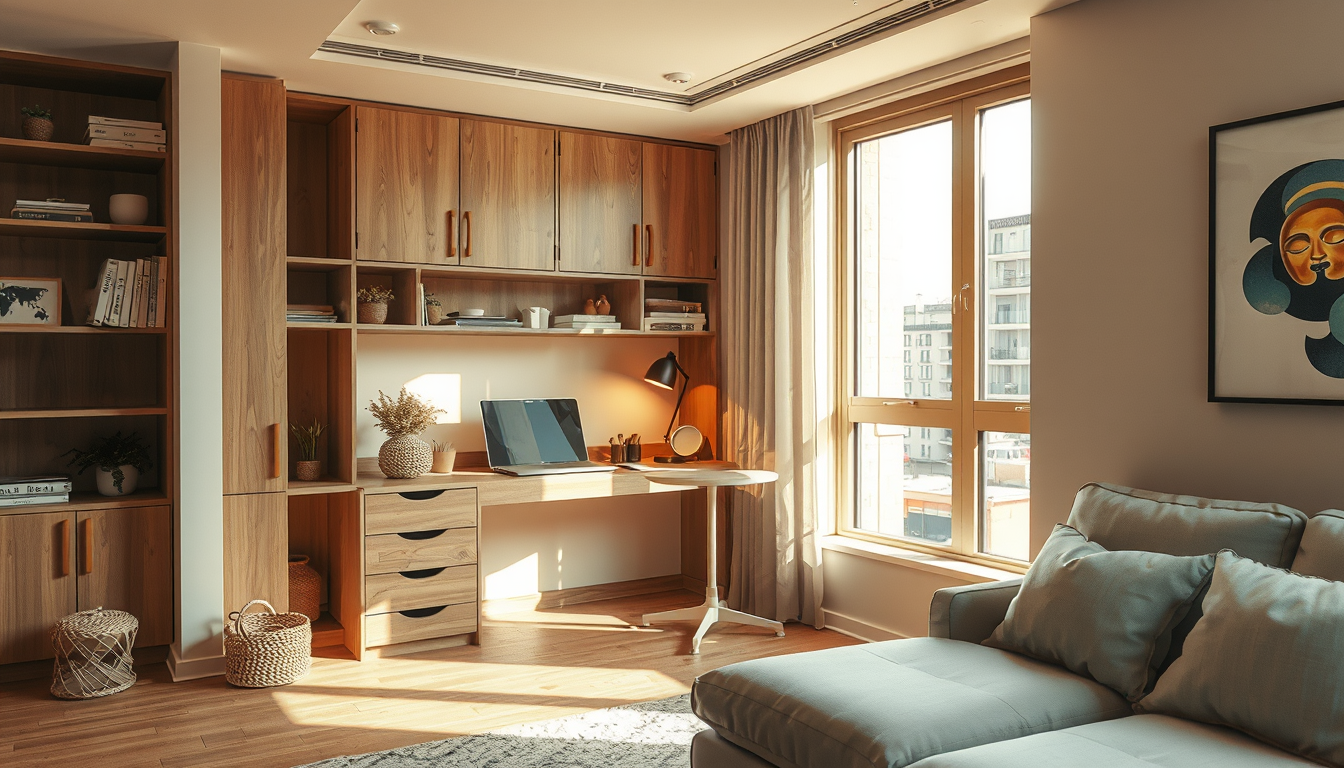
Most home office window ideas Canada designers recommend start and end with curtain fabric. That misses the point entirely. Your windows are not decoration — they are a performance system that needs to manage light, heat loss, privacy, and glare across four brutal seasons. In Toronto, you get roughly 8.9 hours of daylight on the winter solstice and blazing western sun in July. If your home office window setup cannot handle both extremes, you will either freeze at your desk, squint at your monitor, or watch your energy bills climb. Here is how to treat your windows as the hardest-working element in your workspace.
Why Home Office Window Ideas Canada Homeowners Need to Go Beyond Curtains
Remote and hybrid work now accounts for roughly 25–30% of the Canadian workforce, and that number has held steady since the pandemic reset . Your home office is not a temporary setup anymore. It is permanent infrastructure, and the windows in that room need to perform accordingly.
The challenge is uniquely Canadian. Windows account for 25–30% of residential heating energy use , which means a poorly insulated home office window is literally leaking money from October through April. Meanwhile, research from Cornell University found that workers with adequate natural daylight slept 46 minutes longer per night and reported up to 18% higher productivity compared to those in artificially lit spaces . You need the light — you just need it without the energy penalty.
In dense Toronto neighbourhoods like the Annex, Leslieville, and Corktown, add a third variable: privacy. Your desk may sit three metres from a sidewalk or a neighbour’s kitchen window. Solving all three problems — light, energy, privacy — at once is what separates a functioning home office from an uncomfortable room with a laptop in it.
Best Window Treatments for Light, Privacy, and Insulation in Canada
Shop Compact Work-From-Home Staples
Desks, task lamps, and shelving do more for a condo office than oversized furniture that eats the room.
Toronto Interior Designer may earn a commission if you shop through these links at no extra cost to you.
The single most effective treatment for a Canadian home office is a top-down/bottom-up cellular shade. At Toronto Interior Designer, this is the recommendation we return to most often, and the reasons are measurable. Cellular shades with a double- or triple-honeycomb construction reach insulating R-values up to 7.0, outperforming standard blinds by three to four times. The top-down function lets you lower the shade from the top to block sightlines from the street while keeping the lower portion open for desk-level daylight.
Here is how the most common treatments compare for home office use:
| Treatment | Light Control | Privacy | Insulation (R-Value) | Budget Range (CAD) | Best For |
|---|---|---|---|---|---|
| Top-down/bottom-up cellular shades | Excellent | Excellent | Up to 7.0 | $250–$600/window | North- or street-facing offices |
| Solar roller shades (3–5% openness) | Good | Moderate | 1.0–2.0 | $150–$400/window | West-facing glare control |
| Sheer + blackout layered system | Excellent | Excellent | 2.0–3.5 | $400–$900/window | Large or south-facing windows |
| Interior wood shutters | Good | Excellent | 2.5–3.5 | $500–$1,200/window | Victorian or heritage homes |
| Standard horizontal blinds | Fair | Fair | 0.5–1.0 | $80–$200/window | Temporary or rental setups |
If your office faces west, prioritize glare management. A solar roller shade with 3–5% openness factor cuts glare on screens without blocking your view — a critical detail for video calls where backlighting washes out your face.
How to Maximize Natural Light in Your Canadian Home Office During Winter
Once you have the right treatments in place, the next step is designing the room itself to work with what little winter light you get. Toronto averages about 2,066 sunshine hours per year, but those hours are not evenly distributed . From November through February, you are working in low, angled light that disappears by 4:30 p.m. Every design decision in your office should aim to capture and extend that scarce daylight.
A north-facing home office in Toronto needs to treat every photon like a non-renewable resource. Paint, furniture placement, and window treatment all either amplify or absorb the light you have.
Five strategies that make a measurable difference:
- Position your desk perpendicular to the window. Light enters from the side, reducing screen glare while illuminating your workspace. Never put your back to the window — it creates silhouette glare on video calls.
- Use light-coloured, matte wall paint within 1.5 metres of the window. Benjamin Moore’s OC-17 White Dove or similar warm whites reflect up to 85% of incoming light deeper into the room.
- Install a light shelf or deep interior sill. A painted MDF shelf mounted at the window midpoint bounces low winter sun onto the ceiling, extending natural light up to 2.5 metres further into the room.
- Remove heavy window frames or mullions if structurally possible. Every centimetre of frame blocks light. Modern fibreglass frames are slimmer than wood or vinyl and handle Canadian temperature swings better.
- Add a full-spectrum task light for the 3:30–6:00 p.m. gap. Even the best window strategy cannot fix December darkness. A 5000K desk light with a CRI above 90 supplements fading daylight without the harsh feel of overhead fluorescents.
If you are working from a she shed or backyard studio, the same principles apply — but you gain the advantage of controlling window placement from the start. Orient the largest glazing surface north or east for consistent, indirect light.
Energy-Efficient Window Upgrades That Pay for Themselves in Canada
Replacing single- or double-pane windows with triple-pane, Low-E, argon-filled units is one of the highest-return upgrades for a Canadian home office. The upfront cost runs $800–$1,500 per window installed, but in a climate with 4,000+ heating degree days, most homeowners recoup the investment within seven to ten years through lower heating bills alone — faster if energy prices continue rising.
Check current federal and provincial incentive programs before you start. The Canada Greener Homes Grant program previously offered up to $5,000 for qualifying window replacements, and successor programs may be available in 2026 . Ontario has also run provincial top-up incentives. Your installer should be able to confirm what is active at the time of your project.
For those not ready for full replacement, secondary glazing panels — acrylic or polycarbonate sheets mounted inside the existing frame — offer a budget-friendly alternative at $50–$150 per window. They add an insulating air gap and reduce condensation, a common problem in Toronto homes where interior humidity meets cold glass in January.
Toronto Designer Tips: Window Solutions for 5 Common Office Layouts
Treatments and upgrades only work if they match the room you are actually working in. At Toronto Interior Designer, we see the same five office layouts repeatedly in Toronto condos and houses. Here is what works in each:
- Corner condo unit with floor-to-ceiling glass: Use motorized solar rollers on a timer synced to sunrise and sunset. Manual adjustment on a 15-foot window wall is impractical.
- Basement home office with one small egress window: Maximize every lumen. Trim back exterior landscaping blocking the window well, install a reflective window-well liner, and use sheer white treatments only.
- Victorian rowhouse front room: Interior plantation shutters give privacy from the street while preserving heritage character. Pair with a renovation approach that respects original mouldings.
- Open-plan condo with desk in the living area: A ceiling-mounted curtain track can create a visual boundary for video calls without blocking light to the rest of the space. Browse more home office layout ideas for similar setups.
- Loft or converted attic with skylights: Add honeycomb skylight shades with side tracks to prevent sagging. Skylights without shading overheat in summer and lose significant heat in winter.
What to Do Next
The best home office window strategy starts with understanding what your specific room needs — not picking a treatment from a catalogue.
- Audit your current window orientation. Stand at your desk at 10 a.m. and 3 p.m. on a weekday. Note where glare hits your screen, where shadows fall, and whether you feel cold drafts near the glass.
- Check your window’s energy rating. Look for the ENERGY STAR label or the ER (Energy Rating) number. Anything below ER 34 is underperforming for Ontario’s climate zone.
- Get quotes for cellular shades first. They offer the best balance of light control, privacy, and insulation for the cost. Measure each window — off-the-shelf sizes save 30–40% over custom.
- Research current rebate programs. Federal and provincial incentives change annually. Confirm eligibility before committing to full window replacement.
- Book a design consultation. A Toronto-based designer who understands local climate, building codes, and condo board restrictions can save you expensive mistakes.
Your home office windows are not a finishing touch. They are the foundation of a workspace that keeps you comfortable, productive, and energy-efficient through every Canadian season.
Make the Setup Feel Finished
Upgrade your office corner with better lighting, smarter storage, and one or two elevated pieces that keep it from feeling temporary.
Toronto Interior Designer may earn a commission if you shop through these links at no extra cost to you.
Sources
- Statistics Canada Labour Force Survey — https://www150.statcan.gc.ca/n1/daily-quotidien/en/labour
- Natural Resources Canada — https://natural-resources.canada.ca/energy-efficiency/homes
- Boubekri et al., Cornell University — https://doi.org/10.1016/j.jclepro.2014.01.016
- Environment Canada Climate Normals — https://climate.weather.gc.ca/
- Natural Resources Canada Greener Homes — https://natural-resources.canada.ca/energy-efficiency/homes/canada-greener-homes-initiative
Frequently Asked Questions
What are the best window treatments for a Canadian home office?
Top-down/bottom-up cellular shades are the most effective choice for Canadian home offices. They provide insulating R-values up to 7.0, block street-level sightlines for privacy, and still allow natural daylight at desk height — essential for managing both energy costs and productivity through harsh winters.
How can I reduce glare on my monitor without blocking natural light?
Position your desk perpendicular to the window so light enters from the side. For west-facing offices, install a solar roller shade with 3–5% openness factor. This cuts screen glare while preserving your view and preventing the backlit silhouette effect during video calls.
Are energy-efficient window upgrades worth the cost in Canada?
Yes. Triple-pane, Low-E, argon-filled windows cost $800–$1,500 per window installed but deliver substantial savings in climates with 4,000+ heating degree days. Federal and provincial rebate programs can offset a significant portion of the upfront cost, making the payback period even shorter.