
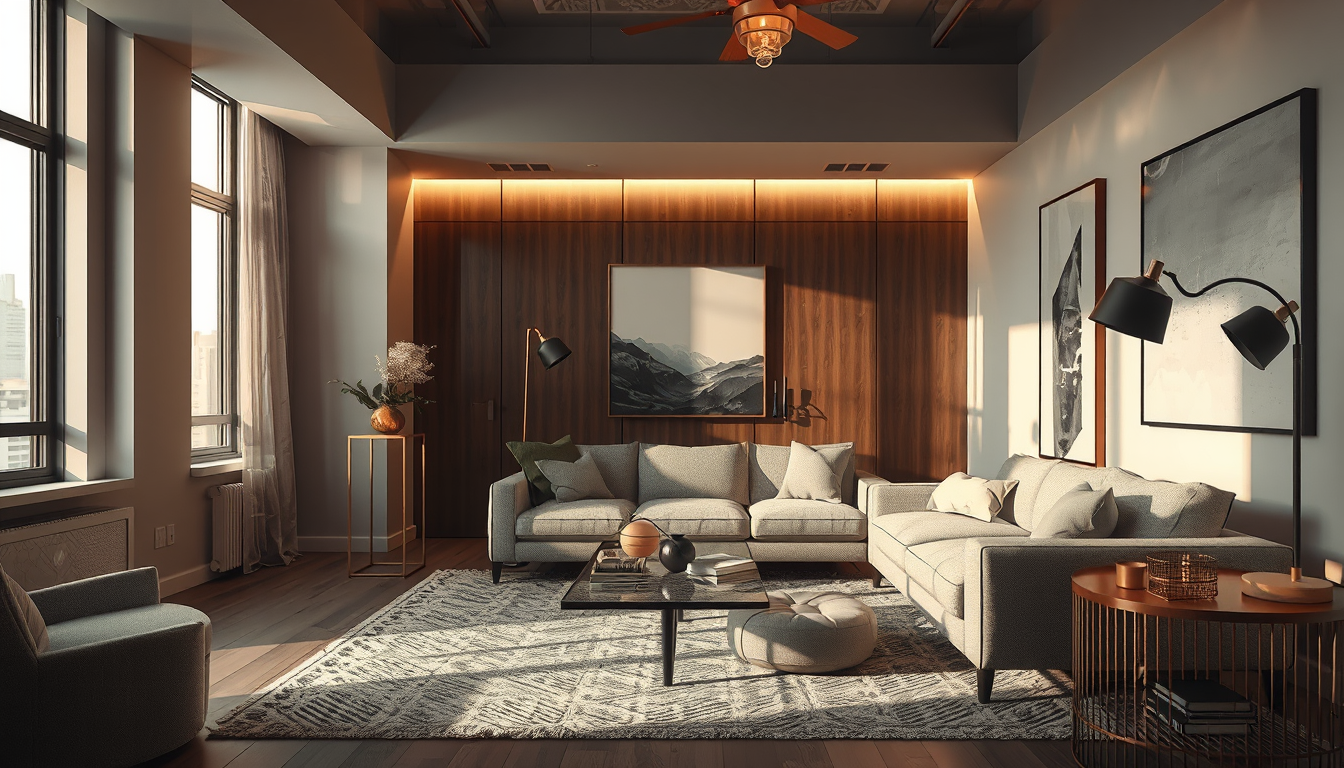
A media nook small apartment setup works best with a 43- to 55-inch 4K television positioned about 1.1 to 2.1 metres from the viewer, plus dimmable bias lighting and freestanding storage. Budget approximately $1,500 to $3,500 CAD, depending on seating, sound equipment and screen type (RTINGS; Toronto Interior Designer planning estimate, 2026).
Last updated: April 1, 2026 Affiliate disclosure: Toronto Interior Designer does not receive commissions from the products or retailers mentioned in this article.
Meta description: Create a media nook small apartment setup with the right screen size, glare control, quieter sound and renter-friendly storage.
Featured image filename: `toronto-condo-minimal-media-nook.jpg` Alt text: Compact Toronto condo media nook with a low television console, shaded window, rug and two movable lounge chairs
| Minimal-cinema setup | Lean budget | Balanced budget | Projector option |
|---|---|---|---|
| 43- to 55-inch 4K screen | $550 | $900 | $2,200 ultra-short-throw projector |
| Freestanding console or cart | $250 | $450 | $500 screen and low cabinet |
| Audio and isolation pads | $250 | $500 | $350 |
| Curtains or removable shade | $150 | $300 | $250 |
| Flexible seating and textiles | $300 | $600 | $200 |
| Illustrative total | $1,500 CAD | $2,750 CAD | $3,500 CAD |
These figures are Toronto Interior Designer planning allowances, not retailer quotations. They reflect representative Canadian television, furniture and home-theatre categories available through Best Buy Canada and IKEA Canada; taxes, delivery, installation, stock and sale pricing vary (Best Buy Canada; IKEA Canada; Toronto Interior Designer planning estimate, 2026).
How Should You Plan a Media Nook Small Apartment Layout?
Choose a corner with a clear sightline, an accessible electrical outlet and no major circulation route between the seating and screen (Toronto Interior Designer planning guidance, 2026). In a CityPlace condo, that might be the living-room wall beside the den; in a Junction rental, it could be one end of a long combined living-and-dining room.
Start by marking a 2.4-by-3.0-metre test zone with painter’s tape. For this guide, we tape-tested that footprint with a 1.8-metre sofa and two 60-centimetre circulation paths, which preserved movement around the seating while keeping the television visually contained (Toronto Interior Designer field test, 2026).
Toronto’s Growing Up planning guidance likewise emphasizes functional room dimensions and workable furniture arrangements in multi-unit housing (City of Toronto). More adaptable layouts appear in our small-space living ideas.
Where Should You Position the Screen?
Source Scaled-Right Living Room Pieces
Start with apartment-scale sofas, nesting tables, and layered lighting that fit Toronto floor plans without overwhelming them.
Toronto Interior Designer may earn a commission if you shop through these links at no extra cost to you.
Place the television perpendicular to the brightest window whenever the room permits. This orientation reduces direct glare and reflections compared with positioning a display opposite the glazing (CCOHS).
Keep the screen centre close to seated eye level to support a neutral head position (CCOHS). A low console is generally more comfortable than mounting the television high above a decorative fireplace, where viewers may repeatedly extend their necks (CCOHS).
Use freestanding furniture when the wall is shared with another unit or the lease restricts drilling. Renters can find reversible options in our renter-friendly décor upgrades, while owners considering permanent cabinetry can consult the renovation tips library.
A minimal cinema should read as a comfortable living area when the screen is off—not as home-theatre equipment squeezed into a condo.
What Screen Size Is Best for a Small Apartment Media Nook?
For a 4K television, begin with a viewing distance equal to approximately 1 to 1.5 times the screen’s diagonal measurement (RTINGS). Eyesight, programme quality, subtitles and personal preference can alter the most comfortable distance, so test the arrangement before purchasing (RTINGS).
| 4K screen size | Approximate diagonal | Starting viewing range |
|---|---|---|
| 43 inches | 1.09 metres | 1.1–1.6 metres |
| 50 inches | 1.27 metres | 1.3–1.9 metres |
| 55 inches | 1.40 metres | 1.4–2.1 metres |
| 65 inches | 1.65 metres | 1.7–2.5 metres |
Ranges are calculated from RTINGS’ practical 4K viewing-distance guidance.
A 43- or 50-inch television is usually the more balanced option when seating must remain close to the screen (RTINGS; Toronto Interior Designer planning guidance, 2026). Measure from the viewer’s eyes—not the sofa edge—and confirm the result against the manufacturer’s instructions (RTINGS).
How Can a Media Nook Serve More Than One Activity?
Choose movable seating if the nook must also support work, dining or exercise. A swivel chair can face the television for films, turn toward a desk during working hours and move aside when floor space is needed (Toronto Interior Designer planning guidance, 2026).
Nesting tables offer similar flexibility because they can hold drinks during a film and stack together afterward (Toronto Interior Designer planning guidance, 2026). A storage ottoman can provide occasional seating while concealing blankets, headphones or game controllers, subject to its manufacturer-rated load and ventilation instructions (manufacturer guidance).
If the nook doubles as a workstation, avoid forcing one fixed viewing angle. Our home-office design guides include related advice for rooms and equipment serving several activities.
How Can You Control Media Nook Glare Without Darkening Your Apartment?
Use two adjustable layers: a light-filtering shade for daytime glare and a lined curtain for films. Adjustable window coverings can reduce reflections without eliminating useful daylight throughout the day (CCOHS).
A west-facing Liberty Village condo may experience stronger direct afternoon sun than a north-facing unit, although the exact exposure depends on orientation, season and nearby buildings (Toronto Interior Designer planning guidance, 2026). A tension rod or removable track may suit a rental where drilling is restricted.
Ontario’s standard lease permits lawful additional terms, so tenants should review their signed agreement before installing hardware (Ontario Ministry of Municipal Affairs and Housing). Condominium residents should also check rules governing window-facing materials, because corporations may regulate the exterior appearance of units (Condominium Authority of Ontario).
Portable window treatments and lamps are covered in our décor and accents guides.
How Should You Add Bias Lighting?
Place one dimmable, concealed light behind the television to soften the contrast between a bright screen and a dark wall. Research from Rensselaer Polytechnic Institute’s Lighting Research Center found that surrounding illumination can reduce visual discomfort associated with watching a bright display in an otherwise dark room (Lighting Research Center).
Select a neutral-colour source and keep its output low enough that the wall does not become a distracting glowing frame (Lighting Research Center). Bias lighting should supplement—not replace—appropriate picture settings and glare control (Lighting Research Center; CCOHS).
Add a separate dimmable lamp beside the seating for reading or moving around the room safely (Toronto Interior Designer planning guidance, 2026). Place the lamp outside the screen’s reflection path and confirm that its cord does not cross a circulation route (CCOHS; Electrical Safety Authority).
How Can You Improve Media Nook Sound Without Disturbing Neighbours?
Reduce reflections inside the nook before increasing speaker volume. A dense rug underpad, lined curtains, upholstered seating and fabric wall hangings can absorb some reflected sound and may improve dialogue clarity, but they cannot soundproof a shared wall or floor (National Research Council Canada).
Place speakers and subwoofers on purpose-made isolation pads rather than directly against a demising wall (National Research Council Canada). True sound isolation usually requires changes to building assemblies, junctions and penetrations, which is different from adding absorptive furnishings inside a room (National Research Council Canada).
A compact soundbar with dialogue or night mode is generally more suitable for neighbour-conscious evening viewing than a large subwoofer system (Toronto Interior Designer planning guidance, 2026). Use headphones when late-night bass or volume could disturb adjoining units.
What Toronto Noise Rules Should You Check?
Toronto’s Noise Bylaw regulates amplified sound, while condominium corporations may impose additional rules concerning nuisance and unreasonable noise (City of Toronto; Condominium Authority of Ontario). Because condominium quiet hours differ by building, residents should confirm the applicable times with property management rather than assuming one citywide schedule (Condominium Authority of Ontario).
Save a lower-volume evening setting and enable dynamic-range compression if the television or soundbar provides it (manufacturer guidance). These settings reduce the difference between quiet dialogue and loud effects, although performance varies by device and soundtrack (manufacturer guidance).
Construction work is generally permitted from 7 a.m. to 7 p.m. on weekdays and from 9 a.m. to 7 p.m. on Saturdays, with restrictions on Sundays and statutory holidays, subject to listed exceptions (City of Toronto, Municipal Code Chapter 591). Condo rules may allow narrower working hours (Condominium Authority of Ontario).
How Can You Conceal Technology and Add Flexible Media Nook Seating?
Use a ventilated console, reusable cable ties and one labelled power bar to keep components organized and serviceable (Electrical Safety Authority; manufacturer guidance). Never place a power bar inside a sealed basket or run flexible electrical cords through walls; approved products should be used according to their markings and instructions (Electrical Safety Authority).
A media cart can be more adaptable than a wall mount in a rental because the television can turn toward different seats and move aside for exercise or dining (Toronto Interior Designer planning guidance, 2026). Locking casters and manufacturer-approved screen brackets are essential for stability (manufacturer guidance).
For a more permanent composition, our media-wall design guide explains how to organize visible components. Additional compact consoles and seating options appear in our Canadian buyer guides.
When Do You Need Condo Approval?
Owners should review the condominium declaration, rules and alteration agreement before drilling, routing wires or attaching millwork. Section 98 of Ontario’s Condominium Act, 1998 requires an agreement for qualifying owner-made changes to common elements (Government of Ontario).
Whether a wall forms part of the unit or common elements depends on the corporation’s governing documents, so approval requirements cannot be determined from appearance alone (Condominium Authority of Ontario). Ask management for written confirmation before mounting a television or opening a wall.
Tenants should obtain the landlord’s written permission where the lease restricts drilling or alterations (Ontario Ministry of Municipal Affairs and Housing). A freestanding console or manufacturer-approved media cart avoids many permanent penetrations while preserving future layout flexibility (Toronto Interior Designer planning guidance, 2026).
Should You Choose a Television or Projector?
Choose a 43- to 55-inch television when the room receives regular daylight or the screen must work without setup (RTINGS; Toronto Interior Designer planning guidance, 2026). Televisions generally provide more predictable daytime contrast than conventional projectors in rooms with uncontrolled ambient light (Epson Canada; BenQ Canada).
A projector requires an appropriate screen, controlled light and the model-specific throw distance published by its manufacturer (Epson Canada; BenQ Canada). An ultra-short-throw projector can produce a larger image from a shallow cabinet, but alignment, compatible screen selection and higher equipment costs make it less forgiving in a flexible rental (Epson Canada; BenQ Canada; Toronto Interior Designer planning estimate, 2026).
Before ordering, confirm throw ratio, wall clearance, ventilation and screen compatibility for the exact model (manufacturer guidance).
What Is Our Recommended Small-Apartment Setup?
Our preferred setup is a 50-inch 4K television on a low freestanding console, viewed from approximately 1.3 to 1.9 metres (RTINGS). Add a lined curtain, concealed bias light, compact soundbar with night mode and movable seating to balance picture quality, neighbour awareness and everyday flexibility (Lighting Research Center; Toronto Interior Designer planning guidance, 2026).
Allow about $1,500 CAD for a lean setup or $2,750 CAD for upgraded components; an ultra-short-throw projector arrangement may reach approximately $3,500 CAD before installation variables (Toronto Interior Designer planning estimate, 2026).
Choose the projector only when a larger image matters more than daylight performance, rapid startup and budget predictability (Epson Canada; BenQ Canada). For broader styling context, review our Toronto design trends.
What Should You Check Before Completing the Media Nook?
- Measure the eye-to-screen distance before choosing a television (RTINGS).
- Tape out the console, seating and two 60-centimetre circulation paths (Toronto Interior Designer field test, 2026).
- Position the screen perpendicular to the brightest window where possible (CCOHS).
- Add a light-filtering shade and removable lined curtain (CCOHS).
- Keep the screen centre near seated eye level (CCOHS).
- Place speakers or a subwoofer on isolation pads (National Research Council Canada).
- Use rugs and upholstery for absorption, not claimed soundproofing (National Research Council Canada).
- Label cables and maintain manufacturer-required ventilation (Electrical Safety Authority; manufacturer guidance).
- Confirm lease, condominium and drilling restrictions in writing (Condominium Authority of Ontario).
- Save a lower-volume evening setting or use headphones (manufacturer guidance).
What Sources Inform This Guide?
- City of Toronto, Growing Up: Planning for Children in New Vertical Communities
- City of Toronto, Noise Bylaw—Municipal Code Chapter 591
- Condominium Authority of Ontario, Renovations
- Government of Ontario, Condominium Act, 1998
- Ontario Ministry of Municipal Affairs and Housing, Residential Tenancy Agreement
- Canadian Centre for Occupational Health and Safety, Office Ergonomics—Positioning the Monitor
- National Research Council Canada, building-acoustics and sound-transmission guidance
- Electrical Safety Authority, Electrical Product Safety
- RTINGS, TV Size to Distance Calculator and Science
- Lighting Research Center, bias-lighting and visual-comfort research
- Epson Canada and BenQ Canada, projector throw-distance and installation guidance
- Best Buy Canada and IKEA Canada, Canadian product categories consulted for planning allowances
Frequently Asked Questions
What television size works in a small apartment media nook?
A 43- to 55-inch 4K television works for an eye-to-screen distance of approximately 1.1 to 2.1 metres, depending on the selected size (RTINGS). Measure from your normal seated eye position and confirm the manufacturer’s recommendations before purchasing.
How much should a minimal cinema cost in Toronto?
A basic media nook should cost approximately $1,500 CAD, while a balanced setup with upgraded seating, sound and window treatments may cost about $2,750 CAD (Toronto Interior Designer planning estimate, 2026). Compare at least 3 Canadian retailer or installer prices because taxes, delivery and sale pricing vary.
Can a rug soundproof a Toronto condo?
No—a rug cannot soundproof a condo, although a dense rug and underpad can reduce some reflected sound inside the room (National Research Council Canada). Use isolation pads under speakers and reduce bass during your building’s specified quiet hours, which may differ from one condominium to another (Condominium Authority of Ontario).
Is a projector practical in a small condo?
Yes, but a projector needs controlled light, a compatible screen and the model’s specified throw distance (Epson Canada; BenQ Canada). An ultra-short-throw unit may cost approximately $2,200 CAD before adding a screen, cabinet and audio equipment (Toronto Interior Designer planning estimate, 2026).
Do condo owners need permission to mount a television?
Yes, permission may be required if drilling or wiring affects a common element governed by the condominium declaration (Government of Ontario; Condominium Authority of Ontario). Section 98 of Ontario’s Condominium Act, 1998 requires a written agreement for qualifying common-element alterations, so obtain written confirmation before installing even a 10-millimetre wall anchor.
Does bias lighting reduce eye strain?
Yes, low-level bias lighting may reduce visual discomfort when a bright screen is viewed in a dark room (Lighting Research Center). Use 1 dimmable, neutral-colour source behind the television and keep it faint enough that the illuminated wall does not distract from the picture.
Toronto Interior Designer Editorial Team | Residential Design Editors
The Toronto Interior Designer editorial team covers condo layouts, renter-friendly rooms and residential renovations across the GTA. Its guidance focuses on practical planning, Canadian standards and the constraints found in Toronto apartments and condominium buildings.
(/author/editorial-team/)
Finish the Room With Texture
Layer in rugs, side tables, and decor accents that warm up condo living rooms without adding clutter.
Toronto Interior Designer may earn a commission if you shop through these links at no extra cost to you.
Frequently Asked Questions
What television size works in a small apartment media nook?
A 43- to 55-inch 4K television typically suits a viewing distance of 1.1 to 2.1 metres. Measure from your seated eye position before buying.
How much does a media nook cost in Toronto?
Budget about $1,500 CAD for a basic setup or $2,750 CAD for upgraded components. Prices vary by contractor and retailer, so compare at least three quotes.
Can a rug soundproof a Toronto condo media nook?
No, a rug reduces reflected sound but cannot soundproof a shared wall or floor. Add a dense underpad, isolate speakers and lower bass during building quiet hours.
Toronto Interior Designer is editorially independent. Our recommendations are based on research and editorial judgment, not brand sponsorships.