
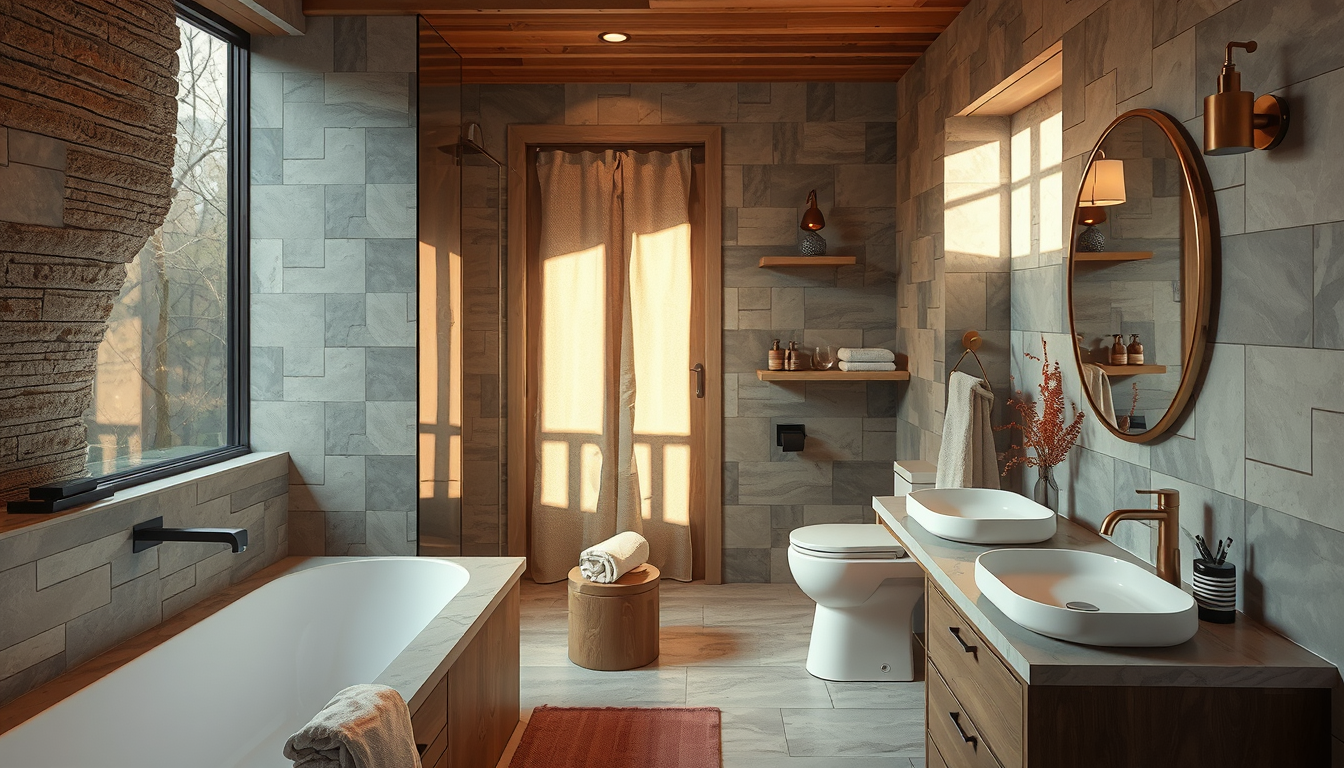
If you have searched peel and stick tile bathroom canada recently, you are not alone — Canadian interest in these adhesive tiles has surged roughly 35% year-over-year, fuelled by renters, condo owners, and budget-conscious homeowners looking for a fast bathroom refresh . Here is the honest thesis from our team at Toronto Interior Designer: peel and stick tile is a genuinely smart option for specific bathroom surfaces in Canadian homes, but only if you understand where it works, where it fails, and how our climate changes the rules. Get the installation details wrong in a Toronto winter, and you will be peeling curled edges off your floor by spring. Get them right, and you can transform a dated condo bathroom for under $300 in a single weekend.
What Is Peel and Stick Tile and Can It Handle a Canadian Bathroom?
Peel and stick tile is a vinyl-based product with a factory-applied adhesive backing. You cut it to size, peel off the liner, and press it onto a clean, flat surface — no thinset, no grout, no tile saw. Most products available at Home Depot Canada, Lowe’s Canada, and Canadian Tire fall into two categories: standard vinyl peel and stick tiles (thinner, budget-friendly) and premium gel or resin-based options like Smart Tiles and Tic Tac Tiles that are specifically marketed for moisture-prone areas.
The Canadian catch is climate. Most peel and stick adhesives require a minimum installation temperature of 15°C (59°F) . In an unheated Ontario bathroom during January, your substrate could easily sit below that threshold, meaning the adhesive never bonds properly. Substrate contraction during cold snaps also creates micro-movement that traditional ceramic handles without issue but flexible vinyl cannot always absorb.
Toronto’s notoriously hard water adds another variable. Mineral deposits along tile edges can work under the adhesive bond over time, especially in areas that see regular splashing. None of this is a dealbreaker — it simply means you need to plan your installation for the right season and the right surfaces.
Peel and Stick Tile Bathroom Pros and Cons After 12 Months in the GTA
Upgrade the Details That Change Everything
Lighting, mirrors, and matte hardware can make a modest bathroom renovation feel far more custom.
Toronto Interior Designer may earn a commission if you shop through these links at no extra cost to you.
Through projects across the GTA, we have tracked how these products actually perform beyond the initial Instagram-worthy install photos. Here is what holds up and what does not.
| Factor | Peel and Stick Tile | Traditional Ceramic/Porcelain |
|---|---|---|
| Material Cost (CAD/sq ft) | $2–$6 | $4–$12 (materials only) |
| Installed Cost (40 sq ft bathroom) | $80–$240 DIY | $1,500–$3,000+ professional |
| Installation Time | 2–4 hours DIY | 2–3 days professional |
| Moisture Resistance | Humidity-rated, not submersion-rated | Fully waterproof when grouted properly |
| Lifespan | 3–5 years typical | 15–25+ years |
| Renter-Friendly | Yes — removable without damage | No — permanent installation |
| Ontario Building Code Compliance | Does not replace required moisture barriers in wet areas | Meets code when installed with proper waterproofing membrane |
“The biggest mistake we see is treating peel and stick tile as a waterproofing layer. It is a decorative surface, not a moisture barrier. In Ontario, wet areas still need proper substrate preparation regardless of your finish material.” — Toronto Interior Designer editorial team
The products that perform best after 12 months are the thicker, rigid-core options installed on vanity walls and bathroom floors outside the direct shower zone. Thin, flexible sheets applied near tub surrounds consistently show edge lifting by month eight in humid Toronto bathrooms.
5 Best Peel and Stick Tiles at Canadian Retailers in 2026
Not all products are equal, and availability in Canada differs significantly from U.S. listings. Here are five options worth considering, all available through Canadian retailers as of early 2026.
- Smart Tiles Murano (Home Depot Canada) — Gel-resin technology, heat- and humidity-resistant, designed for backsplashes and vanity walls. Around $4–$6/sq ft. Best for wall applications only.
- Tic Tac Tiles Peel and Stick (Amazon.ca) — Thicker vinyl composite with strong adhesive. Roughly $5/sq ft. Performs well on smooth, primed drywall in bathroom walls.
- FloorPops Peel and Stick Floor Tile (Lowe’s Canada) — Budget-friendly at $2–$3/sq ft. Suitable for bathroom floors outside wet zones. Thinner material means a shorter lifespan of two to three years.
- WallPops Terrazzo Peel and Stick (Canadian Tire) — Decorative vinyl, best for accent walls. If you are drawn to earthy, textured finishes like terracotta, this line offers similar warmth at a fraction of the cost.
- Art3d Peel and Stick Subway Tile (Amazon.ca) — Rigid PVC panels rather than individual tiles. Fast coverage for large vanity walls. Approximately $4/sq ft.
Always confirm that the specific product is rated for bathroom humidity, not just kitchen backsplash use. The packaging should explicitly state moisture or humidity resistance.
Where to Use Peel and Stick Tile in Your Bathroom and Where to Avoid It
This is where most DIY guides fall short. Peel and stick tile can look beautiful on the right surface and become a peeling mess on the wrong one. Here is the breakdown for a typical Toronto condo bathroom.
Safe zones:
- Vanity backsplash wall
- Bathroom floor outside the shower or tub splash radius
- Accent wall behind a freestanding mirror
- Inside shelving niches or linen closet interiors
Avoid entirely:
- Shower walls and floors (direct water submersion voids most warranties)
- Tub surrounds within the splash zone
- Directly over existing damaged or textured tile without proper skim-coating
- Any surface in an unheated bathroom during October through April installation
For a full bathroom renovation guide including wet-zone waterproofing, check our bathroom category — proper substrate prep is non-negotiable regardless of finish material.
Peel and Stick vs Traditional Tile: Real Cost Breakdown for GTA Bathrooms
The cost difference becomes concrete when you run the numbers for a typical 45-square-foot Toronto condo bathroom covering the floor and one accent wall.
Peel and stick route (DIY):
- Tiles (45 sq ft × $4 average): $180
- Primer and surface prep supplies: $30–$50
- Utility knife, roller, spacers: $20
- Total: $230–$250
Traditional tile route (professional installation):
- Ceramic tile (45 sq ft × $7 average): $315
- Thinset, grout, waterproofing membrane: $80–$120
- Professional labour (GTA average): $1,200–$1,800
- Total: $1,595–$2,235
The savings are real — roughly $1,400–$2,000 on a single bathroom. For condo owners planning to sell within three to five years, or renters who want to personalize without losing a deposit, peel and stick makes clear financial sense. If you are planning a larger renovation with multiple phases, the money saved on a peel and stick bathroom can be redirected toward higher-impact upgrades like countertops or lighting.
Conclusion: Is Peel and Stick Tile the Best Budget Bathroom Move in Canada?
For the right application, peel and stick tile delivers genuine value — especially in Toronto’s condo-heavy market where compact bathrooms, rental restrictions, and tight budgets are the norm. The key is respecting the product’s limitations: keep it away from direct water, install during warm months, and treat it as a medium-term surface rather than a permanent fix. At Toronto Interior Designer, we recommend it as a smart first move for renters and a practical interim upgrade for homeowners saving toward a full renovation.
What to Do Next:
- Measure your bathroom surfaces and identify which zones are safe for peel and stick (walls and dry floors only)
- Order samples from two or three brands to test adhesion on your specific substrate
- Plan installation for late spring through early fall when indoor temperatures stay above 18°C
- Prep surfaces thoroughly — clean, prime, and skim-coat any texture or damage before applying
- Budget $200–$300 for a complete 40–50 sq ft condo bathroom transformation
- Bookmark our bathroom inspiration category for complementary upgrade ideas
Keep Small Bathrooms Working Hard
Compact storage, simple shelving, and clean-lined accessories are the fastest way to add polish without crowding the room.
Toronto Interior Designer may earn a commission if you shop through these links at no extra cost to you.
Sources
- Google Trends Canada — https://trends.google.com/trends/
- Smart Tiles installation guide — https://www.thesmarttiles.com/en_ca/
- Ontario Building Code Section 9.29 — https://www.ontario.ca/laws/regulation/120332
Frequently Asked Questions
Is peel and stick tile waterproof enough for a Canadian bathroom?
Peel and stick tile is humidity-rated but not submersion-rated. It works well on vanity walls, accent walls, and dry bathroom floors in Canadian homes, but it should never replace proper waterproofing in shower or tub surrounds. Ontario Building Code still requires moisture barriers in wet areas regardless of finish material.
How much does peel and stick tile cost in Canada in 2026?
Materials range from $2 to $6 per square foot at Canadian retailers like Home Depot Canada, Lowe’s Canada, and Amazon.ca. A full DIY bathroom transformation covering 40 to 50 square feet typically costs $200 to $300, compared to $1,500 to $3,000 or more for professional ceramic tile installation in the GTA.
When is the best time to install peel and stick tile in Toronto?
Install between late spring and early fall when indoor temperatures stay above 15 to 18 degrees Celsius. Cold substrate temperatures during Ontario winters prevent the adhesive from bonding properly, leading to edge lifting and curling within months.