
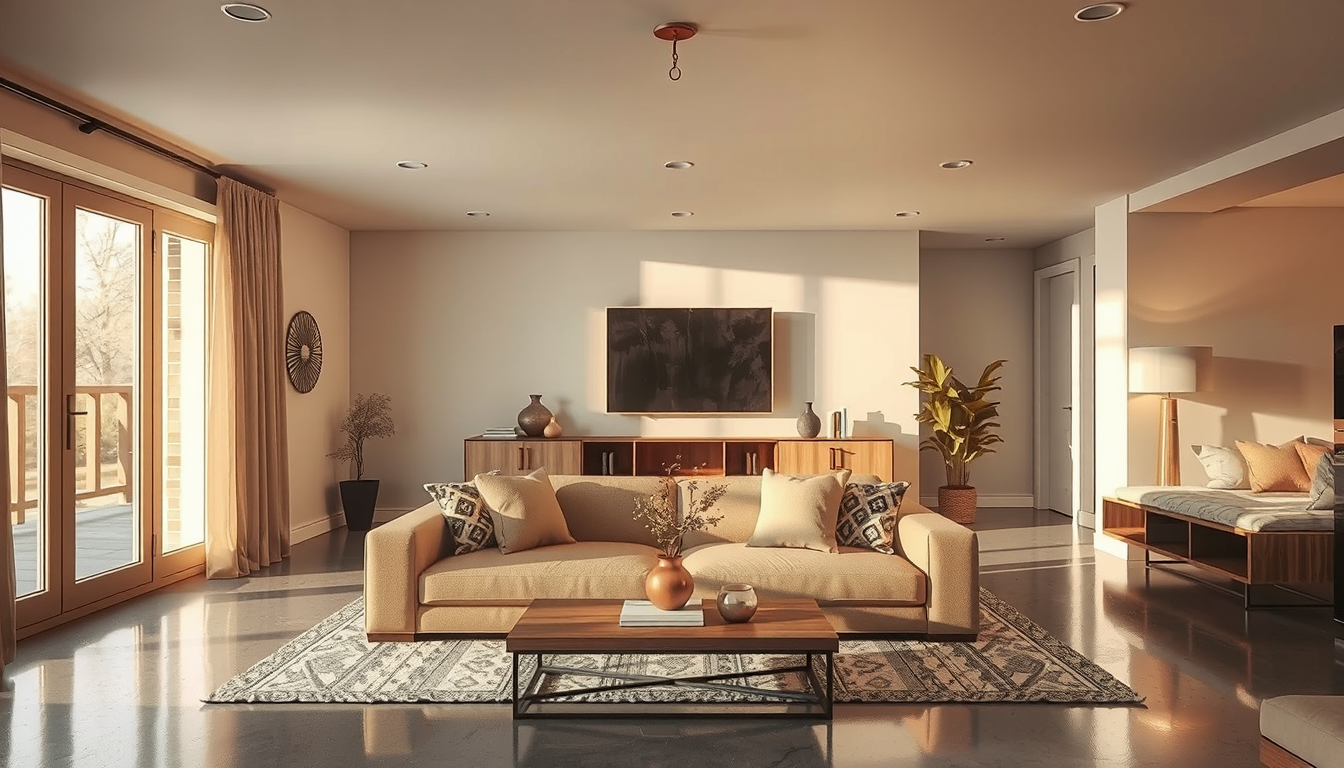
A polished concrete floor is a strong choice for a dry, structurally sound Toronto slab, especially when durability and visual continuity matter. Budget approximately $7–$18 per square foot to polish an existing slab or $15–$25 per square foot for a cementitious overlay in 2026 (HomeStars Canada 2026; Toronto Interior Designer planning estimates).
Last updated: April 1, 2026
Meta description: Compare polished concrete floor costs, radiant heating, moisture risks and condo restrictions before renovating your Toronto home.
Why Is a Polished Concrete Floor a Good Choice in Toronto?
Polished concrete suits Toronto lofts, dry basements and open-plan homes because it provides a durable, continuous surface without grout lines. Contractors create the finish by grinding, honing and polishing concrete with progressively finer diamond abrasives; it is not simply a glossy coating (Concrete Polishing Association of America).
A topical sealer can scratch or peel, whereas mechanically polished concrete derives its finish primarily from the slab itself. Densifiers and penetrating guards may still be applied to improve hardness and stain resistance (Concrete Polishing Association of America).
Polishing reveals the slab you have—not the flawless, uniform slab shown in a showroom sample.
Explore related material decisions in our Toronto renovation tips.
Where does it make sense locally?
In a Junction semi, polished concrete can create a seamless basement floor that visually expands a narrow plan. In a CityPlace condo, however, the structural slab and floor assembly may be common elements or subject to the corporation’s governing documents, so written approval may be required before grinding begins (Condominium Authority of Ontario).
Toronto condo corporations may also regulate construction hours, elevator reservations, loading access and acoustic performance (Condominium Authority of Ontario). Grinding noise cannot be controlled with area rugs; our guide to sound absorption versus soundproofing explains the distinction.
How Much Does a Polished Concrete Floor Cost in Toronto?
Price Out the High-Impact Pieces First
Before committing to a renovation mood board, benchmark the furniture, lighting, and storage pieces that set the tone.
Toronto Interior Designer may earn a commission if you shop through these links at no extra cost to you.
Allow approximately $7–$18 per square foot to polish a usable existing slab and $15–$25 per square foot for an overlay in 2026 (HomeStars Canada 2026; Toronto Interior Designer planning estimates). These figures are budgeting allowances rather than fixed contractor rates.
Small rooms often cost more per square foot because mobilization, edge grinding and dust-control equipment are required regardless of floor area (HomeStars Canada 2026). Repairs, stairs, moisture mitigation and restricted condo access can also increase the quotation (HomeStars Canada 2026).
What are realistic 2026 planning allowances?
| Renovation scope | Toronto planning allowance (CAD) | Typical site time |
|---|---|---|
| Basic cream polish | $7–$10/sq. ft. | 3–4 days |
| Salt-and-pepper finish | $9–$13/sq. ft. | 4–5 days |
| Full aggregate polish | $12–$18/sq. ft. | 5–7 days |
| Crack and patch repairs | Add $2–$6/sq. ft. | 1–3 days |
| Moisture mitigation | Add $4–$8/sq. ft. | 2–4 days |
| Cementitious overlay | $15–$25/sq. ft. | 7–10 days |
| Electric radiant heating | Add $12–$20/sq. ft. | 2–4 days |
Allowances and timelines are based on HomeStars Canada cost guidance and Toronto Interior Designer’s review of GTA contractor scopes; prices exclude HST, furniture removal and structural work (HomeStars Canada 2026; Toronto Interior Designer).
What should an itemized quotation include?
The quotation should identify the aggregate exposure, sheen, grinding sequence, edge work, dust control, crack treatment, densifier and protective guard (Concrete Polishing Association of America). It should distinguish structural repairs from cosmetic filling because neither method guarantees an invisible result (Concrete Polishing Association of America).
Ask whether moisture testing, baseboard removal, waste disposal and final protection are included. Condo owners should also price elevator bookings, parking, loading access and security deposits required by the corporation (Condominium Authority of Ontario).
Compare at least three written bids and examine recent references (HomeStars Canada 2026). BILD RenoMark membership signals agreement with a renovation-specific code of conduct, but it does not replace proof of insurance, references or a detailed contract (BILD RenoMark).
Should You Polish the Existing Concrete Slab or Install an Overlay?
Polish the existing slab when test grinding confirms that it is dry, stable and visually acceptable. Choose an overlay when adhesive shadows, incompatible concrete pours, extensive patching or undesirable aggregate would make the original floor inconsistent (Concrete Polishing Association of America).
An overlay can produce more controlled colour and aggregate distribution, but it adds floor height and may affect doors, appliances, transitions and accessible clearances (Ontario Building Code).
What can a test grind reveal?
A test grind can expose aggregate colour, surface hardness, previous repairs, stains and outlines left by former partitions (Concrete Polishing Association of America). Concrete varies naturally, so a small showroom sample cannot predict the exact appearance of an existing Toronto slab (Concrete Polishing Association of America).
In our editorial review, we compared GTA contractor scope language across cream, salt-and-pepper and exposed-aggregate finishes. We found the most useful proposals documented the intended exposure, sheen, pinhole treatment and crack-filling method rather than relying on a generic high-gloss photograph (Toronto Interior Designer).
Why must old adhesive be tested?
Older resilient flooring and black mastics may contain asbestos, so suspect materials must be assessed before sanding, drilling or grinding disturbs them (Ontario Regulation 278/05). Do not grind unidentified black adhesive.
Ontario Regulation 278/05 establishes procedures for asbestos on construction projects, including requirements related to identification, handling and worker protection (Ontario Regulation 278/05). Testing is especially important in older homes in neighbourhoods such as Parkdale, Riverdale and the Annex, where multiple flooring generations may conceal the original slab.
When is an overlay appropriate?
An overlay is useful when the substrate is stable but too damaged or visually inconsistent to deliver the desired finish (Concrete Polishing Association of America). Product-specific thickness varies, so the installer must check transitions, doors and cabinetry against the manufacturer’s requirements and the Ontario Building Code (Ontario Building Code).
An overlay does not stop active water intrusion. Exterior drainage, foundation leakage and excessive basement moisture should be corrected before interior finishes are installed (CMHC). Investigate grading, downspouts, foundation cracks and sump performance before approving a decorative floor (CMHC).
Is a Polished Concrete Floor Too Cold for Toronto Winters?
Concrete can feel cold because it conducts heat away from bare feet more readily than carpet or wood. Its surface temperature is determined by insulation, air leakage, slab location, indoor temperature and the heating system—not by the finish alone (Natural Resources Canada).
Toronto’s 1991–2020 climate normal records a January daily mean below 0°C, making basement insulation and perimeter air sealing important comfort considerations (Environment and Climate Change Canada). Start with a home heat-loss audit before assuming the floor finish is the primary problem.
Does radiant heating solve the comfort problem?
Radiant heating can improve barefoot comfort because concrete stores and distributes heat across a broad surface (Natural Resources Canada). Performance depends on insulation, controls, floor construction and the room’s calculated heat loss; no universal energy-saving percentage applies (Natural Resources Canada).
Hydronic tubing is generally easiest to incorporate into a new slab or major renovation. Electric cable and mat systems can suit smaller areas, but equipment must be approved for the proposed assembly and carry an accepted Canadian certification mark (Electrical Safety Authority).
Most fixed electric floor-heating installations require an ESA notification and inspection (Electrical Safety Authority). Our Toronto winter heating guide explains why equipment capacity should follow a heat-loss calculation rather than an arbitrary floor-area rule.
What helps when radiant heat is impractical?
During substantial basement work, insulated sub-slab construction can reduce heat loss and improve surface comfort (Natural Resources Canada). Less invasive measures include perimeter air sealing and washable rugs in seating or standing zones (Natural Resources Canada).
In condos, heated overlays may be limited by panel capacity, floor height, door clearances, structural loading and corporation rules (Electrical Safety Authority; Ontario Building Code; Condominium Authority of Ontario). Impact-noise control may also require a tested assembly approved by the condo corporation (Condominium Authority of Ontario).
For attached-home assemblies, consult our guide to soundproof party-wall construction.
How Durable, Safe, and Easy to Maintain Is a Polished Concrete Floor?
A properly installed polished floor can remain serviceable for decades, although no single lifespan applies to every installation (Concrete Polishing Association of America). Performance depends on slab quality, grinding sequence, traffic, contaminants and maintenance (Concrete Polishing Association of America).
Concrete is hard and reflective, so rugs, upholstery and acoustic ceiling treatments can reduce room reverberation (National Research Council Canada). These treatments improve absorption inside a room but do not replace a tested impact-noise assembly between condo units (Condominium Authority of Ontario).
How should Toronto road salt be managed?
Remove tracked-in slush and de-icing salt promptly with absorbent mats and routine damp cleaning. Toronto uses road salt in winter operations, while Canada’s road-salt code recognizes chloride-related environmental and material effects (City of Toronto; Environment and Climate Change Canada).
Use an exterior scraper mat followed by an interior absorbent mat. A compatible penetrating guard can improve stain resistance, but it does not make concrete stain-proof (Concrete Polishing Association of America).
Clean with the pH-neutral product recommended by the installer because acidic descalers and harsh alkaline cleaners can alter the finish or its protective treatment (Concrete Polishing Association of America). Owners of older houses can also consult our heritage front-door restoration guide for entrance weather control.
Is polished concrete slippery?
Polished concrete can become slippery when water, grease or winter slush contaminates the surface. Traction depends on the finish, maintenance, contaminants and any traction treatment; gloss alone is not a reliable measure of slip resistance (CSA B651).
Request documented wet and dry test results for the proposed system, particularly at entrances, kitchens and shared routes (CSA B651). A satin or lower-sheen finish may be more practical in a Toronto mudroom, while mats should have secure backing and edges that do not create a trip hazard (CSA B651).
For showers and consistently wet bathroom floors, textured small-format tile generally offers more predictable traction than highly polished concrete because its surface texture and additional grout joints increase underfoot grip (Tile Council of North America).
Where Does a Polished Concrete Floor Work Best in Toronto Homes?
Polished concrete works best in dry basements, lofts, studios, kitchens and open living areas where durability and visible variation are welcome (Concrete Polishing Association of America). It is less suitable when a slab has unresolved moisture, occupants need a softer surface, or condo rules prohibit grinding or structural-slab alterations (CMHC; Condominium Authority of Ontario).
Warm oak, wool, linen and upholstered furniture can visually soften concrete’s industrial character. Browse our living-space design coverage and decor and accent guides for complementary materials.
When should you choose another flooring material?
Choose tile when predictable wet traction is the priority, resilient flooring when softness and easier replacement matter, or engineered wood when warmth and a more consistent appearance are preferred. Each alternative still requires a substrate and installation method appropriate to the room’s moisture conditions (CMHC; National Wood Flooring Association).
Bedrooms may feel more comfortable with cork, carpet or engineered wood, while kitchens need a finish that tolerates frequent cleaning and prompt spill removal. Coordinate finished floor height with cabinetry and appliances using our kitchen and dining design coverage.
What is our recommendation?
Choose polished concrete for a dry, sound slab when you want long service life, minimal visual interruption and compatibility with radiant heat. Select an overlay for a stable but unattractive substrate, provided moisture testing and manufacturer requirements support the assembly (Concrete Polishing Association of America; CMHC).
Before work begins:
- Obtain written condo approval for grinding, drilling or floor-height changes (Condominium Authority of Ontario).
- Confirm permit requirements with the City of Toronto when structural, plumbing or heating work is involved (City of Toronto).
- Test basement slabs for moisture and correct active water entry (CMHC).
- Request a test grind and approve the exposure, sheen and patching method (Concrete Polishing Association of America).
- Confirm ESA requirements for electric radiant heating (Electrical Safety Authority).
- Reserve 10%–15% of the flooring budget as a planning contingency for concealed repairs (Toronto Interior Designer).
- Document cleaning products, warranty terms and maintenance intervals before final payment.
Sources
- BILD RenoMark, Renovator Code of Conduct and Member Directory
- Canada Mortgage and Housing Corporation, Basement Moisture and Renovation Guidance
- City of Toronto, Building Permit Requirements and Winter Maintenance
- Concrete Polishing Association of America, Polished Concrete Specifications and Technical Guidance
- Condominium Authority of Ontario, Renovations, Governing Documents and Owner Responsibilities
- Electrical Safety Authority, Notifications, Inspections and Recognized Certification Marks
- Environment and Climate Change Canada, Canadian Climate Normals 1991–2020 and Code of Practice for Road Salt Management
- HomeStars Canada, Flooring Cost Guides and Contractor-Hiring Guidance
- Natural Resources Canada, Keeping the Heat In and radiant-heating guidance
- Ontario Building Code, Ontario Regulation 332/12
- Ontario Regulation 278/05, Designated Substance—Asbestos on Construction Projects
- CSA Group, CSA B651: Accessible Design for the Built Environment
Frequently Asked Questions
How much does polished concrete cost in Toronto?
Yes, a realistic 2026 allowance is $7–$18 per square foot for polishing an existing slab and $15–$25 per square foot for an overlay (HomeStars Canada 2026; Toronto Interior Designer). Obtain at least 3 itemized quotations because access, repairs and exposure level can change the final price (HomeStars Canada 2026).
Can an existing Toronto basement slab be polished?
Yes, an existing slab can be polished when moisture testing and a test grind confirm that it is dry, stable and visually acceptable (CMHC; Concrete Polishing Association of America). Allow approximately $2–$6 per square foot for patching when cracks or damaged areas require cosmetic repair (Toronto Interior Designer planning estimates).
Does polished concrete require radiant heating?
No, radiant heating is optional, but it can improve barefoot comfort during Toronto winters (Natural Resources Canada). Electric systems may add approximately $12–$20 per square foot and generally require approved equipment, sufficient panel capacity and an ESA notification (Electrical Safety Authority; Toronto Interior Designer planning estimates).
Can polished concrete be installed in a Toronto condo?
Yes, but obtain written condo approval before grinding or changing the floor assembly (Condominium Authority of Ontario). An overlay may add approximately 6–15 mm, depending on the product, and the corporation may impose construction hours, elevator procedures and acoustic requirements (manufacturer specifications; Condominium Authority of Ontario).
Is polished concrete slippery when wet?
Yes, polished concrete can become slippery when contaminated by water, grease or winter slush (CSA B651). Request documented wet testing and use 2 entrance-mat zones—one scraper mat and one absorbent mat—where Toronto road salt is likely to be tracked indoors (CSA B651; City of Toronto).
How long does polished concrete installation take?
A straightforward 500-square-foot polishing project typically requires approximately 3–7 site days, while an overlay may require 7–10 days plus product-specific curing time (Toronto Interior Designer planning estimates; manufacturer specifications). Repairs, moisture treatment, condo access and the number of grinding passes can extend the schedule.
Toronto Interior Designer Editorial Team | Toronto Renovation Research Editors The Toronto Interior Designer Editorial Team researches materials, building requirements and renovation decisions for homeowners, condo owners and renters across the GTA. Its guidance emphasizes Toronto conditions, Canadian standards and transparent project planning. (/author/editorial-team/)
Balance Budget and Finish Quality
Mix accessible basics with a few standout pieces so the room feels layered rather than one-note.
Toronto Interior Designer may earn a commission if you shop through these links at no extra cost to you.
Frequently Asked Questions
How much does a polished concrete floor cost in Toronto?
Budget $7–$18 per square foot to polish an existing slab or $15–$25 per square foot for an overlay in 2026. Obtain three itemized quotes because repairs, access, and finish level affect the final price.
Can an existing Toronto basement slab be polished?
Yes, if moisture testing and a test grind confirm the slab is dry, stable, and visually suitable. Crack repairs typically add $2–$6 per square foot, and active water entry must be corrected first.
Does a polished concrete floor need radiant heating?
No, but radiant heating can improve barefoot comfort during Toronto winters. Electric systems may add $12–$20 per square foot and generally require approved equipment, sufficient panel capacity, and ESA notification.
Toronto Interior Designer is editorially independent. Our recommendations are based on research and editorial judgment, not brand sponsorships.