
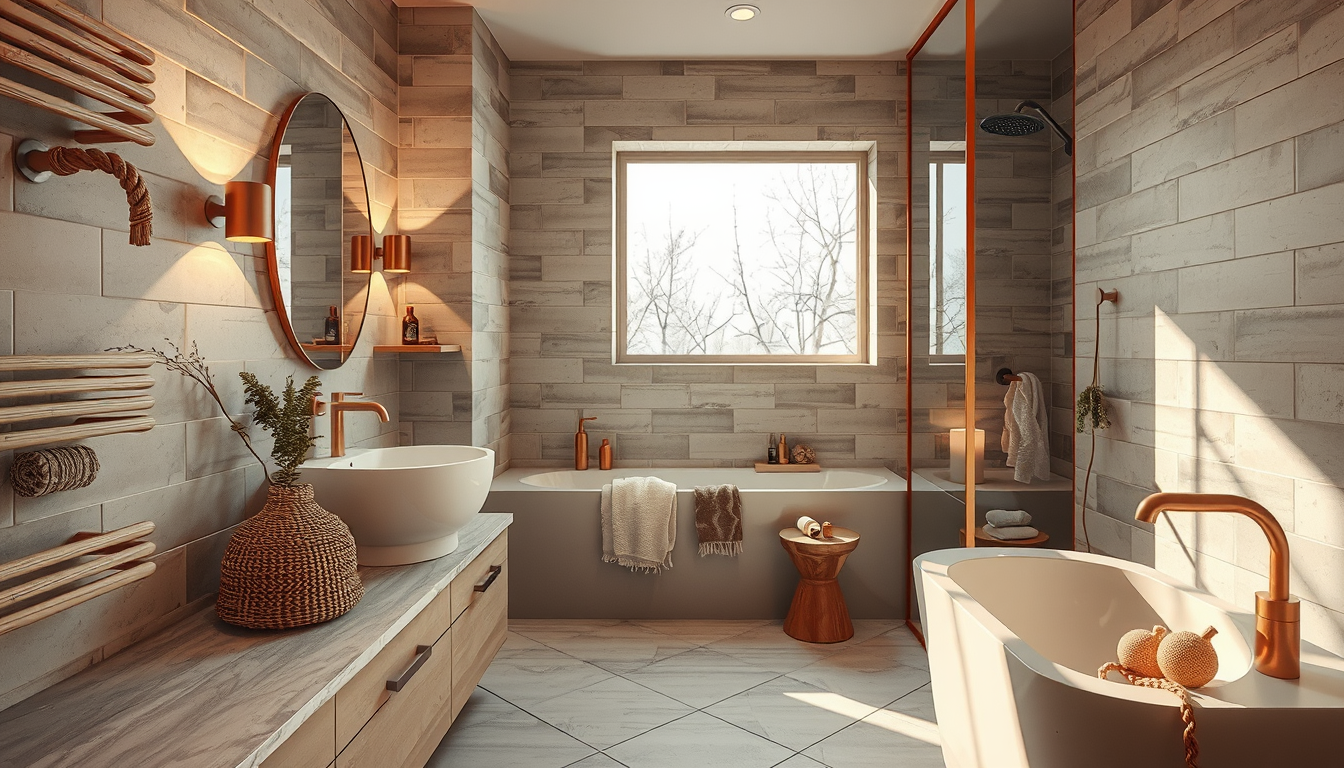
Few materials have earned their place in Canadian homes quite like subway tile bathroom Canada renovations rely on year after year. First introduced in the New York City subway system in 1904, this rectangular workhorse has outlasted every trend cycle thrown at it — and for good reason. In a country where bathrooms endure bone-dry heated winters and muggy summers, subway tile delivers the rare combination of affordability, durability, and design flexibility that Canadian homeowners actually need. Whether you are refreshing a 1920s Toronto semi or finishing a new-build condo ensuite, the question is not whether subway tile belongs in your bathroom. It is which format, layout, and material will work hardest for your space and climate.
Why Subway Tile Bathroom Canada Homeowners Trust Most
Subway tile’s staying power is not accidental. Its proportions — traditionally 3×6 inches, now available in elongated 4×12 and 4×16 formats — create clean sight lines that make compact Canadian bathrooms feel larger. That matters when the average Toronto condo bathroom measures under 50 square feet.
Beyond aesthetics, subway tile is one of the easiest wall surfaces to maintain in a country where hard water and humidity swings are facts of life. Toronto’s municipal water hardness averages 124 mg/L, which falls in the moderately hard range and leaves mineral deposits on grout faster than you might expect . Choosing the right tile-and-grout combination upfront saves years of scrubbing.
The material also bridges every design era. A herringbone layout in glossy white reads modern farmhouse. A vertical stack bond in matte sage green feels thoroughly contemporary. That adaptability is why, at Toronto Interior Designer, we recommend subway tile as a starting point for nearly every bathroom project — it anchors a room without boxing you into a single aesthetic.
5 Subway Tile Layout Patterns Trending in Canadian Bathrooms
Upgrade the Details That Change Everything
Lighting, mirrors, and matte hardware can make a modest bathroom renovation feel far more custom.
Toronto Interior Designer may earn a commission if you shop through these links at no extra cost to you.
The classic running bond (brick pattern) still accounts for the majority of installations, but Canadian designers and homeowners are increasingly requesting layouts that add visual interest without overwhelming small spaces.
- Vertical stack bond — Tiles stacked straight up with aligned grout lines. This elongates walls and pairs well with modern vanities and frameless glass showers. It is the fastest-growing request we see in Toronto condo renovations.
- Herringbone — Tiles set at opposing 45-degree angles. Creates movement and texture, ideal for a feature wall behind a freestanding tub. Expect 10–15% more tile waste due to angled cuts.
- Crosshatch (basket weave) — Alternating horizontal and vertical pairs. Adds a subtle vintage character that suits heritage Toronto homes without feeling dated.
- Stacked horizontal with contrasting grout — The standard stack bond, but with a dark grout (charcoal, black, or navy) that turns the grid into a graphic statement. Low effort, high impact.
- Mixed-format feature walls — Combining standard 3×6 tiles with elongated 4×12 or 4×16 formats on a single wall. This approach reduces grout lines on the larger tiles while creating a layered, intentional look.
A layout change costs nothing extra in materials — only a few more hours of skilled labour — but it transforms a $12-per-square-foot tile into something that looks custom.
If you are exploring broader renovation ideas, the layout decision is where your budget stretches furthest.
Best Subway Tile Materials for Canada’s Climate and Hard Water
Once you have settled on a layout, the next decision — and arguably the more important one — is material. This is where most US and international design advice falls short. Canadian bathrooms, especially those on exterior walls or above unheated garages, deal with temperature and humidity extremes that demand specific material choices.
| Factor | Ceramic Subway Tile | Porcelain Subway Tile | Glass Subway Tile |
|---|---|---|---|
| Moisture absorption | 3–7% | Less than 0.5% | Near 0% |
| Frost resistance | Poor — not rated for exterior-adjacent walls | Excellent — meets ASTM C373 standards | Excellent |
| Hard water stain resistance | Moderate | High (dense surface) | Highest (non-porous) |
| Cost per sq ft (CAD, installed) | $12–$18 | $15–$25 | $25–$40 |
| Best use case | Interior powder rooms, low-moisture areas | Main bathrooms, showers, steam showers | Accent walls, backsplash strips |
| GTA availability | Widely available | Widely available (Ciot, Olympia Tile, Stone Tile) | Specialty order at most suppliers |
For most Toronto bathrooms, porcelain is the right call. Its sub-0.5% absorption rate means it handles the swing from dry winter heating to humid summer conditions without cracking or delaminating. Ceramic works fine in a powder room that rarely sees steam, but we would not install it in a primary shower enclosure in a Canadian home.
Grout matters just as much as tile. In the GTA’s moderately hard water, cement-based grout stains and deteriorates roughly three to five times faster than epoxy grout. Epoxy costs more upfront — typically $8–$12 per square foot installed versus $4–$6 for cement-based — but it resists mould, mineral buildup, and discolouration without annual sealing. For any shower or tub surround, Toronto Interior Designer projects default to epoxy.
One often-overlooked detail: ensure your contractor installs a proper vapour barrier behind tile on exterior-facing bathroom walls. Canadian building code requires it, but in older Toronto homes undergoing renovation, existing barriers may be degraded or missing entirely.
Subway Tile Colour and Grout Pairings for Canadian Bathrooms
With the right material and layout locked in, colour is where personality enters the room. The pairing of tile colour and grout shade sets the entire mood of your bathroom, and certain combinations hold up better than others under the lighting conditions typical of Canadian homes. Here are the pairings we see performing best right now:
- White tile + warm grey grout — The modern classic. Reads clean without the high-maintenance look of pure white grout. Works in every home style from Victorian to contemporary.
- Sage green tile + matching grout — Creates a seamless, spa-like wall that feels calm and organic. Pairs beautifully with white oak vanities and brass fixtures.
- Navy or deep blue tile + white grout — Bold but timeless. Ideal for a feature wall or half-height wainscot in a larger bathroom. If you are choosing paint colours for adjacent rooms, coordinate undertones for flow between spaces.
- Black tile + black grout — Dramatic and surprisingly low-maintenance. Best in bathrooms with strong natural light to prevent the space from feeling closed in.
- Zellige-style white tile + no grout lines visible — Handmade-look tiles with irregular edges create organic texture. The slight variation in each tile does the visual heavy lifting, so you do not need contrasting grout.
For compact Toronto condos, lighter tiles with minimal grout contrast keep walls feeling expansive. Save darker, bolder choices for larger rooms or dedicated accent walls.
Subway Tile Bathroom Canada Renovation Costs for 2026
Budget transparency matters. Canadian bathroom renovations average $15,000 to $35,000 nationally, but Toronto consistently runs higher due to labour costs and permitting. Here is what a typical subway tile bathroom renovation in the GTA costs:
| Renovation Scope | Estimated Cost (CAD) | What’s Included |
|---|---|---|
| Tile refresh only (tub surround or shower walls) | $3,500–$7,000 | Tile, grout, labour, minor prep |
| Mid-range full bathroom | $20,000–$35,000 | Tile, new vanity, fixtures, lighting, labour |
| High-end full bathroom | $35,000–$50,000+ | Premium tile, custom vanity, heated floors, glass enclosure |
These figures assume a standard 40–60 square foot bathroom. Steam showers, structural changes, or plumbing relocation push costs toward the higher end.
The tile itself is rarely the most expensive line item. Labour, waterproofing, and fixture upgrades account for 60–70% of most bathroom budgets. That is why subway tile is such a smart investment — you get designer-level results from a material that costs $8–$25 per square foot, freeing budget for the fixtures and finishes that make the room feel complete. Browse our bathroom category for more ideas on making every dollar count.
What to Do Next
- Assess your bathroom’s exposure. Is it on an exterior wall or above an unheated space? If yes, choose porcelain and confirm your vapour barrier is intact.
- Pick your layout before your tile. The pattern determines the feel of the room more than the tile colour does. Ask your installer for a dry-lay mockup.
- Budget for epoxy grout. It costs more upfront but eliminates the annual sealing and stain-fighting cycle that Toronto’s hard water demands.
- Source locally. Visit Ciot, Olympia Tile, or Stone Tile showrooms in the GTA to see finishes in person — screens never capture glaze texture accurately.
- Get three quotes. Toronto Interior Designer always recommends comparing at least three licensed contractors, and confirming each carries WSIB coverage and appropriate liability insurance.
- Start with one wall. If budget is tight, tile a single feature wall in a statement layout and paint the rest. You can expand later without ripping anything out.
Keep Small Bathrooms Working Hard
Compact storage, simple shelving, and clean-lined accessories are the fastest way to add polish without crowding the room.
Toronto Interior Designer may earn a commission if you shop through these links at no extra cost to you.
Sources
- City of Toronto Water Quality Report — https://www.toronto.ca/services-payments/water-environment/tap-water-in-toronto/water-quality-results/
- HomeStars Canadian Renovation Cost Guide — https://homestars.com/cost-guides
Frequently Asked Questions
How much does a subway tile bathroom cost in Canada?
A subway tile bathroom in Canada costs $3,500–$7,000 for a tile refresh and $20,000–$35,000 for a mid-range full renovation in the GTA. Labour, waterproofing, and fixtures account for 60–70% of the budget, while subway tile itself runs $8–$25 per square foot installed.
Should I use ceramic or porcelain subway tile in a Canadian bathroom?
Porcelain is the best choice for most Canadian bathrooms. Its moisture absorption rate is under 0.5%, making it frost-resistant and ideal for exterior-facing walls and showers that endure Canada’s humidity swings and dry winter heating cycles. Ceramic works for low-moisture powder rooms only.
What grout is best for subway tile in Toronto’s hard water?
Epoxy grout is recommended for Toronto bathrooms. The city’s moderately hard water (124 mg/L) causes cement-based grout to stain and deteriorate three to five times faster. Epoxy costs $8–$12 per square foot installed but resists mould, mineral buildup, and discolouration without annual sealing.