
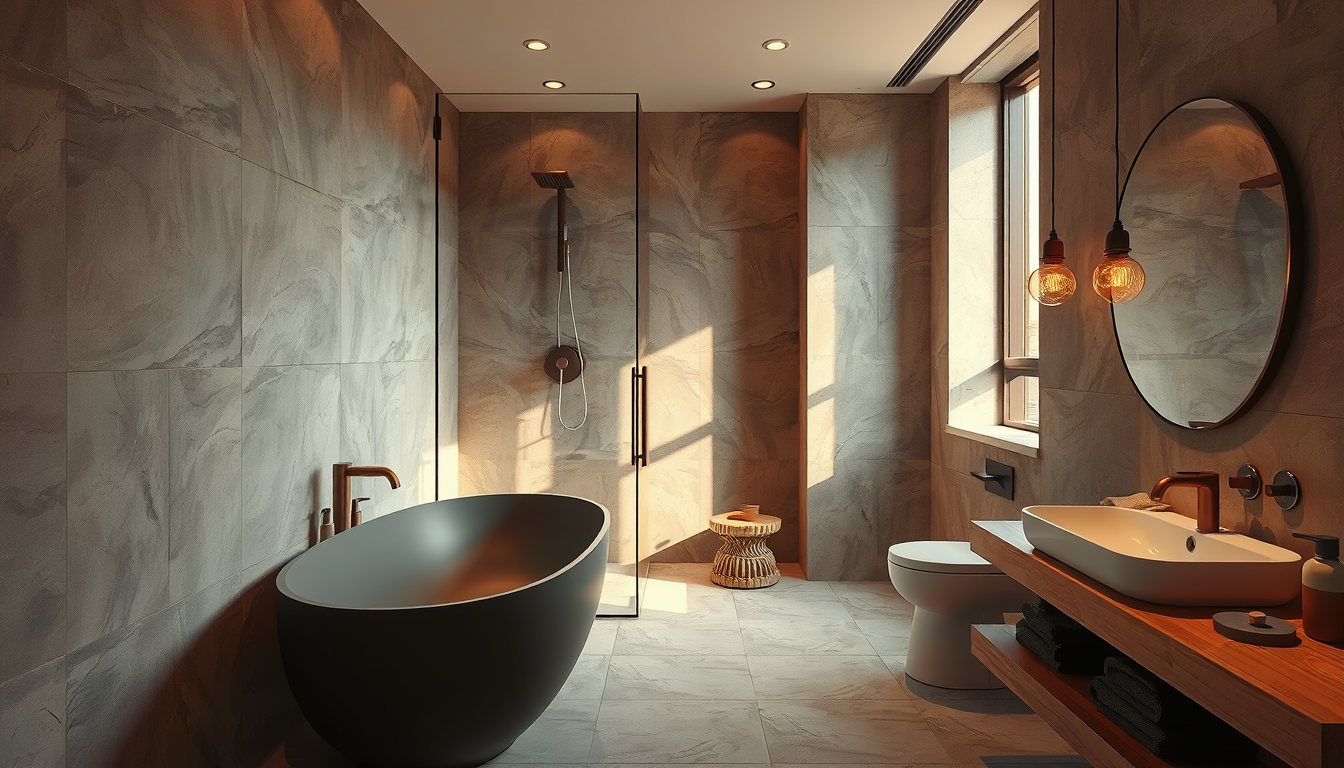
If you have been searching for wet room ideas canada, you are not alone — barrier-free, open-concept showers have overtaken tub-shower combos as the most-requested bathroom feature in Canadian new builds . The appeal is straightforward: a fully waterproofed bathroom with a curbless shower entry looks better, functions better for all ages and abilities, and adds measurable resale value. But building one in Canada means navigating freeze-thaw waterproofing challenges, Ontario Building Code requirements, and — if you live in a Toronto condo — stack plumbing constraints that glossy design magazines never mention. This guide covers the practical realities so you can plan with confidence.
What Is a Wet Room and Why Canadian Homeowners Want One
A wet room is a bathroom where the entire floor is waterproofed and graded toward a drain, eliminating the need for a shower curb, tray, or enclosure. The shower area flows seamlessly into the rest of the room, often separated only by a glass panel or nothing at all.
Three forces are driving adoption across Canada:
- Aging-in-place demand. Barrier-free showers let homeowners stay in their homes longer. Renovations that include accessibility features can increase resale value by an estimated 4–6 percent among aging-in-place buyers . That premium only grows as Canada’s population ages.
- Condo living and small footprints. Toronto’s condo bathrooms average 35 to 50 square feet. Removing a bulky tub surround and replacing it with a wet room layout visually doubles the space and eliminates the awkward step-over that causes slips.
- Wellness culture. The spa-at-home movement now goes well beyond freestanding tubs and candles. Open shower designs with rainfall heads, steam functions, and heated floors turn a daily routine into something restorative — a shift Toronto Interior Designer has covered extensively in our bathroom design guides.
A wet room is not just a design trend — it is a long-term investment in how your home supports your body, your routine, and your property value through every stage of life.
Canadian Building Code and Waterproofing Rules for Wet Rooms
Upgrade the Details That Change Everything
Lighting, mirrors, and matte hardware can make a modest bathroom renovation feel far more custom.
Toronto Interior Designer may earn a commission if you shop through these links at no extra cost to you.
This is where Canadian wet rooms diverge sharply from the European and Australian examples you see on Pinterest. Our climate and codes demand specific materials and methods.
Ontario Building Code (OBC) Section 3.8 sets minimum accessibility standards for barrier-free bathrooms, including a minimum 900 mm × 900 mm clear floor space at the shower area . If you are building a secondary suite or planning for future mobility needs, these dimensions are a baseline, not a ceiling — most designers recommend 1,200 mm × 1,200 mm for comfortable wheelchair access.
Waterproofing is non-negotiable. Canadian freeze-thaw cycles stress building envelopes differently than milder climates. Industry-standard systems like Schluter KERDI or Laticrete Hydro Ban create a continuous waterproof membrane across the entire floor and up the walls to a minimum height of 1,800 mm. Expect this membrane work to add $2,000 to $4,000 CAD to your renovation budget in the GTA .
Condo-specific concerns add another layer of complexity. Buildings constructed before 2000 in Toronto often have two-inch drain lines. The slope engineering and tie-in to older stack plumbing requires a licensed plumber’s assessment — and your condo board’s written approval before any work begins. Skipping this step risks serious liability if water migrates to the unit below.
7 Wet Room Ideas Canada Homeowners Love: Condos, Semis, and Houses
With code and waterproofing requirements understood, the next step is choosing a layout. The best configuration depends on your space, plumbing location, and how many people use the bathroom daily. Here are proven designs that work in real Toronto homes:
- Full wet room, no enclosure. The entire bathroom is the shower zone. Best for compact condos under 40 square feet where every inch matters.
- Half-wall partition. A 1,200 mm pony wall separates the shower spray zone from the vanity area while keeping the open feel. Ideal for semis with narrow bathrooms.
- Glass panel divider. A single fixed glass panel (no door) contains splash while preserving sightlines. The most popular choice in mid-size bathrooms of 50 to 70 square feet.
- Linear drain at threshold. The drain runs along the bathroom entry or at the midpoint, creating a dry zone and a wet zone on the same continuous floor.
- Dual-head wet room. A rainfall ceiling mount plus a handheld wand on a slide bar — this setup meets accessibility guidelines and feels luxurious.
- Wet room with freestanding tub. For detached homes with space, place a soaker tub inside the wet room zone so overflow and splashing drain naturally.
- Steam-ready wet room. Add a sealed glass enclosure at the ceiling, a steam generator, and proper ventilation. This is the full spa conversion and requires an HRV-rated exhaust fan for Canadian humidity levels.
If you are rethinking your entire home layout alongside the bathroom, our guide to creating a year-round home office covers similar practical planning for Canadian climates.
Best Materials and Finishes for Canadian Wet Room Humidity
Once you have settled on a layout, material selection becomes critical. Canadian bathrooms swing from bone-dry winter air — sometimes below 20 percent relative humidity — to steamy post-shower conditions in minutes. Every surface must handle that range without cracking, warping, or growing mould.
| Element | Recommendation | Budget Range (CAD) | Works Best In |
|---|---|---|---|
| Floor tile | Large-format porcelain (24×24 or larger), matte finish, slip rating R10+ | $8–$18 per sq ft installed | All wet rooms |
| Wall tile | Porcelain or ceramic, rectified edges for tight grout lines | $7–$15 per sq ft installed | All wet rooms |
| Grout | Epoxy grout (not cement-based) — resists mould and staining | $3–$5 per sq ft premium over standard | High-use family bathrooms |
| Linear drain | Stainless steel, tile-insert style for seamless look | $300–$800 per unit | Open-concept layouts |
| Heated floor | Electric in-floor radiant mat | $10–$16 per sq ft installed | Essential in Canadian wet rooms |
| Ventilation | HRV-connected or high-CFM exhaust fan with humidity sensor | $250–$600 installed | All wet rooms, especially steam setups |
| Glass panel | 10 mm tempered, fixed mount, treated with anti-calcification coating | $500–$1,200 installed | Layouts needing splash control |
Heated flooring deserves special emphasis. In a Canadian wet room, stepping onto cold, wet tile from October through April is a dealbreaker. In-floor radiant heat at $10 to $16 CAD per square foot installed is near-essential, not a luxury add-on . It also dries the floor faster, reducing both slip risk and mould growth.
Wet Room Costs in Canada: 2026 GTA Budget Breakdown
Knowing your materials narrows the budget conversation considerably. Here is what Toronto Interior Designer typically sees for GTA wet room projects in 2026:
- Basic conversion (existing footprint, standard porcelain, linear drain, waterproof membrane): $12,000–$18,000 CAD
- Mid-range upgrade (heated floor, glass panel, upgraded fixtures, epoxy grout): $18,000–$28,000 CAD
- Full spa build (steam system, body jets, premium natural stone, custom niche lighting): $30,000–$50,000+ CAD
- Condo-specific premium (engineering assessment, condo board process, plumbing tie-in to older stacks): add $2,000–$5,000 CAD
- Accessibility additions (fold-down teak bench, grab bars, handheld wand on slide bar): add $800–$2,500 CAD
These ranges reflect labour-heavy Toronto pricing. Waterproofing alone — the most critical line item — runs $2,000 to $4,000 and should never be the place you cut corners. For broader renovation budgeting advice, our renovation tips section covers planning strategies that apply across every room.
What to Do Next
Wet room searches spike every spring as homeowners plan summer renovations. If you are considering an open shower conversion, start here:
- Measure your bathroom and note the drain location, door swing, and any load-bearing walls.
- Check your building type. Condo owners: request your building’s plumbing stack drawings and review the renovation agreement before hiring anyone.
- Get three quotes from GTA contractors who specialize in waterproofing — not general handypeople.
- Prioritize the membrane and heated floor in your budget before upgrading tile or fixtures.
- Choose slip-rated porcelain (R10 or higher) and epoxy grout from the start to avoid costly re-grouting later.
- Plan for ventilation. A humidity-sensing exhaust fan or HRV connection is code-smart and protects your investment.
A well-built wet room is one of the few renovations that improves daily life, supports long-term mobility, and pays back at resale. Get the waterproofing right, and everything else falls into place.
Keep Small Bathrooms Working Hard
Compact storage, simple shelving, and clean-lined accessories are the fastest way to add polish without crowding the room.
Toronto Interior Designer may earn a commission if you shop through these links at no extra cost to you.
Sources
- Canadian Home Builders’ Association — https://www.chba.ca
- Appraisal Institute of Canada — https://www.aicanada.ca
- Ontario Building Code — https://www.ontario.ca/laws
- Estimated from GTA contractor pricing — https://www.houseandgarden.co.uk
- Ontario radiant heating contractors — https://www.nrcan.gc.ca
Frequently Asked Questions
How much does a wet room cost in Canada?
A basic wet room conversion in the GTA runs $12,000 to $18,000 CAD, mid-range upgrades with heated floors and glass panels cost $18,000 to $28,000, and full spa builds start at $30,000. Condo projects add $2,000 to $5,000 for engineering and board approvals.
Can you build a wet room in a Toronto condo?
Yes, but condo wet rooms require your building’s plumbing stack drawings, written condo board approval, and a licensed plumber to assess drain tie-ins — especially in pre-2000 buildings with two-inch drain lines.
What waterproofing do wet rooms need in Canada?
Canadian wet rooms require a continuous waterproof membrane such as Schluter KERDI or Laticrete Hydro Ban across the entire floor and up walls to at least 1,800 mm. This protects against freeze-thaw stress and costs $2,000 to $4,000 CAD in the GTA.