
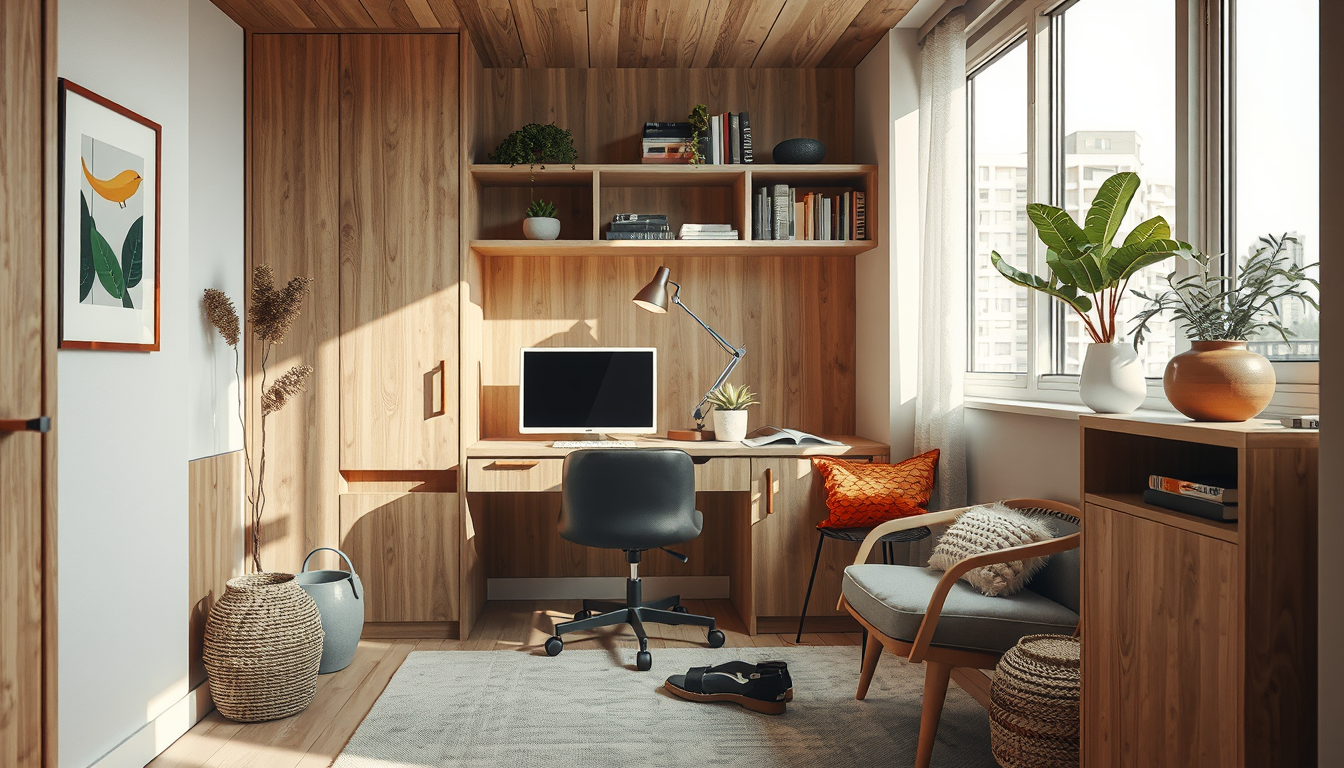
A she shed home office canada project solves a problem that twenty-four percent of Canadian remote workers know too well: your dining table is not a desk, and your bedroom corner is not a workplace . A dedicated backyard studio separates your professional life from your personal space without the cost or disruption of a full home addition. But in a country where January temperatures hit minus twenty, a garden office needs more than shiplap walls and a string of Edison bulbs. It needs real insulation, proper electrical, and a design that earns its place in your yard twelve months a year. Here is how to build one that actually works in our climate.
Why Canadian Remote Workers Choose a She Shed Home Office
The pandemic-era kitchen-table setup was temporary. The shift to remote work is not. With nearly one in four Canadian professionals still working primarily from home, proper home office space has moved from nice-to-have to essential infrastructure . Toronto and GTA homeowners face a particular squeeze: condo and semi-detached layouts rarely have a spare room, and main-floor renovations in the city routinely start at $50,000 or more.
A backyard garden studio sidesteps those constraints entirely. You gain a self-contained workspace on land you already own, with a separate entrance that creates a genuine psychological boundary between work and home. At Toronto Interior Designer, we have seen this shift accelerate — clients who once asked for a reading nook now ask for a fully wired, climate-controlled office thirty steps from their back door.
The appeal goes beyond function. A well-designed studio adds real curb value. Canadian real estate appraisal estimates suggest a quality backyard structure can contribute five to ten percent to residential property value, depending on your market and build quality .
Ontario Building Permits and Zoning for Garden Offices
Shop Compact Work-From-Home Staples
Desks, task lamps, and shelving do more for a condo office than oversized furniture that eats the room.
Toronto Interior Designer may earn a commission if you shop through these links at no extra cost to you.
Before you pick finishes, pick up the phone and call your municipal building department. Rules vary by municipality, but here is the general framework for Ontario:
- Size threshold. In many Ontario municipalities, accessory structures under 10 square metres (about 108 square feet) do not require a building permit. However, setback requirements and lot coverage maximums still apply — and these can disqualify a build even if the size is compliant.
- Electrical and plumbing permits. Even if the structure itself is permit-exempt, any electrical service, plumbing, or gas line requires its own permit and licensed contractor. No exceptions.
- Zoning bylaws. Toronto’s zoning bylaws regulate accessory structures by zone. Height limits, rear-yard setbacks (typically 0.6 metres minimum), and lot coverage ratios all factor in. Mississauga and Ottawa have their own variations.
- Property tax implications. MPAC generally does not reassess for small accessory structures without plumbing, but adding electrical service or exceeding the size threshold may trigger reassessment .
- Heritage or conservation overlays. If your property falls within a heritage conservation district, additional design approvals may be required regardless of size.
“The biggest mistake we see is clients who design first and check permits second. A ten-minute call to your local building department can save you months of rework.” — Toronto Interior Designer editorial team
Budget two to four weeks for permit research before committing to a design.
Designing a Four-Season She Shed Home Office for Canadian Winters
This is where most inspiration-board advice falls apart. A Pinterest-worthy shed built to US or UK specs will be unusable by November in Toronto. Four-season performance in Ontario demands residential-grade building science.
| Element | Recommendation | Budget Range (CAD) | Why It Matters |
|---|---|---|---|
| Wall insulation | R-20 to R-24 (spray foam or mineral wool) | $1,500–$3,500 | Meets OBC SB-12 minimums for habitable space |
| Ceiling insulation | R-32 or higher | $800–$2,000 | Heat rises — ceiling is your biggest loss point |
| Flooring | Engineered wood or LVP over radiant heat | $1,200–$4,000 | Resists freeze-thaw moisture; radiant heat eliminates baseboard clutter |
| Windows | Double- or triple-pane, low-E argon-filled | $2,000–$5,000 | Prevents condensation and drafts at minus-twenty |
| HVAC | Mini-split heat pump (heating + cooling) | $3,000–$5,500 installed | Most efficient single system for a small footprint |
| Vapour barrier | 6-mil polyethylene on warm side of insulation | $200–$500 | Prevents moisture migration in freeze-thaw cycles |
For flooring specifically, engineered wood handles temperature swings far better than solid hardwood in an outbuilding that may cool down overnight. Pair it with electric radiant mats beneath and you get comfortable, even heat without eating into your limited floor space.
Ventilation matters as much as heating. A single ERV (energy recovery ventilator) sized for your square footage keeps air fresh without dumping your heated air outside. In summer, your mini-split handles cooling and dehumidification — critical during Toronto’s humid July and August stretches.
If you are building near your garden, consider how your outdoor landscaping connects to the studio entrance — a pergola or covered walkway makes the thirty-second commute comfortable even in rain or snow.
She Shed Home Office Canada Layouts: Compact to Full Studio
The right layout depends on your lot, your work, and your budget. Here are four proven configurations:
The Compact Pod (8–10 m²). A single room with a built-in desk spanning one wall, shelving above, and a compact lounge chair for reading or calls. Best for solo knowledge workers — writers, developers, designers. Keep the door on the narrow end to maximize usable wall space.
The Split Studio (12–15 m²). A work zone on one side and a creative or meeting area on the other, divided by a low credenza or bookshelf. This is the sweet spot for freelancers who take video calls and need a presentable background without sacrificing desk real estate.
The Maker’s Workshop (15–20 m²). A standing-height work surface, overhead task lighting, pegboard storage walls, and durable flooring. Ideal for artists, crafters, or anyone whose work involves materials and mess. Include a utility sink if budget allows — remember, plumbing means a permit.
The Full Office Suite (20–25 m²). Room for a proper desk, guest seating, a small kitchenette counter with a kettle, and a daybed or Murphy bed for the occasional overnight guest. At this size you are likely above the permit-exempt threshold, so plan for a full building permit from the start.
In every layout, prioritize natural light. Position your desk to face or sit perpendicular to the largest window — never with a window directly behind your screen. For supplemental heating during the coldest weeks, a certified space heater serves as reliable backup alongside your primary mini-split system.
Costs, Canadian Prefab Options, and Property Value
Canadian prefab garden studios range widely. A basic shell kit from suppliers like Summerwood or Modular Backyard Studios starts around $15,000, while a fully insulated, electrically wired, HVAC-equipped turnkey unit runs $50,000 to $80,000 depending on finishes and size. Custom site-built studios typically fall between $40,000 and $100,000 all-in, including foundation, permits, and landscaping.
For context, a basement renovation in the GTA averages $30,000 to $75,000, and a main-floor home office addition easily exceeds $80,000 once structural work is involved. A garden studio often delivers more usable, purpose-built space for comparable or lower cost — with zero disruption to your existing home during construction.
The return is tangible. Beyond the daily quality-of-life improvement, a well-executed backyard office signals to future buyers that the property supports modern work patterns. That five-to-ten-percent value increase is not guaranteed, but in neighbourhoods where remote work is the norm, it is increasingly expected.
What to Do Next
- Call your municipal building department to confirm setback, lot coverage, and permit requirements for your specific property.
- Set your insulation baseline at R-20 walls and R-32 ceiling — do not compromise on this for a year-round she shed home office canada build.
- Get three quotes from both prefab suppliers and local contractors so you can compare shell-kit versus custom-build costs.
- Plan your electrical early — a 60-amp subpanel gives you room for heating, lighting, and equipment without overloading your main panel.
- Design your layout around your work style before choosing aesthetics — function drives every good workspace decision.
- Browse our home office category for more workspace design ideas tailored to Canadian homes.
A she shed home office canada project is one of the smartest investments a remote worker can make — a space that is entirely yours, built for how you actually work, and engineered for every season this country throws at it. Start with the permit call. The rest follows from there.
Make the Setup Feel Finished
Upgrade your office corner with better lighting, smarter storage, and one or two elevated pieces that keep it from feeling temporary.
Toronto Interior Designer may earn a commission if you shop through these links at no extra cost to you.
Sources
- Statistics Canada Labour Force Survey — https://www.statcan.gc.ca/
- Appraisal Institute of Canada — https://www.aicanada.ca/
- MPAC — https://www.mpac.ca/
Frequently Asked Questions
Do you need a building permit for a she shed home office in Canada?
In many Ontario municipalities, accessory structures under 10 square metres do not require a building permit. However, electrical service, plumbing, and gas lines always require separate permits and licensed contractors. Setback and lot coverage rules still apply regardless of size, so call your local building department before you design.
How much does a backyard office cost in Canada?
A basic prefab shell kit starts around $15,000 CAD, while a fully insulated, HVAC-equipped turnkey garden studio runs $50,000 to $80,000. Custom site-built studios typically cost $40,000 to $100,000 all-in, including foundation, permits, and landscaping.
What insulation do you need for a four-season she shed in Canada?
For year-round use in Canadian winters, aim for R-20 to R-24 in the walls and R-32 or higher in the ceiling. Use spray foam or mineral wool insulation, triple- or double-pane low-E windows, a 6-mil vapour barrier, and a mini-split heat pump for efficient heating and cooling.