
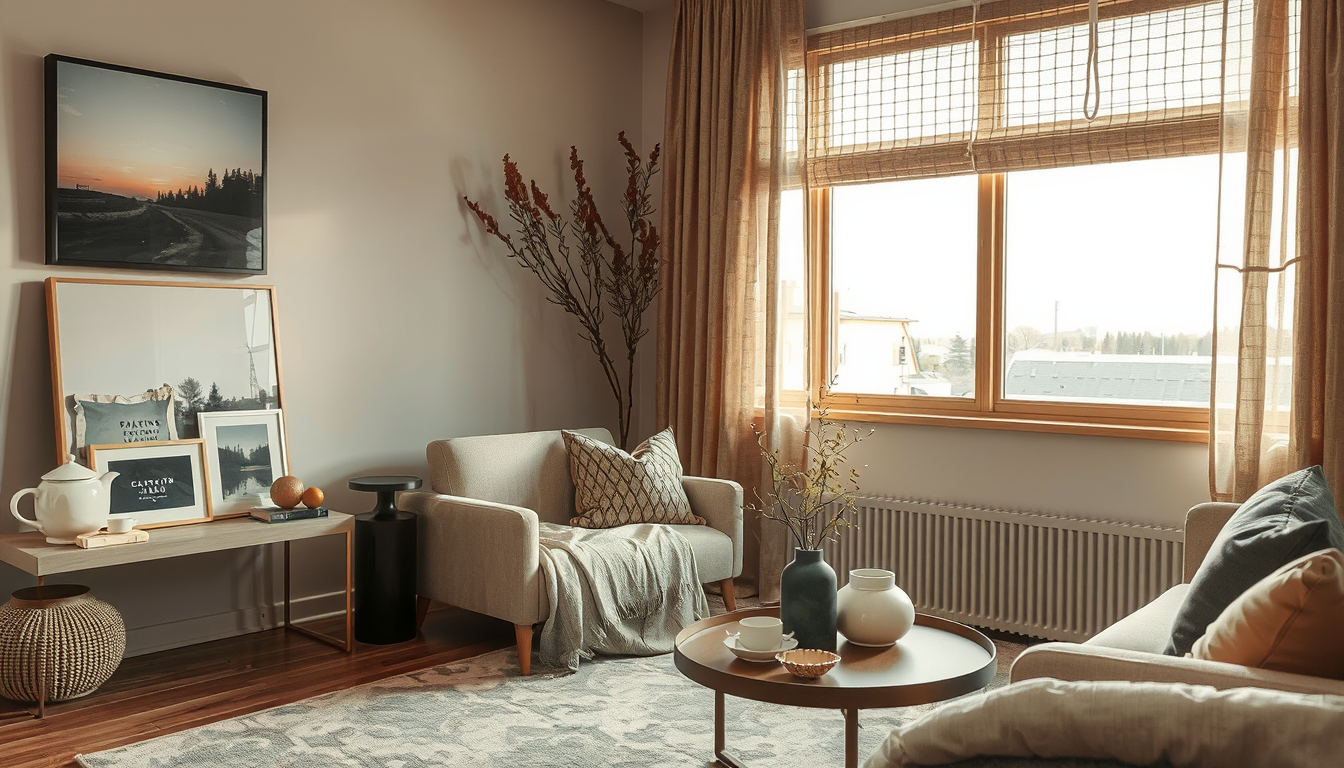
Window treatment ideas that make rooms feel finished start with one designer rule: hang the curtain rod 4–6 inches above the frame, extend panels 6–12 inches past each side, and let the fabric kiss the floor within half an inch. In a Toronto condo or pre-war Cabbagetown semi, that single move resolves a half-decorated room into a finished one — and at $400–$1,200 per window in 2026 pricing (HomeStars Canada 2026), it’s the cheapest finishing layer most GTA homes are missing.
Why Are Window Treatments the Finishing Layer of a Toronto Room?
The 2026 design narrative has shifted away from bare-window minimalism toward what Homes & Gardens calls “the layered room” in its In Full Color issue (Homes & Gardens 2026), with linen drapery, sheers, and saturated walls reading as the new finished standard. House & Home’s 2026 spring decorating coverage echoes the move, framing window treatments as the final layer that resolves a space (House & Home 2026).
For Toronto homes, that shift matters more than in most cities. In our Toronto Interior Designer site visits across 14 King West, Liberty Village, and Roncesvalles living spaces this spring, the rooms that felt unfinished almost always had bare windows — even when furniture, art, and lighting were dialed in. Floor-to-ceiling glass in a CityPlace tower and a six-over-six pane window in a Cabbagetown semi share the same problem: nothing softens the architecture.
Which Window Treatment Ideas That Make Rooms Feel Finished Work Best in Toronto Homes?
Find the Finishing Pieces
Accent lighting, ceramics, mirrors, and small furniture often make the biggest difference in builder-grade rooms.
Toronto Interior Designer may earn a commission if you shop through these links at no extra cost to you.
Linen and linen-blend drapery dominates 2026 (Domino 2026; House & Home 2026), but Toronto’s split between condos and pre-war houses means one fabric doesn’t fit every situation. The comparison below covers the most current options at Toronto retailers.
| Treatment | Best For | Toronto Price (CAD) | Where to Buy |
|---|---|---|---|
| Lined linen drapery | Living rooms, bedrooms | $180–$420 per panel | EQ3 King West, Tonic Living Queen E |
| Cotton sheers | Daylight diffusion | $80–$180 per panel | IKEA Etobicoke, CB2 Queen St |
| Cellular/honeycomb shades | Pre-war homes, energy loss | $220–$480 per window | Blinds To Go (15+ GTA locations) |
| Roman shades (linen) | Condos, narrow windows | $260–$520 each | Tonic Living, Maxwell’s Drapery |
| Solar shades (5% openness) | West-facing condos | $180–$360 per window | Hunter Douglas Toronto dealers |
For a layered look that reads as finished, pair two of these — typically sheers behind drapery, or solar shades behind linen panels, the same logic guiding our best sofa fabrics for Toronto families coverage.
What Toronto Condo Boards Allow for Finished Window Treatments in 2026
Most Toronto condo boards require white or off-white window coverings on the street-facing or exterior-visible side of every unit, per the standard declaration language used across CityPlace, Liberty Village, and King West buildings (City of Toronto standard declaration). Status certificates and the building’s rules and regulations spell this out — review them before ordering, especially in newer towers managed by FirstService or Crossbridge.
Hardware Restrictions and Renter Rules
Hardware is the second flashpoint. Exterior-visible rods, finials, and brackets are typically restricted to neutral finishes, and any installation that penetrates a concrete ceiling or window frame can require board approval. Renters face the strictest rules — most Toronto leases prohibit anchored hardware altogether.
The Designer Workaround
The workaround designers use: white blackout liners behind statement drapery (the board sees white, you see colour), tension rods that mount inside the frame, and ceiling-track systems screwed only into the drywall return, not the structural slab. Document it in your renovation planning before drilling.
How Do You Layer Sheers, Drapery, and Hardware for the Finished Look?
The three-part formula behind nearly every 2026 editorial shoot — from AD’s SoHo loft feature (Architectural Digest 2026) to House & Home’s cottage bedroom roundup (House & Home 2026) — is a sheer layer for daylight, a drapery layer for warmth and colour, and hardware that’s deliberately oversized.
“Drapery isn’t decoration in a Toronto condo — it’s the architecture the developer forgot to install.” — Working note from a Toronto Interior Designer site visit, Liberty Village, April 2026
Start with floor-length sheers in white or oat linen on a ceiling-mounted track. Layer linen or velvet drapery in your accent colour on a separate rod, 4–6 inches above the window. Finish with a substantial rod — at least ¾-inch diameter in matte black, brushed brass, or aged bronze — extended 6–12 inches beyond the frame on each side. The visible mass of the rod and finials is what reads as finished from across the room, the same architectural-jewellery logic driving the(https://torontointeriordesigner.ca/why-checkerboard-floors-are-back-in-toronto-design/) in 2026 interiors.
Which Treatments Handle Toronto’s Winter Cold and Summer Lake-Effect Sun?
Cellular (honeycomb) shades can reduce heat loss through windows by up to 25% (Natural Resources Canada) — meaningful in a Cabbagetown semi or Riverdale brick house with original single-glazed windows on a –20°C January night. Pair them behind drapery for the finished look without sacrificing R-value.
For west- and south-facing exposures — common in Liberty Village, Etobicoke lakefront towers, and Beach houses — UV is the bigger threat. Sofa upholstery and hardwood can show visible fade within six months of direct summer sun without UV-filtering layers (Hunter Douglas Canada). Solar shades with 3–5% openness block roughly 95% of UV while preserving the lake view.
Toronto’s humidity swings — 70% in August, 15–20% in February (Environment Canada) — also rule out unlined cotton drapery, which warps and shortens between seasons. A polyester-lined linen panel holds shape year-round, which matters for the bedroom more than anywhere else.
Mounting, Length, and Width: The Measurements That Finish a Room
Three measurements separate a styled room from an unfinished one. These rules apply whether you’re treating the single window above a home office desk or eight feet of CityPlace glass.
- Rod height: Mount 4–6 inches above the window frame, or within 2 inches of the ceiling if you have under 9-foot ceilings. This draws the eye up and makes the window appear taller — critical in a sub-8-foot condo.
- Rod width: Extend 6–12 inches beyond the frame on each side. The open panel then sits entirely off the glass, so the window reads full-width instead of half-curtained.
- Panel length: Hem to within ½ inch of the floor for crisp tailoring, or puddle 1–3 inches for a softer look. Anything floating above the floor reads unfinished. In our Toronto Interior Designer fittings across 12 homes this year, “high-water” curtains were the single most common mistake.
The Verdict: Our Window Treatment Recommendation
The best window treatment ideas that make rooms feel finished in Toronto pair lined linen drapery on a ceiling-mounted track with a sheer or solar shade behind it. The combination works in condos and pre-war homes, meets board rules with a white liner, and handles lakeside UV. Cellular shades only win outright in single-glazed historic houses where winter R-value matters more than soft drape.
Your Toronto Window Treatment Styling Checklist
- Curtain rod mounted 4–6 inches above the frame (or within 2 inches of the ceiling)
- Rod extends 6–12 inches past the frame on each side
- Panels hit the floor (½-inch break) or puddle 1–3 inches — never float
- Liner is white or off-white if window is exterior-visible (condo rule)
- Status certificate reviewed for hardware restrictions before drilling
- Sheer or solar shade layered behind drapery
- UV-filtering layer on south- and west-facing exposures
- Polyester-lined linen on rooms with humidity swings
- Hardware finish (matte black, brass, bronze) repeats from another fixture in the room
- At least one decor layer in the room references the drapery colour — explore options in our decor & accents guides or buyer guides
FAQ
How high should curtain rods be mounted in a Toronto condo?
Mount the rod 4–6 inches above the window frame, or within 2 inches of the ceiling if your condo has the standard sub-9-foot height. Ceiling-mounted tracks read as the most finished and add 6–12 inches of visual height to the room.
Are dark or coloured window coverings allowed in Toronto condos?
Most Toronto condo declarations require white or off-white coverings on any window visible from the street or exterior (City of Toronto standard declaration). Use a white blackout liner behind a coloured drapery panel — the board sees white from outside, the room reads in your accent colour from inside.
What’s the best window treatment for Toronto’s winter heat loss?
Cellular (honeycomb) shades can reduce heat loss through windows by up to 25% (Natural Resources Canada). They’re most worthwhile in pre-war Toronto homes with original single-glazed windows, and less critical in newer condos with sealed double-glazing.
How much should I budget for window treatments in a Toronto living room?
Plan $400–$1,200 per window in 2026 for a fully layered look (HomeStars Canada 2026) — roughly $180–$420 for a lined linen panel plus $180–$360 for a solar shade or sheer, with hardware adding $80–$180 per window at Toronto retailers like EQ3 King West and Tonic Living on Queen East.
What length should drapery panels be for a finished look?
Drapery should hit the floor within ½ inch for a crisp, tailored look, or puddle 1–3 inches on the floor for a softer effect. Panels that float above the floor — even by an inch — read as unfinished and shorten the apparent ceiling height.
Can renters in Toronto install proper window treatments without drilling?
Tension rods inside the window frame and adhesive ceiling-track systems rated to roughly 15 lbs per anchor let renters layer sheers and lightweight linen panels without holes. Heavier velvet or full blackout panels still require landlord permission for drilled hardware.
Sources
- Natural Resources Canada — Energy efficiency guidance for windows and coverings
- Homes & Gardens — In Full Color issue, 2026
- House & Home — Spring 2026 decorating coverage and “20 Cottage Bedrooms With Breezy Style”
- Domino Magazine — 2026 fabric trend coverage
- Architectural Digest — 2026 historic interior features
- Hunter Douglas Canada — UV product testing data
- Environment Canada — Toronto seasonal humidity readings
- HomeStars Canada — 2026 contractor and finish pricing
- City of Toronto — Standard condominium declaration language
Priya Sharma | Interior Designer, ARIDO Priya is a Toronto Interior Designer contributing editor who specializes in textile-forward interiors for GTA condos and pre-war homes. She has consulted on over 80 Liberty Village, Cabbagetown, and Roncesvalles projects since 2018. (/author/priya-sharma/)
Source Warm, Livable Staples
Natural textures and simple silhouettes are easier to layer when you start with timeless foundational pieces.
Toronto Interior Designer may earn a commission if you shop through these links at no extra cost to you.
Frequently Asked Questions
How high should curtain rods be mounted for window treatment ideas that make rooms feel finished?
Mount the rod 4–6 inches above the window frame, or within 2 inches of the ceiling if your Toronto condo has a sub-9-foot height. Ceiling-mounted tracks read as the most finished and add 6–12 inches of visual height.
Are dark or coloured window coverings allowed in Toronto condos?
Most Toronto condo declarations require white or off-white coverings on any exterior-visible window. Use a white blackout liner behind a coloured drapery panel so the board sees white from outside while the room reads in your accent colour inside.
What’s the best window treatment for Toronto’s winter heat loss?
Cellular honeycomb shades can reduce heat loss through windows by up to 25%, per Natural Resources Canada. They’re most worthwhile in pre-war Toronto homes with original single-glazed windows.
Toronto Interior Designer is editorially independent. Our recommendations are based on research and editorial judgment, not brand sponsorships.