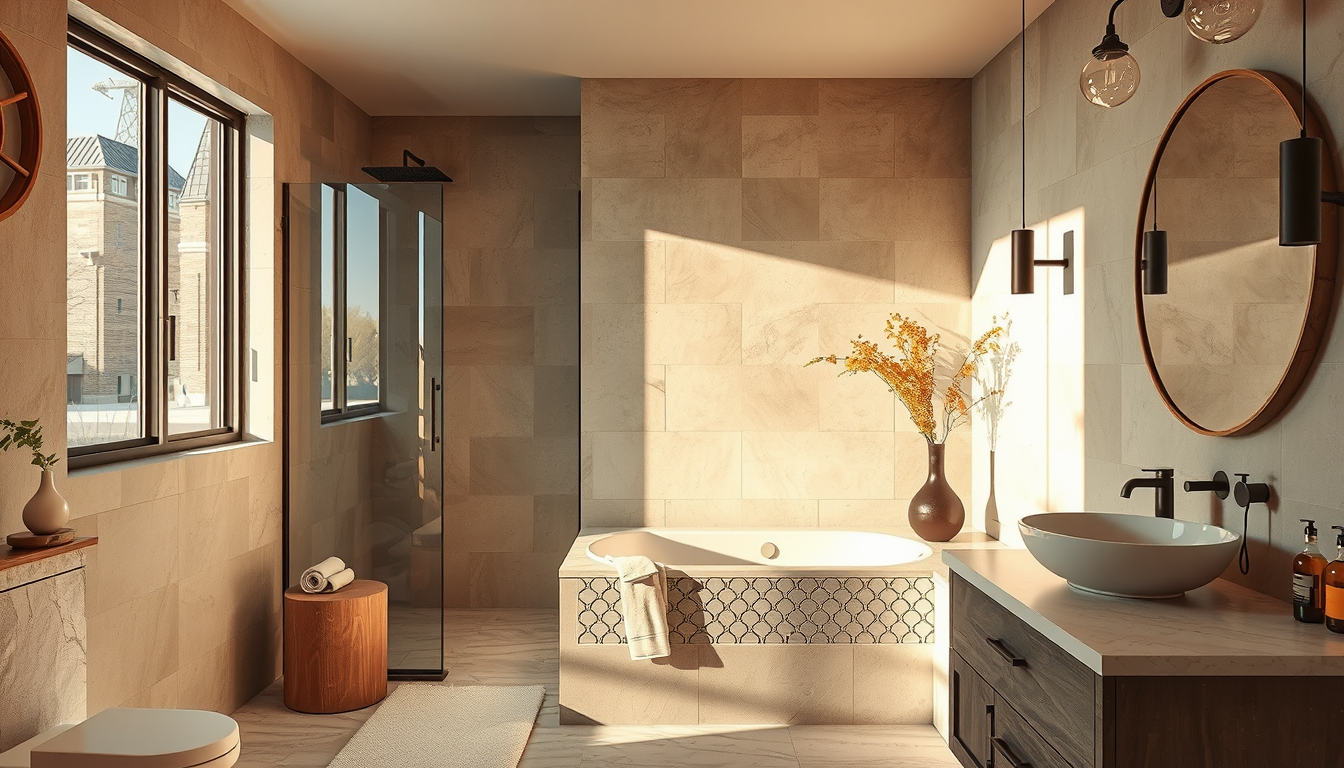
The best master ensuite ideas Canada homeowners are embracing in 2026 share one thing in common: they treat the bathroom as a wellness room, not just a functional space. After years of grey subway tile and chrome fixtures, Canadian designers are shifting toward warm natural materials, heated surfaces, and layouts that account for our winters. Your ensuite should feel like a private retreat that works with our climate, not against it. Whether you live in a 600-square-foot Toronto condo or a detached home in the suburbs, this guide covers the materials, layouts, and finishing details that make a spa-inspired ensuite practical for Canadian living.
Why Canadian Homeowners Are Upgrading Their Master Ensuites
The pandemic-era home office boom has settled, and the next room getting serious attention is the master ensuite. Canadian homeowners are spending between $25,000 and $55,000 on bathroom renovations, with Toronto projects typically landing at the higher end of that range . The motivation goes beyond aesthetics. After months of dark, cold mornings, a heated bathroom floor and a warm-toned palette genuinely change how you start your day.
House & Home’s 2026 coverage confirms the shift: walnut, warm oak, and muted blue-green tones are replacing the all-white, all-grey ensuites that dominated the last decade . At Toronto Interior Designer, we see this playing out in every consultation — clients want bathrooms that feel warm and grounded, not like a hotel lobby.
This is also a functional upgrade. Modern Canadian homes built to energy-efficient standards have tight building envelopes, which means standard exhaust fans often cannot handle the humidity from a steam shower. Proper HRV-integrated ventilation is now a baseline requirement for any serious ensuite renovation .
Best Ensuite Materials That Handle Canadian Climates
Upgrade the Details That Change Everything
Lighting, mirrors, and matte hardware can make a modest bathroom renovation feel far more custom.
Toronto Interior Designer may earn a commission if you shop through these links at no extra cost to you.
Material selection in a Canadian ensuite is a climate decision as much as a design one. Here is what works — and what to avoid.
| Element | Recommendation | Budget Range (CAD) | Works Best In |
|---|---|---|---|
| Flooring | Large-format porcelain with radiant heat | $15–$30/sq ft installed | All home types |
| Vanity surface | Quartz or sintered stone | $1,200–$3,500 | Condos and detached |
| Wall tile | Zellige or handmade ceramic | $18–$45/sq ft | Feature walls |
| Wood accents | Teak or white oak (sealed) | $800–$2,500 for shelving/panelling | Detached homes |
| Tub | Freestanding soaker (acrylic or stone composite) | $2,000–$8,000 | Homes with 50+ sq ft tub zone |
| Shower glass | Frameless fixed panel | $1,500–$3,000 | All home types |
Radiant in-floor heating deserves special attention. At roughly $8 to $15 per square foot to install, it is one of the most cost-effective comfort upgrades in a bathroom renovation, and Toronto contractors report that over 60 percent of ensuite projects now include it. On a January morning, the difference between stepping onto a heated stone floor versus cold porcelain is the difference between wanting to linger in your bathroom and wanting to leave it immediately.
For wood accents — a defining feature of the warm, spa-forward ensuite — stick with teak, sealed white oak, or thermally modified wood. Standard hardwood will not survive the humidity swings in a Canadian bathroom. If you are working with a tighter budget, wood-look porcelain tile has improved dramatically and gives you the aesthetic without the maintenance risk. For more on choosing warm tones throughout your home, see our guide to the best warm neutral paint colours for Canadian homes.
5 Spa-Inspired Master Ensuite Layouts for Every Home Size
Layout matters more than any single fixture choice. Here are five approaches scaled to real Canadian home sizes:
- The Condo Wet Room (40–55 sq ft): Remove the tub entirely, use a curbless shower with a linear drain, wall-mounted vanity, and a single large-format tile across floor and walls. This layout makes a small bathroom feel twice its size. For more small-space strategies, check out our condo bathroom ideas for Toronto.
- The Townhouse Dual-Zone (55–75 sq ft): Separate the shower and vanity zone with a partial glass wall. Add a narrow teak bench in the shower and a recessed niche for storage. No tub, but the shower becomes the centrepiece.
- The Semi-Detached Soaker Layout (75–100 sq ft): Freestanding tub positioned under or near the window, walk-in shower behind a half-wall, double vanity along the opposite wall. This is the most requested layout in Toronto Interior Designer consultations.
- The Detached Home Spa Suite (100–140 sq ft): Full wet zone with walk-in shower and freestanding tub in the same area, separate water closet, double vanity with seated makeup area, and dedicated linen storage.
- The Principal Suite Conversion (variable): Borrow space from an adjacent closet or small bedroom to expand a cramped ensuite. This is increasingly common in older Toronto homes where the original master bath is undersized by modern standards.
“The biggest mistake we see is homeowners choosing fixtures before finalizing layout. A $6,000 freestanding tub means nothing if the room flow forces you to squeeze past it every morning.”
Essential Ensuite Fixtures, Lighting, and Smart Features
Once layout and materials are set, these finishing details separate a good ensuite from a great one.
Lighting. Canadian ensuites need a layered lighting plan because natural daylight is limited for nearly half the year. Toronto gets roughly 8 to 9 hours of daylight in December versus over 15 in June. North-facing bathrooms benefit from a skylight or enlarged window. For artificial light, combine recessed ceiling fixtures with backlit mirrors and a dimmer — you want bright task lighting for grooming and warm ambient light for evening baths.
Fixtures. Matte black and brushed brass remain strong, but brushed nickel is gaining ground as a quieter, more timeless option. Thermostatic shower valves are a worthwhile upgrade in any ensuite with multiple shower heads — they maintain temperature precisely, which matters when your incoming water is near freezing in January.
Smart features. Heated towel bars ($300–$800 installed) are one of the highest-impact, lowest-cost upgrades. Digital shower controls, integrated Bluetooth speakers, and smart mirrors with built-in lighting are popular but not essential — prioritize climate comfort features like heating and ventilation before technology.
Ventilation. If you are installing a steam shower or even a high-flow rain head, consult an HVAC professional about tying your bathroom exhaust into your home’s HRV system. In modern airtight Canadian homes, a basic bathroom fan may not remove moisture fast enough to prevent mould behind walls.
Top Master Ensuite Ideas Canada Designers Recommend in 2026
The master ensuite ideas Canada designers are most excited about this year centre on authenticity over spectacle. The era of the Instagram-perfect bathroom is fading in favour of ensuites that reflect how people actually live — textured tiles with slight imperfections, open shelving instead of fully closed cabinetry, and colour palettes drawn from nature rather than trend forecasts.
Japanese-style soaker tubs — deeper and shorter than standard freestanding models — are gaining popularity in Toronto, especially for homes where floor space is limited but the desire for a soaking experience is real. Canadian retailers like DERA Design and Quartz & Stone have expanded their ofuro-style selections significantly over the past two years.
At Toronto Interior Designer, the advice we give most often is this: invest in the bones first. Heated floors, proper ventilation, quality waterproofing, and a smart layout will outlast any tile trend. The decorative layers — hardware, paint, accessories — are easy to swap in five years. The infrastructure is not.
For broader renovation planning, browse our renovation tips and guides.
What to Do Next
- Set your layout before choosing fixtures. Walk your existing ensuite and measure every wall. Decide where wet and dry zones will live before shopping.
- Get three contractor quotes that include itemized costs for radiant heating, ventilation upgrades, and waterproofing — not just tile and fixtures.
- Consult an HVAC professional if you plan to add a steam shower or significantly increase bathroom humidity output.
- Choose materials for climate first, aesthetics second. Ensure every wood, stone, and grout choice can handle Canadian humidity swings.
- Prioritize comfort upgrades — heated floors, towel bars, and thermostatic valves — over purely cosmetic features. You will appreciate them every winter morning.
Keep Small Bathrooms Working Hard
Compact storage, simple shelving, and clean-lined accessories are the fastest way to add polish without crowding the room.
Toronto Interior Designer may earn a commission if you shop through these links at no extra cost to you.
Sources
- HomeStars Cost Guide — https://homestars.com/cost-guides/bathroom-renovation
- House & Home — https://houseandhome.com/design/bathroom-design/
- Ontario Building Code — https://www.ontario.ca/page/ontarios-building-code
Frequently Asked Questions
How much does a master ensuite renovation cost in Canada?
Canadian homeowners typically spend between $25,000 and $55,000 on a master ensuite renovation, with Toronto projects at the higher end. Costs vary based on layout changes, material choices, and upgrades like radiant floor heating and HRV-integrated ventilation.
Is radiant floor heating worth it in a Canadian ensuite?
Yes. At $8 to $15 per square foot installed, radiant in-floor heating is one of the most cost-effective comfort upgrades for Canadian bathrooms. Over 60 percent of Toronto ensuite projects now include it, making cold winter mornings far more comfortable.
What materials work best in Canadian ensuite bathrooms?
Large-format porcelain tile with radiant heat is ideal for flooring. Quartz or sintered stone handles humidity well for vanities. Wood accents should use teak, sealed white oak, or thermally modified wood to withstand Canadian humidity swings. Avoid standard hardwood in wet areas.