
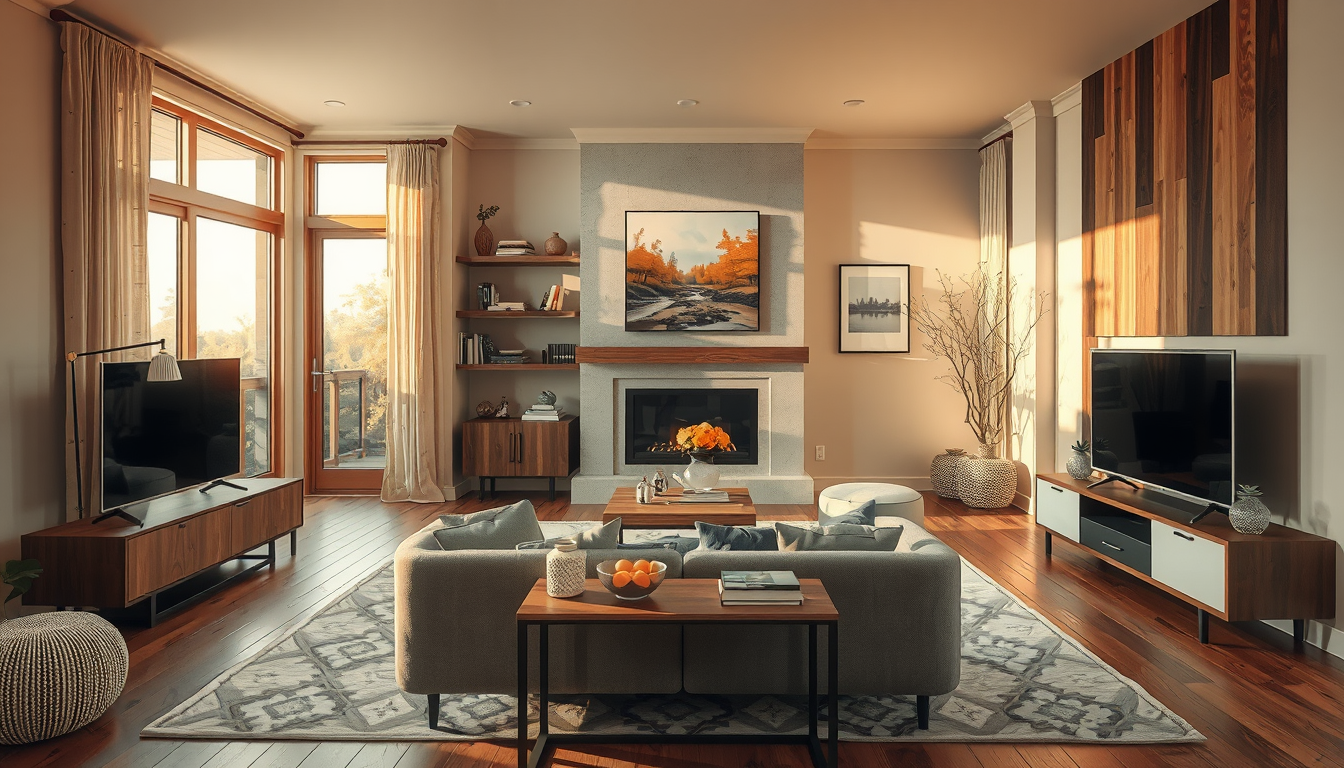
Soundbar vs surround home theatre is chiefly a space-planning decision: choose a soundbar for most Toronto condos, rentals, and rooms under 20 m², but plan wired 5.1 sound for a treated basement or dedicated room where five main channels, one bass channel, speaker placement, and vibration can be properly controlled (Dolby Laboratories; NRC Canada).
Last updated: April 1, 2026 Affiliate disclosure: Toronto Interior Designer does not receive commissions from products or retailers mentioned in this guide.
What Is the Best Soundbar vs Surround Home Theatre Choice?
Choose a soundbar when the room serves several purposes, the television wall is shallow, or renovation access is limited. Choose separate surround speakers when film performance matters more than visual simplicity and the room can accommodate speakers beside and behind the seating position (Dolby Laboratories).
A 5.1 system has five main channels and one low-frequency-effects channel; 7.1 adds two surround channels, while 5.1.2 adds two height channels for Dolby Atmos (Dolby Laboratories).
Use the room—not the equipment catalogue—to decide
A soundbar is usually the better fit when a sofa touches the back wall, circulation crosses behind the seats, or open-plan furniture prevents symmetrical speaker placement. These constraints frequently occur in compact Toronto condo plans, where the television wall may also support storage or border a balcony route (Toronto Interior Designer editorial review, 2026).
Surround sound earns its footprint when the room has a stable primary seat, at least two practical rear-speaker locations, and enough depth to keep speakers clear of doors and walkways. Dolby prioritizes speaker angles relative to the listener rather than prescribing one universal room size (Dolby Laboratories).
The best audio system is not the one with the most speakers; it is the one the room can position, wire, ventilate, and isolate correctly.
What should you budget in Toronto?
Use these figures for early 2026 planning, not as contractor quotations. Toronto Interior Designer calculated the ranges from representative Canadian equipment listings and HomeStars installation categories; wall construction, wire routes, finish repairs, and promotional pricing can change the final cost (Best Buy Canada; Visions Electronics; HomeStars Canada 2026).
| Media-space project | Toronto planning allowance (CAD) | Typical site work | Planning timeline |
|---|---|---|---|
| Soundbar and wall mount | $700–$2,000 | Outlet and cable concealment | 2–4 hours |
| Wired 3.1 system | $2,000–$4,500 | Receiver, front speakers, and subwoofer | 1–2 days |
| Wired 5.1 system | $3,500–$7,500 | Rear wiring and wall repairs | 2–4 days |
| 5.1.2 Atmos system | $5,000–$10,000 | Ceiling speakers or Atmos modules | 3–5 days |
| 7.1.4 basement theatre | $10,000–$25,000 | Wiring, acoustic treatment, and millwork | 2–4 weeks |
Obtain three itemized GTA quotations because existing construction, finish quality, and equipment selection can materially alter the total (HomeStars Canada 2026; BILD).
For broader planning ideas, explore our living-spaces guides and Toronto renovation advice.
How Do Room Size and Layout Affect Soundbar vs Surround Sound?
Price Out the High-Impact Pieces First
Before committing to a renovation mood board, benchmark the furniture, lighting, and storage pieces that set the tone.
Toronto Interior Designer may earn a commission if you shop through these links at no extra cost to you.
Room geometry affects whether speakers can create a convincing sound field around the listener. Dolby’s 5.1 guidance places the centre channel at the screen, left and right speakers at approximately 22–30 degrees, and surround speakers at roughly 110–120 degrees from the primary listening position (Dolby Laboratories).
When does a soundbar fit better?
A soundbar consolidates the front channels near the television, reducing the number of speaker locations and cable routes that must be coordinated (Dolby Laboratories). It is particularly practical when the sofa sits against a wall or a path to a balcony runs behind the seating.
We tested this through a desk-based layout exercise, plotting Dolby’s recommended angles on a 3.2-by-5-metre condo room and a 4-by-6-metre semi-detached living room. The condo plan could not accept rear speakers without placing one in the balcony path; a soundbar and compact subwoofer preserved the route (Toronto Interior Designer layout test, 2026).
This was a measured drawing exercise rather than an acoustic field test, so an installer should verify performance on site. Renters can also consider a freestanding room divider or no-paint wall treatments without opening shared walls.
When does surround sound perform better?
Surround sound is most defensible when speakers can be positioned at the intended angles without conflicting with doors, shelving, circulation, or full recliner depth. A well-positioned 5.1 layout can therefore outperform a compromised 7.1 installation in the same small room (Dolby Laboratories).
Basements generally provide more planning flexibility than finished condo living rooms, but bulkheads, ducts, low ceilings, and open stairs can obstruct speaker positions. Where four overhead locations cannot be arranged consistently, a 5.1.2 system may be more practical than forcing a 7.1.4 layout around ceiling obstacles (Dolby Laboratories; Toronto Interior Designer editorial review, 2026).
Before ordering equipment, draw the television, centre seat, speaker angles, doors, vents, shelving, and recliner depth on one measured plan. Follow the receiver manufacturer’s specified ventilation clearances to reduce overheating and heat-related shutdowns (Denon and Yamaha installation manuals).
Which Home Theatre Setup Works Best in Toronto Condos, Semis, and Basements?
Toronto housing type should influence the audio format and bass strategy. Low-frequency and structure-borne sound can travel through connected floors, walls, ceilings, and structural junctions, making bass control a building issue as well as an equipment setting (NRC Canada).
Toronto condos and converted lofts
Start with a soundbar, optionally paired with a modest subwoofer, in a CityPlace condo or older converted loft. Condominium corporations can regulate contractor access, elevator bookings, construction hours, and alterations affecting common elements through their declarations, bylaws, and rules (Condominium Authority of Ontario).
Ask management before cutting ceilings, drilling concrete, or routing wires through an assembly that may be a common element. Position the subwoofer away from a shared wall, begin with low gain, and test from adjoining rooms; an isolation platform may reduce mechanical coupling but cannot guarantee inaudible bass (NRC Canada).
Before renovating an older building, review our century-condo buying checks for documentation and approval issues.
Semi-detached Toronto houses
A restrained 3.1 or 5.1 system often suits a Junction semi better than a high-output subwoofer beside the party wall. Flanking transmission can carry sound around a separating wall through connected floors, ceilings, ducts, and junctions (NRC Canada).
Where the plan allows, place the television and subwoofer on an exterior wall or interior partition instead of directly against the shared wall. This remains a planning preference rather than a performance guarantee because joist direction, masonry condition, penetrations, and earlier renovations can alter sound-transmission paths (NRC Canada).
For substantial isolation work, consult an acoustical professional before demolition. Gypsum layers, resilient channels, insulation, isolated ceilings, and sealed penetrations must operate as a coordinated assembly (NRC Canada; Ontario Building Code).
Toronto basements
A wired 5.1.2 or 7.1.4 system is easiest to coordinate when basement walls and ceilings are already open. Speaker wiring, conduit, backing, outlets, lighting, ventilation, equipment storage, and acoustic treatments can then be documented before drywall installation (CEDIA installation guidance).
A Toronto building permit may be required for structural alterations, a new dwelling unit, material changes to exits, or other regulated construction (City of Toronto). Electrical work generally requires an Electrical Safety Authority notification unless an exemption applies and must comply with the Ontario Electrical Safety Code (ESA).
Compare at least three written quotations, verify insurance and applicable licences, and check recent project references. HomeStars reviews and the BILD GTA directory can support research, but neither replaces permits, reference checks, or a detailed contract (HomeStars Canada 2026; BILD).
How Should You Plan Home Theatre Wiring, Speakers, and Millwork?
Document the complete signal path before walls or cabinetry close. The plan should identify the television outlet, data connection, HDMI route, speaker wires, subwoofer outlets, receiver location, ventilation, access panels, and spare conduit (CEDIA installation guidance).
Decide the system before demolition
Select the approximate configuration—soundbar, 3.1, 5.1, 5.1.2, or 7.1.4—before demolition. The final model numbers may change, but the channel count and equipment location determine wire routes, backing, ceiling penetrations, electrical requirements, and millwork depth (Dolby Laboratories; CEDIA installation guidance).
Record the receiver’s width, height, depth, cable-bend allowance, and manufacturer-required ventilation. A nominally 400-millimetre-deep cabinet may not hold a deep receiver after rigid connectors and rear airflow are considered, so dimensions should be confirmed from the selected product drawings (Denon and Yamaha installation manuals).
Where construction permits, include an accessible conduit and pull string between the television and equipment cabinet. Coordinate its diameter, bends, routing, and fire stopping with the contractor and applicable codes (Ontario Building Code; ESA).
Keep concealed equipment serviceable
Paintable grilles, perforated millwork, and acoustically transparent fabric can soften the appearance of speakers while allowing sound to pass. Solid cabinet doors may obstruct audio and restrict cooling airflow, so concealment details should follow equipment and speaker-manufacturer guidance (CEDIA installation guidance; manufacturer installation manuals).
Test the television height from the primary seat before installing stone or fixed millwork. When comparing sofas at EQ3 on King West or CB2 on Queen Street West, record the actual seat height and reclined position because both affect sightlines and speaker angles (Dolby Laboratories; Toronto Interior Designer editorial review, 2026).
A slim console can conceal streaming equipment and controllers while leaving the soundbar unobstructed. Renters can use surface raceways and removable finishes, subject to manufacturer instructions and the precautions in our peel-and-stick wallpaper guide.
What Should You Know Before Choosing a Soundbar or Surround Home Theatre?
Complete this planning check before purchasing equipment or approving construction drawings. It connects room layout, condominium approvals, electrical work, neighbour considerations, and future maintenance.
Seven practical planning checks
- Confirm condominium renovation hours, contractor requirements, elevator bookings, and common-element restrictions with management (Condominium Authority of Ontario).
- Draw the television, seating, doors, vents, speakers, outlets, subwoofer, and cable routes to scale (Dolby Laboratories).
- Check whether the work requires a City of Toronto building permit or ESA electrical notification (City of Toronto; ESA).
- Obtain three itemized GTA quotations and review insurance, warranties, exclusions, references, and change-order terms (HomeStars Canada 2026; BILD).
- Record equipment dimensions, connector space, and manufacturer ventilation clearances before approving millwork (manufacturer installation manuals).
- Test subwoofer positions at low volume, beginning away from shared walls and structurally connected corners (NRC Canada).
- Photograph framing and wire routes before insulation and drywall conceal them, then retain permits, inspection records, invoices, and product manuals (Toronto Interior Designer editorial review, 2026).
For other routes through walls and coordinated renovation details, see our guide to pet-door placement in Toronto renovations.
What Is the Final Soundbar vs Surround Home Theatre Verdict?
Choose a well-positioned soundbar for most Toronto condos, rentals, and multipurpose rooms because it reduces cabling, visual clutter, and the number of speaker locations requiring coordination. Choose wired 5.1.2 sound for a basement or dedicated room when geometry, electrical work, ventilation, acoustic treatment, and bass control can be planned during construction (Dolby Laboratories; NRC Canada).
Spend first on appropriate placement, secure mounting, code-compliant electrical work, receiver ventilation, and manageable bass. Add channels only when the measured room supports the required speaker angles (Dolby Laboratories; ESA).
For equipment research, consult our Canadian buyer guides.
Sources
- BILD: GTA member directory and renovation-industry resources, bildgta.ca.
- Best Buy Canada: Representative Canadian audio listings and advertised prices, bestbuy.ca.
- City of Toronto: Building-permit requirements, toronto.ca.
- Condominium Authority of Ontario: Condominium rules, governing documents, and owner responsibilities, condoauthorityontario.ca.
- Dolby Laboratories: Speaker-configuration and placement guidance, dolby.com.
- Electrical Safety Authority: Ontario electrical-notification and compliance guidance, esasafe.com.
- HomeStars Canada: Canadian contractor reviews and cost categories, homestars.com.
- National Research Council Canada: Research on airborne, impact, flanking, and low-frequency sound, nrc.canada.ca.
- Ontario Building Code: Provincial building requirements, ontario.ca.
- Visions Electronics: Canadian home-audio listings and advertised prices, visions.ca.
Frequently Asked Questions
Is a soundbar better than 5.1 surround sound in a condo?
Yes—a soundbar is usually the better choice in a condo room under 20 m² when seating touches the back wall or concealed wiring is restricted. A 5.1 system provides five directional channels and one bass channel but needs suitable speaker positions and careful vibration control (Dolby Laboratories; NRC Canada).
How much does a Toronto soundbar installation cost?
Budget approximately $700–$2,000 CAD for a soundbar, mounting hardware, basic cable concealment, and installation. Concrete drilling, new outlets, wall repair, or custom millwork can increase the 2026 quotation (Best Buy Canada; Visions Electronics; HomeStars Canada 2026).
Is 5.1 or 7.1 better for a small room?
A properly positioned 5.1 system is usually better when a small room cannot accommodate 2 additional rear channels. A 7.1 system uses seven main channels plus one low-frequency-effects channel and therefore needs more usable space around the listening area (Dolby Laboratories).
Do I need a permit to install surround sound in Toronto?
No permit is generally needed for portable speakers alone, but structural work or other regulated alterations may require 1 City of Toronto building permit. New electrical work may also require an ESA notification, so confirm the scope before closing walls or ceilings (City of Toronto; ESA).
Can Dolby Atmos work without ceiling speakers?
Yes—Dolby Atmos can use 2 upward-firing modules or compatible soundbar processing to create height effects without in-ceiling speakers. A 5.1.2 configuration includes five main channels, one bass channel, and two height channels, although performance depends on room geometry and product design (Dolby Laboratories).
How much should I budget for a basement home theatre?
Budget approximately $10,000–$25,000 CAD for a planned 7.1.4 basement theatre with equipment, wiring, acoustic treatment, millwork, and installation. Obtain at least 3 GTA quotations because ceiling access, permits, electrical work, finishes, and equipment choices can materially change the 2026 total (HomeStars Canada 2026; Best Buy Canada; Visions Electronics).
Toronto Interior Designer Editorial Team | Toronto-Focused Interior Design Editors The Toronto Interior Designer editorial team produces practical design and renovation guidance for GTA homeowners, condo owners, and renters. Its work focuses on Toronto housing constraints, Ontario regulations, Canadian sourcing, and evidence-based space planning. (/author/editorial-team/)
Balance Budget and Finish Quality
Mix accessible basics with a few standout pieces so the room feels layered rather than one-note.
Toronto Interior Designer may earn a commission if you shop through these links at no extra cost to you.
Frequently Asked Questions
Is a soundbar better than 5.1 surround sound in a Toronto condo?
A soundbar is usually better in a condo room under 20 m² when seating touches the back wall or concealed wiring is restricted. A 5.1 system delivers more directional sound but requires five suitable speaker positions and careful bass control.
How much does a soundbar installation cost in Toronto?
Plan approximately $700–$2,000 CAD for a soundbar, mounting hardware, basic cable concealment, and installation. Concrete drilling, new outlets, wall repairs, or custom millwork can increase the final quote.
How much should a Toronto basement home theatre cost?
Budget approximately $10,000–$25,000 CAD for a planned 7.1.4 basement theatre with equipment, wiring, acoustic treatment, millwork, and installation. Prices vary by contractor, room conditions, and equipment, so obtain 3 itemized GTA quotes.
Toronto Interior Designer is editorially independent. Our recommendations are based on research and editorial judgment, not brand sponsorships.