
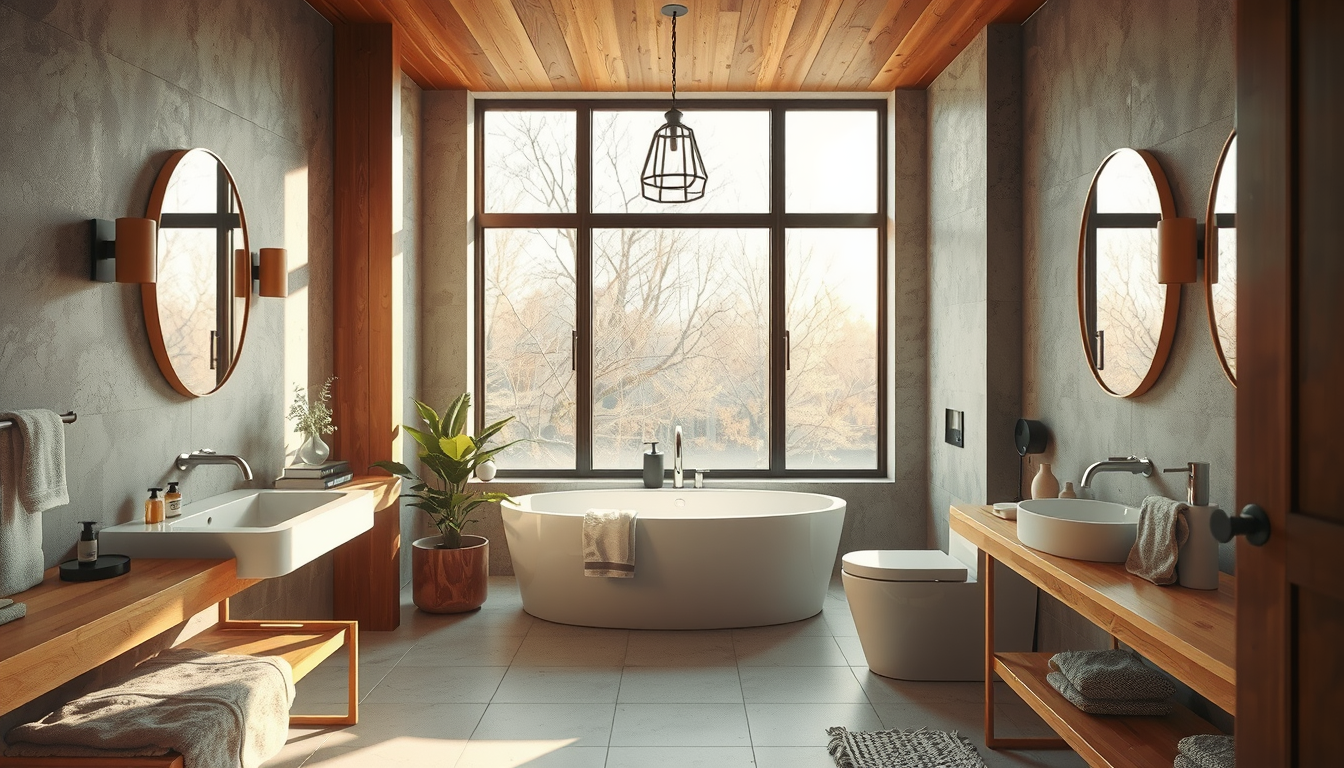
If you’re searching for bathroom storage ideas Canada homeowners actually use, start with this reality check: the average condo bathroom built after 2010 offers just 36 to 40 square feet of floor space — roughly 30 percent smaller than a typical US new build . That tight footprint, combined with Ontario Building Code clearance requirements and the sharp humidity swings of Canadian winters, means generic Pinterest solutions rarely survive contact with a real Toronto bathroom. The good news? Constraints breed creativity. This guide breaks down storage strategies by housing type, budget, and climate reality so every square inch earns its keep.
Why Canadian Bathrooms Need Unique Storage Solutions
Most bathroom organization content online assumes a spacious American-style layout with deep linen closets and wide countertops. Canadian bathrooms — especially in Toronto’s pre-war semis, post-war bungalows, and condo-boom towers — play by different rules.
Three constraints shape every decision:
- Ontario Building Code clearances. Section 3.8 mandates a minimum 21-inch clearance in front of fixtures, which eliminates many swing-door and deep pullout options in narrow layouts .
- Non-standard wall depths. Toronto has over 400,000 pre-1950 homes where plaster-and-lath walls and irregular stud spacing limit heavy-mount shelving and recessed cabinets .
- Seasonal humidity cycles. Heated Canadian homes drop to 20–30 percent relative humidity in winter, but bathrooms spike during showers. That expansion-contraction cycle punishes cheap particleboard and rewards moisture-smart materials.
Understanding these realities before you buy a single shelf saves money and frustration. At Toronto Interior Designer, we regularly see homeowners waste hundreds of dollars on storage pieces that physically don’t fit or deteriorate within two winters.
Vertical Bathroom Storage Ideas for Condos and Apartments
Upgrade the Details That Change Everything
Lighting, mirrors, and matte hardware can make a modest bathroom renovation feel far more custom.
Toronto Interior Designer may earn a commission if you shop through these links at no extra cost to you.
When floor space is fixed, the only direction left is up. Vertical storage is the single highest-impact upgrade for any bathroom under 45 square feet — and the transition from cramped to comfortable often comes down to how well you use the wall space between counter height and ceiling.
| Storage Solution | Best For | Budget Range (CAD) | Key Consideration |
|---|---|---|---|
| Floating shelves (2–3 tiers) | Open-concept display, daily essentials | $40–$120 | Use stainless steel brackets for plaster walls |
| Over-toilet cabinet | Condo bathrooms with standard ceiling height | $80–$250 | Verify 21-inch clearance from toilet front edge |
| Floating vanity with open base | Small footprints needing visual space | $300–$900 | Pairs well with basket storage below; see our bathroom vanity ideas guide |
| Tall narrow linen tower | Bathrooms with at least 12 inches of unused wall | $150–$400 | Anchor to studs — plaster walls need toggle bolts |
| Magnetic spice-rack strips | Razor, tweezer, and small-tool storage | $15–$35 | Mount inside cabinet doors to save wall space |
Floating vanities deserve special attention. They’ve surged in popularity among Canadian homeowners on Pinterest year over year, and for good reason: raising the vanity off the floor makes a 37-square-foot bathroom feel noticeably larger while creating usable storage underneath for baskets, bins, or a small step stool .
“In a tight condo bathroom, your walls are your storage budget. Every inch between 48 and 84 inches off the floor is prime real estate — use it before you buy a single freestanding organizer.”
Built-In Bathroom Storage for Century Homes and Toronto Semis
Century homes offer something condos can’t: thick walls with genuine potential for recessed storage. A skilled contractor can notch a medicine cabinet or niche between studs without touching wet walls — a critical distinction when you want to avoid permit headaches and keep renovation costs contained.
Three built-in approaches that work with older Toronto housing stock:
- Recessed niches in shower walls. A tiled niche between studs costs $200–$500 installed and eliminates the need for rust-prone shower caddies. Size it at 12 by 24 inches minimum to hold bottles upright, and consider adding a second narrow niche at knee height for children’s bath products.
- Recessed medicine cabinets with mirrored fronts. The mirrored-storage debate is alive — Dwell recently explored whether concealed mirror storage is design-forward or dated . Our take: in a small Canadian bathroom, dual-purpose beats aesthetics every time. A 30-inch recessed cabinet adds three to four cubic feet of hidden storage without claiming a single inch of floor space.
- Under-sink pullout drawers retrofitted to existing vanities. Many older Toronto semis have pedestal sinks with zero storage. A custom U-shaped pullout shelf ($120–$300 from a local millworker) wraps around the plumbing and reclaims dead space that would otherwise sit empty for decades.
If you’re tackling a broader renovation in an older home, our renovation tips section covers permit planning and contractor selection specific to Toronto housing stock.
Budget-Friendly Bathroom Organization Under $200 CAD
Not every storage upgrade requires a contractor. These five solutions cost under $200 total and install in a weekend with basic tools:
- Tension rod under the sink ($12–$20 at Canadian Tire). Hang spray bottles by their triggers and free up the cabinet floor for stackable bins.
- IKEA Canada ENHET wall cabinet ($79–$129). Designed for wet spaces with a moisture-resistant finish. Note that IKEA Canada prices run 8 to 15 percent higher than US equivalents, so watch for the semi-annual bathroom event in January and June .
- Adhesive-mount hooks on the back of the door ($8–$15 for a 6-pack). No drilling, fully removable, and perfect for rentals where landlord approval is limited.
- Stackable bamboo bins with lids ($25–$45 for a set of 3). Bamboo handles bathroom humidity far better than pine or MDF and is widely available at HomeSense locations across the GTA.
- Over-door towel rack with shelf ($30–$50). Adds a full shelf plus three towel bars without a single screw hole — ideal for bathrooms where wall space is already spoken for.
Total for all five: roughly $160 to $260 CAD. That’s a fully organized bathroom for less than the cost of a single designer shelf unit.
Moisture-Smart Materials That Last Through Canadian Winters
Material choice is where many homeowners stumble, and the question our editors hear most often is: Why did my bathroom shelf warp after one season?
Canada’s winter heating cycle creates dry indoor air at 20 to 30 percent humidity, but a hot shower pushes your bathroom to 70 percent or higher within minutes. That repeated swing destroys materials designed for stable environments.
Choose these materials for bathroom storage:
- Marine-grade plywood or Baltic birch — handles humidity swings without delaminating. Costs 20–30 percent more than standard plywood but lasts years longer.
- Powder-coated steel — rust-resistant, wipes clean, and supports heavy loads. Look for Canadian-made options from industrial suppliers.
- Solid bamboo — naturally moisture-resistant, more dimensionally stable than softwoods, and widely stocked at Canadian retailers.
- High-pressure laminate (HPL) — used in commercial washrooms for a reason. Budget-friendly and nearly indestructible in humid conditions.
Avoid: raw MDF, unfinished particleboard, and natural wicker without a sealed finish. These materials absorb moisture, swell, and develop mould — a serious concern in any Canadian bathroom without upgraded ventilation.
For similar material guidance applied to another storage-hungry room, see our guide to bedroom storage ideas across Canada.
What to Do Next
Bathroom storage ideas Canada homeowners can act on this weekend:
- Measure your clearances first. Check the distance from each fixture to the nearest wall or door. If you’re under 21 inches anywhere, rule out swing-door and deep pullout solutions before you shop.
- Identify your wall type. Knock test: hollow means drywall on studs (good for anchored shelving); solid and hard means plaster-and-lath (use toggle bolts or consult a contractor for heavy loads).
- Pick one vertical solution and one concealed solution. Combining visible and hidden storage keeps the room functional without visual clutter.
- Budget in CAD and shop Canadian retailers first. Canadian Tire, IKEA Canada bathroom events, and HomeSense offer the best price-to-quality ratio without cross-border shipping surprises.
- Choose moisture-rated materials only. Skip the bargain MDF shelf. Spend 20 percent more on marine-grade plywood or bamboo and avoid replacing it in two years.
Small bathrooms don’t need more space — they need smarter storage. Start with one upgrade this weekend and build from there.
Keep Small Bathrooms Working Hard
Compact storage, simple shelving, and clean-lined accessories are the fastest way to add polish without crowding the room.
Toronto Interior Designer may earn a commission if you shop through these links at no extra cost to you.
Sources
- CMHC housing data — https://www.cmhc-schl.gc.ca
- Ontario Building Code — https://www.ontario.ca/laws
- City of Toronto Open Data — https://open.toronto.ca
- Pinterest Predicts 2025 — https://business.pinterest.com/pinterest-predicts/
- Dwell — https://www.dwell.com
- IKEA Canada — https://www.ikea.com/ca/en/
Frequently Asked Questions
What are the best bathroom storage ideas for small Canadian condos?
Floating vanities, over-toilet cabinets, and vertical shelving between 48 and 84 inches off the floor deliver the biggest impact in condos under 45 square feet. Use stainless steel brackets on plaster walls and verify Ontario Building Code 21-inch fixture clearances before installing any swing-door unit.
Which materials survive Canadian bathroom humidity?
Marine-grade plywood, powder-coated steel, solid bamboo, and high-pressure laminate handle the extreme humidity swings of heated Canadian homes. Avoid raw MDF, unfinished particleboard, and unsealed wicker, which absorb moisture and develop mould within one or two winters.
How can I organize my bathroom on a budget in Canada?
Five upgrades totalling under $200 CAD cover most needs: a tension rod under the sink, an IKEA Canada ENHET wall cabinet, adhesive-mount door hooks, stackable bamboo bins, and an over-door towel rack with shelf. Shop Canadian Tire, IKEA bathroom events in January and June, and HomeSense for the best value.