
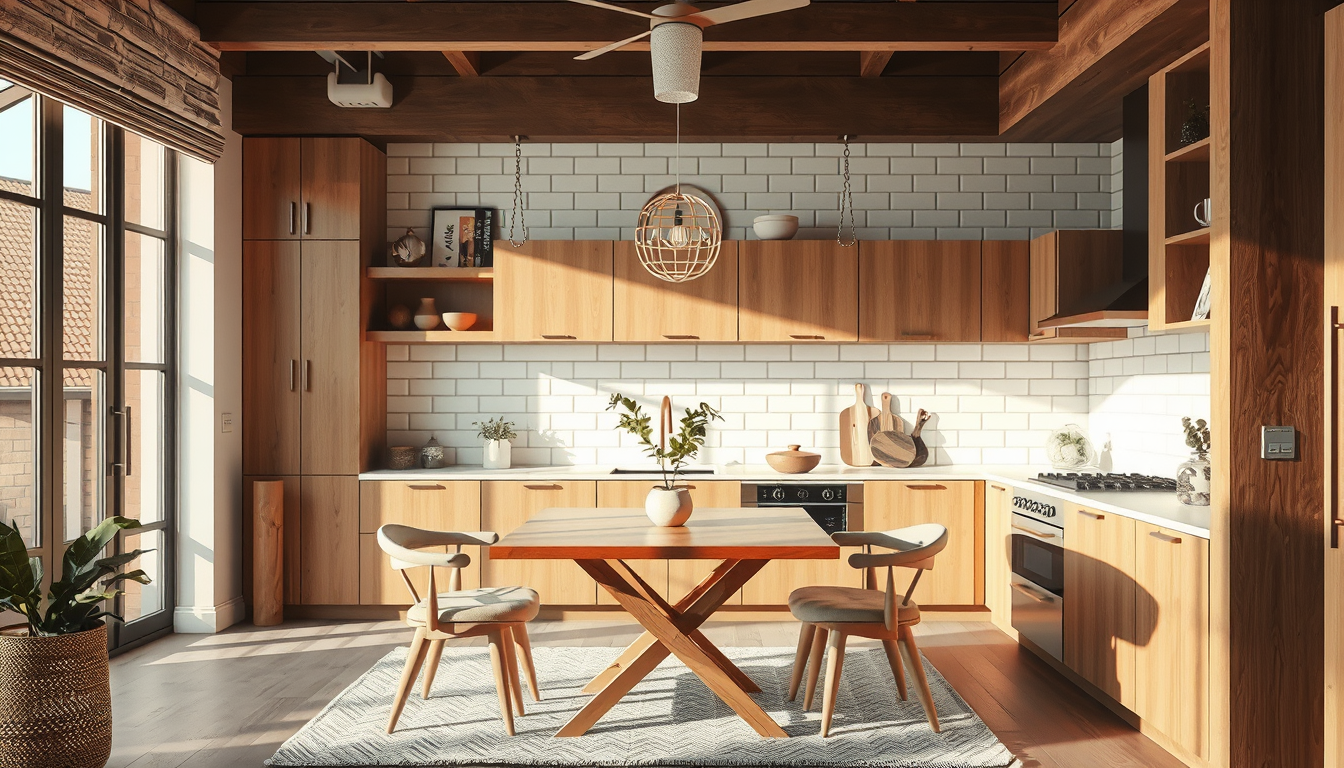
Every dining table buying guide Canada homeowners come across skips the one detail that matters most in this market: your table has to earn its square footage. In a typical GTA condo — somewhere between 500 and 700 square feet of open-concept living — the dining table isn’t tucked away in a separate room. It sits at the crossroads of your kitchen, living area, and entryway, visible from every angle. It doubles as a home office, a meal-prep overflow, and the centrepiece of every dinner party you host. Choosing wrong means a table that chokes your layout or looks cheap under constant scrutiny. Choosing right means a piece that anchors your entire home. Here’s how to get it right.
How to Size a Dining Table for Canadian Condos and Open-Concept Layouts
The single most common mistake in condo dining is buying a table that technically seats six but leaves no room to move. The standard rule calls for 36 inches (91 cm) of clearance between the table edge and the nearest wall or furniture piece — enough space to pull out a chair and walk behind someone who is seated . In a condo with a combined living-dining zone under 700 square feet, that clearance requirement eliminates most full-size rectangular tables before you even consider style.
Start by measuring the actual footprint available for dining, not the whole room. In many Toronto condos, the usable dining zone is roughly 8 by 8 feet once you account for kitchen island overhang, a pathway to the balcony, and living room furniture. That gives you room for a table up to about 48 inches in diameter or 54 inches long — and not an inch more if you want comfortable circulation.
Here is a quick reference for common table sizes and what they realistically fit:
| Table Shape | Dimensions | Seats | Min. Room Footprint | Best For |
|---|---|---|---|---|
| Round | 42″ diameter | 4 | 8′ × 8′ | Studios and small condos |
| Round | 48″ diameter | 4–5 | 9′ × 9′ | One-bedroom condos |
| Oval | 54″ × 36″ | 4–6 | 9′ × 10′ | Narrow open-concept layouts |
| Rectangular | 60″ × 36″ | 6 | 10′ × 10′ | Townhomes and larger condos |
| Extendable | 48–66″ × 36″ | 4–8 | 9′ × 10′ (collapsed) | Hosts who need flexibility |
If you are working with a tight layout, an extendable table is the most pragmatic pick. Brands like Canadel and EQ3 both offer well-engineered leaf mechanisms designed for daily use, not just holiday overflow.
Round, Oval, or Rectangular: Which Table Shape Best Saves Condo Space
Shop Dining Pieces for Narrow Layouts
Extendable tables, slim dining chairs, and compact pendants make a bigger impact than oversized statement pieces.
Toronto Interior Designer may earn a commission if you shop through these links at no extra cost to you.
Once you know your footprint, shape becomes the most impactful decision. Round tables are the unsung heroes of compact dining. Without corners, they allow easier traffic flow and create a more social seating arrangement where everyone faces the centre. A 48-inch round table can seat five in the same footprint where a rectangular table of similar capacity would block a walkway — roughly 15 to 20 percent less floor area consumed .
Oval tables split the difference. They offer the elongated serving surface of a rectangle with the softened edges of a round, making them a smart choice for narrow layouts where you need length but cannot afford sharp corners jutting into a hallway. The 2026 “Neo Deco” trend identified by Architectural Digest — with its fluted pedestals and sculptural silhouettes — has made oval tables especially popular this year .
A dining table in a Toronto condo isn’t just where you eat — it’s the most visible piece of furniture in your home. Every design decision you make radiates outward from that spot.
Rectangular tables still make sense if you have a dedicated dining area or a longer, corridor-style layout common in older Toronto low-rises. They offer the most serving surface per dollar and seat guests more formally, which matters if you entertain regularly. Just be honest about clearance — if you cannot walk comfortably behind a seated guest, the table is too big.
Solid Wood, Stone, or Engineered: Best Dining Table Materials for Canadian Climates
With shape and size settled, material is where longevity and budget come into play — and it matters more in Canada than in most markets. Our homes endure dry, heated winters with indoor humidity sometimes dropping below 25 percent, followed by humid summers that can push past 70 percent. That seasonal swing is hard on furniture, and it should influence your buying decision directly.
Solid hardwood — walnut, white oak, and maple — remains the gold standard. A well-built hardwood table can last 20 years or more and develops character with age. Ontario walnut and Quebec maple are both available through Canadian makers like Canadel (manufacturing in Louiseville, Quebec since 1982) and smaller workshops across the GTA. Expect to pay $1,500 to $4,000 CAD for a quality solid-wood table. The investment pays off in longevity and refinishability — you can sand and re-seal a hardwood top multiple times over its lifespan.
Engineered and veneer tops offer the look of real wood at a lower price, typically $500 to $1,500 CAD. They handle humidity swings reasonably well because the composite core resists warping better than solid planks. The trade-off is durability: veneer cannot be refinished if deeply scratched, and most engineered tables last five to ten years with daily use.
Stone and ceramic tops (marble, quartz, sintered stone) are heat-resistant and easy to clean, making them practical for households that cook frequently. Sintered stone options from brands like Mobilia and Artemano start around $1,800 CAD and handle Canadian climate fluctuations without the sealing maintenance that natural marble demands. If you are pairing a stone-top table with a new kitchen backsplash, coordinate the veining and tone so the two surfaces don’t compete.
Where to Buy a Quality Dining Table in Canada: 5 Proven Retailers
Canadian-made and Canadian-stocked retailers offer real advantages: shorter lead times, easier returns, and designs scaled for our housing stock. Here are your strongest options, organized by budget:
- Structube ($400–$1,200 CAD) — Affordable, trend-forward designs. Best for renters or first-time buyers who want style without a long-term commitment. Montreal-based with stores across Ontario.
- EQ3 ($800–$2,500 CAD) — Canadian-designed furniture with solid construction and clean mid-century lines. Winnipeg headquarters, multiple GTA showrooms. Good customization on upholstery and some table finishes.
- Canadel ($1,200–$3,500 CAD) — The customization leader. Choose your wood species, stain, shape, and size from their Louiseville factory. Ideal for buyers who want a precise fit for an awkward condo layout.
- Artemano ($1,500–$4,000 CAD) — Specializes in reclaimed and exotic hardwoods with a raw, artisan aesthetic. Strong option if material provenance matters to you.
- Mobilia ($1,000–$5,000+ CAD) — Higher-end European and Canadian designs. Worth visiting for stone and ceramic-top options that are harder to find elsewhere in the GTA.
We consistently recommend seeing tables in person before buying — especially for solid wood. Grain pattern, finish sheen, and edge profile all look different under showroom lighting than they do on a screen.
How to Match Your Dining Table to an Open-Concept Kitchen and Living Room
Because your condo’s open layout puts the dining table on permanent display, it needs to harmonize with both the kitchen and the living room. A few principles keep this simple.
Match the undertone, not the exact colour. If your kitchen cabinets are warm-toned (honey oak, warm grey, cream), choose a table with warm wood or a warm-toned stone. Cool-toned kitchens (white, blue-grey, charcoal) pair better with white oak, ash, or light marble. This principle also applies when choosing wall art for the dining zone — coordinate with the table’s material palette rather than matching it exactly.
Let the table legs do the talking. The 2026 Neo Deco trend means sculptural bases — fluted columns, arched trestles, tapered cylinders — are everywhere. A statement base paired with a simple top gives you visual interest without overwhelming a small room.
Consider the chair relationship. Budget roughly 40 percent of your total dining set spend on chairs. A beautiful table paired with flimsy seating undermines the whole setup. If you are mixing and matching, keep the leg finish consistent between table and chairs for a cohesive look.
For more ideas on designing a kitchen-dining area that flows, browse our kitchen and dining inspiration.
What to Do Next
This dining table buying guide Canada readers can actually use comes down to five steps:
- Measure your dining zone first. Tape out the footprint on the floor before shopping. Include 36 inches of clearance on all sides.
- Choose shape before style. Round or oval for condos under 700 sq ft; rectangular only if you have true clearance.
- Set a material budget. Solid hardwood if you are staying long-term ($1,500–$4,000 CAD); engineered or veneer for shorter timelines ($500–$1,500 CAD).
- Shop in person. Visit at least two showrooms — Canadel, EQ3, and Mobilia all have GTA locations worth the trip.
- Coordinate with your open-concept sightlines. Your table is visible from everywhere, so match undertones with your kitchen and living room palette.
At Toronto Interior Designer, we believe the dining table is the hardest-working piece of furniture in any Canadian home — especially in a condo. Get the size and material right, and everything else in the room falls into place.
Start With Functional Basics
For budget-friendly kitchen and dining updates, focus on stools, storage, and lighting before decorative extras.
Toronto Interior Designer may earn a commission if you shop through these links at no extra cost to you.
Sources
- National Kitchen & Bath Association guidelines — https://nkba.org
- Architectural Digest space-planning guide — https://architecturaldigest.com
- Architectural Digest 2026 trend report — https://architecturaldigest.com
Frequently Asked Questions
What size dining table fits a Toronto condo?
Most Toronto condos with 500–700 sq ft of open-concept space can fit a round table up to 48 inches in diameter or a rectangular table up to 54 inches long. Always allow 36 inches of clearance between the table edge and the nearest wall or furniture for comfortable seating and walkways.
How much does a quality dining table cost in Canada?
Expect to pay $500–$1,500 CAD for engineered or veneer tops, $1,500–$4,000 CAD for solid hardwood from Canadian makers like Canadel or EQ3, and $1,800+ CAD for stone or sintered-stone options from retailers like Mobilia and Artemano.
Is solid wood or engineered better for Canadian climates?
Solid hardwood like walnut or white oak lasts 20+ years and can be refinished, but it needs stable humidity. Engineered tops resist warping better through Canada’s dry winters and humid summers, making them a practical choice for shorter-term ownership at a lower price point.