
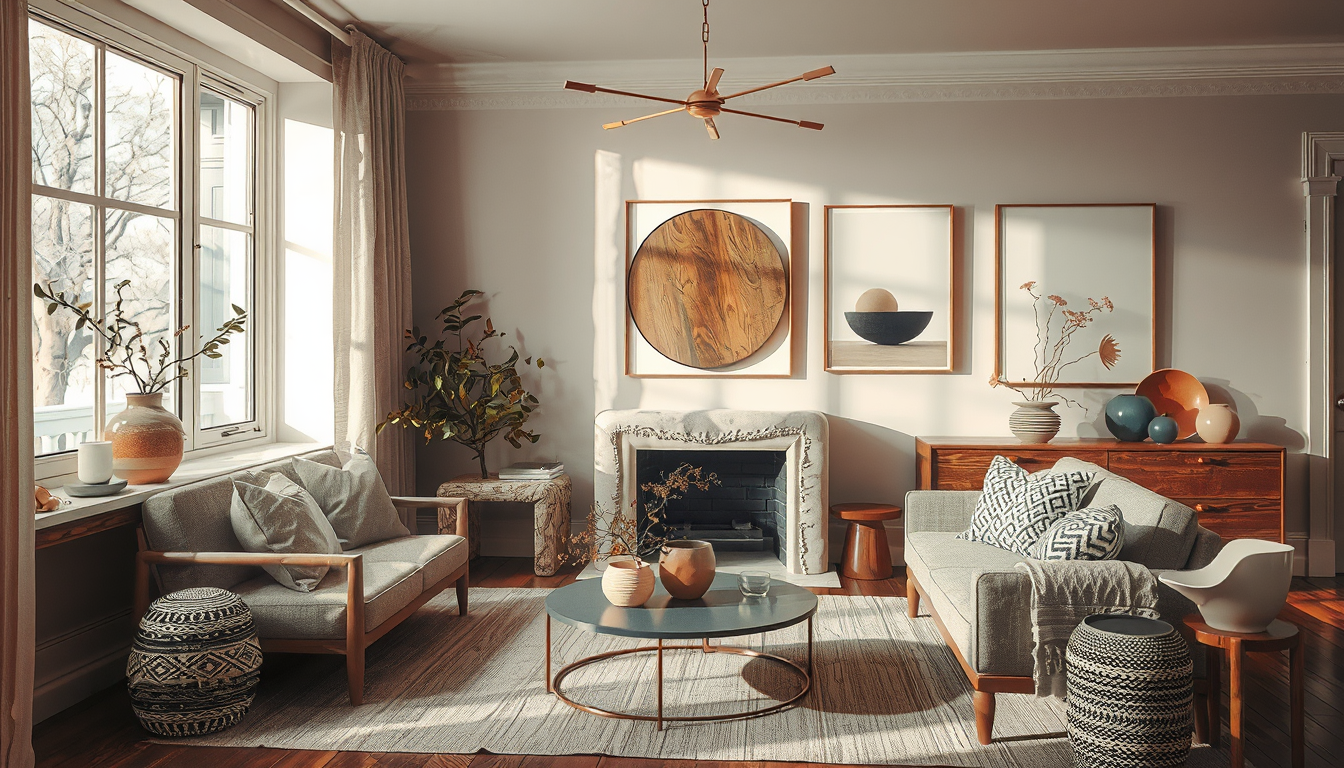
If you are searching for wall art ideas canada homeowners actually use, here is the thesis worth pinning above your sofa: one well-chosen piece of art will do more for a room than a full furniture swap. Art sets the colour story, anchors the mood, and gives guests something to talk about — yet most Canadians hang whatever they already own, wherever a nail happens to be. This guide walks you through choosing the right type of art, sourcing it from Canadian artists and galleries, matching it to your room’s palette and proportions, and hanging it properly on the plaster, drywall, or concrete walls found in Canadian homes from century Victorians to new-build condos.
Best Types of Wall Art for Canadian Homes and Climates
Not every piece survives a Canadian winter. Forced-air heating can drop indoor humidity below 25 percent between November and March, then summer pushes it past 55 percent — a swing that warps unprotected canvases and buckles paper prints . Choosing the right medium up front saves you from damage and reframing costs later.
| Art Type | Best For | Climate Consideration | Budget Range (CAD) |
|---|---|---|---|
| Framed prints (giclée) | Renters, gallery walls | Use UV-protective glazing and acid-free matting | $80–$400 |
| Original canvas paintings | Living rooms, dining rooms | Stretch bars can shift — request climate-rated varnish | $500–$5,000+ |
| Textile wall hangings | Bedrooms, nurseries | Naturally absorb humidity swings; air out seasonally | $150–$1,200 |
| Metal or acrylic panels | Condos, modern spaces | Humidity-resistant; minimal framing needed | $200–$900 |
| Mixed-media / sculptural | Statement walls, entryways | Heavier pieces need proper anchoring (see hanging section) | $300–$3,000+ |
The 2026 Neo Deco trend identified by Architectural Digest favours ornamental, richly framed, and mixed-media displays over the bare-wall minimalism of recent years . If you have been sitting on a bold piece that felt “too much,” now is the time to hang it.
Where to Buy Wall Art in Canada: Galleries, Platforms, and Local Artists
Find the Finishing Pieces
Accent lighting, ceramics, mirrors, and small furniture often make the biggest difference in builder-grade rooms.
Toronto Interior Designer may earn a commission if you shop through these links at no extra cost to you.
Supporting Canadian artists keeps money in the local creative economy and gives you a story behind every piece. The following sources consistently deliver quality at a range of price points:
- West Queen West and the Distillery District (Toronto) — Walk-in galleries with rotating shows; ideal for finding emerging painters and printmakers at accessible price points.
- Partial Gallery (Toronto-based online platform) — Connects buyers directly with Canadian artists; original works start around $300 and ship framed.
- Indigenous Art Centre and regional Indigenous art collectives — Organizations across Canada make original Indigenous artwork more accessible, with growing demand since 2020 for authentic, artist-direct purchases.
- Etsy Canada and local art fairs — Filter by location for one-of-a-kind prints, weavings, and photography from makers in your province.
- Estate sales and vintage shops — Older framed works often come with solid wood frames that outperform modern alternatives in both quality and character.
“The best rooms I have designed in Toronto all started with one piece of art the client already loved — we just built everything else around it.” — a principle the Toronto Interior Designer editorial team hears repeatedly from local designers.
When buying online, request a detail shot of the surface texture and ask whether the piece ships with hanging hardware rated for its weight. A 30 × 40-inch framed canvas can weigh over 15 pounds, which matters once you get to the wall.
How to Match Wall Art to Your Room’s Colour Palette and Scale
Choosing art is not about matching your sofa cushions — it is about creating a conversation between the piece and the room. Get the proportion and colour relationship right, and even an inexpensive print can anchor a space.
Scale rule: Design experts recommend artwork should fill roughly two-thirds to three-quarters of the wall space above the furniture it sits over. A 72-inch sofa needs at least a 48-inch-wide piece or grouping above it. Anything smaller looks like an afterthought, and anything larger overwhelms the furniture beneath it.
Colour strategy: Pull two secondary tones from the artwork into your throw pillows, rug, or curtain fabric. This creates cohesion without making the room feel like a paint swatch. If you are working on bedroom colour choices, pick art that introduces one accent hue outside your main palette to keep the space from feeling flat.
Frame finish: Match frame material to the room’s existing hardware. Brass light fixtures pair with warm-toned wood or gold frames; matte black hardware calls for slim black or raw steel frames. In compact Toronto condos, frameless or floating-frame canvases reduce visual bulk and make the room feel larger.
How to Hang Wall Art on Plaster, Drywall, and Concrete Walls in Canada
This is where most Canadian homeowners go wrong. Toronto’s housing stock spans 150 years of construction methods, and each wall type demands a different fastener. Using the wrong anchor is the fastest way to crack your plaster or watch a piece crash to the floor at three in the morning.
| Wall Type | Common In | Recommended Hardware | Weight Limit |
|---|---|---|---|
| Plaster and lath | Pre-1950s Toronto homes | Toggle bolts or plaster-specific anchors | Up to 50 lb per anchor |
| Standard drywall (½″) | Post-1970s houses, townhomes | Threaded drywall anchors or wall studs + screws | 25–75 lb (stud-mounted) |
| Concrete / CMU | Condo towers, lofts | Tapcon screws or sleeve anchors (drill required) | 50 lb+ per anchor |
Hanging height: The gallery standard is 57–60 inches from the floor to the centre of the artwork — the same range used by the AGO and most major museums. In rooms with 8-foot ceilings typical of Toronto condos, stick closer to 57 inches so the piece does not crowd the ceiling.
Protect your walls from humidity cycling:
- Use bumper pads on the back corners of every frame to allow air circulation and prevent moisture trapping.
- In older homes, apply a small patch of painter’s tape behind each anchor point before drilling — this stops plaster from spider-cracking outward.
- For heavy pieces (over 20 pounds), use two anchor points 6–8 inches apart rather than a single centre hook. The lateral spread distributes weight and prevents tilting over time.
If you are renovating and want to plan art placement before the walls go up, our renovation tips archive covers backing board installation and blocking for future-proof hanging.
Gallery Wall Layout Ideas for Canadian Homes
A gallery wall lets you display multiple pieces without committing to a single large-scale work. Done well, it turns a blank hallway or staircase into a visual narrative. Here is the approach Toronto Interior Designer contributors recommend:
- Start on the floor. Lay all pieces on the ground or a large sheet of kraft paper. Arrange until you find a grouping you like, then trace each frame on the paper, tape it to the wall, and nail through the marks.
- Pick one unifying element. Consistent frame colour, a shared colour in every image, or uniform matting width — choose one thread to tie the collection together.
- Keep spacing tight. Two to three inches between frames creates a cohesive cluster. Wider gaps make the arrangement read as separate pictures rather than a single installation.
- Mix sizes deliberately. Anchor the layout with one large piece (at least 16 × 20 inches), then surround it with smaller works. Avoid using all identical sizes unless you want a rigid grid.
- Include one three-dimensional object. A small shelf, a sculptural sconce, or a woven basket breaks up the flat plane and adds depth — a detail that aligns with the Neo Deco push toward mixed-media displays.
For more ideas on styling the rooms where gallery walls have the most impact, browse our living spaces collection.
What to Do Next
Finding the right wall art comes down to preparation. Use this checklist to move from browsing to hanging:
- Measure your wall and furniture before you shop — know the minimum artwork width your space needs.
- Identify your wall type (plaster, drywall, or concrete) and buy the correct anchors before picture-hanging day.
- Visit one local gallery or online Canadian art platform this month and save three pieces that speak to you.
- Pull colour swatches from your favourite piece and test them against your room’s existing tones.
- Hang at 57–60 inches to centre and use two anchor points for anything over 20 pounds.
- Add bumper pads and check framing seals before winter to protect against humidity-driven damage.
Wall art is the fastest, most personal upgrade you can make to any room — and when you source it from Canadian artists, every piece carries a story that no mass-produced print can match. Start with one wall, one piece, and build from there.
Source Warm, Livable Staples
Natural textures and simple silhouettes are easier to layer when you start with timeless foundational pieces.
Toronto Interior Designer may earn a commission if you shop through these links at no extra cost to you.
Sources
- Natural Resources Canada home moisture guide — https://natural-resources.canada.ca/energy-efficiency/homes
- Architectural Digest Neo Deco trend report — https://www.architecturaldigest.com/story/neo-deco-trend-2026
Frequently Asked Questions
Where can I buy affordable wall art in Canada?
Canadian buyers can find affordable wall art through Partial Gallery, Etsy Canada filtered by location, local art fairs, Toronto’s West Queen West galleries, and estate sales. Original works from emerging Canadian artists start around $80 for framed prints and $300 for original pieces.
How high should I hang wall art in a Canadian condo?
Hang artwork so the centre sits 57 to 60 inches from the floor, the same standard used by the AGO and major museums. In condos with standard 8-foot ceilings, aim closer to 57 inches so the piece does not crowd the ceiling line.
How do I protect wall art from humidity damage in Canadian winters?
Use UV-protective glazing and acid-free matting on framed prints, request climate-rated varnish on original canvases, attach bumper pads to frame corners for air circulation, and check framing seals before winter when indoor humidity can drop below 25 percent.