
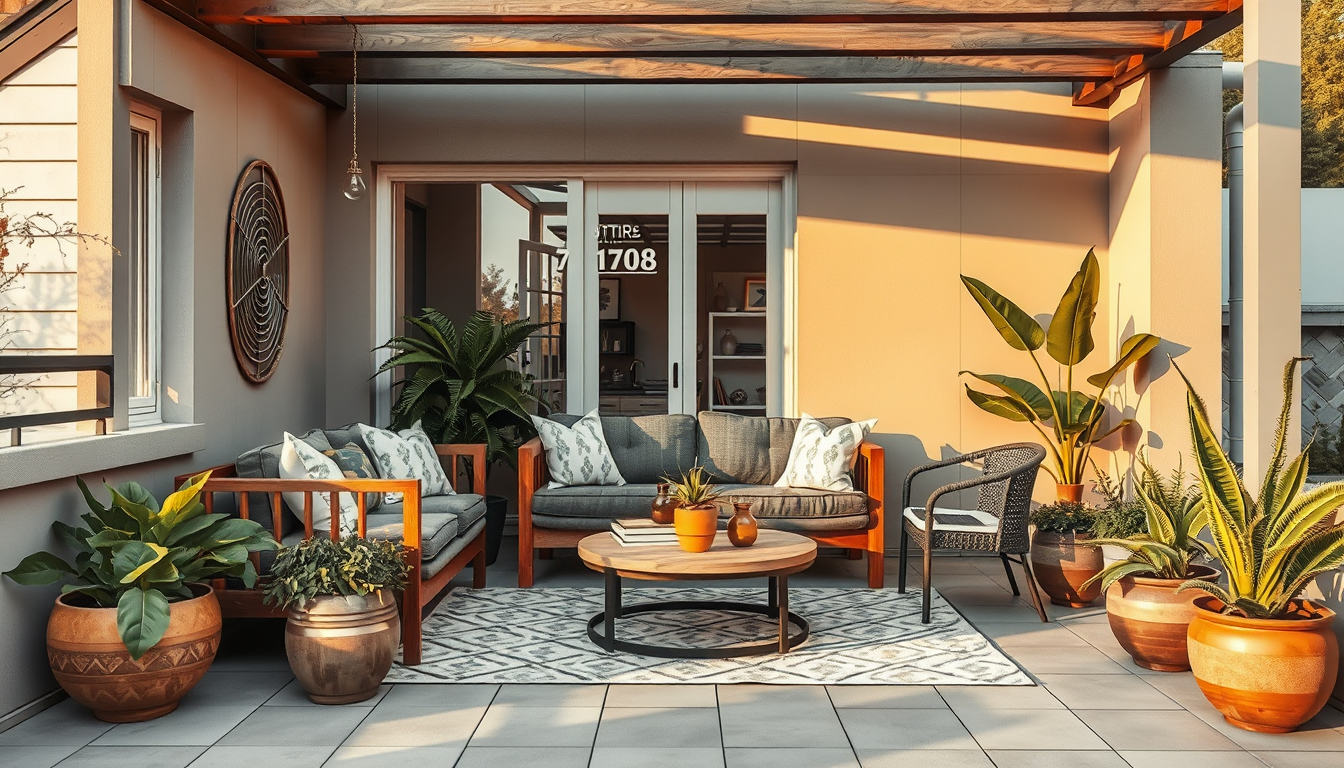
If you’re searching for small patio ideas Toronto designers actually stand behind, the answer starts with one honest truth: your outdoor space is not a miniature version of someone else’s big backyard — it’s a different design problem entirely. A 45-square-foot condo balcony in Liberty Village and a 12×15-foot yard in Leslieville each face constraints that generic Pinterest boards ignore. Toronto’s freeze-thaw cycles, condo board bylaws, and a usable outdoor season running roughly late April through mid-October mean every material, every piece of furniture, and every layout decision carries more weight here than in year-round climates. This guide gives you the specific strategies that work in this city.
Why Small Patio Ideas in Toronto Require a Climate-Smart Strategy
Most outdoor design content is written for climates where a patio lives outside twelve months a year. Toronto gets roughly five and a half months of reliable use. That compressed timeline changes the math on what’s worth buying, building, and maintaining.
Start with materials. Toronto averages over 30 freeze-thaw cycles per winter . Water seeps into porous surfaces like unsealed concrete and terracotta, freezes, expands, and cracks them within a season or two. Every dollar spent on the wrong planter or tile is a dollar wasted by March.
Then there are condo rules. Over half of Toronto’s housing stock is apartments and condominiums , and most condo corporations restrict what residents can place on balconies. Common restrictions include propane or charcoal BBQs, heavy planters that exceed load limits, permanent fixtures attached to walls or railings, and even certain types of outdoor rugs that impede drainage. Violations can mean fines or forced removal. Before you buy anything, request your building’s balcony rules in writing — this one step saves more money than any sale ever will.
For homeowners with small backyards, the constraints are different but just as real. Setback requirements, shared fences, and Toronto’s narrow lot widths (many houses sit on lots just 15 to 20 feet wide) limit what you can build without a permit. If you’re considering a more extensive renovation, our guide to Toronto kitchen renovation ideas covers permit and planning lessons that apply to outdoor projects too.
5 Layout Tricks That Make a Small Toronto Patio Feel Twice Its Size
Shop Balcony and Patio Pieces That Fit
Toronto outdoor spaces are often tight, so look for stackable seating, slim tables, and weather-ready textiles first.
Toronto Interior Designer may earn a commission if you shop through these links at no extra cost to you.
Square footage is fixed. Perceived space is not. These five techniques are what Toronto Interior Designer contributors recommend for yards under 200 square feet:
- Diagonal furniture placement. Angle your seating group at 45 degrees to the fence line. This forces the eye along the longest visual axis of the space — the diagonal — making the area feel substantially wider.
- Zone with levels, not walls. A single 8×8-foot raised deck platform, even just six inches up, creates a distinct “dining room” without eating floor space with dividers. Use step-down gravel or pavers for the remaining area.
- One statement piece, not five small ones. A single oversized planter (24-inch diameter or larger) reads as intentional. Five small pots read as clutter. Group plants vertically instead of spreading them across the ground.
- Mirror the indoor sight line. Position your best outdoor view — a planter wall, a small water feature, a string-light canopy — directly in the sight line from your most-used interior window. This visually extends both spaces.
- Limit your palette to three materials. Pick one wood tone, one metal finish, and one textile colour. Tight material control makes even a 12×15-foot space feel curated rather than chaotic.
“The biggest mistake I see in small Toronto backyards is trying to fit a cottage-sized setup into a city-sized lot. Edit ruthlessly — one good lounge chair beats three cheap ones every time.”
Condo Balcony Ideas Toronto Buildings Actually Allow
Moving from backyard to balcony, the footprint shrinks but the potential doesn’t. Condo balconies in Toronto typically range from 40 to 80 square feet, with many newer builds offering as little as 30 square feet. At that scale, every item needs to justify its footprint.
Vertical gardening is the single highest-impact move for sub-50-square-foot balconies. Wall-mounted rail planters and tension-rod plant shelves can triple your green space without touching the floor . Pair them with compact bistro furniture — a 24-inch round table and two folding chairs take up under six square feet when open and nearly nothing when stored.
Here’s a quick reference for what typically works within condo rules:
| Element | Recommendation | Budget Range (CAD) | Best For |
|---|---|---|---|
| Seating | Folding bistro set, powder-coated aluminum | $150–$400 | Balconies 40+ sq ft |
| Planters | Rail-mount or wall-hung fibreglass | $30–$80 each | Any balcony size |
| Flooring | Interlocking deck tiles (composite or acacia) | $8–$15 per sq ft | Concrete slab balconies |
| Lighting | Battery or solar LED string lights | $25–$60 | All balconies (no wiring needed) |
| Privacy | Outdoor bamboo roll-up screen | $40–$90 | Low-rail balconies |
| Storage | Slim deck box (doubles as bench) | $80–$200 | Balconies 60+ sq ft |
If your small-space challenges extend indoors, our small Toronto condo living room ideas use similar space-maximizing principles for the other side of the sliding door.
Weather-Proof Patio Materials That Survive Canadian Winters
Once you’ve nailed the layout, material selection is where Toronto outdoor design diverges most sharply from warmer-climate advice. Here’s what holds up and what doesn’t:
Use these freely: Powder-coated aluminum (rust-proof, lightweight, easy to store), high-density polyethylene (HDPE) wicker (won’t crack in cold), solution-dyed acrylic fabrics like Sunbrella (fade- and mould-resistant), and composite decking tiles (no sealing, no splintering).
Use with caution: Natural teak (durable but needs annual oiling and will grey without it), wrought iron (heavy and prone to rust at joints — inspect yearly), and cedar (great for planters but softens over time without treatment).
Avoid for outdoor permanent use: Unsealed terracotta, low-grade resin that becomes brittle below minus-10, glass tabletops (thermal shock risk during spring temperature swings), and untreated pine (rots within two seasons).
A Toronto Interior Designer rule of thumb: if a material needs to be brought inside every October, it had better be light enough for one person to carry. Heavy seasonal teardown kills the joy of outdoor living fast.
Where Toronto Designers Source Small-Patio Furniture and Planters
With the right materials in mind, you don’t need to order everything online. Toronto has strong local options for compact outdoor furnishings, and shopping in person lets you test scale — critical when every inch counts:
- EQ3 (King West and Yorkdale) — Clean-lined, condo-scale outdoor seating designed for Canadian weather. Their modular pieces let you build a configuration that fits your exact dimensions.
- BYTH Living (online, Toronto-based) — Modular outdoor furniture specifically sized for balconies, with free delivery across the GTA.
- Sheridan Nurseries (multiple GTA locations) — Best local selection of frost-hardy planters and native perennials. Staff can advise on which plants handle north-facing balcony shade.
- Habitat for Humanity ReStore (multiple locations) — Salvaged outdoor furniture, planters, and stone pavers at a fraction of retail — ideal for budget-friendly character pieces.
- Facebook Marketplace and Bunz — End-of-season in September and October is prime time for lightly-used patio sets from condo dwellers who are moving.
For more outdoor design inspiration and seasonal planning, browse our outdoor category.
Your Small Patio Ideas Toronto Spring Action Plan
Small patio ideas Toronto residents can act on this spring come down to disciplined choices, not big budgets. Here’s your checklist:
- This week: If you’re in a condo, request your building’s balcony rules from property management.
- This month: Measure your space precisely (length, width, and clearance from door swing). Sketch a layout before buying anything.
- Before April: Choose your material palette — pick one wood, one metal, one textile colour and stick to it.
- April–May: Shop local first. Hit Sheridan Nurseries for frost-proof planters and EQ3 or BYTH for condo-scaled furniture.
- Setup day: Install deck tiles and rail planters first, then place furniture. Hang string lights last — they’re the finishing layer, not the foundation.
- October: Store or cover everything properly. Fifteen minutes of fall prep saves hundreds in spring replacements.
Your small Toronto patio isn’t a limitation — it’s a design brief. Work with the space, the season, and the rules you actually have, and you’ll use that balcony or backyard more than most people use their living rooms from May through September.
Layer the Outdoor Room
Lighting, planters, and textiles can stretch a short summer season and make even a small balcony feel intentional.
Toronto Interior Designer may earn a commission if you shop through these links at no extra cost to you.
Sources
- Environment and Climate Change Canada — https://climate-change.canada.ca/
- Statistics Canada 2021 Census — https://www12.statcan.gc.ca/census-recensement/2021/dp-pd/index-eng.cfm
- Canadian Home Trends — https://www.canadianhometrends.com/
Frequently Asked Questions
What are the best small patio ideas for Toronto condos?
The best small patio ideas for Toronto condos include vertical rail planters, folding bistro sets, interlocking deck tiles, and solar LED string lights. Always check your condo corporation’s balcony rules before purchasing, as most Toronto buildings restrict propane BBQs, heavy planters, and permanent wall fixtures.
What patio materials survive Toronto winters?
Powder-coated aluminum, HDPE wicker, solution-dyed acrylic fabrics, and composite decking tiles all handle Toronto’s 30-plus annual freeze-thaw cycles without cracking or rusting. Avoid unsealed terracotta, low-grade resin, and untreated pine, which typically fail within one or two Canadian winters.
Where can I buy small-space patio furniture in Toronto?
Toronto shops like EQ3 in King West and Yorkdale, BYTH Living online, and Sheridan Nurseries across the GTA carry compact, Canadian-weather-rated outdoor furniture. For budget finds, check Habitat for Humanity ReStore locations and Facebook Marketplace in September and October when condo dwellers sell end-of-season sets.