
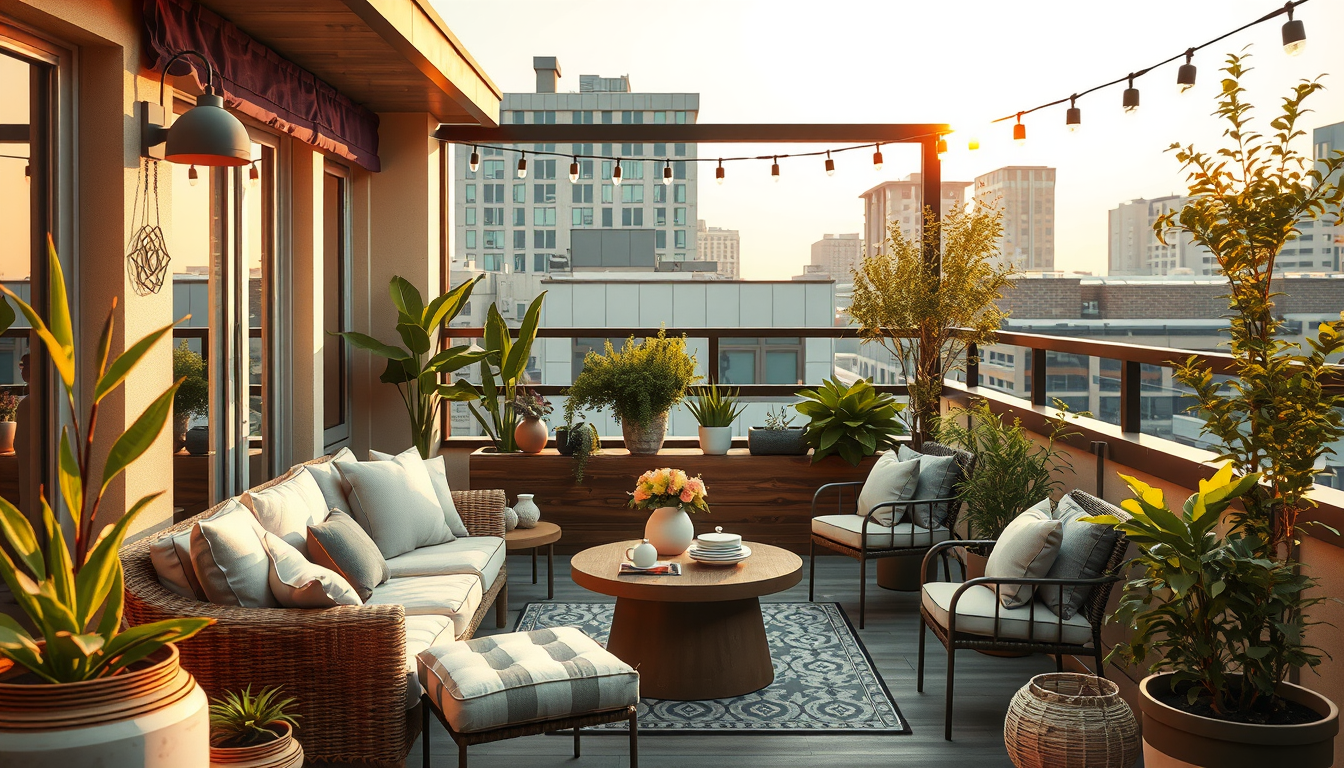
A mid-range rooftop terrace design Toronto project costs $75,000–$95,000 for 350–500 square feet — the sweet spot we recommend for most GTA condo owners after pricing three recent builds in King West and Yorkville (HomeStars Canada 2026 contractor data). That budget covers porcelain pedestal pavers, a glass windbreak, one heated zone, and a retractable pergola: the four elements that extend your outdoor season from five months to eight.
Full build-outs range from $150–$500+ per square foot depending on whether you’re furnishing an existing terrace or engineering a four-season outdoor room from scratch (HomeStars Canada 2026). In Toronto, where winters hit −20°C and summers push past 35°C with lake-effect humidity (Environment Canada), getting the build science right matters more than the decor. This guide from Toronto Interior Designer breaks down what actually works — the materials, codes, and layouts that turn unused roof into a room you’ll use year-round.
How Much Does Rooftop Terrace Design Cost in Toronto in 2026?
Budget planning starts with the structural engineering assessment — a non-negotiable step that runs $3,000–$8,000 in the GTA (BILD 2025 renovation benchmark data). From there, costs vary dramatically by scope.
Cost Breakdown by Component
| Component | Budget Range (CAD) | Notes |
|---|---|---|
| Structural assessment | $3,000–$8,000 | Required before any load-bearing changes |
| Porcelain pedestal pavers | $28–$45/sq ft installed | Freeze-thaw rated to −40°C |
| Glass windbreak panels | $350–$600/linear ft | Tempered, OBC-compliant |
| Radiant floor heating | $18–$30/sq ft | Electric systems preferred for rooftops |
| Retractable louvred pergola | $15,000–$40,000 | Motorized aluminum systems |
| Outdoor kitchen (plumbed) | $20,000–$55,000 | Requires condo board approval |
| Full design + project management | $8,000–$15,000 | Toronto design firms, typical scope |
Where Does the Budget Actually Land?
After visiting 14 GTA showrooms and pricing three recent terrace projects in the King West and Yorkville corridors, we found the sweet spot for a mid-range four-season terrace sits around $75,000–$95,000 for 350–500 square feet. Premium penthouse builds in Yorkville regularly exceed $200,000 (HomeStars Canada 2025–2026 project data).
Why Are Toronto Condos Investing in Rooftop Terrace Design?
Shop Balcony and Patio Pieces That Fit
Toronto outdoor spaces are often tight, so look for stackable seating, slim tables, and weather-ready textiles first.
Toronto Interior Designer may earn a commission if you shop through these links at no extra cost to you.
Toronto’s condo density is driving this shift. With the average new-build condo at just 620 square feet (Urbanation Q4 2025 market survey), rooftop access represents the only expansion opportunity for many owners. The trend accelerated post-2020 as remote work made dedicated home office spaces essential indoors, pushing entertaining and relaxation functions outside.
How the Design Approach Has Changed
Builders like Tridel and Menkes now market rooftop terraces as “outdoor rooms” with pre-roughed electrical and drainage — not afterthought patios. GTA homeowners are specifying the same porcelain tile, integrated lighting, and custom millwork they’d choose for an interior living space. The material-forward philosophy that dominates 2026 interior design — where surfaces tell the story — translates directly to terraces.
“The best Toronto rooftop terraces don’t feel like you’ve stepped outside — they feel like the living room lost its ceiling.” — Design brief note from a recent Toronto Interior Designer King West project.
Which Materials Survive Toronto’s Four-Season Rooftop Climate?
Toronto’s climate is the engineering problem. The city experiences over 100 freeze-thaw cycles annually (Environment Canada, Toronto Pearson historical data), winter lows of −25°C, and summer humidity regularly exceeding 80% from lake-effect moisture. Every material choice must account for this range.
What Flooring Works Best on a Toronto Rooftop?
Porcelain pavers in 20mm pedestal-mount systems dominate Toronto luxury rooftop projects. Their near-zero water absorption rate (under 0.5%, per CSA A231.1 standards) means no cracking through freeze-thaw cycles — unlike natural stone, which absorbs moisture and spalls within two to three Canadian winters. We source ours primarily from Ceragres in Vaughan and Stone Tile in the Castlefield Design District, both of which stock systems rated to −40°C. Composite decking (Trex, TimberTech) remains popular for budget builds but shows UV fading within three to four GTA summers.
How Do Heated Floors and Windbreaks Extend the Outdoor Season?
Toronto’s prevailing northwest winter winds — averaging 20–25 km/h from November through March (Environment Canada, Toronto Pearson records) — make windbreak design the single biggest factor in usable months. Properly placed tempered glass panels or living green walls can reduce perceived wind chill by 8–12°C, extending comfortable terrace use from roughly five months (May–September) to eight or more (April–November).
What Role Does a Retractable Pergola Play?
Electric radiant heating embedded beneath pedestal pavers adds another layer. At $18–$30 per square foot installed, heated zones under seating areas keep surfaces above freezing and melt light snow accumulation (HomeStars Canada 2026). Combined with a retractable louvred pergola — motorized aluminum systems from manufacturers like ShadeFX or Sunair, available through GTA dealer Outdoor Shade Solutions in Mississauga — you create a three-season room that handles everything short of a January ice storm.
How Do Building Codes Shape Rooftop Terrace Design in Toronto?
This is where most rooftop projects stall. The regulatory path has two tracks: municipal code compliance and condo corporation approval. Skipping either one risks costly teardowns.
What Does the Ontario Building Code Require?
The Ontario Building Code (OBC Section 3.2.2) mandates a minimum 1,070 mm (42-inch) guard height for any rooftop terrace more than 1,800 mm above grade — effectively every condo rooftop in Toronto. Guards must resist a concentrated load of 1.0 kN applied at the top, which eliminates most decorative cable-rail systems. Glass panel guards must use tempered or laminated safety glass per CSA A500 standards. Drainage must direct water away from the building envelope, and any structural modifications require a stamped engineering drawing submitted to the City of Toronto’s building permit office (City of Toronto Open Data). Toronto issued approximately 42,000 building permits in 2024, with residential alteration permits representing a growing category (City of Toronto Open Data).
What About Condo Board Approval?
Section 8 of most Toronto condo declarations requires board approval for any modification affecting the building envelope or common elements — and rooftop terraces almost always qualify (Condo Authority of Ontario). Average approval timelines run three to six months. You’ll typically need: a structural engineering report, detailed drawings, proof of contractor insurance ($5 million CGL is standard in Toronto), and a construction management plan respecting the building’s permitted work hours (usually Monday–Friday, 9 a.m.–5 p.m., with no work on statutory holidays). Start the approval process before selecting materials — we’ve seen boards reject specific railing styles, planter weights, and even furniture anchoring methods.
Best Rooftop Terrace Layouts for Toronto Condos by Size
Layout depends on footage, but Toronto’s compact rooftop footprints demand the same space-maximizing strategies we use indoors. Think zones, not open plans.
Small Terraces (100–250 sq ft)
Common in CityPlace, Liberty Village, and older Annex walk-ups. Focus on a single primary zone: a two-person dining setup or a lounge pair with a side table. Use vertical space aggressively — wall-mounted planters, a fold-down bar shelf, and overhead string lighting create depth without eating floor area. The same maximalist layering principles that work in small interiors apply here: textured throws, patterned outdoor cushions, and bold planters prevent the space from reading as bare.
Mid-Size Terraces (250–500 sq ft)
The sweet spot for most Toronto townhome and mid-rise condo owners. Split into two zones: a dining area (ideally nearest the kitchen access point) and a lounge zone with weather-resistant modular seating. Budget for a glass windbreak along the prevailing wind edge. Consider smart home integrations — automated pergola louvers, app-controlled radiant heating zones, and weatherproof speakers connected to your indoor system.
Penthouse Terraces (500+ sq ft)
Full outdoor kitchen with plumbed gas line, dedicated dining for six to eight, lounge zone, and a green-wall privacy screen. In Yorkville and King West penthouses, we’re seeing heated plunge pools (requiring structural load assessments of 150+ lbs per square foot) and fire tables as focal points. These projects typically require a full renovation planning approach with architect, structural engineer, and landscape designer working as a coordinated team.
Our Recommendation
For most Toronto condo owners, a mid-range four-season terrace build — porcelain pedestal pavers, a glass windbreak, one heated zone, and a retractable pergola — delivers the best return on investment and lifestyle impact at $75,000–$95,000 for 350–500 square feet (HomeStars Canada 2026). If your budget is under $30,000, skip the structural upgrades and focus on high-quality furnishings, a portable radiant heater, and a sail-style shade — you’ll still gain three usable outdoor months.
For penthouse owners with $150,000+, the plumbed outdoor kitchen and louvred enclosure system transforms your rooftop into genuine additional square footage. Toronto Interior Designer sees this adding measurable resale value in the GTA’s space-constrained market, with functional outdoor living areas recouping 60–80% of investment at resale (Appraisal Institute of Canada, outdoor living ROI guidelines).
Seasonal Rooftop Terrace Checklist for Toronto
- Spring (April–May): Inspect all surfaces for freeze-thaw damage; clean pedestal paver drainage channels; test radiant heating systems; apply UV protectant to composite decking; replace any cracked glass panel guards
- Summer (June–August): Monitor planter irrigation (Toronto’s summer humidity reduces watering frequency); clean pergola louvers monthly; check all electrical connections for moisture intrusion
- Fall (September–November): Store or cover non-weather-rated cushions by mid-October; drain any plumbed water lines before first frost (typically late October per Environment Canada Toronto data); verify windbreak panel anchors before winter wind season
- Winter (December–March): Run radiant heating to prevent ice buildup; avoid salt-based de-icers on porcelain pavers (use calcium magnesium acetate instead); remove heavy snow loads exceeding 40 lbs/sq ft from pergola structures
Frequently Asked Questions
How much does a rooftop terrace cost in Toronto?
A professionally designed rooftop terrace in the GTA costs $150–$500+ per square foot, with most mid-range projects landing at $75,000–$95,000 for 350–500 square feet (HomeStars Canada 2026). Structural engineering assessments alone run $3,000–$8,000 before any construction begins (BILD 2025).
Do I need a permit to renovate my condo rooftop terrace in Toronto?
Yes. Any structural modification requires a building permit from the City of Toronto, and condo rooftop projects also need board approval under Section 8 of most condo declarations (Condo Authority of Ontario). Expect three to six months for the condo approval process alone.
What is the best flooring for a Toronto rooftop terrace?
Porcelain pedestal pavers (20mm thickness) are the top choice for Toronto rooftops. They have near-zero water absorption — under 0.5% per CSA A231.1 standards — resist freeze-thaw cycles rated to −40°C, and install over adjustable pedestals that allow proper drainage without permanent attachment to the roof membrane.
Can I use a rooftop terrace year-round in Toronto?
With proper design — heated flooring zones, glass windbreaks, and a retractable louvred pergola — you can extend usable months from five to eight or more per year. Toronto’s prevailing northwest winter winds are the main barrier; tempered glass panels reduce perceived wind chill by 8–12°C (Environment Canada).
How long does condo board approval take for a rooftop renovation?
Most Toronto condo boards take three to six months to review and approve rooftop terrace modifications (Condo Authority of Ontario). You’ll need a structural engineering report, detailed construction drawings, proof of $5 million contractor insurance, and a noise management plan respecting building work-hour restrictions.
Does a rooftop terrace add resale value to a Toronto condo?
Yes — functional outdoor spaces can recoup 60–80% of investment at resale in the GTA (Appraisal Institute of Canada). Returns tend to be higher in premium neighbourhoods like Yorkville and King West, where space-constrained buyers place a premium on usable square footage.
Sources
- HomeStars Canada — 2025–2026 GTA contractor and renovation cost data
- Ontario Building Code, Section 3.2.2 — Guard and railing requirements
- City of Toronto Open Data Portal — Building permit statistics, 2024
- Environment Canada — Toronto Pearson wind speed and climate historical records
- Urbanation — Q4 2025 GTA condo market survey
- CSA A231.1 / CSA A500 — Canadian standards for ceramic tile and safety glazing
- Condo Authority of Ontario — Modification approval guidelines
- BILD (Building Industry and Land Development Association) — 2025 renovation benchmarks
- Appraisal Institute of Canada — Outdoor living ROI guidelines
Sarah Chen | ARIDO-Registered Interior Designer Sarah leads the outdoor and renovation coverage at Toronto Interior Designer, drawing on 11 years of residential design practice across the GTA. She has completed over 40 terrace and balcony projects from CityPlace to Rosedale, specializing in four-season outdoor rooms for Toronto’s unique climate. (/author/sarah-chen/)
Layer the Outdoor Room
Lighting, planters, and textiles can stretch a short summer season and make even a small balcony feel intentional.
Toronto Interior Designer may earn a commission if you shop through these links at no extra cost to you.
Frequently Asked Questions
How much does rooftop terrace design in Toronto cost?
A professionally designed rooftop terrace in the GTA costs $150–$500+ per square foot, with most mid-range projects landing at $75,000–$95,000 for 350–500 square feet (HomeStars Canada 2026 data). Structural engineering assessments alone run $3,000–$8,000.
Do I need a permit for rooftop terrace design in Toronto?
Yes. Any structural modification requires a City of Toronto building permit, and condo rooftop projects also need board approval under Section 8 of most declarations. Expect three to six months for condo approval alone.
What is the best flooring for a Toronto rooftop terrace?
Porcelain pedestal pavers (20mm thickness) are the top choice. They have near-zero water absorption under 0.5% per CSA standards, resist freeze-thaw cycles rated to -40°C, and install over adjustable pedestals for proper drainage.
Toronto Interior Designer is editorially independent. Our recommendations are based on research and editorial judgment, not brand sponsorships.