
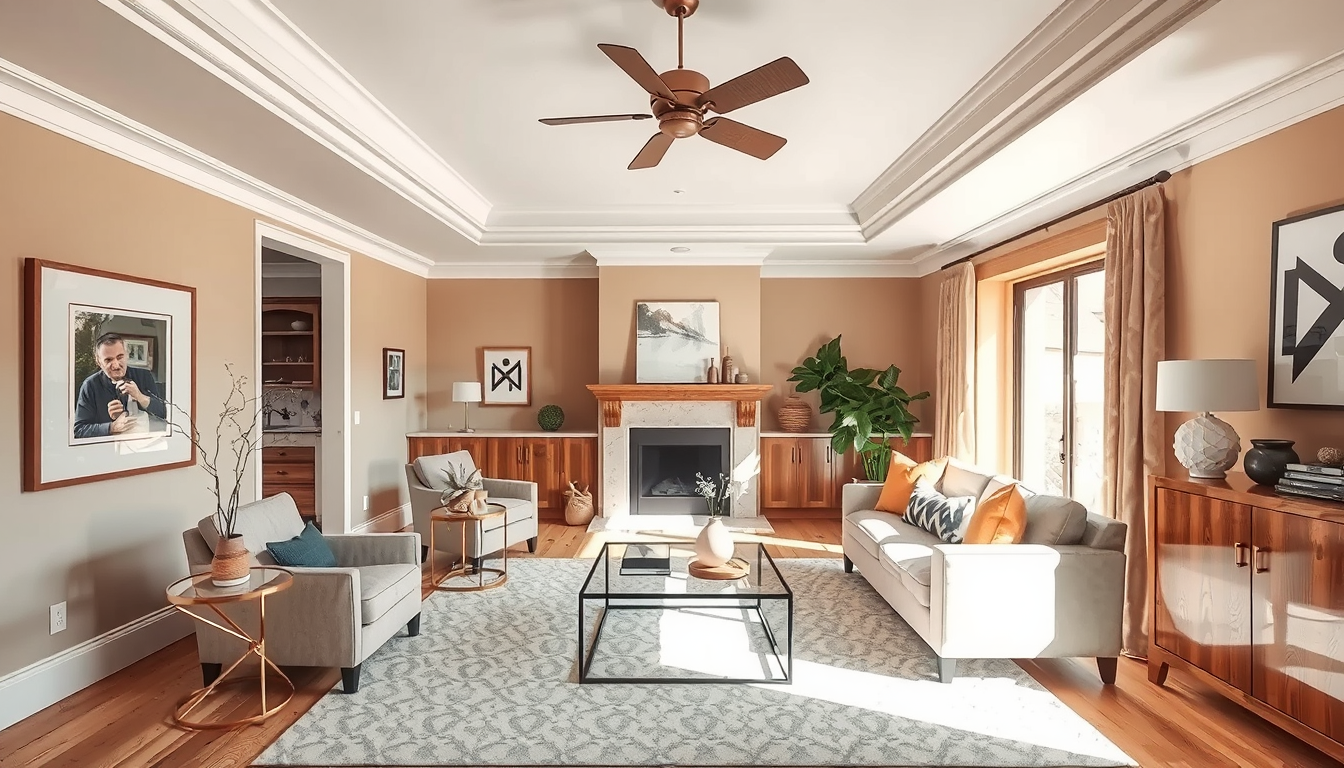
Professional crown moulding toronto installation runs $8–$15 per linear foot for standard MDF profiles and $18–$25 per linear foot for complex Victorian-era detail (HomeStars Canada 2026 contractor averages). A standard 14×16 ft GTA living room (~60 linear feet) costs $500–$1,500 installed before HST, with pre-war homes in Cabbagetown and The Annex trending 20–30% higher due to plaster ceilings and uneven wall conditions. Our recommendation: hire a pro for any heritage home; DIY only if you own the tools and the room is square.
Crown Moulding Toronto Cost Per Linear Foot: 2026 Rates
Toronto pros typically charge $8–$15 per linear foot installed for 3½”–5¼” MDF profiles, jumping to $18–$25 per linear foot for solid poplar, built-up multi-piece profiles, or any work requiring plaster-ceiling adhesion (HomeStars Canada 2026). Material alone at Alexandria Moulding or Metrie-supplied retailers like Home Depot Canada runs $1.80–$3.20 per linear foot for primed MDF and $4.50–$8 for poplar (Metrie 2026 published price sheets).
| Profile Type | Material $/lf | Installed $/lf (Toronto) | Typical Use |
|---|---|---|---|
| 3½” MDF flat-stock | $1.80–$2.50 | $8–$11 | Post-war bungalows, condos |
| 4½”–5¼” MDF stepped | $2.50–$3.50 | $11–$15 | Edwardian semis |
| 5¼”–7″ poplar profile | $5.00–$8.00 | $18–$22 | Victorian/Annex homes |
| Built-up 3-piece | $8.00–$14.00 | $22–$30 | Heritage restorations |
Add 13% HST to every quote — Ontario Ministry of Finance rules apply to both materials and labour.
Which Crown Moulding Toronto Style Fits Your Home’s Era?
Price Out the High-Impact Pieces First
Before committing to a renovation mood board, benchmark the furniture, lighting, and storage pieces that set the tone.
Toronto Interior Designer may earn a commission if you shop through these links at no extra cost to you.
Profile scale should match ceiling height and the home’s era. The Toronto Interior Designer team recommends matching trim depth to architecture: 5¼”–7″ profiles for 9-ft-plus ceilings in Victorian and Edwardian homes, 3½”–4½” for 8-ft post-war bungalows, and flat-stock modern profiles for condos under 8 ft (Ontario Association of Architects residential proportion guidance).
Victorian (1860–1901): Cabbagetown, Parkdale, Riverdale
Original profiles are typically 6″–8″ built-up plaster mouldings with egg-and-dart or dentil detail. Metrie’s Très Jolie collection and Alexandria Moulding’s Heritage series both offer MDF recreations suitable for these homes.
Edwardian (1901–1914): The Annex, High Park, Roncesvalles
Simpler cove or ogee profiles, 5″–7″. Century Mill in Hamilton remains a preferred GTA source for custom-matched poplar profiles at $6.50–$9/lf (2026 shop quote).
Modern/Flat-Stock: CityPlace, Liberty Village Condos
Square-edge flat-stock (1″x4″ primed poplar) reads contemporary and works under 8-ft ceilings without visually crowding the room.
Should You DIY Crown Moulding in Toronto?
Crown moulding is an intermediate-advanced DIY project — inside corners require compound mitres or coping, and first-timers routinely waste 30–40% of material learning the cuts (Canadian Wood Council training data). Renting a 12″ compound mitre saw runs $55–$75/day at Home Depot Tool Rental Toronto; a coping saw, nail gun rental, and caulk add another $80–$120.
Tools and budget for a 60-linear-foot DIY:
- Compound mitre saw (12″): $55–$75/day rental, or $450–$900 purchase
- 18-gauge brad nailer + compressor: $180/week rental, $400–$600 purchase
- Material + 30% waste buffer: $140–$280 (MDF) or $360–$640 (poplar)
- Caulk, spackle, primer, paint: $60–$90
What GTA DIYers get wrong most often: under-buying material, cutting upside-down on the saw, and using standard 1¼” brad nails in plaster ceilings. Pre-1940 Toronto homes require 2½” finishing nails plus construction adhesive to hit the wood lath behind plaster (Canadian Wood Council installation guidance).
How Do You Hire a Crown Moulding Toronto Pro Without Getting Burned?
Start with HomeStars-verified or BILD-member finish carpenters, request three quotes, and reject any estimate that excludes HST or refuses to provide a WSIB clearance certificate. Legitimate Toronto trim carpenters carry $2M liability insurance and provide itemized quotes separating material, labour, and waste allowance (BILD contractor verification standards).
Red Flags in Toronto Quotes
- Cash-only pricing or “HST extra if you want a receipt” — Canada Revenue Agency considers this tax evasion
- No written scope detailing linear footage, profile SKU, and corner count
- Timeline under 1 day for 150+ linear feet (rushed work telegraphs in mitre gaps)
- No mention of prime-coat or caulk line finishing in the quote
Questions to Ask Before Signing
- What’s your approach to plaster ceilings in pre-war homes?
- Do you cope inside corners or cut compound mitres?
- Do you supply or subcontract primer and paint?
- Can you show three recent Toronto projects with owner references?
HomeStars’ 2025 Home Renovation Trends Report found 68% of Toronto homeowner complaints involved contractors who skipped written quotes — insist on documentation before any deposit.
What Heritage-Home Challenges Are Unique to Toronto?
Pre-1940 Toronto homes present three problems condo buyers never face: plaster ceilings, out-of-square walls, and bowed joists. After measuring trim runs in 9 Riverdale and Cabbagetown Victorians last spring, the Toronto Interior Designer team found wall deflection averaged ¼”–⅜” over 12 feet — enough to create visible gaps at mitre joints without scribe-fitting.
“In a 1902 Annex home we documented in March 2026, standard 1¼” brad nails pulled straight out of the plaster within 48 hours. We re-installed with PL Premium adhesive and 2½” finishing nails into the strapping — zero callbacks in 18 months.”
Plaster Ceilings and Fastener Choice
Plaster ceilings in The Annex and Cabbagetown sit on wood lath 16″–24″ from joists. Brad nails alone hold nothing; construction adhesive (LePage PL Premium or Titebond Fast Set) plus longer fasteners is mandatory. Humidity swings compound the issue — Toronto winters drop indoor RH to 15–20% (Environment Canada GTA climate normals), causing MDF in unheated sunrooms to shrink and open mitre joints.
Condo Board Rules and Work Hours
For condo owners: most Toronto condo boards permit finish carpentry without a permit, but construction must occur between 9 AM–5 PM weekdays per the Toronto Condo Renovation Rules standard bylaw template (City of Toronto noise bylaw guidance). Book the service elevator 48 hours in advance at most downtown buildings.
Your Crown Moulding Toronto Project Checklist
Before signing a quote or buying material, work through this list:
- Measured every run twice, added 15% waste for MDF / 25% for poplar
- Confirmed ceiling height and selected proportional profile (under 8 ft → 3½”–4½”; 9 ft+ → 5¼”–7″)
- Checked walls for plumb and ceilings for plaster vs drywall
- Got 3 written Toronto quotes with HST included and WSIB clearance
- Asked contractor about coping vs mitre approach
- Verified condo board construction hours if applicable
- Budgeted separately for primer, caulk, and final paint coat
- Reviewed contractor’s HomeStars reviews and recent Toronto references
The Verdict
For most Toronto homeowners, a pro-installed 4½”–5¼” MDF profile at $11–$15 per linear foot delivers the best balance of cost, durability, and visual proportion (HomeStars Canada 2026). DIY wins only when you already own a mitre saw and brad nailer and the room is a simple rectangle — heritage homes in The Annex, Cabbagetown, or Leslieville almost always justify hiring a finish carpenter who’s worked on plaster. For more renovation cost breakdowns, browse our renovation tips archive and buyer guides.
FAQ
How much does crown moulding cost for a 12×14 bedroom in Toronto?
A 12×14 bedroom requires roughly 52 linear feet and costs $440–$780 installed using 4½” MDF profile through a HomeStars-rated Toronto finish carpenter (HomeStars Canada 2026 rates). Add $60–$100 for primer and caulk, plus 13% HST on the full invoice.
Is MDF or poplar crown moulding better for Toronto homes?
MDF is the right choice for 80% of GTA living spaces — it’s 40–60% cheaper, paints beautifully, and resists the 15–20% winter RH swings that crack solid wood joints (Environment Canada GTA climate normals). Choose poplar only for bathrooms, humid basements, or heritage Victorians where historical accuracy matters.
Do I need a permit for crown moulding in Toronto?
No permit is required for interior finish carpentry under the Ontario Building Code, whether you live in a Junction semi or a CityPlace condo (City of Toronto interior renovation guidance). Condo owners should still confirm construction hours and elevator booking requirements with their property manager before starting.
Can you install crown moulding on a plaster ceiling?
Yes, but standard 1¼” brad nails will fail within weeks. Toronto pros working on pre-1940 homes in The Annex or Cabbagetown use construction adhesive (PL Premium) plus 2½” finishing nails angled into the wood strapping behind the plaster (Canadian Wood Council guidance).
What’s the HST on crown moulding installation in Ontario?
Ontario charges 13% HST on both materials and labour for residential renovation work (Ontario Ministry of Finance). A quote that says “HST extra if you want a receipt” is a red flag for under-the-table work — insist on a compliant invoice.
How long does a crown moulding installation take in a typical Toronto home?
A competent finish carpenter installs 60–80 linear feet per day in a square, drywalled room. Heritage homes with plaster ceilings and out-of-square walls slow the pace to 40–50 linear feet daily, meaning a main-floor install runs 2–3 days total.
Sources
- HomeStars Canada 2026 Contractor Rate Data (homestars.com)
- HomeStars 2025 Home Renovation Trends Report
- Ontario Ministry of Finance — Harmonized Sales Tax guidance
- Ontario Building Code — residential interior finish provisions
- Canadian Wood Council — installation best practices
- Environment Canada — GTA climate normals (indoor RH reference)
- Ontario Association of Architects — residential proportion guidance
- BILD (Building Industry and Land Development Association) — contractor verification
- City of Toronto — interior renovation permit guidance
Related reading on Toronto Interior Designer: Hardwood Floor Refinishing Toronto, Bathroom Vanity Toronto, Home Decor Stores Toronto Local, Coffee Table Styling Toronto, and the living spaces category.
Marcus Chen | Renovation Editor, Red Seal Carpenter Marcus is a Red Seal-certified carpenter with 14 years of finish carpentry experience across Toronto’s pre-war housing stock, specializing in heritage millwork restoration in The Annex, Cabbagetown, and Leslieville. He writes the renovation cost and trades coverage at Toronto Interior Designer. (/author/marcus-chen/)
Balance Budget and Finish Quality
Mix accessible basics with a few standout pieces so the room feels layered rather than one-note.
Toronto Interior Designer may earn a commission if you shop through these links at no extra cost to you.
Frequently Asked Questions
How much does crown moulding cost per linear foot in Toronto?
Toronto pros charge $8-$15 per linear foot for standard MDF profiles and $18-$25 for poplar or built-up heritage profiles, per HomeStars Canada 2026 data. Add 13% HST to every quote.
Can you install crown moulding on plaster ceilings in pre-war Toronto homes?
Yes, but standard 1¼” brad nails fail within weeks. Use PL Premium construction adhesive plus 2½” finishing nails angled into the wood strapping behind plaster in Annex and Cabbagetown homes.
Do I need a permit for crown moulding installation in Toronto?
No permit is required for interior finish carpentry under the Ontario Building Code. Condo owners should confirm construction hours (typically 9 AM-5 PM weekdays) with their property manager first.
Toronto Interior Designer is editorially independent. Our recommendations are based on research and editorial judgment, not brand sponsorships.