
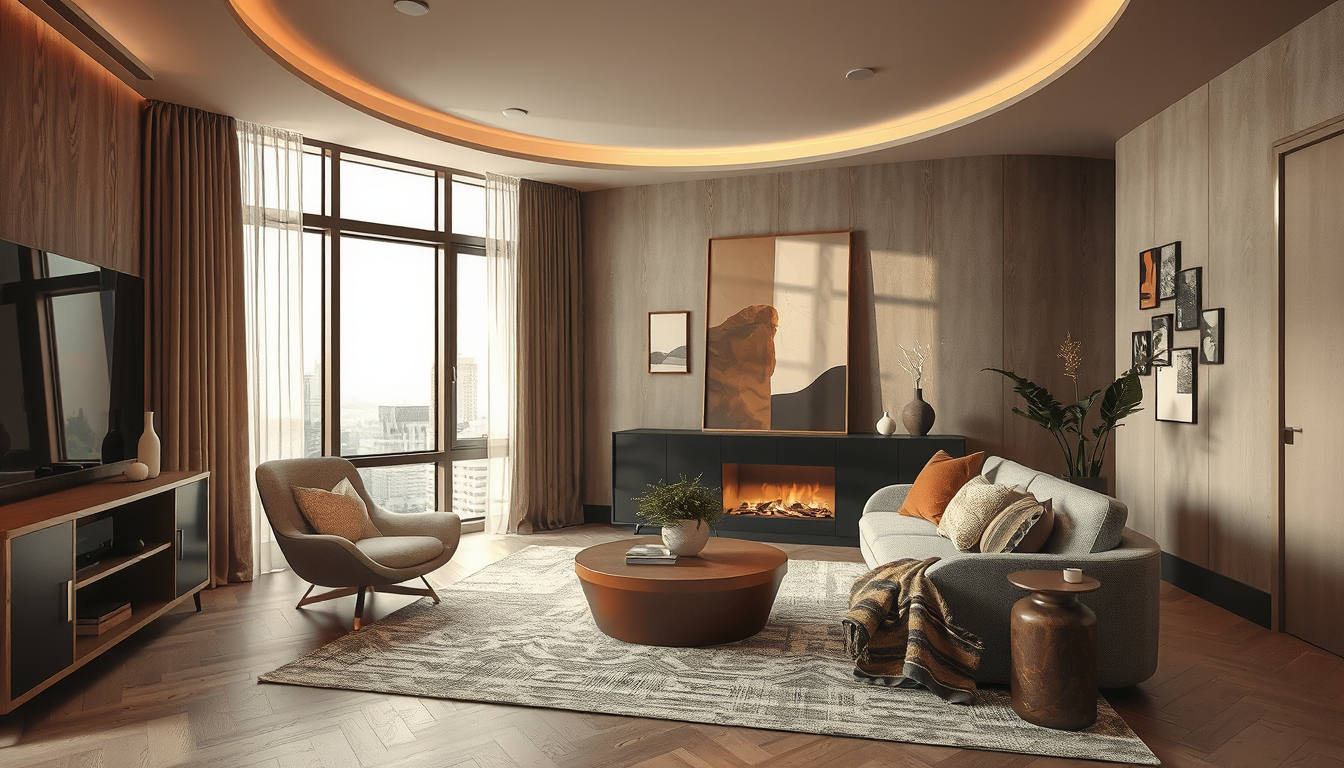
Biophilic design Toronto is no longer a nice-to-have — it is the single most effective way to make a compact urban home feel larger, calmer, and healthier through every season. The concept is straightforward: integrate natural materials, living plants, daylight, and organic patterns into your interior so your nervous system registers “outdoors” even when you are fourteen floors up. Research from Terrapin Bright Green found that biophilic environments can reduce stress by up to 37 percent and lift productivity by roughly 15 percent . In a city where winter daylight dips to 8.8 hours and over 400,000 households live in condos, those numbers matter more here than almost anywhere else in North America.
What Biophilic Design Means and Why Toronto Condos Need It Most
Biophilic design goes beyond a fiddle-leaf fig in the corner. Coined by biologist E.O. Wilson, the term describes a systematic approach to architecture and interiors that reconnects occupants with nature through three channels: direct nature (plants, water, natural light), indirect nature (wood grain, stone, earth-toned palettes), and spatial conditions (prospect views, refuge nooks, sensory variability).
Toronto’s built environment creates a perfect storm of biophilic need. The city receives only about 2,066 sunshine hours annually — well below the Canadian average — and most of those hours land between May and September . Meanwhile, condo floor plans rarely exceed 700 square feet, balconies face neighbouring towers, and building envelopes seal out fresh air for energy efficiency. The result is months spent in artificially lit, thermally static boxes — exactly the environment biophilic interventions are designed to counteract.
The good news: you do not need a ravine-lot house or a six-figure renovation budget. The strategies below are scaled specifically for Toronto’s vertical housing stock and its four-season reality.
5 Biophilic Design Principles That Work in Toronto Condos
See the Pieces Behind the Trend
Translate trend ideas into real products by starting with lighting, occasional furniture, and layered decor.
Toronto Interior Designer may earn a commission if you shop through these links at no extra cost to you.
1. Maximize borrowed light. Replace solid interior doors with fluted or reeded glass panels so daylight travels deeper into the unit. A single warm neutral paint colour on walls and ceilings — think Benjamin Moore’s White Heron or Farrow & Ball’s School House White — bounces available light further than any fixture can. In north-facing units, this single change can make a room feel noticeably brighter without adding a bulb.
2. Layer natural materials at every touchpoint. Swap laminate for white-oak open shelving, introduce a honed-limestone trivet on the counter, or add a jute runner in the hallway. The goal is tactile variety: your hands and feet should encounter organic textures throughout the day, not just your eyes.
3. Use living walls vertically, not horizontally. Floor space is precious. A slim wall-mounted planter system (Woolly Pocket, Lechuza Green Wall) lets you grow pothos, philodendron, and ferns upward in a 12-inch-deep footprint. Mount one beside a window or above a desk to bring greenery into your sightline without sacrificing a single square foot of floor.
4. Introduce water sounds. A small tabletop fountain or a wall-mounted water feature adds the auditory dimension of biophilia that plants alone cannot. This is particularly effective in open-plan condos where ambient traffic noise competes for attention.
5. Create one “refuge” micro-zone. Biophilic theory identifies refuge — a sheltered, partially enclosed space — as a deep human need. In a condo, this can be a reading chair tucked beside a bookshelf with a trailing plant overhead. It does not require square footage; it requires intention.
“Biophilic design is not about decoration. It is about restoring the sensory diet your body evolved to expect — daylight, texture, air movement, the presence of living things — inside spaces that were engineered to eliminate all of it.” — Stephen Kellert, Birthright: People and Nature in the Modern World
Best Plants and Natural Materials for Biophilic Design in Toronto
Not every biophilic material or plant thrives here. Toronto’s dry winter air (indoor humidity often drops below 25 percent) and limited winter light narrow the field considerably. Here is what actually performs in local conditions.
Plants that tolerate low light and dry air: ZZ plant, snake plant (Dracaena trifasciata), pothos, cast-iron plant, and Chinese evergreen. These survive north-facing exposures and the forced-air heating that dehydrates tropical species overnight.
Materials sourced locally or regionally: White oak from Ontario mills, Eramosa limestone (quarried near Hamilton), reclaimed Douglas fir from salvage dealers in the Junction, and Canadian wool textiles. Using regional materials is not just sustainable — it reduces lead times and keeps your project on budget.
Full-spectrum lighting: When natural light is scarce from November through March, a full-spectrum LED (5000K–6500K, CRI 95+) in task areas mimics daylight’s biological effects. Pair warm 2700K ambient lighting in the evening to maintain circadian rhythm. At Toronto Interior Designer, we consider lighting the most underrated biophilic tool in any condo.
Biophilic Design Toronto Trends Worth Investing In Now
With the foundational principles and materials covered, here is how the biggest current movements translate to Toronto homes specifically.
| Trend | Why It Works in Toronto Homes | Budget Impact | Best Room |
|---|---|---|---|
| Fluted wood panelling | Adds texture and warmth to featureless drywall; hides imperfections in older condos | $800–$2,500 per accent wall | Living room or entry |
| Stone-look porcelain tile in large format | Brings geological texture without the weight restrictions of real stone on upper floors | $12–$22/sq ft installed | Bathroom or kitchen |
| Integrated indoor herb garden | Productive greenery that earns its counter space; thrives under a grow light in winter | $60–$200 for a countertop kit | Kitchen |
| Organic-curve furniture | Softens the rigid geometry of condo floor plans; creates visual flow in tight layouts | $500–$3,000 per piece | Living spaces |
| Natural fibre window treatments | Woven wood or linen Roman shades filter light without blocking it; suit north-facing units | $150–$500 per window | Bedroom |
Making Biophilic Design Feel Timeless, Not Trendy
The fastest way to date a biophilic interior is to treat it as a theme. Avoid the “jungle room” trap — wall-to-wall tropical wallpaper, neon plant pots, overly styled shelfie arrangements. Instead, embed nature at the material level. A solid white-oak dining table will still feel alive in ten years. A raw-edge stone countertop will still ground the kitchen. If you are choosing furniture for a small condo, pick pieces made from honest materials rather than pieces that merely look natural from a distance. The rule at Toronto Interior Designer is simple: if the material actually came from the earth, it ages well. If it is a printed imitation, it has an expiration date.
What to Do Next
Biophilic design is not a single purchase — it is a shift in how you evaluate every material, light source, and surface in your home. Start small, layer over time, and let the space evolve with you.
- Audit your light: Walk through your unit at 10 a.m. and 3 p.m. Note which rooms get direct sun, reflected light, or none. This determines where to place plants and where to invest in full-spectrum fixtures.
- Pick one tactile upgrade this month: Swap a synthetic throw for a wool one, replace plastic drawer pulls with oak knobs, or add a stone tray to your bathroom vanity.
- Choose three low-light plants: Start with a ZZ, a pothos, and a snake plant. Place them at different heights to create visual layers.
- Set a material palette: Select two natural materials (e.g., white oak and limestone) and carry them through at least three rooms for cohesion. Browse our renovation tips for more guidance on material selection.
- Book a consultation: A Toronto Interior Designer consultation can map a biophilic plan to your specific unit layout, orientation, and budget — so every dollar goes where the science says it will make the most difference.
Nature does not require a backyard. It requires intention, the right materials, and a plan built for the space you actually have.
Keep the Trend Livable
Ground any trend with simple, versatile pieces that still work when the room evolves over the next few years.
Toronto Interior Designer may earn a commission if you shop through these links at no extra cost to you.
Sources
- Terrapin Bright Green, 14 Patterns of Biophilic Design — https://www.terrapinbrightgreen.com/reports/14-patterns/
- Environment Canada climate normals — https://climate.weather.gc.ca/
Frequently Asked Questions
What is biophilic design and why does it matter in Toronto condos?
Biophilic design integrates natural materials, plants, daylight, and organic patterns into interiors to reconnect occupants with nature. In Toronto, where condos average under 700 square feet and winter daylight drops to 8.8 hours, biophilic strategies reduce stress by up to 37 percent and make compact spaces feel larger and calmer.
What are the best low-light plants for biophilic design in Toronto?
ZZ plants, snake plants, pothos, cast-iron plants, and Chinese evergreens perform best in Toronto condos. They tolerate north-facing exposures, low winter light, and the dry air caused by forced-air heating systems common in high-rise buildings.
How much does biophilic design cost for a Toronto condo?
Biophilic design scales to any budget. A countertop herb garden starts at $60, natural fibre window treatments run $150 to $500 per window, and fluted wood accent walls cost $800 to $2,500. Start with tactile upgrades like wool throws or oak knobs and layer over time.